Starfield Optics 115 Triplet review: my best Andromeda yet
Where does it rank on our leaderboard
| Rank | Telescope | Stars for Your Buck | Recorded UK price |
|---|---|---|---|
| 1 | Askar 50P | 95 out of 100 | £299 |
| 2 | ToupTek Hope D60 | 93 out of 100 | £749 |
| 3 | Sky-Watcher HAC125DX | 92 out of 100 | £589 |
| 19 | Sky-Watcher Heliostar 76Ha | 74 out of 100 | £2,399 |
| 23 | ZWO FF80 APO | 73 out of 100 | £1,175 |
| 37 | Starfield Optics 115 Triplet | 52 out of 100 | £1,899 |
| 38 | Altair 60EDF | 51 out of 100 | £499 |
| 41 | Celestron 114 LCM | 42 out of 100 | £361 |
| 42 | Celestron AstroMaster LT 76 | 13 out of 100 | £200 |
Contents
- 01 Where does it rank on our leaderboard
- 02 Specifications and features
- 03 In the hand
- 04 How good is it? Here's what I captured
- 05 Planets and the Moon
- 06 Raw against finished
- 07 The rig on the mount
- 08 What is it for
- 09 Watch the review
- 10 Tested numbers and the download
- 11 Should you buy it?
- 12 Questions and more about this review
In 30 seconds
Stars for Your Buck 52/100
Reviewed 25 Nov 2024 Updated 23 Sep 2026
- Rank
- #37 of 42 telescopes
- Verdict
- With reservations
Written by Damon Scotting 7 min read
Buy it if
- You image from home and want 805 mm of reach for galaxies and small nebulae.
- Your mount is rated for 8 kg or more without a counterweight.
- You want one refractor that can also take the Moon, Saturn and Jupiter with a Barlow.
Skip it if
- You fly with your kit: this long, heavy tube is a stay-at-home telescope.
- You want the big nebulae whole: on an APS-C sensor the field is only 1.69 by 1.13 degrees.
- Your budget stops at the tube: the reducer or flattener that gets the most from it is extra.
This is a system ready to go out of the box: just add your camera and start shooting. It gave me the best image I have ever taken of the Andromeda Galaxy.
Specifications and features
Against the telescopes I have reviewed
Compare with
| Starfield Optics 115 Triplet reviewed #37 of 42 | Askar 140APO #15 of 42 | ZWO FF110 #22 of 42 | Askar 103APO #13 of 42 | Askar 91F #6 of 42 | Askar SQA106 #4 of 42 | |
|---|---|---|---|---|---|---|
| Recorded UK price | £1,899 | £2,098 | £1,499 | £999 | £995 | £3,395 |
| Stars for Your Buck | 52/100 | 80/100 | 73/100 | 81/100 | 89/100 | 91/100 |
| Aperture | 115 mm | 140 mm | 110 mm | 103 mm | 91 mm | 106 mm (4.17") |
| Focal length | 805 mm | 980 mm | 766 mm | 700.4 mm | 609 mm | 509 mm |
| Focal ratio | f/7 | f/7 | f/7.0 | f/6.8 | f/6.7 | f/4.8 |
| Optical design | Air-spaced triplet APO, FPL-53 ED glass, fully multi-coated | Triplet air-spaced APO | Four-element air-spaced apochromat with one ED element, native flat field | Triplet air-spaced APO | Quadruplet air-spaced APO, one ED element, self-flattening | Quintuplet Petzval APO · 2× SD elements |
| Image circle | Up to 42 mm corrected and illuminated sensor diameter with optional large 0.8x adjustable reducer | not stated by the maker for the bare triplet; 44 mm full frame with the optional 1x flattener or 0.8x reducer | 44 mm | not stated by the maker for the bare triplet; 44 mm full frame with the optional 1x flattener | 44 mm | 44 mm illuminated full-frame · 55 mm medium-format rated |
| Back focus | With optional large 0.8x adjustable reducer: 67.6 mm total target; a 55 mm camera train requires the reducer set to 12.6 mm | not stated by the maker for the bare triplet; 55 mm from the base of the M48 male thread with the optional 1x flattener or 0.8x reducer | 42 to 73 mm from the M54 to M48 shoulder | not stated by the maker for the bare triplet; 55 mm from the base of the M48 male thread with the optional 1x flattener | Imaging mode 45 to 75 mm from the M48x0.75 male thread base | 48 to 78 mm; recommended 55 mm |
| Focuser | 2.5 inch dual-speed rack and pinion, 1:10, 360 degree rotation | 3.5 inch dual-speed rack and pinion, 1:10 fine focus, 360 degree rotator, 2 inch and 1.25 inch visual adapters | 3″ rack-and-pinion, 1:10 dual speed | 3.3 inch dual-speed rack and pinion, 1:10 fine focus, 2 inch and 1.25 inch visual adapters | 3 inch dual-speed rack and pinion, 1:10 fine adjustment, 30 mm travel | 2.8 inch rigid dual-speed focuser, 30 mm travel, engraved drawtube scale, motor-focuser compatible |
| Weight, tube | 6.8 kg with tube rings and dovetail | 9.2 kg OTA; 10.9 kg gross with tube rings and dovetail | 5.74 kg OTA; 6.76 kg full package | 4.75 kg OTA; 5.5 kg gross with tube rings and dovetail | 3.92 kg OTA; 4.52 kg gross with tube rings and dovetail plate | 5.82 kg |
| Length, tube | 711 mm (28 in) dew shield retracted; 889 mm (35 in) extended | 735 mm dew shield retracted; 870 mm extended; rear tube extension 125 mm | 664 mm shortest (1.25 inch interface, all retracted); 728 mm photo tube retracted; 751 mm dew shield out; 815 mm photo tube plus dew shield extended | 600 mm dew shield retracted; 711 mm extended | 513 mm dew shield contracted; 599 mm extended (with 1.25 inch adapter); 550 / 636 mm with the photographic adapter | 516 mm dew shield contracted; 586 mm dew shield extended |
| Dew shield | Retractable | Retractable | Retractable, internal anti-reflection coating | Retractable, felt-lined interior | Retractable | Retractable |
| In the box | CNC tube rings, Vixen dovetail, carry handle, soft case, optical test report, 2 inch to 1.25 inch adapter | 140APO OTA, pair of tube rings, handle, Askar 300 mm Losmandy dovetail plate, Oxford cloth case, manual | Photo extension tube, M48 and M54 adapters, quick-release rings, handle/dovetail, inspection report | 103APO OTA, pair of tube rings, handle, 290 mm Vixen dovetail plate, manual, Oxford cloth case | 91F OTA, pair of tube rings, handle, 230 mm Vixen dovetail plate, set of photographic adapters | SQA106 OTA, Oxford cloth case |
In the hand
On the ZWO AM5 at night
On the JUWEI-14
From below, against the night sky
Side on, on the ZWO AM5 by the fence
Beside the Askar 71F and ZWO FF80
Tube ring and handle on the JUWEI-14
How good is it? Here's what I captured
Six targets
Andromeda Galaxy (M31), Unknown
- Integration
- 3 h 34 min
- Field
- 1.66 x 1.08 degrees
- Telescope
- Starfield Optics 115 Triplet
- Camera
- Unknown
- Mount
- Unknown
- Target
- Andromeda Galaxy (M31)
- Type
- Spiral galaxy
- Location
- Bortle 6.8 (in my garden)
Cygnus Wall, North America Nebula (NGC 7000), Unknown
- Integration
- 1 h 30 min
- Field
- 1.66 x 1.09 degrees
- Telescope
- Starfield Optics 115 Triplet
- Camera
- Unknown
- Mount
- Unknown
- Target
- Cygnus Wall, North America Nebula (NGC 7000)
- Type
- Emission nebula
- Location
- Bortle 6.8 (in my garden)
Crab Nebula (M1), Unknown
- Integration
- 1 h
- Field
- 1.65 x 1.11 degrees
- Telescope
- Starfield Optics 115 Triplet
- Camera
- Unknown
- Mount
- Unknown
- Target
- Crab Nebula (M1)
- Type
- Supernova remnant
- Location
- Bortle 6.8 (in my garden)
Dumbbell Nebula (M27), ASI533MC
- Integration
- Unknown
- Field
- 0.80 x 0.80 degrees
- Telescope
- Starfield Optics 115 Triplet
- Camera
- ZWO ASI533MC
- Mount
- Unknown
- Target
- Dumbbell Nebula (M27)
- Type
- Planetary nebula
- Location
- Bortle 6.8 (in my garden)
Ring Nebula (M57), ASI533MC
- Integration
- Unknown
- Field
- 0.71 x 0.70 degrees
- Telescope
- Starfield Optics 115 Triplet
- Camera
- ZWO ASI533MC
- Mount
- Unknown
- Target
- Ring Nebula (M57)
- Type
- Planetary nebula
- Location
- Bortle 6.8 (in my garden)
Betelgeuse (Alpha Orionis), Unknown
- Integration
- Unknown
- Field
- 1.68 x 1.12 degrees
- Telescope
- Starfield Optics 115 Triplet
- Camera
- Unknown
- Mount
- Unknown
- Target
- Betelgeuse (Alpha Orionis)
- Type
- Red supergiant star
- Location
- Bortle 6.8 (in my garden)
Planets and the Moon
The planets and the Moon
Moon
- Date
- Published 29 Oct 2024
- Gear
- ZWO ASI585MC, no Barlow
Jupiter
- Date
- Published 29 Oct 2024
- Gear
- ZWO ASI585MC with a 5x Barlow
Saturn
- Date
- Published 29 Oct 2024
- Gear
- ZWO ASI585MC with a 5x Barlow
Raw against finished
The rig on the mount
The 3 targets, the raw combined stack against my finished image, each with its integration, the camera and the palette:
- Andromeda Galaxy (M31): 3 h 34 min of light, Unknown, the raw combined stack with one automatic stretch
- Cygnus Wall, North America Nebula (NGC 7000): 1 h 30 min of light, Unknown, the raw combined stack with one automatic stretch
- Crab Nebula (M1): 1 h of light, Unknown, the raw combined stack with one automatic stretch
On the JUWEI-17, then on six other mounts
What is it for
Five things it is for
Andromeda at 805 mm
This is an image of the Andromeda Galaxy captured with the Starfield 115 mm triplet refractor telescope.
Small, faint targets
Its long focal length gives me the ability to take some beautiful deep shots, like this one of the Crab Nebula.
The Moon, Saturn and Jupiter
I imaged the Moon with the Starfield 115 and was so impressed that I pointed this four and a half inch refractor at the gas giants. With a 5x Barlow lens and an ASI585MC camera I got these shots, and the seeing that night wasn't even that good.
Ready out of the box
It comes packaged with its own carry case and a personalised report on its optical clarity.
Light enough for a strain wave mount
The Starfield 115 weighs 6.88 kg when you include the tube rings and dovetail bar. Add a 1x flattener and the ASI533 colour camera and you are still within the 8 kg payload limit for tracking without a counterweight bar.
Watch the review
The INCREDIBLE Starfield 115mm Refractor Telescope! · published 25 November 2024 · 1:00 · Watch on YouTube · 156,188 views, 5,930 likes on 2 Oct 2026
Jump to
- 0:00 Andromeda through the Starfield 115
- 0:06 The Triangulum Galaxy, the Pleiades and the Crab
- 0:14 Ready out of the box
- 0:20 Carry case and optical test report
- 0:26 Reducers and flatteners
- 0:31 Focuser and camera angle adjuster
- 0:36 FPL-53 glass
- 0:44 The Moon
- 0:46 Saturn and Jupiter
Transcript of the review video 166 words · 9 chapters · searchable
Press a time stamp to play from there.
0:00 Andromeda through the Starfield 115
0:00 This is an image I captured of the Andromeda Galaxy with the Starfield 115 mm triplet refractor telescope.
0:06 The Triangulum Galaxy, the Pleiades and the Crab
0:06 If that doesn't tickle your pickle, then here are images I captured of the Triangulum Galaxy, the Pleiades and the elusive Crab Nebula.
0:14 Ready out of the box
0:15 Starfield Optics is an astronomy system ready to go out of the box: just add your camera and start shooting.
0:20 Carry case and optical test report
0:21 It comes packaged with its own carry case, a personalised report on its optical clarity, as well as a 3 year warranty.
0:26 Reducers and flatteners
0:26 It can be used in conjunction with a number of reducers and adjustable flatteners to bring out the most in your images.
0:31 Focuser and camera angle adjuster
0:32 Its premium focuser and camera angle adjuster allow you to fine-tune your view of the night sky.
0:36 FPL-53 glass
0:36 The FPL-53 glass used for this telescope ensures a sharp view of deep-sky objects, as well as those within our own solar system.
0:44 The Moon
0:44 Here's how the Moon looks through the telescope.
0:46 Saturn and Jupiter
0:47 What about Saturn and Jupiter? 0:47 Not bad for a 4.5 inch refractor telescope.
Check out more videos on the Starfield Optics 115 Triplet
What Telescope should you BUY in 2025?
20 Dec 2024
WAS this the BEST week of STARGAZING EVER?!
29 Oct 2024
Is this the BEST value ASTRONOMY Mount?! (I BOUGHT the £600 JUWEI-14 Mount!)
18 Jul 2025
Tested numbers and the download
Finished image
- Download the raw stack JPEG · 1.7 MB · 4,096 x 2,646
- Download the finished image JPEG · 2.2 MB · 4,096 x 2,646
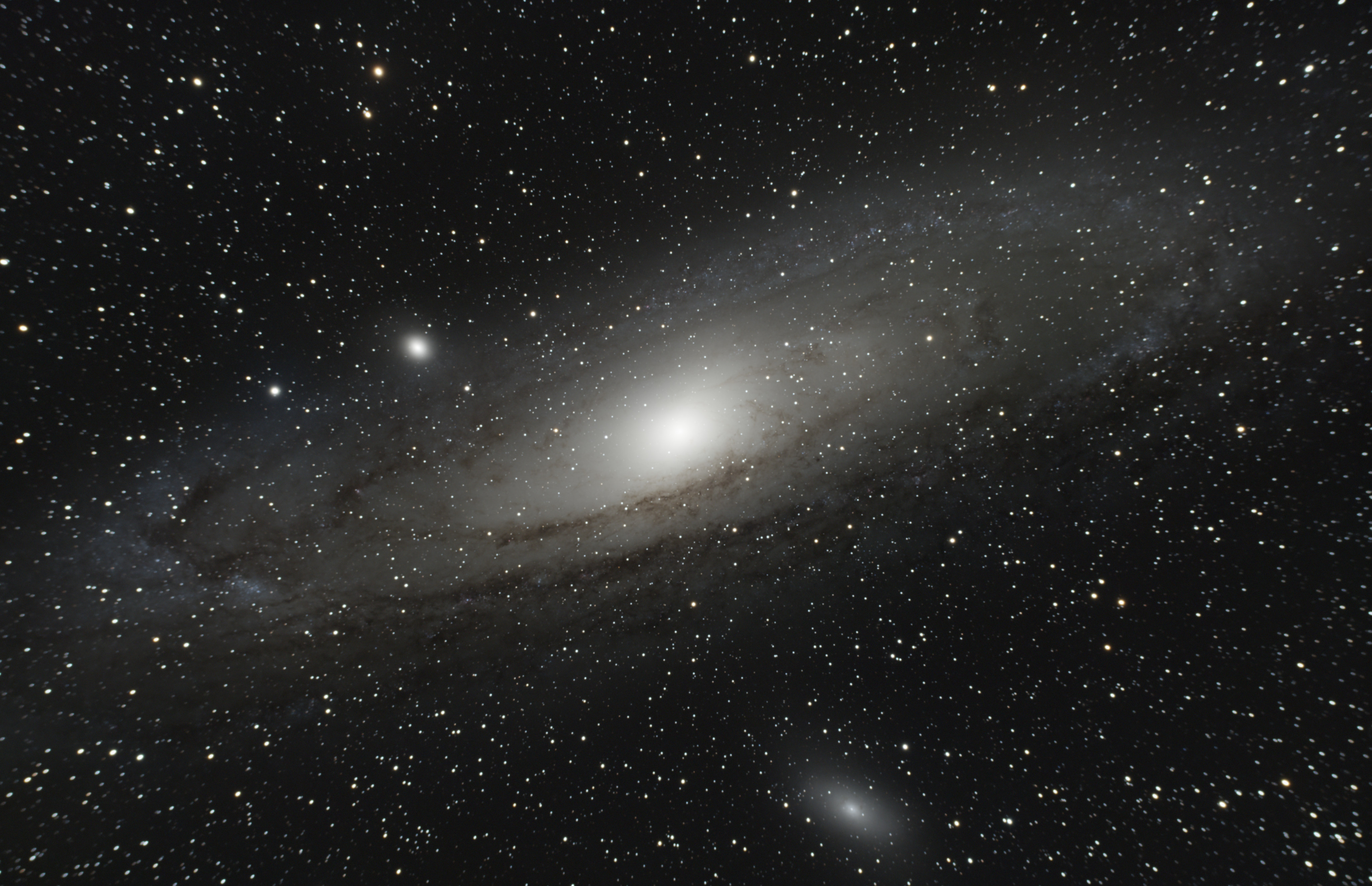
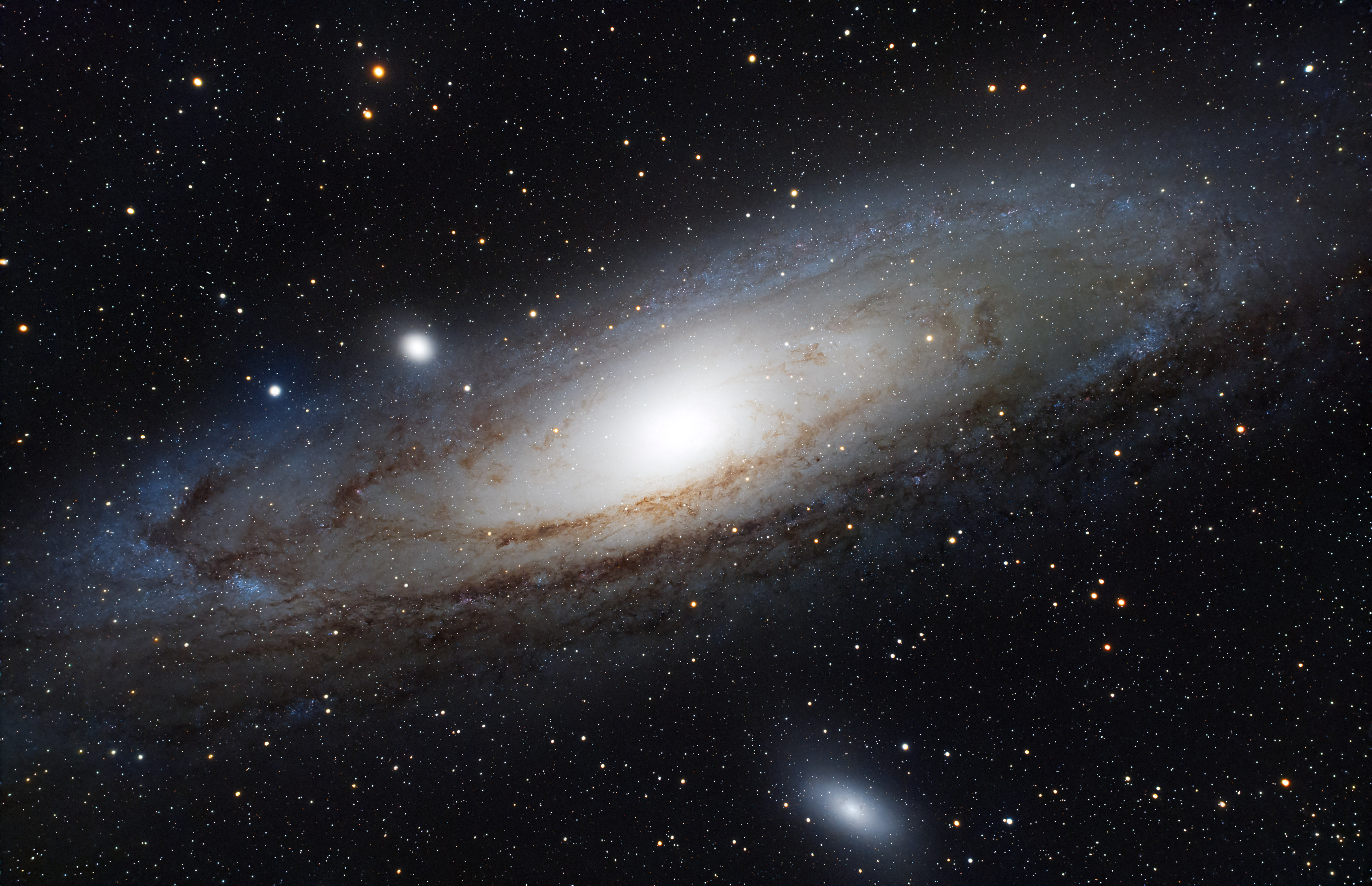
Licence: for personal use, credit Damon Scotting. Both JPEGs 4,096 x 2,646 px.
Unknown sensor temperature during imaging
796 mm focal length, plate solved Starfield Optics states 805 mm
1.69 x 1.13° field of view
26.1 MP camera
Should you buy it?
52/100 Stars for Your Buck
Pros
- At 805 mm it reaches small, faint targets such as the Crab Nebula and the Ring Nebula.
- The air-spaced FPL-53 triplet handles the Moon and the planets as well as deep sky.
- Tube rings, a dovetail, a handle, a soft case and an optical test report come in the box.
- A 2.5 inch dual-speed rack and pinion focuser with 360 degree rotation.
Cons
- Views like this are not cheap, and the 0.8x reducer or 1x flattener that improves it for imaging costs extra.
- At 6.8 kg and 711 mm long with the dew shield retracted, it needs a strong mount and it is no travel telescope.
- It is a deep-sky telescope first: 115 mm of aperture is not bad on Saturn and Jupiter, but it is no planetary specialist.
- Neither the image circle nor the back focus of the bare tube is published, so spacing a flattener or reducer means following the accessory's figures.
The FPL-53 glass used for this telescope ensures a sharp view of deep-sky objects, as well as those within our own solar system.
Who the 115 Triplet is for
Complete beginner
Skip
An 805 mm refractor on an equatorial mount is a hard first telescope. My recommendation is a Seestar S50 or the Askar 71F.
Galaxy and small-nebula imager
Buy
This is a telescope for targets under a degree across: galaxies, planetary nebulae and supernova remnants from a back garden.
Strain wave mount owner
Buy
It fits an 8 kg no-counterweight rating with a light camera and a flattener; a guided rig with a guide scope wants a bigger mount.
Travelling astrophotographer
Skip
It is too long and heavy to fly with. My recommendation for travel is the Askar SQA85.
Wide-field nebula hunter
Skip
At 805 mm the big nebulae do not fit. My recommendation for them is the Askar 71F at 490 mm.
Owner of a 100 mm triplet
Skip
Keep what you have: the step from 100 mm to 115 mm is small for the price.
Three alternatives I have reviewed
- Askar 140APO 140 mm f/7, triplet air-spaced APO 80/100 £2,098 Read the review
- ZWO FF110 110 mm f/7.0, four-element air-spaced apochromat 73/100 £1,499 Read the review
- Askar 103APO 103 mm f/6.8, triplet air-spaced APO 81/100 £999 Read the review
Questions and more about this review
Reviewed by
Damon Scotting
The Telescope Man Verified
BSc (Hons) Physics with Astrophysics and Cosmology, Loughborough University PGCE / QTS, University of Nottingham
About Damon About Damon Damon Scotting is The Telescope Man. He holds a BSc (Hons) in Physics with Astrophysics and Cosmology from Loughborough University and a PGCE with QTS from the University of Nottingham, and taught physics in secondary schools before becoming an astronomy creator. He is a contributing writer for BBC Sky at Night Magazine and the author of 42 Wonders of Our Night Sky, and his photograph of the galaxy M100 with the dwarf planet Ceres was Highly Commended in the Astronomy Photographer of the Year 2024 competition run by Royal Observatory Greenwich. He has appeared on the BBC's Blue Peter. More than 750,000 people follow his astronomy channels on YouTube, Instagram and TikTok, and he has reviewed more than 140 telescopes, mounts, cameras, filters and accessories hands-on for this site. More about Damon · How I test · Damon's book
I review all kinds of gear: most of it I buy, some is gifted and some is loaned, and all of it is reviewed the same way. How this site is funded
Seven questions, answered
Questions about the Starfield Optics 115 Triplet
Reviewed 25 November 2024 ·Updated 23 September 2026
I review all kinds of gear. Most of it I buy, some is gifted and some is loaned, and all of it is reviewed the same way: no company sees or approves a review before it is published. Shop links marked Ad are affiliate links: I earn a commission when you buy through them, at no extra cost to you. How this site is funded
- Is the Starfield Optics 115 Triplet good for astrophotography? Yes. Through it I captured the Andromeda Galaxy in 3 h 34 min, plus the Crab Nebula, the Cygnus Wall, the Dumbbell and the Ring Nebula. What I captured ↓
- Do I need a flattener or reducer with it? Neither is in the box. Starfield's adjustable 0.8x reducer takes it to 644 mm at f/5.68, and the 1x flattener keeps the full 805 mm; either improves it for imaging. The specifications and the comparison table ↓
- What mount does it need? It weighs 6.88 kg with rings and dovetail, so a strain-wave mount rated for 8 kg without a counterweight is the minimum. The rig on the mount shows the load on each mount. What is it for ↓
- What field of view does it give? On an APS-C sensor with 3.76 micron pixels my plate solves give 1.69 by 1.13 degrees at 796 mm, 0.97 arcseconds per pixel. Tested numbers and the download ↓
- Can it image the planets? Yes. With a 5x Barlow and an ASI585MC camera I captured Saturn and Jupiter on a night of ordinary seeing. Planets and the Moon ↓
- Gen I or Gen II: which one is on sale? Mine is the Gen I, with a 2.5 inch focuser and a Vixen dovetail, which is what First Light Optics lists. Starfield's own store sells the 2025 Gen II, with a 3.7 inch ball-bearing focuser and a Losmandy-style dovetail. The specifications and the comparison table ↓
- What have I not tested on the 115 Triplet? I have not measured its star shapes, tilt or back focus, or imaged through the 0.8x reducer.