
ZWO Seestar S30 Plus review: the best Seestar under $500
In 30 seconds
Stars for Your Buck 85/100
Reviewed 10 Nov 2026 Updated 10 Nov 2026
- Rank
- #4 of 11 smart telescopes
- Verdict
- Damon's pick
Written by Damon Scotting 8 min read
How I tested it
Side by side with the S30 Pro, the S50 Pro, the original S50 and the DWARF mini on the same nights in my garden (Bortle 6.8), every telescope's own stacks through one identical processing chain. How I test
Who should buy it
- You want a first smart telescope under $500 that sets itself up, finds targets and stacks by itself.
- You want sharp stars and a tight field for galaxies and nebulae without paying for the S30 Pro.
- You want the Moon as well as deep sky from one small, light telescope.
Who should not buy it
- You want the widest field and 4K frames: the S30 Pro takes in 4.6 degrees at 3840 x 2160.
- You want the most detail: the S50 Pro's 260 mm lens showed finer structure in most of my matched fields.
- You mainly want the planets: Saturn came out tiny and faint.
“The Seestar S30 Plus sits nicely in an affordable bracket and takes the crown as the best Seestar you can buy under $500.”
Where does it rank on my leaderboard
| Rank | Telescope | Stars for Your Buck | Recorded UK price |
|---|---|---|---|
| 1 | ZWO Seestar S30 Pro | 99 out of 100 | £649 |
| 2 | ZWO Seestar S50 Pro | 91 out of 100 | £999 |
| 3 | DwarfLab DWARF mini | 89 out of 100 | £399 |
| 4 | ZWO Seestar S30 Plus | 85 out of 100 | £499 |
| 6 | Vaonis Vespera Pro 2 | 74 out of 100 | £2,599 |
| 7 | DwarfLab DWARF 3 | 61 out of 100 | £459 |
| 8 | Vaonis Vespera III | 60 out of 100 | £2,199 |
| 10 | DwarfLab DWARF II | 22 out of 100 | £369 |
| 11 | Unistellar eVscope 2 | 8 out of 100 | £4,099 |
Contents
- 01 Where does it rank on my leaderboard
- 02 Specifications and features
- 03 How good is it? Here's what I captured
- 04 Planets and the Moon
- 05 Raw against finished
- 06 Same target, other smart telescopes
- 07 What is it for
- 08 Versus the ZWO Seestar S30 Pro
- 09 Tested numbers and the download
- 10 Should you buy it?
- 11 Questions and more about this review
Specifications and features
Against the smart telescopes I have reviewed
Compare with
| ZWO Seestar S30 Plus reviewed #4 of 11 | ZWO Seestar S30 Pro #1 of 11 | DwarfLab DWARF mini #3 of 11 | ZWO Seestar S30 #5 of 11 | DwarfLab DWARF 3 #7 of 11 | |
|---|---|---|---|---|---|
| Recorded UK price | £499 | £649 | £399 | £419 | £459 |
| Stars for Your Buck | 85/100 | 99/100 | 89/100 | 81/100 | 61/100 |
| Aperture | 30 mm (telephoto); 3.4 mm (wide-angle) | 30 mm (telephoto); 3.4 mm | 30 mm (telephoto); 3.4 mm | 30 mm | 35 mm (telephoto); 3.4 mm |
| Focal length | 160 mm (telephoto); 6 mm (wide-angle) | 160 mm (telephoto); 6 mm | 150 mm (telephoto); 6.7 mm | 150 mm | 150 mm (telephoto); 6.7 mm |
| Focal ratio | f/5.3 (telephoto); f/1.75 (wide-angle) | f/5.3 (telephoto); f/1.75 | f/5 | f/5 | f/4.3 (telephoto); f/2 |
| Optical design | 4-element apochromatic lens with ED glass; separate wide-angle camera | 4-element apochromatic lens with ED glass; separate wide-angle camera | Six-element apochromatic lens; separate wide-angle camera | Apochromatic triplet with ED glass; separate wide-angle camera | 6-element apochromatic dual-camera lens group |
| Sensor | 1/1.8 inch (telephoto); 1/2 inch (wide-angle) | Sony IMX585 (telephoto); Sony IMX586 | Sony IMX662, 1/2.8 inch, 2.9 um pixels (telephoto); OmniVision OS02K10 | Sony IMX662 (telephoto); separate wide-angle sensor | Sony IMX678 Starvis 2, 1/1.8 inch (telephoto); 1/2.8 inch |
| Resolution | 2560 x 1440, 3.7 MP (wide-angle cropped) | 3840 x 2160, 8.3 MP | 1920 x 1080, 2 MP | 1080 x 1920 (telephoto); 1920 x 1080 | 3840 x 2160, 8.3 MP (telephoto); 1920 x 1080 |
| Field of view | 3 degrees (telephoto); 43.5 degrees cropped (wide-angle) | 4.6 degrees (telephoto); 63 degrees | 2.45 degrees diagonal (telephoto); 50.59 degrees diagonal | 2.46 degrees diagonal (telephoto); 23.2 degrees | 3.38 degrees diagonal (telephoto); 50.6 degrees diagonal |
| Filters | UV/IR cut; dual-band (OIII 30 nm, H-alpha 20 nm); dark field | UV/IR cut; light pollution (OIII 30 nm, H-alpha 20 nm); dark field | Dark frame; astro 430 to 690 nm; dual narrowband H-alpha and OIII | UV/IR cut; light pollution (OIII 30 nm, H-alpha 20 nm); dark field; magnetic solar filter | Visible, astro and dual-band (OIII 500.7 nm and H-alpha 656.3 nm); magnetic solar filter in the box |
| Weight | 1.65 kg | 1.65 kg | 840 g | 1.65 kg | 1.35 kg |
| Battery | 6000 mAh, up to 6 hours | 6000 mAh, about 6 hours | 7,000 mAh built in, USB charging; about 4 hours | 6000 mAh, about 6 hours | 10,000 mAh built in, USB charging; up to 5.5 hours |
| Storage | 64 GB | 128 GB eMMC | 64 GB built in | 64 GB eMMC | 128 GB eMMC built in |
| App | Seestar app | Seestar app, free with no monthly fee | DWARFLAB app | Seestar app, the same app as the S50 | DWARFLAB app |
How good is it? Here's what I captured
Eight targets

Image: Damon Scotting
NGC 7000 North America Nebula, 1/1.8 inch sensor (built in), light pollution filter
- Integration
- 2 h 35 min
- Field
- 5.2 x 2.9 degrees
- Telescope
- ZWO Seestar S30 Plus
- Camera
- 1/1.8 inch sensor (built in)
- Mount
- Built-in Seestar mount
- Target
- NGC 7000 North America Nebula
- Type
- Emission nebula
- Location
- Bortle 6.8 (in my garden)

Image: Damon Scotting
M 45 Pleiades, 1/1.8 inch sensor (built in), UV/IR-cut filter
- Integration
- 41 min
- Field
- 2.6 x 1.5 degrees
- Telescope
- ZWO Seestar S30 Plus
- Camera
- 1/1.8 inch sensor (built in)
- Mount
- Built-in Seestar mount
- Target
- M 45 Pleiades
- Type
- Open cluster and reflection nebula
- Location
- Bortle 6.8 (in my garden)

Image: Damon Scotting
M 31 Andromeda Galaxy, 1/1.8 inch sensor (built in), UV/IR-cut filter
- Integration
- 42 min
- Field
- 2.6 x 1.5 degrees
- Telescope
- ZWO Seestar S30 Plus
- Camera
- 1/1.8 inch sensor (built in)
- Mount
- Built-in Seestar mount
- Target
- M 31 Andromeda Galaxy
- Type
- Spiral galaxy
- Location
- Bortle 6.8 (in my garden)

Image: Damon Scotting
M 42 Orion Nebula, 1/1.8 inch sensor (built in), light pollution filter
- Integration
- 43 min
- Field
- 2.6 x 1.5 degrees
- Telescope
- ZWO Seestar S30 Plus
- Camera
- 1/1.8 inch sensor (built in)
- Mount
- Built-in Seestar mount
- Target
- M 42 Orion Nebula
- Type
- Emission nebula
- Location
- Bortle 6.8 (in my garden)

Image: Damon Scotting
IC 1805 Heart Nebula, 1/1.8 inch sensor (built in), light pollution filter
- Integration
- 1 h 21 min
- Field
- 5.2 x 2.9 degrees
- Telescope
- ZWO Seestar S30 Plus
- Camera
- 1/1.8 inch sensor (built in)
- Mount
- Built-in Seestar mount
- Target
- IC 1805 Heart Nebula
- Type
- Emission nebula
- Location
- Bortle 6.8 (in my garden)

Image: Damon Scotting
NGC 6960 Western Veil Nebula, 1/1.8 inch sensor (built in), light pollution filter
- Integration
- 2 h 4 min
- Field
- 4.8 x 2.9 degrees
- Telescope
- ZWO Seestar S30 Plus
- Camera
- 1/1.8 inch sensor (built in)
- Mount
- Built-in Seestar mount
- Target
- NGC 6960 Western Veil Nebula
- Type
- Supernova remnant
- Location
- Bortle 6.8 (in my garden)

Image: Damon Scotting
NGC 7331 and the Deer Lick Group, 1/1.8 inch sensor (built in), UV/IR-cut filter
- Integration
- 39 min
- Field
- 2.6 x 1.5 degrees
- Telescope
- ZWO Seestar S30 Plus
- Camera
- 1/1.8 inch sensor (built in)
- Mount
- Built-in Seestar mount
- Target
- NGC 7331 and the Deer Lick Group
- Type
- Spiral galaxy and galaxy group
- Location
- Bortle 6.8 (in my garden)

Image: Damon Scotting
NGC 1499 California Nebula, 1/1.8 inch sensor (built in), light pollution filter
- Integration
- 42 min
- Field
- 2.6 x 1.5 degrees
- Telescope
- ZWO Seestar S30 Plus
- Camera
- 1/1.8 inch sensor (built in)
- Mount
- Built-in Seestar mount
- Target
- NGC 1499 California Nebula
- Type
- Emission nebula
- Location
- Bortle 6.8 (in my garden)
Planets and the Moon
The planets and the Moon

The Moon
- Gear
- Seestar S30 Plus, its own Moon photo at 2x

Saturn
- Gear
- Seestar S30 Plus, a stack of its RAW video, enlarged 4x
Raw against finished
Image: Damon Scotting
The 4 targets, the raw combined stack against my finished image, each with its integration, the camera and the palette:
- NGC 7000 North America Nebula: 2 h 35 min of light, light pollution filter, the raw combined stack with one automatic stretch
- M 45 Pleiades: 41 min of light, UV/IR-cut filter, the raw combined stack with one automatic stretch
- M 31 Andromeda Galaxy: 42 min of light, UV/IR-cut filter, the raw combined stack with one automatic stretch
- M 42 Orion Nebula: 43 min of light, light pollution filter, the raw combined stack with one automatic stretch
Same target, other smart telescopes
NGC 7331 and the Deer Lick Group, NGC 1499 California Nebula, NGC 6960 Western Veil Nebula, M 45 Pleiades, NGC 7000 North America Nebula, M 31 Andromeda Galaxy, M 42 Orion Nebula, M 16 Eagle Nebula, IC 1805 Heart Nebula on the ZWO Seestar S30 Plus and four other smart telescopes; the panes pan and zoom together
What is it for
Two things it is for

Sharp for its size
Even though its sensor is smaller than the S30 Pro's or the S50 Pro's, the field it takes in is surprisingly sharp and impressive.

It keeps on stacking
Side by side on the same nights it saved a 10-second frame every 12 seconds, and 61 percent of its scheduled imaging time ended up in the stack, against 48 percent for the S30 Pro and 46 percent for the S50 Pro.
Versus the ZWO Seestar S30 Pro
M 31 Andromeda Galaxy on both, the same night, plate-solved and star-aligned (residual 0.33 px per 1000)
| Target | Telescope | Integration | Filter |
|---|---|---|---|
| M 31 Andromeda Galaxy | Seestar S30 Plus | 42 min | UV/IR-cut |
| M 31 Andromeda Galaxy | Seestar S30 Pro | 39 min | UV/IR-cut |
Tested numbers and the download
Finished image
- Download the raw stack JPEG · 4.5 MB · 4,096 x 2,303
- Download the finished image JPEG · 1.7 MB · 4,096 x 2,303
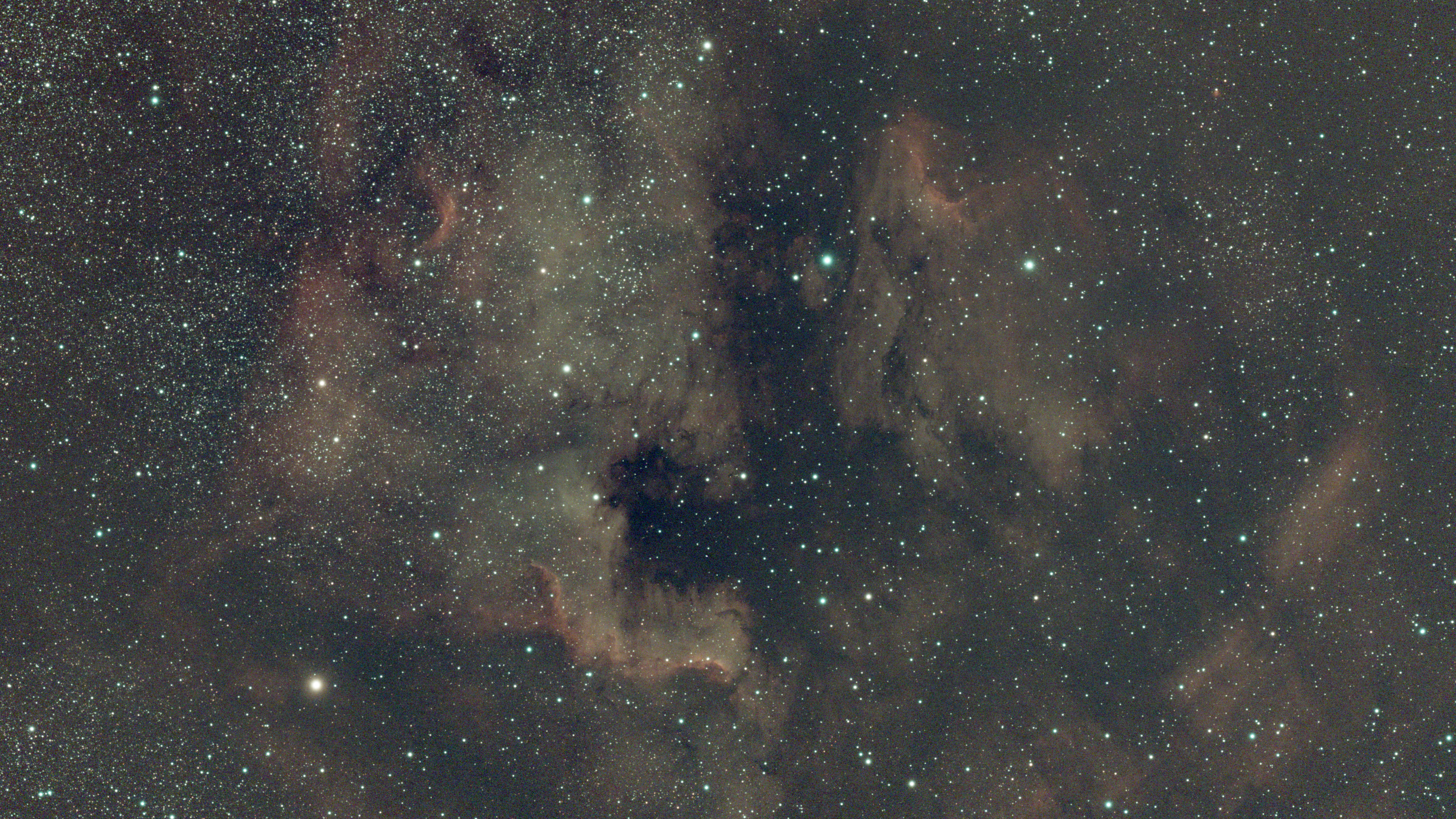
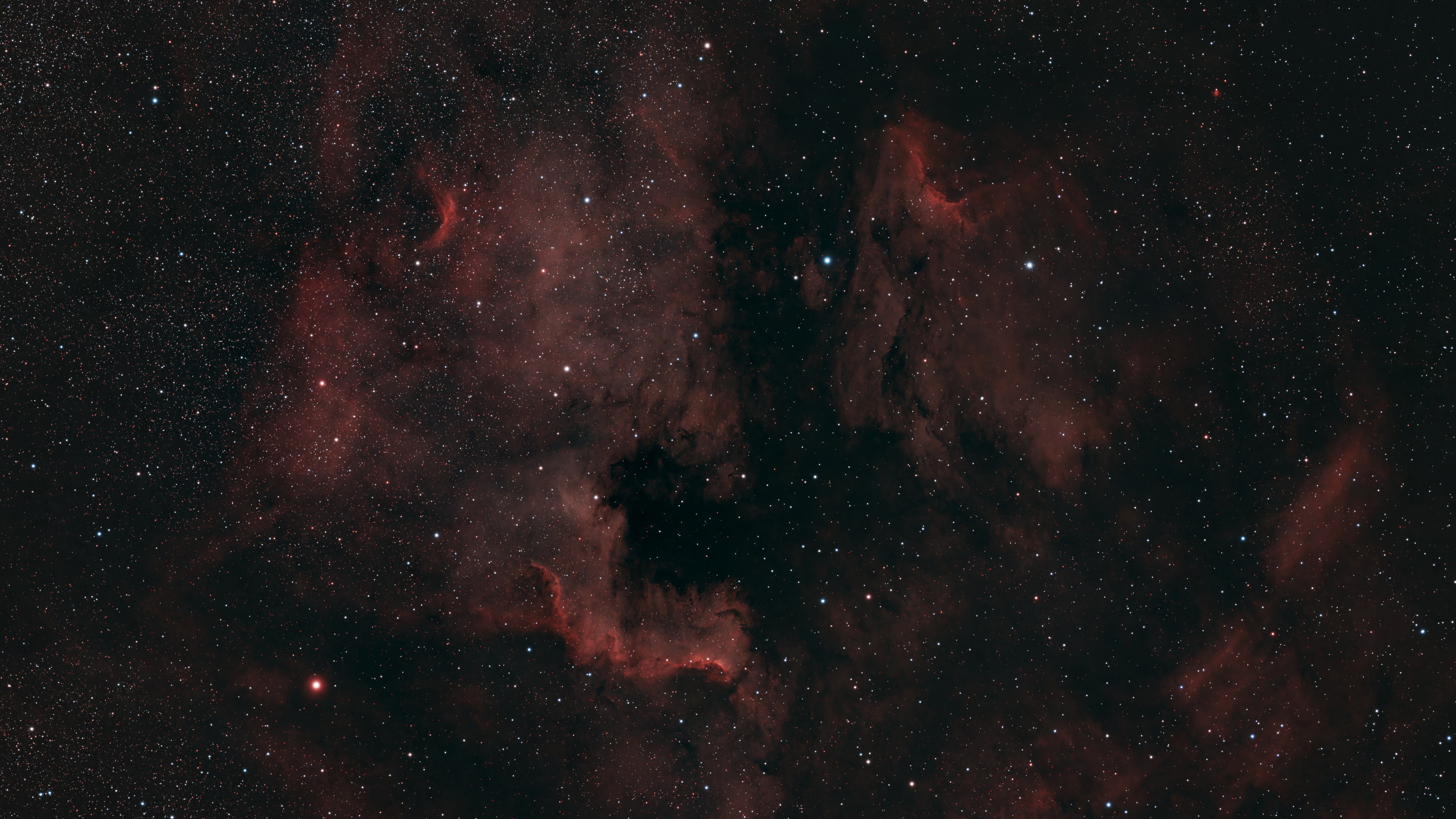
Licence: for personal use, credit Damon Scotting. Both JPEGs 4,096 x 2,303 px.
+23 C sensor temperature during imaging
163 mm focal length, plate solved ZWO states 160 mm
2.6 x 1.5° field of view 2,560 x 1,440 px on 1/1.8 inch sensor
3.7 MP 1/1.8 inch sensor 2,560 x 1,440 px, 7.4 x 4.2 mm
Should you buy it?
85/100 Stars for Your Buck
Pros
- Surprisingly impressive images for the price: the Pleiades, Andromeda and the North America Nebula all came out well from a Bortle 6.8 garden.
- Tighter stars than the S30 Pro on 9 of the 11 targets both shot on the same nights: a median star size of 12.6 arcseconds against 13.9.
- “On the Moon it does a better job than the S30 Pro.”
- It keeps on stacking: about 37 minutes of every scheduled hour went into the stack, against about 29 for the S30 Pro and 27 for the S50 Pro.
- A four-element apo with ED glass, a built-in dual-band filter and a 6-hour battery in a 1.65 kg body.
Cons
- Saturn is a struggle: the first captures were overexposed while the autofocus hunted, and the planet came out tiny and faint.
- No wide-angle mosaics, one-tap Milky Way arch, simultaneous dual-camera capture or comet stacking; the S30 Pro has all four.
- A 2560 x 1440 frame rather than 4K: wide targets need a mosaic.
- The S50 Pro is still sharper: its longer lens showed finer detail in most matched fields.
- About 45 GB of its 64 GB is usable: on a long night of mosaics mine filled up and stopped saving before dawn.
The S30 Plus might not be breaking any new boundaries, but ZWO continue to make the best value smart telescopes on the market.
Who the S30 Plus is for
First smart telescope
Buy
It sets itself up, finds targets and live-stacks by itself, and it costs under $500.
Budget under $500
Buy
It is the best Seestar under $500; on my board only the DWARF mini scores higher at this price.
Choosing between the S30 Plus and S30 Pro
Buy
Sharper stars and, to my eye, a better Moon for $200 less; the S30 Pro adds 4K frames, a wider field and wide-angle mosaics.
Galaxy and nebula imager
Buy
Its 2.6 x 1.5 degree field is close to the S50 Pro's, so galaxies fill more of the frame than on the S30 Pro.
Wants the most detail
Skip
The S50 Pro showed finer structure in most matched fields; it is the one to buy for detail.
Planet imager
Skip
Saturn came out tiny and faint; a telescope this small is for the Moon and deep sky.
Three alternatives I have reviewed
- ZWO Seestar S30 Pro The wider 4K step up: a 4.6 degree field, wide-angle mosaics and dual-camera capture. 99/100 £649 Read the review
- DwarfLab DWARF mini The other small smart telescope I rate under $500. 89/100 £399 Read the review
- ZWO Seestar S50 Pro The sharpest Seestar I have tested, at twice the price. 91/100 £999 Read the review
Questions and more about this review
Reviewed by
Damon Scotting
The Telescope Man Verified
BSc (Hons) Physics with Astrophysics and Cosmology, Loughborough University PGCE / QTS, University of Nottingham
About Damon About Damon Damon Scotting is The Telescope Man. He holds a BSc (Hons) in Physics with Astrophysics and Cosmology from Loughborough University and a PGCE with QTS from the University of Nottingham, and taught physics in secondary schools before becoming an astronomy creator. He is a contributing writer for BBC Sky at Night Magazine and the author of 42 Wonders of Our Night Sky, and his photograph of the galaxy M100 with the dwarf planet Ceres was Highly Commended in the Astronomy Photographer of the Year 2024 competition run by Royal Observatory Greenwich. He has appeared on the BBC's Blue Peter. More than 750,000 people follow his astronomy channels on YouTube, Instagram and TikTok, and he has reviewed more than 140 telescopes, mounts, cameras, filters and accessories hands-on for this site. More about Damon · How I test · Damon's book
I review all kinds of gear: most of it I buy, some is gifted and some is loaned, and all of it is reviewed the same way. How this site is funded
Eight questions, answered
Questions about the ZWO Seestar S30 Plus
Reviewed 10 November 2026 ·Updated 10 November 2026
I review all kinds of gear. Most of it I buy, some is gifted and some is loaned, and all of it is reviewed the same way: no company sees or approves a review before it is published. Some shop links are affiliate links: I earn a commission when you buy through them, at no extra cost to you. How this site is funded
- Is the Seestar S30 Plus better than the S30 Pro? In some ways. On the same nights its stars were tighter on 9 of the 11 targets both shot, and I think it does a better job on the Moon. The S30 Pro saves 4K frames over a wider 4.6 degree field and adds wide-angle mosaics. Versus the ZWO Seestar S30 Pro ↓
- How does it compare with the S50 Pro? The S50 Pro is sharper: its 260 mm lens showed finer detail in most matched fields. The S30 Plus takes in 2.6 x 1.5 degrees, close to the S50 Pro's 2.4 x 1.3, for half the price.
- What resolution does it shoot? 2560 x 1440 pixels, about 3.7 megapixels, through both cameras; the wide-angle frame is a crop. The specifications and the comparison table ↓
- Can it image the Moon and the planets? The Moon, yes, and to my eye better than the S30 Pro. Saturn came out tiny and faint, with the ring only just showing. Planets and the Moon ↓
- Does it do mosaics? Yes, with the main camera: my North America Nebula and Heart Nebula are mosaics. The wide-angle mosaic and the one-tap Milky Way arch are not supported. What I captured ↓
- How much can it store? 64 GB, of which about 45 GB is usable. On a long night of mosaics mine filled up in the early hours and stopped saving, so clear it out between sessions. The specifications and the comparison table ↓
- How long does the battery last? ZWO rates its 6000 mAh battery at up to 6 hours, measured in their laboratory. The specifications and the comparison table ↓
- What does this review not cover? Equatorial mode, the wide-angle camera, the solar filter and a full battery test: I have no S30 Plus results of them to show here. Tested numbers and the download ↓