ZWO Seestar S30 Pro review: the best value smart telescope
Where does it rank on our leaderboard
| Rank | Telescope | Stars for Your Buck | Recorded UK price |
|---|---|---|---|
| 1 | ZWO Seestar S30 Pro | 99 out of 100 | £649 |
| 2 | ZWO Seestar S50 Pro | 91 out of 100 | £999 |
| 4 | ZWO Seestar S30 | 88 out of 100 | £419 |
| 5 | Vaonis Vespera Pro 2 | 63 out of 100 | £2,599 |
| 6 | DwarfLab DWARF 3 | 61 out of 100 | £459 |
| 7 | Vaonis Vespera III | 60 out of 100 | £2,199 |
| 8 | ZWO Seestar S50 | 55 out of 100 | £539 |
| 9 | DwarfLab DWARF II | 22 out of 100 | £369 |
| 10 | Unistellar eVscope 2 | 8 out of 100 | £4,099 |
Contents
- 01 Where does it rank on our leaderboard
- 02 Specifications and features
- 03 In the hand
- 04 From the review video
- 05 How good is it? Here's what I captured
- 06 Raw against finished
- 07 Same target, other smart telescopes
- 08 What is it for
- 09 Versus the ZWO Seestar S50 Pro
- 10 Watch the review
- 11 Tested numbers and the download
- 12 Should you buy it?
- 13 Questions and more about this review
In 30 seconds
Stars for Your Buck 99/100
Reviewed 31 Dec 2025 Updated 23 Sep 2026
- Rank
- #1 of 10 smart telescopes
- Verdict
- Damon's pick
Written by Damon Scotting 7 min read
Buy it if
- You want 4K deep-sky images without building a rig: set it down, pick a target and it calibrates, focuses and stacks by itself.
- You want the best value smart telescope: I recommend it over the S50 Pro as the better buy.
- You want a telescope you can carry anywhere: the whole thing weighs 1.65 kg.
Skip it if
- You want long exposures and room to upgrade: each exposure is capped at 60 seconds and nothing can be swapped out.
- You want the finest detail on galaxies: the S50 Pro pulls ahead once you zoom right in.
- You mainly want the Moon: lunar images are decent rather than spectacular.
“The Seestar S30 Pro is pound for pound the best telescope on the entire planet right now.”
Specifications and features
Against the smart telescopes I have reviewed
Compare with
| ZWO Seestar S30 Pro reviewed #1 of 10 | DwarfLab DWARF mini #3 of 10 | ZWO Seestar S30 #4 of 10 | DwarfLab DWARF 3 #6 of 10 | DwarfLab DWARF II #9 of 10 | |
|---|---|---|---|---|---|
| Recorded UK price | £649 | £399 | £419 | £459 | £369 |
| Stars for Your Buck | 99/100 | 89/100 | 88/100 | 61/100 | 22/100 |
| Aperture | 30 mm (telephoto); 3.4 mm (wide-angle) | 30 mm (telephoto); 3.4 mm | 30 mm | 35 mm (telephoto); 3.4 mm | 24 mm |
| Focal length | 160 mm (telephoto); 6 mm (wide-angle) | 150 mm (telephoto); 6.7 mm | 150 mm | 150 mm (telephoto); 6.7 mm | 100 mm |
| Focal ratio | f/5.3 (telephoto); f/1.75 (wide-angle) | f/5 | f/5 | f/4.3 | f/4.2 (telephoto); f/2.4 |
| Optical design | 4-element apochromatic lens with ED glass; separate wide-angle camera | Six-element apochromatic telephoto | Apochromatic triplet with ED glass; separate wide-angle camera | 6-element apochromatic lens group with ED glass | Refractor |
| Sensor | Sony IMX585 (telephoto); Sony IMX586 (wide-angle) | Sony IMX662 | Sony IMX662 (telephoto); separate wide-angle sensor | Sony IMX678 | Sony IMX415 |
| Resolution | 3840 x 2160, 8.3 MP (both cameras) | 2.07 MP | 1080 x 1920 (telephoto); 1920 x 1080 | 3840 x 2160, 8.3 MP | 3840 x 2160 |
| Field of view | 4.6 degrees (telephoto); 63 degrees (wide-angle) | 2.45 degrees (telephoto); 50.59 degrees (wide-angle), both diagonal | 2.46 degrees diagonal (telephoto); 23.2 degrees | 3.38 degrees (telephoto); 50.6 degrees (wide-angle), both diagonal | 3.72 degrees (telephoto); 50 degrees (wide-angle), both diagonal |
| Filters | UV/IR cut; light pollution (OIII 30 nm, H-alpha 20 nm); dark field | Dark frame; astro 430 to 690 nm; dual narrowband | UV/IR cut; light pollution (OIII 30 nm, H-alpha 20 nm); dark field; magnetic solar filter | Astro; duo-band; H-alpha, H-beta and OIII | VIS/IR pass (telephoto); VIS |
| Weight | 1.65 kg | 0.84 kg | 1.65 kg | 1.35 kg | 1.2 kg |
| Battery | 6000 mAh, about 6 hours | 7000 mAh built in, USB charging | 6000 mAh, about 6 hours | 10000 mAh built in, up to 5.5 hours | 5600 mAh replaceable, about 3 hours |
| Storage | 128 GB eMMC | 64 GB built in | 64 GB eMMC | 128 GB eMMC built in | 64 GB microSD included, up to 512 GB |
| App | Seestar app, free with no monthly fee | DWARFLAB app | Seestar app | DWARFLAB app | DWARFLAB app |
In the hand
Arm up on its tripod
The lens head
Folded
Beside the original S30
S50, S30, S30 Pro and S50 Pro
Under the Moon
From the review video
Three frames from my videos
Browsing targets in the app
Imaging the Moon
Among the smart telescopes I tested
How good is it? Here's what I captured
Four targets
IC 1805 Heart Nebula, Sony IMX585 (built in), light pollution filter
- Integration
- 2 h 39 min (956 x 10 s)
- Field
- 7.8 x 4.4 degrees
- Telescope
- ZWO Seestar S30 Pro
- Camera
- Sony IMX585 (built in)
- Mount
- Built-in Seestar mount
- Target
- IC 1805 Heart Nebula
- Type
- Emission nebula
- Location
- Bortle 6.8 (in my garden)
NGC 7000 North America Nebula, Sony IMX585 (built in), light pollution filter
- Integration
- 3 h 22 min (1,215 x 10 s)
- Field
- 5.9 x 3.3 degrees
- Telescope
- ZWO Seestar S30 Pro
- Camera
- Sony IMX585 (built in)
- Mount
- Built-in Seestar mount
- Target
- NGC 7000 North America Nebula
- Type
- Emission nebula
- Location
- Bortle 6.8 (in my garden)
NGC 6960 Veil Nebula, Sony IMX585 (built in), light pollution filter
- Integration
- 2 h 24 min (865 x 10 s)
- Field
- 4.7 x 2.6 degrees
- Telescope
- ZWO Seestar S30 Pro
- Camera
- Sony IMX585 (built in)
- Mount
- Built-in Seestar mount
- Target
- NGC 6960 Veil Nebula
- Type
- Supernova remnant
- Location
- Bortle 6.8 (in my garden)
M 31 Andromeda Galaxy, Sony IMX585 (built in), UV/IR-cut filter
- Integration
- 2 h 07 min (763 x 10 s)
- Field
- 5.1 x 2.9 degrees
- Telescope
- ZWO Seestar S30 Pro
- Camera
- Sony IMX585 (built in)
- Mount
- Built-in Seestar mount
- Target
- M 31 Andromeda Galaxy
- Type
- Spiral galaxy
- Location
- Bortle 6.8 (in my garden)
Raw against finished
Same target, other smart telescopes
The 4 targets, the raw combined stack against my finished image, each with its integration, the camera and the palette:
- IC 1805 Heart Nebula: 2 h 39 min (956 x 10 s) of light, Sony IMX585 (built in), light pollution filter, the raw combined stack with one automatic stretch
- NGC 7000 North America Nebula: 3 h 22 min (1215 x 10 s) of light, Sony IMX585 (built in), light pollution filter, the raw combined stack with one automatic stretch
- NGC 6960 Veil Nebula: 2 h 24 min (865 x 10 s) of light, Sony IMX585 (built in), light pollution filter, the raw combined stack with one automatic stretch
- M 31 Andromeda Galaxy: 2 h 07 min (763 x 10 s) of light, Sony IMX585 (built in), UV/IR-cut filter, the raw combined stack with one automatic stretch
NGC 7000 North America Nebula, M 31 Andromeda Galaxy, IC 1805 Heart Nebula, NGC 6960 Veil Nebula on the ZWO Seestar S30 Pro and six other smart telescopes; the panes pan and zoom together
What is it for
Five things it is for
A four-element apo on a 4K sensor
The S30 Pro now uses a quadruplet apo and the IMX585 sensor, which take high-quality images of the night sky in 4K. Even the $4,000 smart telescopes do not have a sensor better than this little scope.
32-megapixel mosaics
Mosaic mode stitches the frames into 32-megapixel images of the night sky, far wider than a single 4.6 degree view.
An app that teaches the sky
The app identifies the stars in the frame and overlays the constellations and deep-sky objects. Pick one, read what it is, and the telescope goes to it and live-stacks an increasingly detailed view while you watch.
Sunspots through the solar filter
With the magnetic solar filter attached I can watch the sunspots change from day to day as the Sun rotates about once a month. There is not a single solar telescope on the planet for less.
Several Seestars from one app
A tap of the phone connects over NFC, and if you own more than one Seestar you can control them all and switch between them with ease: your own small observatory.
Versus the ZWO Seestar S50 Pro
M 31 Andromeda Galaxy on both, the same night, plate-solved and star-aligned (residual 0.14 px per 1000)
| Target | Telescope | Integration | Subs | Filter | Nights |
|---|---|---|---|---|---|
| M 31 Andromeda Galaxy | Seestar S30 Pro | 127 min | 763 x 10 s | UV/IR-cut | 2026-08-22 |
| M 31 Andromeda Galaxy | Seestar S50 Pro | 89 min | 538 x 10 s | UV/IR-cut | 2026-08-22 |
Watch the review
Seestar S30 Pro - The Best Telescope of 2026 Might Only Cost $549... · published 31 December 2025 · 8:38 · Watch on YouTube · 72,694 views, 1,652 likes on 2 Oct 2026
Jump to
- 0:22 A four-element apo and a 4K sensor
- 1:12 Improvements
- 1:46 The Seestar app
- 3:06 NFC and several Seestars from one phone
- 3:21 The Moon and the Sun
- 4:05 The in-app denoise
- 4:23 My images
- 7:30 Conclusions
Transcript of the review video 1,080 words · 9 chapters · searchable
Press a time stamp to play from there.
0:00 Intro
0:00 These are the images I've captured with a Seestar S30 Pro. 0:04 And if they don't blow your mind, then maybe the price will. 0:08 Oh yeah, it is pound-for-pound the best telescope on the entire planet right now. 0:13 And that's thanks to its new improved design. 0:16 This is the older version, the Seestar S30, and it has now been superseded by the very similar looking Seestar S30 Pro.
0:22 A four-element apo and a 4K sensor
0:22 The difference is this now uses a quadruplet apo telescope and an IMX585 sensor which allows you to take incredible high-quality images of our night sky in 4K resolution. 0:33 In fact, if you make use of their mosaic mode, then you can actually take 32 megapixel images of our night sky like this. 0:42 Wow. 0:42 That right there is an 8K image of our night sky captured with a $599 smart telescope. 0:47 But it is only the tip of the iceberg. 0:50 In today's video, we're going to take a look at what's improved with this smart telescope, the images I've managed to capture with it, and then finally, my overall conclusions. 1:00 You can also find a direct link to the telescope in the description below in the likely event that you've seen enough already. 1:05 So, how is it better? 1:05 Well, it's not just a sensor and the telescope that have improved, although they are by far the most noteworthy developments.
1:12 Improvements
1:13 The Seestar S30 Pro is finally making good use of its second lens. 1:16 Perhaps good use is underselling it. 1:18 It has made this smart telescope into a wide field beast. 1:23 You can now capture time-lapses and create star trail images with this telescope, and they are so cool. 1:27 But what really sets this apart from just buying your own DSLR camera and capturing images like this, is that the Seestar S30 Pro lets you freeze the foreground of your images, which is very snazzy. 1:39 The cherry on top is that you can also capture 8K mosaic wide field images of the night sky. 1:44 That's insane.
1:46 The Seestar app
1:47 The telescope itself is an engineering marvel, but the app ZWO have built is second to none. 1:51 It really is capable of some incredible things. 1:53 It's unbelievably intuitive and informative. 1:57 I think this telescope is an essential tool even for more experienced astrophotographers. 2:01 The app will identify the stars featured in your image and even overlay what constellations or deep sky objects you are looking at. 2:08 It doesn't get any better than that for someone who is learning about the night sky and what is located where. 2:14 You can then decide to switch between a wide field view of a constellation and look up deep sky objects located within it. 2:19 Then you can read up on what they are as a telescope goes to and starts live stacking images to produce an increasingly more detailed view. 2:28 You can then watch this happen in real time. 2:30 It's incredible a piece of kit like this is available for under $1,000. 2:34 And better yet, the app is free to use and doesn't require a monthly fee. 2:39 There is also another use for the smart telescope and that is actually for daytime observations. 2:43 It can track the movement of wildlife and capture stunning landscape images. 2:47 So, next time you're out on a walk and you come across some penguins, be sure to bring your Seestar S30 Pro with you. 2:53 To be fair, it is small enough and light enough that you can carry it on your person. 2:57 I think for about 99% of telescopes in the world, their tripods alone are heavier than the entirety of the Seestar S30 Pro. 3:04 It's now quicker than ever to connect to thanks to the latest NFC function, meaning all you have to do is tap to get started.
3:06 NFC and several Seestars from one phone
3:12 And if you're like me and you have multiple Seestars, you can now remotely control all of them and switch between them with ease. 3:18 You can basically start up your very own observatory.
3:21 The Moon and the Sun
3:21 You can capture decent images of the moon. 3:23 It helps to utilize the 2x and 4x zoom functions. 3:27 But what is perhaps more impressive is imaging the sun. 3:29 By attaching the magnetic solar filter, you can observe the violent surface of the sun, in particular, the varying sunspots. 3:35 This again makes for a very cool project to continue observing over time. 3:39 The sun rotates on its axis once every month, so a lot changes over this very short period. 3:45 There's not a single solar telescope on the planet for less than $599. 3:51 So, the S30 Pro is an excellent budget alternative. 3:53 Now, let's get started on the images. 3:56 These are all relatively short images I've captured of various deep sky targets. 3:59 I think the shortest is 8 minutes, whilst the longest is a little over an hour. 4:03 I have made a lot of tweaks in terms of the colours and sharpness of the images.
4:05 The in-app denoise
4:07 And the denoise feature that's now included within the app is sensational. 4:12 Seriously, the difference made to your images in less than 60 seconds is like night and day. 4:16 It reduces the complexity of your workflow now that you can edit your images entirely within the app.
4:23 My images
7:30 So, those are my images so far. 7:30 Bear in mind, I've only had the telescope for a week, so there's still so much to come, especially in terms of huge 32 megapixel mosaic images.
7:30 Conclusions
7:38 If you are interested in a telescope, then there is a direct link in the description below that will take you straight to ZWO's official store. 7:46 Now, in conclusion, where does the Seestar S30 Pro rank in terms of smart telescopes? 7:51 Well, as for its imaging sensor, it does not get any better. 7:55 Seriously, even the $4,000 smart telescopes do not have sensors better than this little scope. 7:59 For now, the Seestar S30 Pro is an insane bargain. 8:01 I genuinely don't think you can match the level of quality of these images unless you spend $2,000 on an astrophotography setup. 8:10 In fact, I'm releasing a video shortly where I compare the images I captured with a $2,000 setup versus those captured with a Seestar S30 Pro. 8:18 I'm also releasing a video where I compare the planetary views with all three of these smart telescopes, as well as a video where I push the S30 Pro to its absolute limits, and another in which I take a deep dive into what is the best smart telescope money can buy. 8:30 So, be sure to make sure you're subscribed for all of those.
Check out more videos on the ZWO Seestar S30 Pro
Is the Seestar S30 Pro ACTUALLY Better? Side-by-Side vs S30 & S50
31 Dec 2025
Seestar S30 pro V.S My $2000 Telescope rig - Image comparison
3 Jan 2026
I Tested EVERY SMART Telescope on the Market...These are the results!
30 Aug 2026
Tested numbers and the download
Finished image
- Download the raw stack JPEG · 6.7 MB · 4,096 x 2,303
- Download the finished image JPEG · 2.0 MB · 4,096 x 2,303
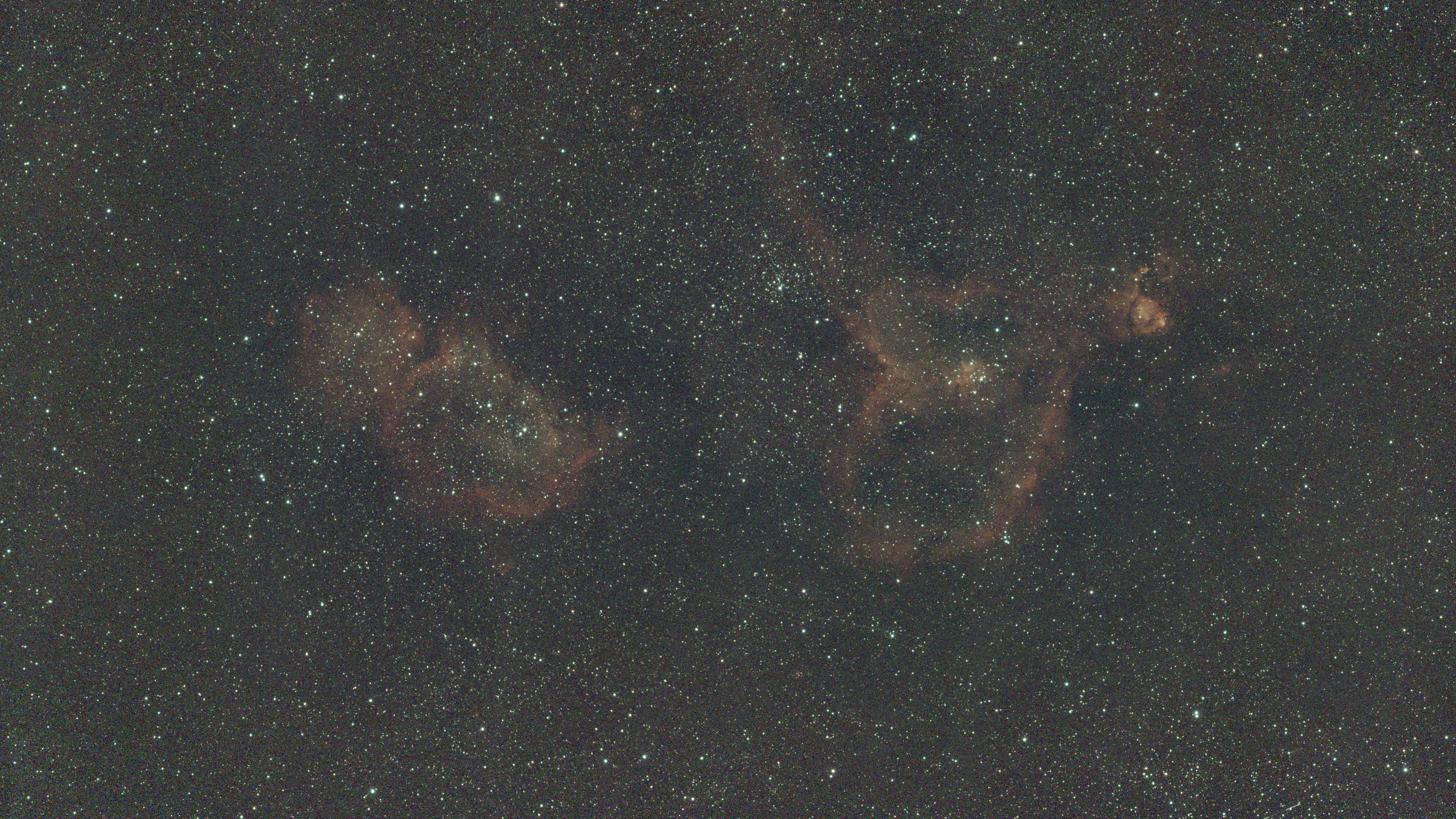
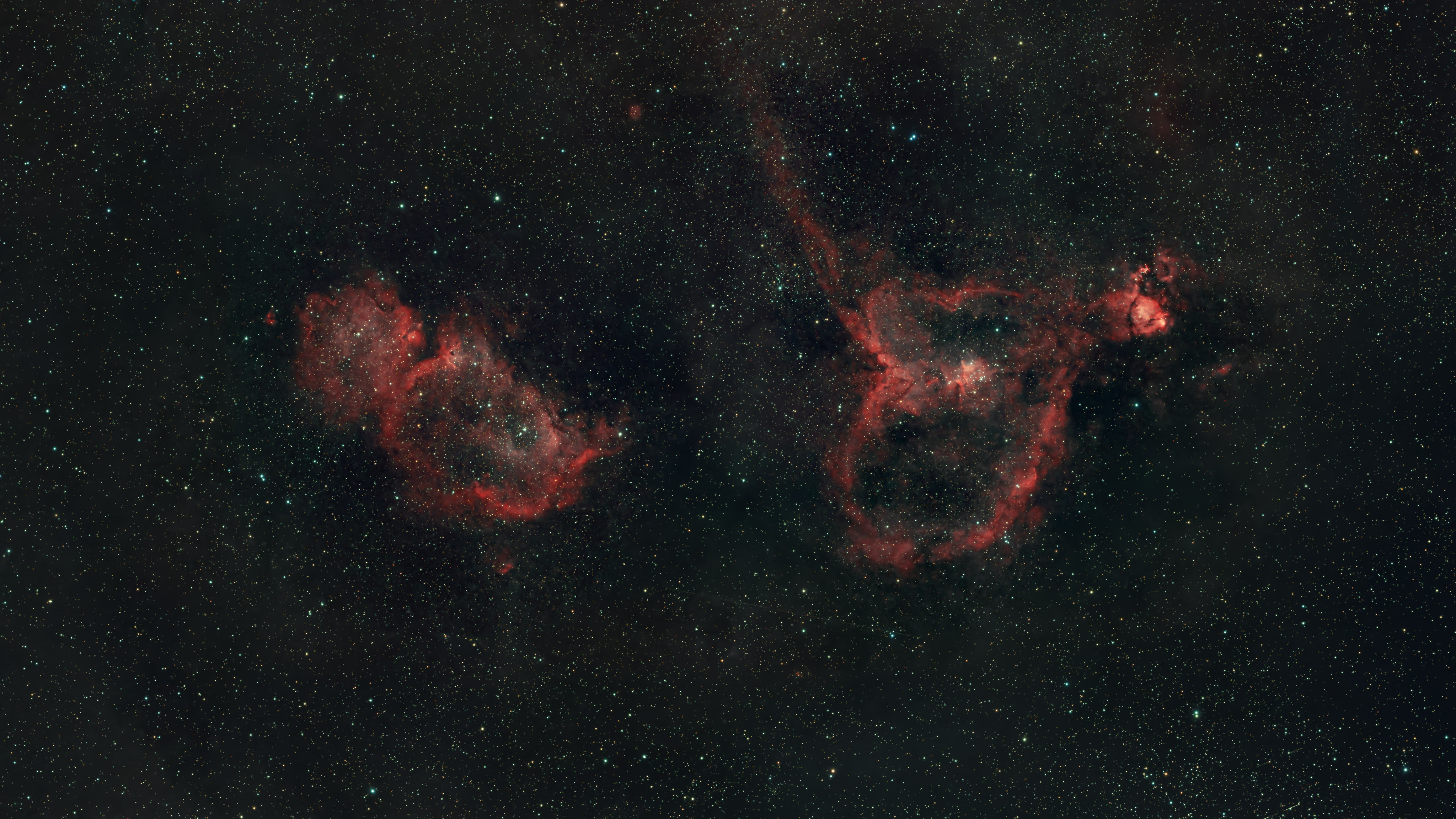
Licence: for personal use, credit Damon Scotting. Both JPEGs 4,096 x 2,303 px.
+24 C sensor temperature during imaging
163 mm focal length, plate solved ZWO states 160 mm
3.9 x 2.2° field of view 3,840 x 2,160 px on Sony IMX585
8.3 MP Sony IMX585 3,840 x 2,160 px, 11.1 x 6.3 mm
Should you buy it?
99/100 Stars for Your Buck
Pros
- “A four-element apo with ED glass on the IMX585 sensor takes genuinely 4K images of the night sky; even the $4,000 smart telescopes do not have a better sensor.”
- “Mosaic mode builds 32-megapixel images, wide enough for the whole Heart Nebula or the North America and Pelican Nebulae in one frame.”
- “The app is second to none: it names the stars, overlays the constellations and live-stacks while you watch, and it is free with no monthly fee.”
- “Small and light enough to carry on your person; for about 99% of telescopes the tripod alone weighs more than the whole S30 Pro.”
- “With the magnetic solar filter it shows sunspots, and no solar telescope costs less.”
- “The denoise tool built into the app makes a night-and-day difference in under 60 seconds.”
Cons
- “Only pipped by the S50 Pro: on the same night the bigger scope shows more in Andromeda's galactic bands once you zoom right in.”
- “Moon images are decent rather than spectacular; the 2x and 4x zoom modes help.”
- “The battery does not last a whole winter night, so I plug in a portable power bank.”
- “Exposures are capped at 60 seconds and nothing can be upgraded; the only upgrade path is the next model.”
For now, the Seestar S30 Pro is an insane bargain.
Who the Seestar S30 Pro is for
Complete beginner
Buy
It calibrates, focuses and live-stacks by itself, and the app teaches you the sky as you go.
Experienced astrophotographer
Buy
It is an essential second tool: images from it rival a $2,000 rig for a fraction of the setup time.
Choosing between the S30 Pro and S50 Pro
Buy
At normal viewing sizes the images are close; my recommendation is the S30 Pro as the better value.
Already owns an S50 Pro
Skip
The S50 Pro already shows more detail; the S30 Pro would be a step sideways, not up.
Wants a rig to grow into
Skip
Nothing on it can be upgraded; a traditional telescope and camera is the route if you want to expand.
Moon and planet imager
Skip
It is a deep-sky telescope first; the Moon comes out decent rather than spectacular.
Three alternatives I have reviewed
- ZWO Seestar S50 Pro 50 mm f/5.2, 4-element apochromatic lens 91/100 £999 Read the review
- DwarfLab DWARF mini 30 mm f/5, six-element apochromatic telephoto 89/100 £399 Read the review
- ZWO Seestar S30 30 mm f/5, apochromatic triplet 88/100 £419 Read the review
Questions and more about this review
Reviewed by
Damon Scotting
The Telescope Man Verified
BSc (Hons) Physics with Astrophysics and Cosmology, Loughborough University PGCE / QTS, University of Nottingham
About Damon About Damon Damon Scotting is The Telescope Man. He holds a BSc (Hons) in Physics with Astrophysics and Cosmology from Loughborough University and a PGCE with QTS from the University of Nottingham, and taught physics in secondary schools before becoming an astronomy creator. He is a contributing writer for BBC Sky at Night Magazine and the author of 42 Wonders of Our Night Sky, and his photograph of the galaxy M100 with the dwarf planet Ceres was Highly Commended in the Astronomy Photographer of the Year 2024 competition run by Royal Observatory Greenwich. He has appeared on the BBC's Blue Peter. More than 750,000 people follow his astronomy channels on YouTube, Instagram and TikTok, and he has reviewed more than 140 telescopes, mounts, cameras, filters and accessories hands-on for this site. More about Damon · How I test · Damon's book
I review all kinds of gear: most of it I buy, some is gifted and some is loaned, and all of it is reviewed the same way. How this site is funded
Eight questions, answered
Questions about the ZWO Seestar S30 Pro
Reviewed 31 December 2025 ·Updated 23 September 2026
I review all kinds of gear. Most of it I buy, some is gifted and some is loaned, and all of it is reviewed the same way: no company sees or approves a review before it is published. Shop links marked Ad are affiliate links: I earn a commission when you buy through them, at no extra cost to you. How this site is funded
- Is the Seestar S30 Pro better than the S50 Pro? Not quite. On the same night the S50 Pro showed more in Andromeda's galactic bands once zoomed right in. At normal viewing sizes the two are close, and the S30 Pro costs far less, so it is my better-value pick. Versus the ZWO Seestar S50 Pro ↓
- How long an exposure can the S30 Pro take? Each exposure is capped at 60 seconds. My captures stack up to 1,215 frames of 10 seconds each: 3 hours 22 minutes on the North America Nebula. What I captured ↓
- What changed from the Seestar S30? The Pro moves to a four-element apo with ED glass and the 4K IMX585 sensor in place of the S30's 1080p IMX662, and it finally makes real use of the wide-angle lens. The specifications and the comparison table ↓
- How big are the mosaics? My largest mosaics are 7680 x 4320 pixels, about 33 megapixels; the Heart Nebula mosaic covers 7.8 x 4.4 degrees. What I captured ↓
- Can it image the Sun and the Moon? Yes. With the magnetic solar filter it shows sunspots, and the Moon comes out decent rather than spectacular, helped by the 2x and 4x zoom. From the review video ↓
- Does the battery last all night? It is rated at about 6 hours. No smart telescope lasts a whole winter night, so I plug in a portable power bank. The specifications and the comparison table ↓
- Do I need a subscription for the app? No. The Seestar app is free to use and has no monthly fee. What is it for ↓
- What have I not tested on the S30 Pro? I have not tested equatorial mode or the wide-angle time-lapse and star-trail modes, and I have no planetary images from the S30 Pro. Tested numbers and the download ↓