ZWO Seestar S30 review: the perfect first smart telescope
Where does it rank on our leaderboard
| Rank | Telescope | Stars for Your Buck | Recorded UK price |
|---|---|---|---|
| 1 | ZWO Seestar S30 Pro | 99 out of 100 | £649 |
| 2 | ZWO Seestar S50 Pro | 91 out of 100 | £999 |
| 3 | DwarfLab DWARF mini | 89 out of 100 | £399 |
| 4 | ZWO Seestar S30 | 88 out of 100 | £419 |
| 6 | DwarfLab DWARF 3 | 61 out of 100 | £459 |
| 7 | Vaonis Vespera III | 60 out of 100 | £2,199 |
| 8 | ZWO Seestar S50 | 55 out of 100 | £539 |
| 9 | DwarfLab DWARF II | 22 out of 100 | £369 |
| 10 | Unistellar eVscope 2 | 8 out of 100 | £4,099 |
Contents
- 01 Where does it rank on our leaderboard
- 02 Specifications and features
- 03 In the hand
- 04 From the review video
- 05 How good is it? Here's what I captured
- 06 Raw against finished
- 07 Same target, other smart telescopes
- 08 What is it for
- 09 Watch the review
- 10 Tested numbers and the download
- 11 Should you buy it?
- 12 Questions and more about this review
In 30 seconds
Stars for Your Buck 88/100
Reviewed 15 Nov 2024 Updated 23 Sep 2026
- Rank
- #4 of 10 smart telescopes
- Verdict
- Damon's pick
Written by Damon Scotting 9 min read
Buy it if
- You want your first deep-sky images without building a rig: it finds, tracks, focuses and stacks by itself through one app.
- You love big nebulae: mosaic mode stitches targets far bigger than one frame, like the Heart and the North America Nebula.
- You want the cheapest way into a Seestar: the same app and features as the S50 for less.
Skip it if
- You mainly want the planets: it shows Jupiter's moons as points of light but no detail on the planet.
- You want the sharpest images a small smart telescope can take: the S30 Pro's 4K sensor is a real step up.
- You want to look through an eyepiece: there isn't one, so you see the sky on your phone.
“The Seestar S30 is the perfect introductory telescope for astrophotography: it's simple but very powerful, and you can create wonderful pieces of art with it.”
Specifications and features
Against the smart telescopes I have reviewed
Compare with
| ZWO Seestar S30 reviewed #4 of 10 | ZWO Seestar S30 Pro #1 of 10 | DwarfLab DWARF mini #3 of 10 | DwarfLab DWARF 3 #6 of 10 | DwarfLab DWARF II #9 of 10 | |
|---|---|---|---|---|---|
| Recorded UK price | £419 | £649 | £399 | £459 | £369 |
| Stars for Your Buck | 88/100 | 99/100 | 89/100 | 61/100 | 22/100 |
| Aperture | 30 mm | 30 mm (telephoto); 3.4 mm | 30 mm (telephoto); 3.4 mm | 35 mm (telephoto); 3.4 mm | 24 mm |
| Focal length | 150 mm | 160 mm (telephoto); 6 mm | 150 mm (telephoto); 6.7 mm | 150 mm (telephoto); 6.7 mm | 100 mm |
| Focal ratio | f/5 | f/5.3 (telephoto); f/1.75 | f/5 | f/4.3 | f/4.2 (telephoto); f/2.4 |
| Optical design | Apochromatic triplet with ED glass; separate wide-angle camera | 4-element apochromatic lens with ED glass; separate wide-angle camera | Six-element apochromatic telephoto | 6-element apochromatic lens group with ED glass | Refractor |
| Sensor | Sony IMX662 (telephoto); separate wide-angle sensor | Sony IMX585 (telephoto); Sony IMX586 | Sony IMX662 | Sony IMX678 | Sony IMX415 |
| Resolution | 1080 x 1920 (telephoto); 1920 x 1080 (wide-angle) | 3840 x 2160, 8.3 MP | 2.07 MP | 3840 x 2160, 8.3 MP | 3840 x 2160 |
| Field of view | 2.46 degrees diagonal (telephoto); 23.2 degrees (wide-angle) | 4.6 degrees (telephoto); 63 degrees | 2.45 degrees (telephoto); 50.59 degrees (wide-angle), both diagonal | 3.38 degrees (telephoto); 50.6 degrees (wide-angle), both diagonal | 3.72 degrees (telephoto); 50 degrees (wide-angle), both diagonal |
| Filters | UV/IR cut; light pollution (OIII 30 nm, H-alpha 20 nm); dark field; magnetic solar filter | UV/IR cut; light pollution (OIII 30 nm, H-alpha 20 nm); dark field | Dark frame; astro 430 to 690 nm; dual narrowband | Astro; duo-band; H-alpha, H-beta and OIII | VIS/IR pass (telephoto); VIS |
| Weight | 1.65 kg | 1.65 kg | 0.84 kg | 1.35 kg | 1.2 kg |
| Battery | 6000 mAh, about 6 hours | 6000 mAh, about 6 hours | 7000 mAh built in, USB charging | 10000 mAh built in, up to 5.5 hours | 5600 mAh replaceable, about 3 hours |
| Storage | 64 GB eMMC | 128 GB eMMC | 64 GB built in | 128 GB eMMC built in | 64 GB microSD included, up to 512 GB |
| App | Seestar app, the same app as the S50 | Seestar app | DWARFLAB app | DWARFLAB app | DWARFLAB app |
In the hand
Arm up under the Moon
The lens head
Status lights on
Folded, beside the original S50
Beside the S30 Pro
S50, S30, S30 Pro and S50 Pro
From the review video
Three frames from my video
Among my other telescopes
Beside the S50
NGC 7000 stacking in the app
How good is it? Here's what I captured
Ten targets
NGC 7000 North America Nebula, Sony IMX662 (built in), LP
- Integration
- 1 h 59 min (713 x 10 s, LP filter)
- Field
- 3.7 x 2.1 degrees
- Telescope
- ZWO Seestar S30
- Camera
- Sony IMX662 (built in)
- Mount
- Built-in Seestar mount
- Target
- NGC 7000 North America Nebula
- Type
- Emission nebula
- Location
- Bortle 6.8 (in my garden)
IC 1805 Heart Nebula, Sony IMX662 (built in), LP
- Integration
- 1 h 21 min (485 x 10 s, LP filter)
- Field
- 3.6 x 2.4 degrees
- Telescope
- ZWO Seestar S30
- Camera
- Sony IMX662 (built in)
- Mount
- Built-in Seestar mount
- Target
- IC 1805 Heart Nebula
- Type
- Emission nebula
- Location
- Bortle 6.8 (in my garden)
The Heart Nebula is too big for even the S30's field, so the mosaic feature fits the entire nebula in one shot.
NGC 6960 and NGC 6992 Veil Nebula, Sony IMX662 (built in), LP
- Integration
- 1 h 24 min (505 x 10 s, LP filter)
- Field
- 3.6 x 2.0 degrees
- Telescope
- ZWO Seestar S30
- Camera
- Sony IMX662 (built in)
- Mount
- Built-in Seestar mount
- Target
- NGC 6960 and NGC 6992 Veil Nebula
- Type
- Supernova remnant
- Location
- Bortle 6.8 (in my garden)
The eastern and western veils are mere outlines of the shell thrown off by the death of a truly colossal star.
M 31 Andromeda Galaxy, Sony IMX662 (built in), IR-cut
- Integration
- 1 h 28 min (529 x 10 s, IR-cut filter)
- Field
- 3.2 x 1.8 degrees
- Telescope
- ZWO Seestar S30
- Camera
- Sony IMX662 (built in)
- Mount
- Built-in Seestar mount
- Target
- M 31 Andromeda Galaxy
- Type
- Spiral galaxy
- Location
- Bortle 6.8 (in my garden)
IC 434 Horsehead Nebula and Orion's Belt, Sony IMX662 (built in), LP
- Integration
- 54 min (326 x 10 s, LP filter)
- Field
- 4.2 x 2.3 degrees
- Telescope
- ZWO Seestar S30
- Camera
- Sony IMX662 (built in)
- Mount
- Built-in Seestar mount
- Target
- IC 434 Horsehead Nebula and Orion's Belt
- Type
- Dark and emission nebula
- Location
- Bortle 6.8 (in my garden)
I have flipped this one so the Horsehead appears the right way up.
The young blue stars of Orion's Belt against the fiery red of the Horsehead is a combination made in the heavens.
Mars and M 44 Beehive Cluster, Sony IMX662 (built in), IR-cut
- Integration
- 1 h 30 min (542 x 10 s, IR-cut filter)
- Field
- 4.2 x 2.3 degrees
- Telescope
- ZWO Seestar S30
- Camera
- Sony IMX662 (built in)
- Mount
- Built-in Seestar mount
- Target
- Mars and M 44 Beehive Cluster
- Type
- Planet and open star cluster
- Location
- Bortle 6.8 (in my garden)
The red planet sitting this close to an open star cluster is rare, and the days you can image it are heavily limited.
Mars is so bright that it throws stray light artefacts across the frame.
IC 1396 Elephant's Trunk Nebula, Sony IMX662 (built in), LP
- Integration
- 1 h 14 min (445 x 10 s, LP filter)
- Field
- 4.2 x 2.4 degrees
- Telescope
- ZWO Seestar S30
- Camera
- Sony IMX662 (built in)
- Mount
- Built-in Seestar mount
- Target
- IC 1396 Elephant's Trunk Nebula
- Type
- Emission nebula
- Location
- Bortle 6.8 (in my garden)
NGC 7635 Bubble Nebula region, Sony IMX662 (built in), LP
- Integration
- 1 h 31 min (545 x 10 s, LP filter)
- Field
- 4.2 x 2.4 degrees
- Telescope
- ZWO Seestar S30
- Camera
- Sony IMX662 (built in)
- Mount
- Built-in Seestar mount
- Target
- NGC 7635 Bubble Nebula region
- Type
- Emission nebula
- Location
- Bortle 6.8 (in my garden)
NGC 2174 Monkey Head and IC 443 Jellyfish Nebulae, Sony IMX662 (built in), LP
- Integration
- 1 h 9 min (415 x 10 s, LP filter)
- Field
- 4.2 x 2.4 degrees
- Telescope
- ZWO Seestar S30
- Camera
- Sony IMX662 (built in)
- Mount
- Built-in Seestar mount
- Target
- NGC 2174 Monkey Head and IC 443 Jellyfish Nebulae
- Type
- Emission nebula and supernova remnant
- Location
- Bortle 6.8 (in my garden)
M 45 Pleiades, Sony IMX662 (built in), IR-cut
- Integration
- 25 min (149 x 10 s, IR-cut filter)
- Field
- 2.4 x 1.4 degrees
- Telescope
- ZWO Seestar S30
- Camera
- Sony IMX662 (built in)
- Mount
- Built-in Seestar mount
- Target
- M 45 Pleiades
- Type
- Open star cluster with reflection nebula
- Location
- Bortle 6.8 (in my garden)
Raw against finished
Same target, other smart telescopes
The 10 targets, the raw combined stack against my finished image, each with its integration, the camera and the palette:
- NGC 7000 North America Nebula: 1 h 59 min (713 x 10 s) of light, Sony IMX662 (built in), LP, the raw combined stack with one automatic stretch
- IC 1805 Heart Nebula: 1 h 21 min (485 x 10 s) of light, Sony IMX662 (built in), LP, the raw combined stack with one automatic stretch
- NGC 6960 and NGC 6992 Veil Nebula: 1 h 24 min (505 x 10 s) of light, Sony IMX662 (built in), LP, the raw combined stack with one automatic stretch
- M 31 Andromeda Galaxy: 1 h 28 min (529 x 10 s) of light, Sony IMX662 (built in), IR-cut, the raw combined stack with one automatic stretch
- IC 434 Horsehead Nebula and Orion's Belt: 54 min (326 x 10 s) of light, Sony IMX662 (built in), LP, the raw combined stack with one automatic stretch
- Mars and M 44 Beehive Cluster: 1 h 30 min (542 x 10 s) of light, Sony IMX662 (built in), IR-cut, the raw combined stack with one automatic stretch
- IC 1396 Elephant's Trunk Nebula: 1 h 14 min (445 x 10 s) of light, Sony IMX662 (built in), LP, the raw combined stack with one automatic stretch
- NGC 7635 Bubble Nebula region: 1 h 31 min (545 x 10 s) of light, Sony IMX662 (built in), LP, the raw combined stack with one automatic stretch
- NGC 2174 Monkey Head and IC 443 Jellyfish Nebulae: 1 h 9 min (415 x 10 s) of light, Sony IMX662 (built in), LP, the raw combined stack with one automatic stretch
- M 45 Pleiades: 25 min (149 x 10 s) of light, Sony IMX662 (built in), IR-cut, the raw combined stack with one automatic stretch
North America Nebula, Andromeda Galaxy, Heart Nebula, Veil Nebula on the ZWO Seestar S30 and six other smart telescopes; the panes pan and zoom together
What is it for
Five things it is for
Two lenses
There are two lenses on the S30: beside the telescope sits a wide-angle camera. I have seen mentions of it being used for wide-field Milky Way photography, which is a very exciting possibility.
Mosaics built while you watch
To cover a bigger area the telescope takes a series of overlapping images and stitches them together as it goes, with a live view of the process. It is like your own telescope putting together the puzzle pieces of the universe: the more time it spends, the better the final image.
A built-in light-pollution filter
The built-in filter reduces the effects of light pollution and brings out the nebulosity. On my first night I had forgotten to switch it on for the North America Nebula; with it on, it was a gorgeous shot, and it has greatly aided most of my mosaics since.
The app does the work
It uses the exact same app and interface as the Seestar S50, so if the app is already on your phone you are ready. It can go to a target, track it and stack every image in the app, which is incredible for the price.
What comes in the box
In the little accessory box there is a set of tripod legs that feel very sturdy, a solar filter and a USB-A to USB-C cable.
Watch the review
Is this the BEST $349 TELESCOPE EVER? Seestar S30 Review · published 15 November 2024 · 12:26 · Watch on YouTube · 31,475 views, 1,148 likes on 2 Oct 2026
Jump to
- 0:49 Unboxing
- 3:02 Tripod legs, solar filter and cable
- 4:52 Two lenses
- 5:30 Specifications
- 6:29 The IMX662 sensor
- 7:35 Photos
- 8:17 The North America Nebula and the filter
- 9:32 The Orion and Horsehead Nebulae
- 11:27 Conclusion
Transcript of the review video 2,483 words · 10 chapters · searchable
Press a time stamp to play from there.
0:00 Intro
0:00 Hello, in case you've been living under a rock for the past year, this is the Seestar S50 telescope that took the astrophotography community by storm. 0:05 It's a $499 smart telescope that is capable of taking images like this, which as you can imagine in terms of telescopes is very special and incredibly cheap. 0:14 But imagine if you could knock off $150. 0:14 What if you could make this telescope for $349 but still maintain all the same features? 0:20 Well that is precisely what ZWO have just done. 0:27 This is the Seestar S30. 0:27 It's a slightly smaller version of the S50 and yet it has the exact same features and a slightly better sensor to capture your images of the night sky with. 0:32 In today's video I'm going to be unboxing it and hopefully, and I mean hopefully, testing this telescope out for myself. 0:41 I'm Damon Scotting and this is Astronomical. 0:46 Right let's get started. 0:46 Out with the old and in with the new. 0:46 Let's make one thing glaringly obvious this is not an upgrade to the S50.
0:49 Unboxing
0:58 They have downsized the model slightly to make it more affordable to beginner astrophotographers which let's just say it is bloody amazing because the features that they've developed for this tiny little telescope are all you could ever wish for as an amateur astrophotographer. 1:10 You do not need an expert level of knowledge to able to operate this setup. 1:15 In fact I can very easily see this being sold in supermarkets. 1:24 I'm sure you'll be seeing a lot of videos like this posted by a lot of creators over the next couple of weeks where they're all being sent to this telescope to post a review on. 1:32 But one thing you certainly won't be seeing until at least a week from now is people capturing images with it. 1:36 And that would be especially true for people who live here in the UK and that is because we are shrouded in clouds basically every single night and quite often day and also speaking more internationally even if people live in deserts and whatnot right now we're about a couple of days away from a full moon which means it's the worst time to be imaging deep sky objects but that doesn't mean we can't check out the telescope and have a look at the specifications of it so we open up the box and we are greeted by some guidelines as well as the Seestar logo and a message that says you're handheld observatory which is a fairly cool statement and this basically is your own private mini observatory. 2:12 We have manuals for the Seestar S30. 2:12 First thing to note is that the Seestar S30 will use the exact same app and interface as the Seestar S50. 2:18 So if you already have the app downloaded on your phone well then that's perfect, that's very convenient for you. 2:26 Here we have the Seestar S30. 2:26 That is tiny. 2:26 I think I read that this weighs 1.65 kilograms if I'm correct. 2:33 Yeah that's a decent design, very sleek. 2:33 Yeah it feels like an expensive piece of kit which is always nice. 2:37 Right so pop all the bits we don't need back into the box and get rid of the box. 2:42 I tell you what I'm gonna do, I'm gonna put the Seestar S30 just there and I'm gonna bring back out the Seestar S50 just for a little size comparison. 2:46 Yeah okay so as you can see the height is very similar but in terms of the actual build and width the Seestar S50 is significantly smaller. 2:56 There we go, hold down the power button and the telescope turns on.
3:02 Tripod legs, solar filter and cable
3:03 Right so in this little black box we have some accessories that go with the Seestar S30 and the first one is a set of tripod legs, which feel very sturdy, which is exactly what you want. 3:13 You want it to feel secure. 3:13 With this being said, I actually have my S50 mounted on my windowsill, that's where it spends most of its time doing its observations. 3:22 Just because that's really convenient for doing my observations, especially because as you can see behind me right now we have a lot of very tall trees, so if I want to image stuff that's just coming above the horizon it makes sense to do so from a high vantage point, which is why having it up there, it's perfect. 3:36 And also in this little box we have a solar filter, fantastic, and a cable which is a USB-A to USB-C. 3:44 Now these are the tripod legs that come with the Seestar S50 and the first thing you've probably noticed with me unboxing the Seestar S30 is that it doesn't seem to have a convenient carry case like the S50 did. 3:54 This is the case the Seestar S50 came in, it's a decent strong foam case that means that if you're carrying around your Seestar S50 with you traveling with it, it is very well packaged but I've already been told by ZWO that there is a bag included but it hasn't been included in my package so not to fear. 4:14 Nice, oh it is exciting isn't it? 4:14 All right and that's it that I'm in so now I have the option to do some stargazing, solar, lunar, planetary or scenery. 4:18 Wow the Seestar S30 is insanely quiet compared to the Seestar S50, listen to that. 4:25 I say listen to that, you can't hear anything. 4:34 I'm not really too bothered about the noise because the S50 is relatively quiet in itself but that is actually surprising. 4:43 Okay let's take this off before we go any further and look at that. 4:49 Let me rotate the S50 around as well so you can get a good view of it.
4:52 Two lenses
4:53 We have two lenses on the S30 so that's already a big plus if you're interested in that kind of thing but it is a handy feature and I've seen mentions of this being used for wide field Milky Way photography which is a very exciting possibility to pursue this with. 5:09 Right so continuing to move the S30 around I think you can now see on this camera Jupiter is just over there to the left a very bright point of light and then generally it has been a sea of clouds that have completely blanketed my entire view of the night sky for the first four hours of this evening and finally we're get to see, get to see some stars.
5:30 Specifications
5:35 Specifications, now obviously with the announcement of a new Seestar model you are expecting upgraded specs but the reality is this model is 30% cheaper than its predecessor which means really we should be expecting a downgrade. 5:48 But surprisingly that's not really the case, in fact there has even been an upgrade. 5:51 In terms of what's gotten worse we of course have the aperture. 5:56 The light gathering capabilities of the scope have decreased due to its smaller size, which we know. 6:01 The tripod, however sturdy, is a far smaller alternative to the carbon fibre tripod of the S50. 6:07 I know you don't need a carbon fibre tripod for this new scope, but I thought it made excellent value as I used it for other stuff as well. 6:13 So I suppose this is one of the ways in which they've managed to shave off some of the costs. 6:17 The features are all the same, the glass slash lenses are the exact same, this is still a lovely triplet telescope with built-in filters to help bring out the nebulosity in certain deep-sky objects and reduce the effects of light pollution.
6:29 The IMX662 sensor
6:29 But as for the sensor, funny enough, that has received a slight improvement. 6:33 The S50 uses an IMX462 which has a 1920 by 1080 resolution and a decently large pixel size of 2.9 micrometers. 6:41 The S30, however, uses the IMX662 which also has a 1080 resolution and 2.9 pixels but the key upgrade is the full well depth, meaning the sensor will no longer become saturated as quickly as it did before in the S50. 6:50 I suppose a noteworthy comparison of this upgrade would be the Player One Mars and the Player One Mars mark 2 cameras which each used the same sensors respectively before being upgraded. 7:01 Now if you think about it this is how much it costs just for the camera of the Seestar S30. 7:05 I know this version is a lot more versatile but the all-in-one package that the Seestar S30 represents is just astonishing. 7:10 The fact that it can track and go to and stack all of these images and much more in the app is incredible. 7:19 I think this aspect of the Seestar S30's release will get massively overlooked, but to reduce the cost by 30% and still keep all of the same features and slightly upgrade the sensor is a huge accomplishment. 7:29 Alright, enough of the specifications, now let's start taking some images and seeing what this tiny scope can capture.
7:35 Photos
7:37 So I pointed the test scope towards the Seven Sisters as my first target. 7:41 This is an object that the Seestar S50 struggled to fit within its full field of view, so it makes sense to try this out and make the most of the 30mm aperture of the Seestar S30. 7:50 Even though the clouds seem to have disappeared to the naked eye, they are still ruining my images. 7:55 After only a few minutes of exposures it quickly became apparent that a full moon and a thin layer of clouds were going to ruin my chances of taking some nice shots. 8:03 I pointed the telescope at a pair of galaxies located in a different corner of our sky, M81 and M82. 8:08 But again, same issue. 8:08 Maybe I'm just going to have to pack up and try again in a week's time when hopefully the weather's better and the moon is gone.
8:17 The North America Nebula and the filter
8:18 Let's try one more target before heading in. 8:18 How about the North America Nebula? 8:23 Wow okay now we're cooking that's a very clean looking image comprised of 42 times 10 second long exposures that have created this seven minute long raw stacked image. 8:28 But get this, I'd forgotten to turn on the Seestar's built-in filter which supposedly reduces the effects of light pollution. 8:38 I wonder if this will also help with the brightness of the moon. 8:42 Bingo. 8:42 That's a gorgeous shot. 8:42 I'm very happy with that. 8:45 After 40 minutes the cloud started ruining my images and I decided this was good enough. 8:49 So I moved over to the heart nebula and tried out the mosaic feature. 8:53 The heart nebula is unfortunately still too big for even a Seestar S30, which means the added bonus of the mosaic feature will enable me to include the entirety of the nebula in one shot. 9:00 To do so it will carry out a process in which it captures successive overlapping images that slowly but surely complete the full picture. 9:10 It's almost like over time you're just adding more and more puzzle pieces. 9:13 It's recommended that in order to do so for a target as difficult to image as a heart nebula, you take almost 2 hours worth of images, and this is what it looked like after exactly 33 minutes. 9:23 Obviously not complete, but it certainly shows a lot of potential. 9:27 The scope really struggled with the Andromeda Galaxy, but do not fear, as I have saved the telescope's best images till last.
9:32 The Orion and Horsehead Nebulae
9:33 Now with the constellation of Orion free from the obstruction of the trees, I could go after the Horsehead and Flame Nebula as well as the Orion Nebula. 9:41 I opted for the Orion Nebula first and even using the live view you could tell the Seestar S30 was going to make light work of it. 9:48 This image right here is the exact type of image you see plastered on the boxes of all those rubbish expensive useless telescopes that companies try and sell. 9:57 You know when they sell you the idea that you can see this when looking through a telescope, which obviously you can't because this is an image captured through the help of long exposure images, but even if you added a $4,000 astronomy camera to one of those telescopes, you still wouldn't be able to capture an image as good as this. 10:13 Which is undoubtedly one of the things that makes the Seestar S30 so objectively amazing. 10:18 I then asked the app to point the telescope a little higher towards the Horsehead Nebula. 10:22 I then left the telescope to image for the entire night. 10:24 However, I'd forgotten that the Seestar seems to cap your stacked images at just under an hour, so I really should have enabled the continuous shooting function and then stacked the images myself the following night. 10:32 But look at that, just under one hours worth of imaging beneath a full moon. 10:37 Beautiful. 10:37 Absolutely beautiful. 10:37 So these are the collection of images I managed to capture on my first ever night with the Seestar S30. 10:43 I wasn't actually holding out for anything at all to tell you the truth, especially given the weather conditions, but to have taken images like this with a $349 telescope beneath some of the worst imaging skies you can imagine is an absolute dream. 10:56 Affordable astronomy and astrophotography in a perfect little bundle. 11:05 I did also use my Seestar S50 alongside the Seestar 30 to generate a comparison between the two scopes. 11:11 I will be posting a video about this over the weekend, and I will also be posting a video about how you can edit your photos to go from this to this in just under 2 minutes for free. 11:20 It's a really simple video that I'm excited to show you all, so make sure you are subscribed and if you are interested in pre-ordering this scope be sure to click the link in the description below.
11:27 Conclusion
11:29 If you still find the S50 appealing and you haven't yet purchased one, I'll also include the link for that. 11:33 But yeah, first impressions, I think ZWO have hit it out of the park again by releasing something $150 cheaper and capable of doing many of the same things. 11:41 But yeah, from now on this is going to be top of the list of beginner telescopes for under $400. 11:47 There is nothing else in the market that comes close to doing what this can do for such a limited price. 11:51 I think basically every single spare clear night that I have from now until the new year I am going to be setting this up alongside my other telescope setups. 11:55 So if you are interested in what I can capture with this telescope from my Bortle 6 garden, which is a fairly average garden, then make sure you're subscribed. 12:04 Thanks for watching, I'm Damon Scotting and this was Astronomical. 12:25 You
Check out more videos on the ZWO Seestar S30
I Captured 10 BREATH-TAKING images with a $349 Smart Telescope! (Seestar S30)
15 Dec 2024
Is the Seestar S30 Pro ACTUALLY Better? Side-by-Side vs S30 & S50
31 Dec 2025
I Tested EVERY SMART Telescope on the Market...These are the results!
30 Aug 2026
Tested numbers and the download
Finished image
- Download the raw stack JPEG · 3.0 MB · 3,352 x 1,880
- Download the finished image JPEG · 1.1 MB · 3,352 x 1,880
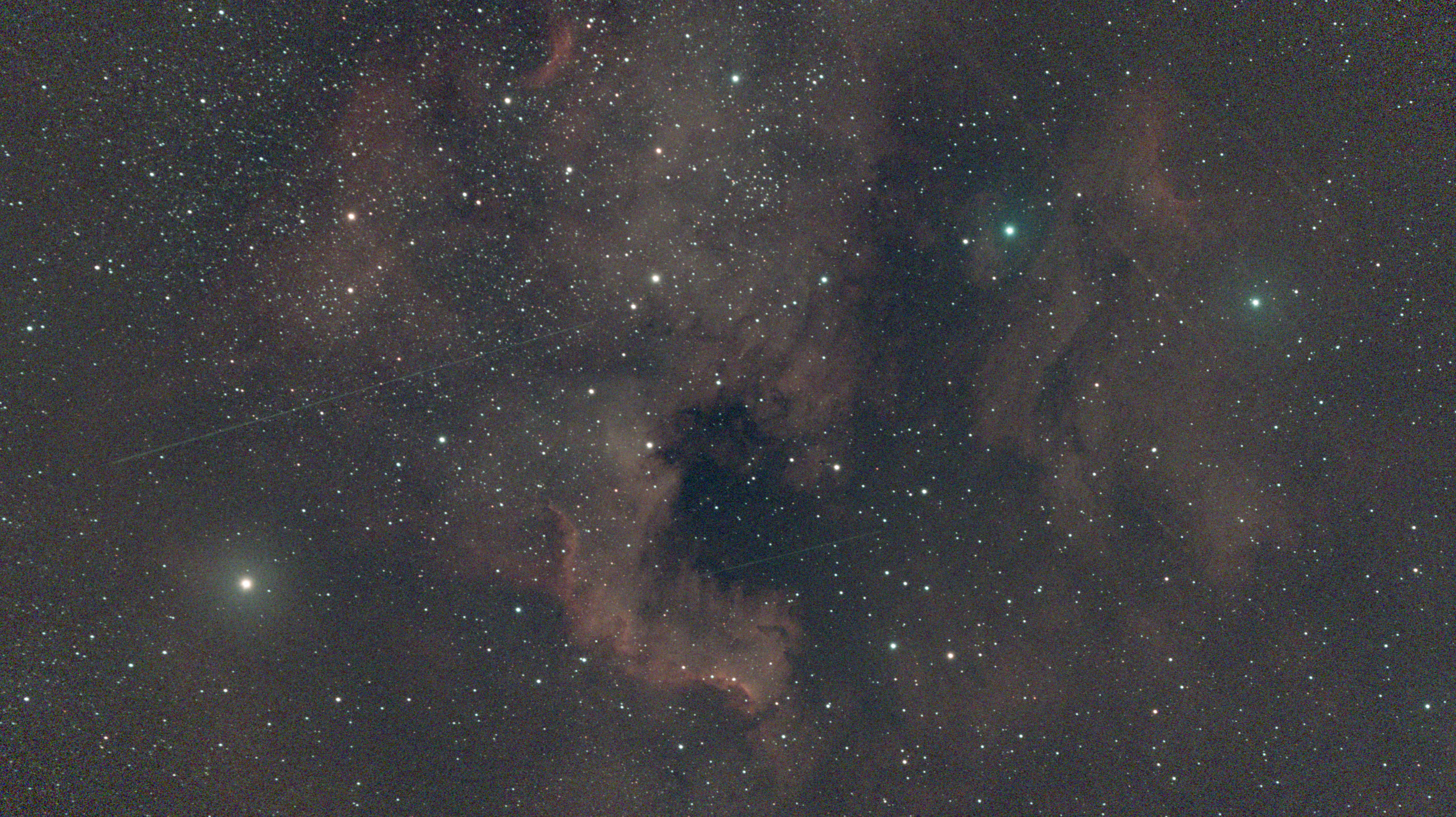
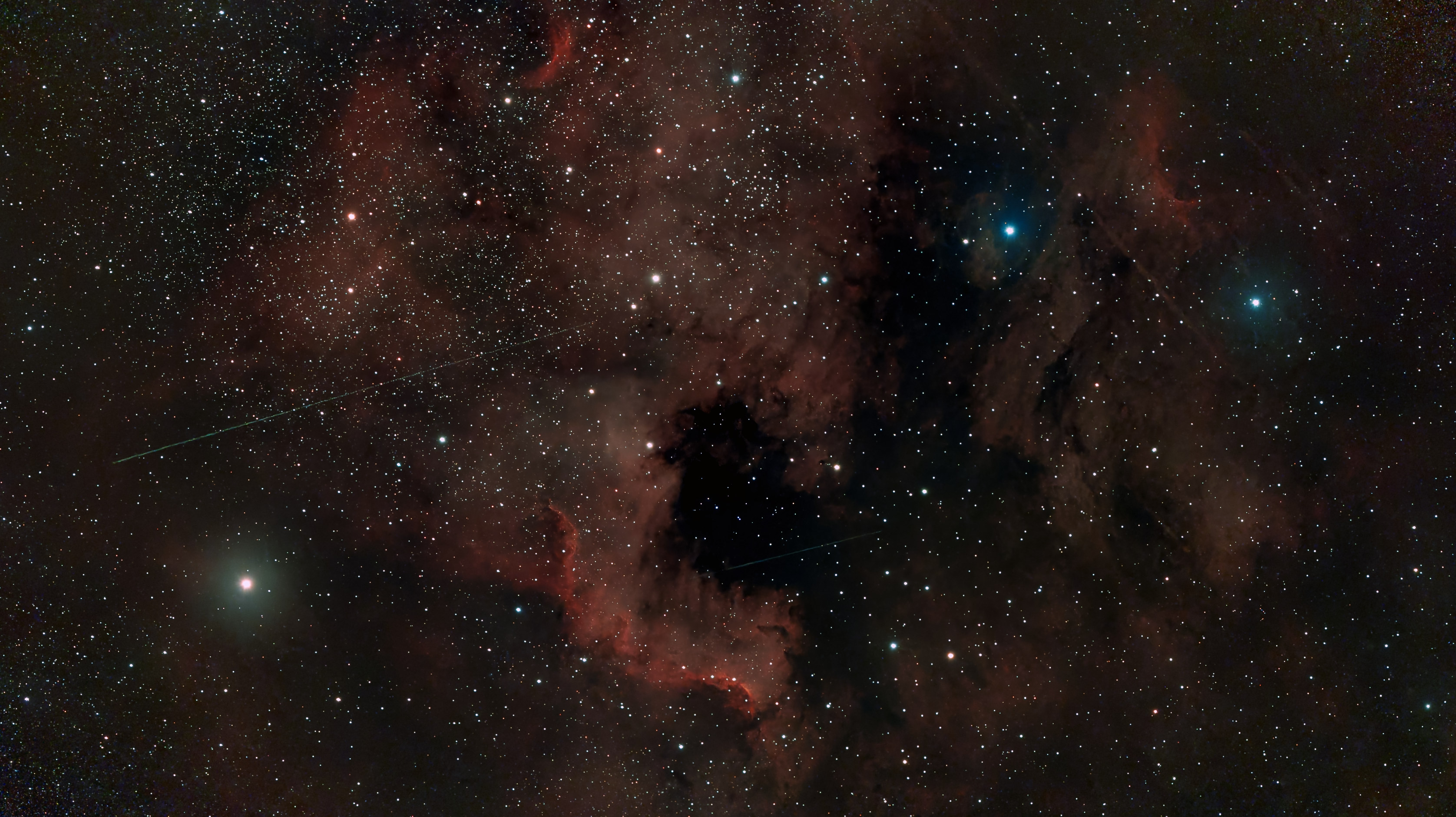
Licence: for personal use, credit Damon Scotting. Both JPEGs 3,352 x 1,880 px.
+16 C sensor temperature during imaging
150 mm focal length, plate solved ZWO states 150 mm
2.13 x 1.20° field of view 1,920 x 1,080 px on Sony IMX662
2.07 MP Sony IMX662 1,920 x 1,080 px, 5.6 x 3.1 mm
Should you buy it?
88/100 Stars for Your Buck
Pros
- “The same app and the same features as the S50 for less, with a slightly upgraded sensor: a huge accomplishment.”
- “The IMX662 sensor's deeper full well means it no longer saturates as quickly as the S50 did.”
- “Its wider field and mosaic mode take in the entire Veil Nebula in one frame.”
- “The built-in light-pollution filter did wonders on the North America Nebula and most of my mosaics.”
- “The Orion Nebula was light work for it, even from the live view in the app.”
- “Insanely quiet compared with the S50: you can't hear anything.”
Cons
- “Light gathering has decreased with the smaller aperture: this is not an upgrade to the S50.”
- “It cannot resolve the planets: Jupiter's moons show as points of light, where the S50 shows the bands.”
- “The alt-azimuth tracking leaves noisy, patterned corners on long sessions and big mosaics, so expect to crop.”
- “Bright planets flare: Mars throws stray light artefacts across the frame, and Jupiter ruined a mosaic.”
- “It has no eyepiece, so you can't look at the night sky yourself.”
Capturing astonishing images of the night sky has seemingly never been this accessible or affordable ever before.
Who the Seestar S30 is for
Complete beginner
Buy
It finds, tracks, focuses and stacks by itself; you do not need an expert level of knowledge to use it.
On a tight budget
Buy
It is the cheapest way into the Seestar app and all of its features.
Loves big nebulae
Buy
Its wider field than the S50 gives it more of a chance to pick up the outer details of big targets.
Moon and planet imager
Skip
The S30 falls short on the planets; the S50 is the bare minimum I would use for them.
Wants the best image quality
Skip
My recommendation is the S30 Pro: its 4K sensor takes you into high-quality astrophotography.
Already owns an S50
Skip
The S30 is not an upgrade: it gathers less light and keeps the same features.
Three alternatives I have reviewed
- ZWO Seestar S30 Pro The same small body with a 4K IMX585 sensor: my pick if you can stretch to it. 99/100 £649 Read the review
- DwarfLab DWARF mini The same 30 mm aperture and IMX662 sensor in an 840 g body; I prefer it over the S30. 89/100 £399 Read the review
- ZWO Seestar S50 50 mm of aperture: more light and the planets, for more money. 55/100 £539 Read the review
Questions and more about this review
Reviewed by
Damon Scotting
The Telescope Man Verified
BSc (Hons) Physics with Astrophysics and Cosmology, Loughborough University PGCE / QTS, University of Nottingham
About Damon About Damon Damon Scotting is The Telescope Man. He holds a BSc (Hons) in Physics with Astrophysics and Cosmology from Loughborough University and a PGCE with QTS from the University of Nottingham, and taught physics in secondary schools before becoming an astronomy creator. He is a contributing writer for BBC Sky at Night Magazine and the author of 42 Wonders of Our Night Sky, and his photograph of the galaxy M100 with the dwarf planet Ceres was Highly Commended in the Astronomy Photographer of the Year 2024 competition run by Royal Observatory Greenwich. He has appeared on the BBC's Blue Peter. More than 750,000 people follow his astronomy channels on YouTube, Instagram and TikTok, and he has reviewed more than 140 telescopes, mounts, cameras, filters and accessories hands-on for this site. More about Damon · How I test · Damon's book
I review all kinds of gear: most of it I buy, some is gifted and some is loaned, and all of it is reviewed the same way. How this site is funded
Eight questions, answered
Questions about the ZWO Seestar S30
Reviewed 15 November 2024 ·Updated 23 September 2026
I review all kinds of gear. Most of it I buy, some is gifted and some is loaned, and all of it is reviewed the same way: no company sees or approves a review before it is published. Shop links marked Ad are affiliate links: I earn a commission when you buy through them, at no extra cost to you. How this site is funded
- Is the Seestar S30 an upgrade on the S50? No. It is a smaller, cheaper model: the aperture drops from 50 mm to 30 mm, so it gathers less light, but it keeps the same app and features and gains a sensor with a deeper full well. The specifications and the comparison table ↓
- Can the Seestar S30 photograph the planets? Not in any detail. It picks up Jupiter's moons as faint points of light and nothing of significance on the planet itself; the S50 can show Jupiter's bands and Saturn's rings. The specifications and the comparison table ↓
- How long did the images on this page take? Between 25 minutes and just under 2 hours each, all 10 second exposures stacked by the telescope itself. The North America Nebula is 713 frames, 1 h 59 min. What I captured ↓
- What does mosaic mode add? One frame covers 2.1 x 1.2 degrees. Mosaic mode stitches overlapping frames as it goes; my finished mosaics here run from 2.4 x 1.4 up to 4.2 x 2.4 degrees, enough for the whole Veil, the Heart and the Elephant's Trunk region. What I captured ↓
- Does it cope with light pollution? Yes. Every capture here was taken under Bortle 6.8 skies, and the built-in light-pollution filter made the biggest difference on emission nebulae like the North America Nebula. What I captured ↓
- Should I buy the S30 or the S30 Pro? If you can stretch to it, the S30 Pro: its 4K sensor is a clear step up on the same targets. The S30 still takes lovely wide images for less.
- What comes in the box? The S30, a set of short tripod legs, a solar filter, a USB-A to USB-C cable and the manuals. What is it for ↓
- What have I not tested on the Seestar S30? I have not tested the wide-angle camera, the solar filter on the Sun or a timed battery run, and I have no Moon images from the S30.