ZWO Seestar S50 review: the original Seestar, tested since 2023
Where does it rank on our leaderboard
| Rank | Telescope | Stars for Your Buck | Recorded UK price |
|---|---|---|---|
| 1 | ZWO Seestar S30 Pro | 99 out of 100 | £649 |
| 2 | ZWO Seestar S50 Pro | 91 out of 100 | £999 |
| 3 | DwarfLab DWARF mini | 89 out of 100 | £399 |
| 4 | ZWO Seestar S30 | 88 out of 100 | £419 |
| 5 | Vaonis Vespera Pro 2 | 63 out of 100 | £2,599 |
| 7 | Vaonis Vespera III | 60 out of 100 | £2,199 |
| 8 | ZWO Seestar S50 | 55 out of 100 | £539 |
| 9 | DwarfLab DWARF II | 22 out of 100 | £369 |
| 10 | Unistellar eVscope 2 | 8 out of 100 | £4,099 |
Contents
- 01 Where does it rank on our leaderboard
- 02 Specifications and features
- 03 In the hand
- 04 From the review video
- 05 How good is it? Here's what I captured
- 06 Raw against finished
- 07 Same target, other smart telescopes
- 08 What is it for
- 09 Watch the review
- 10 Tested numbers and the download
- 11 Should you buy it?
- 12 Questions and more about this review
In 30 seconds
Stars for Your Buck 55/100
Reviewed 18 Nov 2023 Updated 23 Sep 2026
- Rank
- #8 of 10 smart telescopes
- Verdict
- With reservations
Written by Damon Scotting 8 min read
Buy it if
- You can find one at its $499 list price and want a first telescope that finds, tracks and stacks by itself.
- You want the Moon and the Sun as well as nebulae: the solar filter comes in the box.
- You image under light-polluted town skies: the built-in duo-band filter brings out the nebulae.
Skip it if
- You want to buy new today: FLO and the Seestar store list it as unavailable, and Agena as discontinued.
- You can stretch to the S30 Pro: a 4K sensor where the S50 has 2 megapixels, at £649.
- You mainly want the planets: Jupiter shows its moons but no proper surface detail.
The Seestar S50 is the complete package, perfect for both beginner and advanced astrophotographers like myself; a phenomenal piece of kit, I absolutely adore it.
Specifications and features
Against the smart telescopes I have reviewed
Compare with
| ZWO Seestar S50 reviewed #8 of 10 | ZWO Seestar S50 Pro #2 of 10 | Vaonis Vespera Pro 2 #5 of 10 | Vaonis Vespera III #7 of 10 | |
|---|---|---|---|---|
| Recorded UK price | £539 | £999 | £2,599 | £2,199 |
| Stars for Your Buck | 55/100 | 91/100 | 63/100 | 60/100 |
| Aperture | 50 mm | 50 mm | 50 mm | 50 mm |
| Focal length | 250 mm | 260 mm (telephoto); 6 mm | 245 mm | 245 mm |
| Focal ratio | f/5 | f/5.2 (telephoto); f/1.75 | f/4.9 | f/4.9 |
| Optical design | Apochromatic triplet with ED glass | 4-element apochromatic lens with ED glass; separate wide-angle camera | Apochromatic quadruplet with refined field corrector, S-FPL52 lanthanum glass | Apochromatic quadruplet with refined field corrector |
| Sensor | Sony IMX462 | OmniVision OS08B10 (telephoto); Sony IMX586 | Sony IMX676 (colour), 1/1.6 inch, 2 µm pixels | Sony IMX585 (colour), 1/1.2 inch, 2.9 µm pixels |
| Resolution | 1920 x 1080, 2.1 MP | 3840 x 2160, 8.3 MP | 12.5 MP; up to 50 MP with CovalENS mosaic | 3840 x 2160, 8.3 MP; up to 24 MP with CovalENS mosaic |
| Field of view | 1.29 x 0.73 degrees | 2.8 degrees (telephoto); 63 degrees | 1.6 x 1.6 degrees; up to 4.18 x 2.45 degrees with CovalENS | 2.5 x 1.4 degrees; up to 4.33 x 2.43 degrees with CovalENS |
| Filters | UV/IR cut; duo band (OIII 30 nm, H-alpha 20 nm); dark filter; magnetic solar filter included | UV/IR cut; dual-band light pollution (OIII 30 nm, H-alpha 20 nm); dark field; magnetic solar filter included | None built in; solar, dual band and CLS light-pollution filters are optional extras | None built in; solar, dual band and CLS light-pollution filters are optional extras |
| Weight | 2.5 kg (net) | 2.8 kg | 5 kg | 5 kg |
| Battery | 6000 mAh, about 6 hours | 10,000 mAh, up to 9 hours | 11 hours | 11 hours |
| Storage | 64 GB | 128 GB eMMC | 225 GB | 115 GB |
| App | Seestar app (App Store and Google Play) | Seestar app | Singularity | Singularity |
In the hand
Beside the S30
Beside the S50 Pro
S50, S30, S30 Pro and S50 Pro
With its box
Power and battery lights
On its carbon-fibre tripod
From the review video
Three frames from my videos
The Sun in the app, through the solar filter
Orion Nebula: eVscope 2, DWARF 2 and Seestar S50
Horsehead Nebula: S30, S50 and S30 Pro
How good is it? Here's what I captured
Six targets
M 42, Orion Nebula, Sony IMX462 (built in), LP
- Integration
- 29 min 50 s (179 x 10 s, LP filter)
- Field
- 1.25 x 0.70 degrees
- Telescope
- ZWO Seestar S50
- Camera
- Sony IMX462 (built in)
- Mount
- Built-in Seestar alt-azimuth mount
- Target
- M 42, Orion Nebula
- Type
- Emission nebula
- Location
- Bortle 6.8 (in my garden)
Look at that: this telescope took that with just a few taps of my mobile device.
M 31, Andromeda Galaxy, Sony IMX462 (built in), IR-cut
- Integration
- 2 h 8 min (768 x 10 s, IR-cut filter)
- Field
- 2.50 x 1.41 degrees
- Telescope
- ZWO Seestar S50
- Camera
- Sony IMX462 (built in)
- Mount
- Built-in Seestar alt-azimuth mount
- Target
- M 31, Andromeda Galaxy
- Type
- Spiral galaxy
- Location
- Bortle 6.8 (in my garden)
NGC 7000, North America Nebula, Sony IMX462 (built in), LP
- Integration
- 1 h 16 min (456 x 10 s, LP filter)
- Field
- 2.50 x 1.41 degrees
- Telescope
- ZWO Seestar S50
- Camera
- Sony IMX462 (built in)
- Mount
- Built-in Seestar alt-azimuth mount
- Target
- NGC 7000, North America Nebula
- Type
- Emission nebula
- Location
- Bortle 6.8 (in my garden)
NGC 6960, Western Veil Nebula, Sony IMX462 (built in), LP
- Integration
- 1 h 10 min (210 x 20 s, LP filter)
- Field
- 1.24 x 0.69 degrees
- Telescope
- ZWO Seestar S50
- Camera
- Sony IMX462 (built in)
- Mount
- Built-in Seestar alt-azimuth mount
- Target
- NGC 6960, Western Veil Nebula
- Type
- Supernova remnant
- Location
- Bortle 6.8 (in my garden)
IC 1396A, Elephant's Trunk Nebula, Sony IMX462 (built in), LP
- Integration
- 29 min 50 s (179 x 10 s, LP filter)
- Field
- 1.22 x 0.66 degrees
- Telescope
- ZWO Seestar S50
- Camera
- Sony IMX462 (built in)
- Mount
- Built-in Seestar alt-azimuth mount
- Target
- IC 1396A, Elephant's Trunk Nebula
- Type
- Dark nebula in an emission region
- Location
- Bortle 6.8 (in my garden)
M 81 and M 82, Bode's and the Cigar Galaxies, Sony IMX462 (built in), IR-cut
- Integration
- 1 h 5 min (392 x 10 s, IR-cut filter)
- Field
- 1.79 x 1.13 degrees
- Telescope
- ZWO Seestar S50
- Camera
- Sony IMX462 (built in)
- Mount
- Built-in Seestar alt-azimuth mount
- Target
- M 81 and M 82, Bode's and the Cigar Galaxies
- Type
- Spiral and starburst galaxies
- Location
- Bortle 6.8 (in my garden)
Raw against finished
Same target, other smart telescopes
The 6 targets, the raw combined stack against my finished image, each with its integration, the camera and the palette:
- M 42, Orion Nebula: 29 min 50 s (179 x 10 s) of light, Sony IMX462 (built in), LP, the raw combined stack with one automatic stretch
- M 31, Andromeda Galaxy: 2 h 8 min (768 x 10 s) of light, Sony IMX462 (built in), IR-cut, the raw combined stack with one automatic stretch
- NGC 7000, North America Nebula: 1 h 16 min (456 x 10 s) of light, Sony IMX462 (built in), LP, the raw combined stack with one automatic stretch
- NGC 6960, Western Veil Nebula: 1 h 10 min (210 x 20 s) of light, Sony IMX462 (built in), LP, the raw combined stack with one automatic stretch
- IC 1396A, Elephant's Trunk Nebula: 29 min 50 s (179 x 10 s) of light, Sony IMX462 (built in), LP, the raw combined stack with one automatic stretch
- M 81 and M 82, Bode's and the Cigar Galaxies: 1 h 5 min (392 x 10 s) of light, Sony IMX462 (built in), IR-cut, the raw combined stack with one automatic stretch
Andromeda Galaxy, North America Nebula, Veil Nebula, Orion Nebula on the ZWO Seestar S50 and nine other smart telescopes; the panes pan and zoom together
What is it for
Six things it is for
Stacked live in front of you
The Seestar takes successive 10-second exposures of the target and stacks them live in front of your eyes. Within the first minute or so you can already make out spectacular detail that would otherwise be invisible to the naked eye.
Tap the sky atlas and go
One of the best features is the sky atlas. I tap wherever I want in the night sky, press go to, and it takes a minute or so to perfectly centre that object. It even shows you the field of view you are going to see.
A close view of Andromeda
The magnification is quite high, which means objects like the Andromeda Galaxy need multiple mosaic shots to include all of the galaxy. This is a 17-minute exposure of the core of our nearest galactic neighbour.
Two moons of Uranus
I kept the exposure for this shot down to 2 minutes, as I could quickly see on the live feed that it had caught what I was hoping for: either side of Uranus is one of its moons, Oberon and Titania.
Sunspots through the included filter
It includes a solar filter, which lets you capture the Sun in white light, and I was very impressed with the clarity: you can clearly identify a number of sunspots on its surface.
The Moon up close
The bare minimum I want from a telescope includes seeing the craters of the Moon up close, and the Seestar S50 comfortably does that, where the smaller S30 falls just short.
Watch the review
Is this the BEST $500 TELESCOPE EVER? Seestar S50 Review · published 18 November 2023 · 17:17 · Watch on YouTube · 548,158 views, 10,465 likes on 2 Oct 2026
Jump to
- 0:34 Target 1: the Crab Nebula
- 2:24 Target 2: the Orion Nebula
- 5:07 Target 3: the Horsehead and Flame Nebulae
- 6:17 Target 4: the Dumbbell Nebula
- 7:03 The imaging process
- 8:34 Planetary imaging: Jupiter and Uranus
- 10:32 Is this real astrophotography?
- 11:58 The best features
- 15:48 Conclusion
Transcript of the review video 3,559 words · 12 chapters · searchable
Press a time stamp to play from there.
0:00 Intro
0:00 that is amazing the question I get asked the most often on this channel is what telescope should I buy and for most people their budget is less than $500 0:09 they want a telescope that can do everything and they also want to be able to capture what they see this is the Seestar S50 and it is the complete package 0:18 it's perfect for both beginner and advanced astrophotographers like myself and it only costs $499 and in today's video I'm going to be reviewing it my name is Damon 0:28 scotting and this is Astronomical okay let's get straight into looking at what this tiny portable telescope can capture in our Cosmos so where do we
0:34 Target 1: the Crab Nebula
0:40 point it first I think I'm going to go for the Orion Nebula to kick things off and that is located just there behind the clouds isn't that 0:52 just absolutely freaking perfect now if that is an astronomer's look I don't know what is okay change plan we're going to go for a more difficult Target 0:59 then I'm actually going to go straight up in the air just up here for a Target known as Messier object one or better referred to as the Crab Nebula we're 1:08 actually going to be giving it a baptism of fire because it's going up against a very difficult to image object you may have heard of The Crab Nebula before it 1:15 was a supernova Remnant from 1054 ad it's really cool um and since we've been Imaging this now for a very long time what you can actually do with your 1:23 images is you can now capture it and then compare your photos to photos taken 20 30 years ago and see how much the Supernova Remnant has expanded since it 1:32 was first imaged which is really cool I highly doubt we're going to be able to do that with this tiny little telescope so let's see how it fares Against The 1:39 Crab Nebula Oh my legs so after a total of 30 minutes worth of exposures this is our final image of the Crab Nebula I could have 1:51 probably done a better job removing the magenta colour from the core but overall I'm very impressed by it and as previously mentioned here it is in a 1:58 comparison with Hubble's image taken 18 years ago back in 2005 notice the core filaments of the Crab Nebula and how they have expanded over time with the 2:08 help of the billion-dollar Hubble telescope and our $499 Seestar we' have captured the universe in motion go on try and convince me that 2:18 isn't the coolest thing ever and from the death of an old star to the birth of countless new ones behind me right now even though it is out of focus just
2:24 Target 2: the Orion Nebula
2:26 there is the Orion Nebula it is one of the main objects that really captured my interest and Imagination for this hobby I'm sure the majority of us are familiar 2:33 with the Orion Nebula already but if not here's a gentle reminder of its beautiful appearance this image of the stellar nursery was also captured by Hubble 2:41 and it's probably not the best idea to be comparing images taken with a billion-dollar telescope versus the Seestar S50 so instead here's my setup from 10 years 2:49 ago and an image I captured of the Orion Nebula with it this is 3:00 one of my favourite deep Sky objects what makes it especially incredible is the fact that it's so easy to image with just the most basic setups this out 3:08 class is a more advanced setup and it is capable of capturing the Orion Nebula in phenomenal detail don't believe me let's find look at that this telescope took that 3:42 with just a few Taps of my mobile device that is incredible I really do love this it's fantastic right one of the first things I should point out at the start
3:50 An important note on stock
3:51 this video that you should know beforehand is that the Seestar S50 is kind of suffering from its own success in a sense that most the retailers that would 4:00 normally sell this telescope are currently out of stock because it's been such a high demand you can still purchase the telescope directly through ZWO's website I've attached a link 4:09 directly to the product page for this telescope on their official website in the description below I'll also pin it in a comment so you can find it very 4:16 easily yeah it's high in demand and with very good reason because what this is capable of will blow your mind this is such a weird angle because
4:26 Real stars behind me
4:28 it looks like I'm just sort of Standing On Top for the camera and I'm sure that might seem quite daunting but um how else am I supposed to get the stars in a 4:35 night sky in the same shot as me there's actually quite a rare shot from what I see in documentaries and on YouTube itself where you have the presenter 4:41 talking to the camera as well as the stars in the background and for the love of God they are not just put in as a 4:48 green screen these aren't fake Stars these this is the real organic night sky and I think that's very important I've tried doing it myself where I've sort of 4:54 put a fake night sky in behind me as I'm talking but then whenever I'm editing it or rewatching the clip back I just get 5:00 really angry at the fact that it's not real and it just looks so so ugly so the next Target we're going to be going for 5:06 is the Horsehead nebula which is located in the belt of Orion on the leftmost star Alnitak which is just over here again it's a fairly commonly imaged
5:07 Target 3: the Horsehead and Flame Nebulae
5:16 Target but at the same time it's not a very easy one to capture with your camera uh it is a dark nebula which is 5:22 basically we're observing the sort of absence of light from this curtain of dust and gas that hides the birth of stars but it is really pretty yeah I'm 5:30 going to try and see if I can actually frame in the flame nebula and the horsee head nebula to be in the same shot here 5:36 which would be a nice sort of composition as opposed to just getting one uh yeah so let's line this up and see if we can get both of them included 5:43 in the same shot the method in which the Seestar captures the night sky is very impressive it takes successive 10-second-long exposures of the Target and stacks them 5:53 live in front of your eyes and within the first minute or so you can already make out some spectacular detail in your images that would otherwise be invisible 6:01 to the naked eye with 30 minutes total exposure time we are able to create this when using the app you are provided with a wide variety of suggested targets
6:17 Target 4: the Dumbbell Nebula
6:22 including those that are best suited for Imaging tonight you can of course point it anywhere you wish but in this instance I have a very specific Target 6:29 in mind if you want to learn more about what you are Imaging then they have included some very useful information about the object you are then presented 6:36 with a sky Atlas which means you can watch as the telescope slews to the intended target and precisely aligns itself this generally takes a minute or 6:44 two but after it centreed the object all you have to do is tap the red capture button and let the photons do their work 6:50 as they reveal more and more detail about these wonderful deep Sky objects after 15 minutes total exposure time this is what I managed to produce 7:00 the Imaging process is unbelievably easy I managed to capture an extravagant selection of DSOs ranging from Star clusters to nebulae to galaxies and even
7:03 The imaging process
7:12 planets the onboard 64 GB storage ensures there is plenty of room for your raw images to be saved once Imaging is complete preview photos are downloaded 7:21 onto your phone this is how the images turned out without any additional editing the smart telescope overlays a very useful graphic that includes a Tim 7:30 stamp the name of the object and the total exposure time if you're like me then you're going to want to bring out the best features in the image the main 7:37 adjustment I made was to sharpen the image reduce the noise and increase the contrast and saturation the magnification is quite High which means objects like the Andromeda Galaxy that 7:46 I've captured here will require you to take multiple Mosaic shots to include all of the Galaxy itself but how Bloody special is that this is a 17-minute 7:55 exposure of the core of our nearest Galactic neighbour and amazing yeah so it is now peak season for astrophotography we are now entering into the period 8:04 where we have the longest nights of the entire year otherwise known as winter Christmas is just around the corner which means people are spending less 8:11 time Outdoors during the daytime and more time indoors thinking about what they can do for fun and what could be more fun than standing outside in the 8:18 freezing cold all night looking up at the night sky I'm not even joking by that statement I think this is amazing uh behind me you can see some of the 8:27 best features of our winter night skies and in fact that bright point of light just up there that is the largest planet in our Solar System Jupiter so it's not
8:34 Planetary imaging: Jupiter and Uranus
8:35 actually a star um but it is a very wonderful site to look through with a telescope I'm actually going to test the Seestar s50 up against Jupiter so yeah 8:44 this is how Jupiter looks through the Seestar S50 telescope and as predicted you can't see any proper surface detail but you can see the planet and its moons 8:52 itself which is really cool so it's not designed to look at the planets but that's all right because the planets make up a very tiny portion of night sky 8:59 and as for wonderful things that we can see there are far more exciting wonders out there to be observed and be captured with the telescopes built in 9:08 camera but whilst we're still on the topic of talking about planets being imaged with this telescope I just want to point out that Uranus is above my 9:16 head in between the Seven Sisters Oh wrong hand okay Cy okay that's right in between the Seven Sisters and the planet Jupiter is Uranus which is right above 9:27 me just there which I haven't actually done on purpose but where better to be standing than looking up at Uranus Uranus Uranus Uranus you're an 9:36 educator say Uranus Uranus yes I'm actually going to test the telescope out on Uranus real quick and see how it fares against that uh 9:44 again we're not looking to see any surface detail really the main thing I want to try and observe right now is whether or not we can see any of 9:49 Uranus's moons which would be really cool so I'm just going to open up the app I'm going to tap away and say I want 9:55 you to point at Uranus and it's going to take a minute or two to finally Centre itself and then start taking taking some photos yeah I kep the exposure time for 10:01 this shot down to 2 minutes as I could very quickly see on my live feed that it had captured what I was hoping for 10:07 either side of Uranus we can see one of its 27 moons the ones we're looking at here are Oberon and Titania just to finish off talking about the solar 10:15 system Imaging capabilities of this telescope it does include a solar filter which enables you to capture the sun in white light and I was very impressed 10:22 with the clarity of the videos and photos I took you can clearly identify a number of sunspots on the surface of the Sun gosh is there anything this telescope 10:32 can't do okay cool we're making really good progress um it's actually very easy to do astrophotography nowadays when you have a smart telescope like this because
10:32 Is this real astrophotography?
10:40 it does 70% of the work for you the main thing you have to do is just figure out which Target you want to actually 10:46 explore now I know a lot of oldtime astrophotographers will take issue with this they'll say that it's not real astrophotography you're taking all of 10:54 the fun out of astrop Photography and the real experience I get that I understand where they're coming from because being out in the garden and 11:00 looking up at the night sky and looking at it through your telescope and taking pictures it's a very intimate experience especially because for the majority of 11:07 the time we do it by ourselves it's just us so there's a lot of time to sort of contemplate certain aspects of it um you 11:13 feel a much deeper connection with the Universe I know that might sound silly to some people but if you are an astrophotographer you will understand 11:20 what I mean so using a smart telescope kind of remove certain elements of that because you're not going through all the rigorous effort to set it up and get it 11:28 capturing the cosmos which kind of sounds like you're just complaining about this making your life a lot easier which it is which is why I get where 11:35 certain people are coming from with these comments but at the same time I don't necessarily agree with them myself because the fact that I can literally 11:41 pitch this up in about 2 minutes and then connect it to my phone go back inside and sit on my sofa drinking tea all night whilst I point at different 11:49 targets and edit the photos straight on my phone that's so convenient and so easy and it's going to make astrophotography a million times more 11:56 accessible to the rest of the population so to summarize what are the Seestar S50 telescope's best features right so let's then go through a overview of the best
11:58 The best features
12:06 features that the Seestar has so it weighs about 3 Kg which is 6.6 it's able to not only find a Target in the night sky but 12:13 also track it and take long exposure images that it then saves both to the 64 GB storage on the telescope itself no SD card required I'd say one of the more 12:21 impressive features I've noticed from this telescope that stood out compared to the others is that it has a built-in anti-dew function and what that means is 12:28 on cold nights like this glass of all materials is very susceptible to actually fogging up and dewing up and basically giving you a sort of blood 12:36 cloudy image that you can't really see it's really obscured today all it has done in England is rain which isn't a shock to anyone that's all it does here 12:43 but it does mean that we've got some nice crystal clear skies because it's basically removed almost all the clouds in our night sky which is great but it 12:49 also means it's very damp and cold yeah it's uh it's about 6° c yeah it's not quite freezing but it's getting there it's one of those nights where you 12:58 can kind of with stand being outside with your telescope observing the night sky but you'd still much rather be inside with some cookies and a cup of 13:05 tea so alongside it best features uh as it is for any smart telescope is the fact that you can control it solely from being inside your house from the comfort 13:14 of a much warmer environment okay in terms of portability it is still very portable it comes with a foam case carry case which makes it super 13:26 easier uh has an autofocus function on it it allows you to adjust the actual Focus that you're seeing in the night sky so you can pinpoint it yourself or 13:31 you can press the AF button it has a built-in filter a Duo band filter which allows you to bring out more of the nebulosity and certain deep Sky objects 13:38 one of the best features has been the sky atlas like the fact that I can just tap the bottom right part of the phone 13:43 here and then point it wherever I want in a night sky just find the field of view of the region and then press go to 13:50 and it will take a minute or so to perfectly Centre that object it's just phenomenal it makes it so easy and I cannot overstate that the fact it even 13:57 shows you the field of view that going to see with this telescope and the sort of built-in camera that's incredibly handy because I'm always on Stellarium 14:04 where I'm just trying to figure out what certain objects going to look like when I go out to image it later on but this 14:09 is built in it already knows what the field of view is and it's going to tell you what you should see once you Centre 14:14 it in the top left it always has the word enhancing to let you know that it's actually enhancing your image every time in between exposures what it's actually 14:21 doing is in between shots it's dithering dithering is where you move the sort of view of the telescope ever so slightly by just a few pixels we'll do the trick and 14:29 then start taking images again so by moving around but still keeping the same sort of main target in the middle you're going to generate a much cleaner and 14:36 better signal to noise ratio with your actual overall resultant image so it's very handy I'm in the middle of making a video right now which is titled what you 14:45 can see with a $500 telescope and it's very hard to find a package that ticks all the boxes but this right here does so and for a beginner it does not get 14:54 any easier you don't have to know anything about our night sky you don't have to know that Orion's belt those three stars just behind me or that red 15:01 star up just here hang on is Betelgeuse see I don't even know I can't even point in the right direction you don't need to 15:07 know anything it's just it's all here on the mobile device for you tap on a sky Atlas and you just pick your faner and 15:13 the fact that you can see these objects in the night sky on the actual phone is very handy because you get an idea of 15:18 what it looks like so you can just cherry-pick certain things that you think oh hey that looks nice I'd love to capture that let's see what that looks 15:25 like for a telescope go to capture boom all of a sudden the images start coming up on your phone I think it's a wonderful experience and it's going to 15:34 make astronomy and astrophotography accessible to thousands more people so I'm all for it I cannot support it any more than I actually currently do 15:42 because I think this is incredible and it's just the beginning of what's to come yeah I've got a lot of cool and weird projects in mind that I want to
15:48 Conclusion
15:50 pursue with this so the only thing that's prohibiting me from doing so right now is whether or not it stays clear for the foreseeable future but 15:56 living in England clear nights are few and far between unfortunately so yeah if you'd like to purchase a telescope for yourself click the link in the 16:03 description it will direct you straight to the product page in which you can buy it like I said at the start it's very hard to find one in stock at the moment 16:10 because they're in such high demand but by clicking the link that I've put in the description you'll be redirected to the official web page of ZWO and you can 16:17 buy it straight from the supplier itself perhaps you have a partner or friend or family member who's really interested in Astro photography or astronomy as a 16:24 hobby itself in which case depending on how much you love them I do believe that this would be the perfect gift to get them interested in the hobby so yeah 16:32 phenomenal piece of Kit I absolutely adore it I cannot speak highly enough of it so if you want to learn more about it yourself then click on the link down in 16:40 the description below and let me know how you get on I am actually very intrigued to see what other people can capture with this telescope I am in bol 16:46 of six skies at the moment so it's not fantastic in terms of light pollution which is to say that I'm probably not showcasing this to its full potential 16:54 it's still capable of a lot more so stay tuned for other weird and wonderful projects that I with this telescope and more I'm Damon Scotting and this was
Check out more videos on the ZWO Seestar S50
Is THIS the BEST SMART Telescope in the world?
5 Apr 2024
Is the Seestar S30 Pro ACTUALLY Better? Side-by-Side vs S30 & S50
31 Dec 2025
I Tested EVERY SMART Telescope on the Market...These are the results!
30 Aug 2026
Tested numbers and the download
Finished image
- Download the raw stack JPEG · 3.7 MB · 3,777 x 2,129
- Download the finished image JPEG · 3.2 MB · 3,777 x 2,129
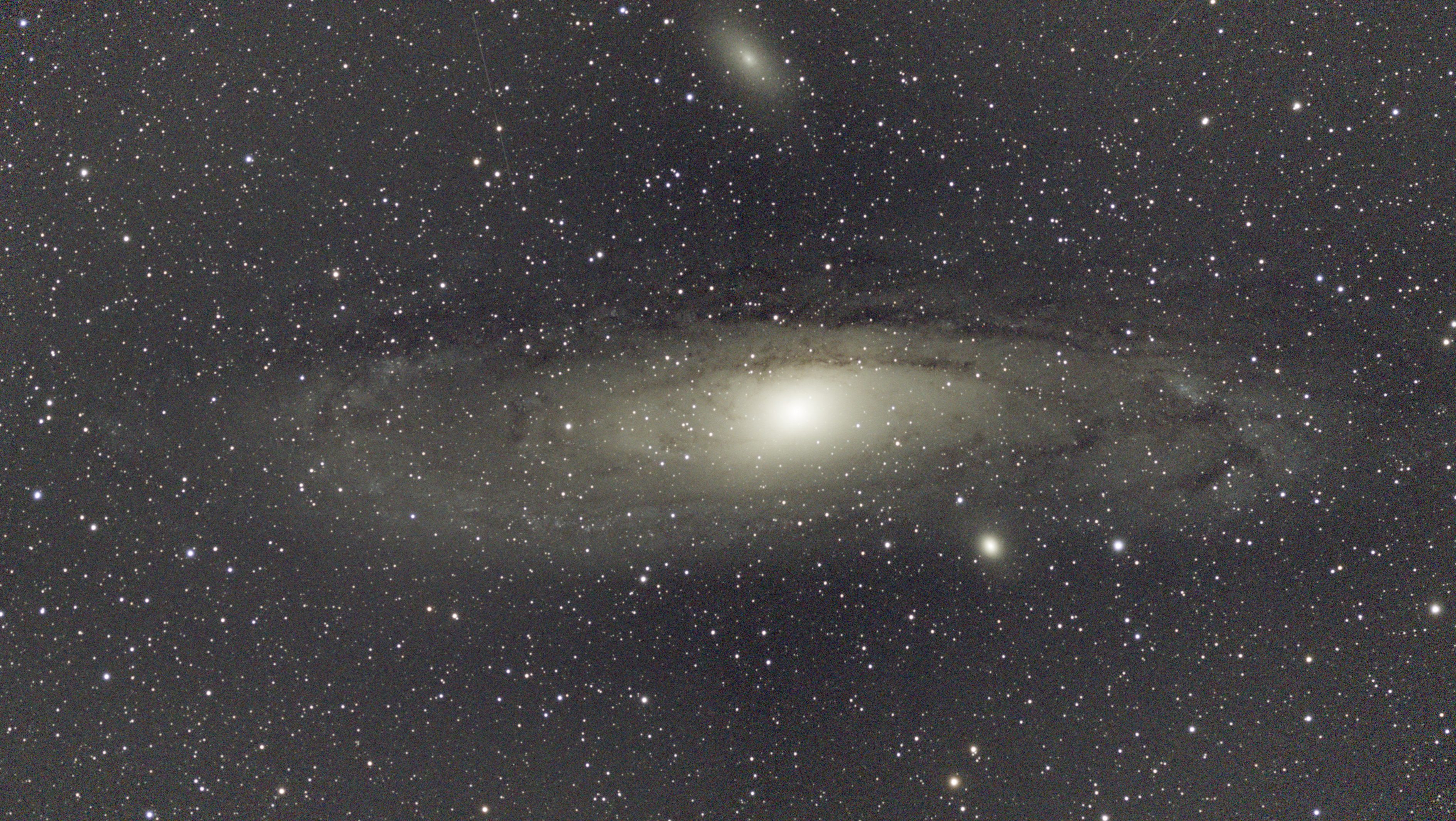
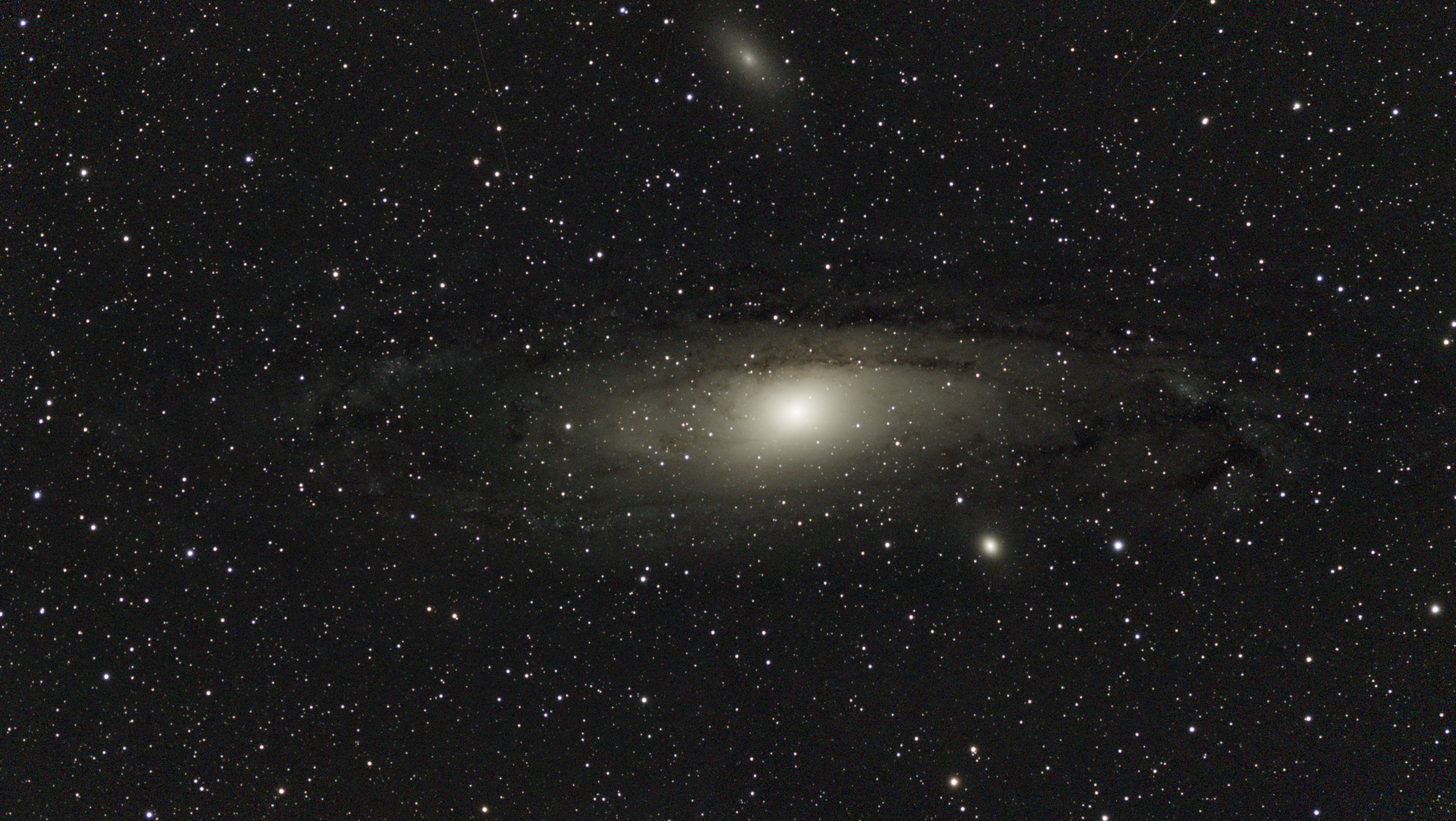
Licence: for personal use, credit Damon Scotting. Both JPEGs 3,777 x 2,129 px.
+11 C sensor temperature during imaging
252 mm focal length, plate solved ZWO states 250 mm
1.27 x 0.71° field of view 1,920 x 1,080 px on Sony IMX462
2.07 MP Sony IMX462 1,920 x 1,080 px, 5.6 x 3.1 mm
Should you buy it?
55/100 Stars for Your Buck
Pros
- “It takes 10-second exposures and stacks them live in front of your eyes; within the first minute you can already make out spectacular detail.”
- “The sky atlas: tap anywhere, press go to, and it perfectly centres the object in a minute or so.”
- “Out of all the smart telescopes, I have found its images the easiest to edit afterwards.”
- “A built-in anti-dew heater warms the outer lens so the glass does not fog up on cold, damp nights.”
- “The carry case, carbon-fibre tripod and clip-on solar filter all come in the box.”
Cons
- “The magnification is quite high, so the Andromeda Galaxy and the big nebulae need mosaic shots to fit.”
- Its sensor is just 2 megapixels (1920 x 1080), where the newer Seestars have 4K sensors.
- “On Jupiter you cannot see any proper surface detail; it is not designed to look at the planets.”
- “The alt-azimuth mount leaves rotation patterns in the corners of long stacks.”
- It is hard to buy new now: the shops list it as unavailable, discontinued or sold out.
At $499, the Seestar S50 is still one of the greatest bargains ever in astrophotography.
Who the Seestar S50 is for
Complete beginner
Buy
It finds, tracks and stacks for you, with the tripod, case and solar filter in the box; for a beginner it does not get any easier, if you can find one.
Buying new today
Skip
FLO and the Seestar store list it as unavailable; my recommendation is the Seestar S30 Pro, which the Seestar store lists in stock.
Already owns a Seestar S30
Skip
The S30's sensor is mildly better than the S50's; if you step up, go to the S30 Pro or the S50 Pro instead.
Experienced astrophotographer
Buy
A second rig you can pitch in about 2 minutes and run from your phone while you sit inside with a cup of tea.
Planet imager
Skip
On Jupiter you see the planet and its moons but no proper surface detail; it is not designed for the planets.
Light-polluted town sky
Buy
The built-in duo-band filter brings out more of the nebulosity, and the anti-dew heater keeps the lens clear on damp nights.
Three alternatives I have reviewed
- ZWO Seestar S30 Pro My pick today: a 4K IMX585 sensor in a smaller body. 99/100 £649 Read the review
- ZWO Seestar S50 Pro The successor: the same 50 mm aperture with a 4K sensor, a wide-angle camera and up to 9 hours of battery. 91/100 £999 Read the review
- DwarfLab DWARF mini The non-ZWO rival: more fun to use, to show off and to carry around. 89/100 £399 Read the review
Questions and more about this review
Reviewed by
Damon Scotting
The Telescope Man Verified
BSc (Hons) Physics with Astrophysics and Cosmology, Loughborough University PGCE / QTS, University of Nottingham
About Damon About Damon Damon Scotting is The Telescope Man. He holds a BSc (Hons) in Physics with Astrophysics and Cosmology from Loughborough University and a PGCE with QTS from the University of Nottingham, and taught physics in secondary schools before becoming an astronomy creator. He is a contributing writer for BBC Sky at Night Magazine and the author of 42 Wonders of Our Night Sky, and his photograph of the galaxy M100 with the dwarf planet Ceres was Highly Commended in the Astronomy Photographer of the Year 2024 competition run by Royal Observatory Greenwich. He has appeared on the BBC's Blue Peter. More than 750,000 people follow his astronomy channels on YouTube, Instagram and TikTok, and he has reviewed more than 140 telescopes, mounts, cameras, filters and accessories hands-on for this site. More about Damon · How I test · Damon's book
I review all kinds of gear: most of it I buy, some is gifted and some is loaned, and all of it is reviewed the same way. How this site is funded
Nine questions, answered
Questions about the ZWO Seestar S50
Reviewed 18 November 2023 ·Updated 23 September 2026
I review all kinds of gear. Most of it I buy, some is gifted and some is loaned, and all of it is reviewed the same way: no company sees or approves a review before it is published. Shop links marked Ad are affiliate links: I earn a commission when you buy through them, at no extra cost to you. How this site is funded
- Is the Seestar S50 still worth buying? At its $499 list price it was one of the greatest bargains in astrophotography, but it is now hard to buy new, and the S30 Pro and S50 Pro have since moved to 4K sensors. The verdict, the readers and the sellers ↓
- What can it photograph? Nebulae, galaxies and star clusters, stacked live from short exposures. My Orion Nebula here is 179 x 10 s and my Andromeda mosaic 768 x 10 s. What I captured ↓
- Does the Andromeda Galaxy fit in one frame? No. One frame covers 1.27 x 0.71 degrees, so I used mosaic mode: my 768-frame Andromeda mosaic covers 2.50 x 1.41 degrees. What I captured ↓
- Can it image the planets? The Moon, and the Sun through the included solar filter, come out well, and on Uranus I caught its moons Oberon and Titania. On Jupiter you see the planet and its moons but no proper surface detail. What is it for ↓
- How does it compare with the Seestar S30? They share the same app and features. The S30's sensor is mildly better and its field wider, while the S50's 50 mm aperture gathers more light and shows more on the Moon and the planets. Same target, other smart telescopes ↓
- What sensor does it use? A Sony IMX462 with 1920 x 1080 pixels of 2.9 microns, 2.07 megapixels. My plate solves give 2.376 arcsec per pixel, a focal length of 252 mm against the stated 250 mm. Tested numbers and the download ↓
- What comes in the box? The Seestar S50, a carbon-fibre tripod, a carrying case, a solar filter, a USB-C cable and a quick start guide. The specifications and the comparison table ↓
- Is it real astrophotography? It does about 70% of the work for you, and I understand the old-timers who say that takes the fun out of it. But I can pitch it in about 2 minutes, go inside and edit on my phone, which makes astrophotography far more accessible. From my video review Watch the review ↓
- What have I not tested on the Seestar S50? I have not tested equatorial mode or exposures longer than 30 seconds, and I have not timed a full battery run.