DwarfLab DWARF mini review: tiny, and surprisingly good
Where does it rank on our leaderboard
| Rank | Telescope | Stars for Your Buck | Recorded UK price |
|---|---|---|---|
| 1 | ZWO Seestar S30 Pro | 99 out of 100 | £649 |
| 2 | ZWO Seestar S50 Pro | 91 out of 100 | £999 |
| 3 | DwarfLab DWARF mini | 89 out of 100 | £399 |
| 4 | ZWO Seestar S30 | 88 out of 100 | £419 |
| 5 | Vaonis Vespera Pro 2 | 63 out of 100 | £2,599 |
| 6 | DwarfLab DWARF 3 | 61 out of 100 | £459 |
| 8 | ZWO Seestar S50 | 55 out of 100 | £539 |
| 9 | DwarfLab DWARF II | 22 out of 100 | £369 |
| 10 | Unistellar eVscope 2 | 8 out of 100 | £4,099 |
Contents
- 01 Where does it rank on our leaderboard
- 02 Specifications and features
- 03 In the hand
- 04 From the review video
- 05 Raw against finished
- 06 Same target, other smart telescopes
- 07 What is it for
- 08 Versus the DWARF 3
- 09 Watch the review
- 10 Tested numbers and the download
- 11 Should you buy it?
- 12 Questions and more about this review
In 30 seconds
Stars for Your Buck 89/100
Reviewed 28 Aug 2026 Updated 23 Sep 2026
- Rank
- #3 of 10 smart telescopes
- Verdict
- Damon's pick
Written by Damon Scotting 6 min read
Buy it if
- You want a smart telescope small enough to take anywhere: it weighs 840 g and generally fits in a pocket.
- You are new to astrophotography: set it on a tripod, pick a target, and it finds its own position and stacks by itself.
- You want colour deep-sky images for about £400, with a dual narrowband filter built in.
Skip it if
- You want the most detail for your money: the Seestar S30 Pro's 4K IMX585 sensor captures better images.
- You want the most polished app: the interface is more basic than the Seestar app.
- You want to image through a whole winter night without a power bank.
Nothing in the world comes as close to being as portable and travel friendly as the DWARF mini, and as far as the user experience goes it is my favourite smart telescope on the market.
Specifications and features
Against the smart telescopes I have reviewed
Compare with
| DwarfLab DWARF mini reviewed #3 of 10 | ZWO Seestar S30 Pro #1 of 10 | ZWO Seestar S30 #4 of 10 | DwarfLab DWARF 3 #6 of 10 | DwarfLab DWARF II #9 of 10 | |
|---|---|---|---|---|---|
| Recorded UK price | £399 | £649 | £419 | £459 | £369 |
| Stars for Your Buck | 89/100 | 99/100 | 88/100 | 61/100 | 22/100 |
| Aperture | 30 mm (telephoto); 3.4 mm (wide-angle) | 30 mm (telephoto); 3.4 mm | 30 mm | 35 mm (telephoto); 3.4 mm | 24 mm |
| Focal length | 150 mm (telephoto); 6.7 mm (wide-angle) | 160 mm (telephoto); 6 mm | 150 mm | 150 mm (telephoto); 6.7 mm | 100 mm |
| Focal ratio | f/5 | f/5.3 (telephoto); f/1.75 | f/5 | f/4.3 | f/4.2 (telephoto); f/2.4 |
| Optical design | Six-element apochromatic lens; separate wide-angle camera | 4-element apochromatic lens with ED glass; separate wide-angle camera | Apochromatic triplet with ED glass; separate wide-angle camera | 6-element apochromatic lens group with ED glass | Refractor |
| Sensor | Sony IMX662, 1/2.8 inch, 2.9 um pixels (telephoto); OmniVision OS02K10 (wide-angle) | Sony IMX585 (telephoto); Sony IMX586 | Sony IMX662 (telephoto); separate wide-angle sensor | Sony IMX678 | Sony IMX415 |
| Resolution | 1920 x 1080, 2 MP (both cameras) | 3840 x 2160, 8.3 MP | 1080 x 1920 (telephoto); 1920 x 1080 | 3840 x 2160, 8.3 MP | 3840 x 2160 |
| Field of view | 2.45 degrees diagonal (telephoto); 50.59 degrees diagonal (wide-angle) | 4.6 degrees (telephoto); 63 degrees | 2.46 degrees diagonal (telephoto); 23.2 degrees | 3.38 degrees diagonal (telephoto); 50.6 degrees diagonal | 3.72 degrees diagonal (telephoto); 50 degrees diagonal |
| Filters | Dark frame; astro 430 to 690 nm; dual narrowband H-alpha and OIII | UV/IR cut; light pollution (OIII 30 nm, H-alpha 20 nm); dark field | UV/IR cut; light pollution (OIII 30 nm, H-alpha 20 nm); dark field; magnetic solar filter | Visible, astro and dual-band (OIII 500.7 nm and H-alpha 656.3 nm); magnetic solar filter in the box | Built-in VIS (440 to 640 nm) and Astro (440 to 670 nm) filters; UHC filter and two ND solar filters in the Deluxe edition |
| Weight | 840 g | 1.65 kg | 1.65 kg | 1.35 kg | 1.2 kg |
| Battery | 7,000 mAh built in, USB charging; about 4 hours | 6000 mAh, about 6 hours | 6000 mAh, about 6 hours | 10,000 mAh built in, USB charging; up to 5.5 hours | 5,600 mAh, replaceable, USB charging; about 3 hours |
| Storage | 64 GB built in | 128 GB eMMC | 64 GB eMMC | 128 GB eMMC built in | 64 GB microSD card included, up to 512 GB |
| App | DWARFLAB app | Seestar app, free with no monthly fee | Seestar app | DWARFLAB app | DWARFLAB app |
In the hand
Lens arm raised
Folded
The lens arm turning
Beside the tripod
Tripod legs extended
The ND filter
From the review video
Five frames from my video
On a tripod head
On its tripod in daylight
The Sun through the ND filter
Live-stacking the Eagle Nebula
Antares and M 4 in the app
Raw against finished
Same target, other smart telescopes
The 8 targets, the unprocessed side against my finished image, each with its integration, the camera and the palette:
- M 20 Trifid Nebula: 1 h 22 min (326 x 15 s) of light, Sony IMX662 (built in), Duo-band filter, the telescope's own stack as it saved it
- M 16 Eagle Nebula: 1 h 46 min (425 x 15 s) of light, Sony IMX662 (built in), Astro filter, the telescope's own stack as it saved it
- M 31 Andromeda Galaxy: 1 h 50 min (441 x 15 s) of light, Sony IMX662 (built in), Astro filter, the telescope's own stack as it saved it
- M 42 Orion Nebula: 1 h 12 min (286 x 15 s) of light, Sony IMX662 (built in), Duo-band filter, the telescope's own stack as it saved it
- NGC 7000 North America Nebula: 1 h 14 min (295 x 15 s) of light, Sony IMX662 (built in), Astro filter, the telescope's own stack as it saved it
- M 8 Lagoon Nebula: 26 min (105 x 15 s) of light, Sony IMX662 (built in), Astro filter, the telescope's own stack as it saved it
- Barnard 33 Horsehead Nebula: 1 h 17 min (307 x 15 s) of light, Sony IMX662 (built in), Duo-band filter, the telescope's own stack as it saved it
- M 45 Pleiades: 2 h 38 min (630 x 15 s) of light, Sony IMX662 (built in), Astro filter, the telescope's own stack as it saved it
North America Nebula, Andromeda Galaxy, Eagle Nebula, Dumbbell Nebula on the DwarfLab DWARF mini and five other smart telescopes; the panes pan and zoom together
What is it for
Four things it is for
Small enough for any trip
DwarfLab call it the world's smallest smart telescope. It weighs 840 g and generally fits in your pocket, which makes it the perfect travel telescope: easy to take on holiday and set up on a balcony without worrying about it.
Set up and imaging in a minute
I put it on a tripod, not in equatorial mode, just in alt-az mode, and select a target. It looks at the night sky, figures out its own position and starts imaging, generally stacking about 90% of the images it captures.
30 mm at f/5 on the IMX662
At its core is a 30 mm aperture and a 150 mm focal length, so it sits at f/5. The sensor is the very popular Sony IMX662, which captures 2-megapixel images with its 1/2.8-inch chip.
Three filters built in
It includes a dark-frame filter, an astro filter and a proper dual narrowband hydrogen-alpha and oxygen III filter built in, which lifts emission nebulae like the Crescent Nebula out of the sky background.
Versus the DWARF 3
Andromeda Galaxy on both, plate-solved and star-aligned (residual 1.80 px per 1000)
| Target | Telescope | Integration | Subs | Filter | Nights |
|---|---|---|---|---|---|
| M 31 Andromeda Galaxy | DWARF mini | 110 min | 441 x 15 s | Astro | 2026-07-08 |
| M 31 Andromeda Galaxy | DWARF 3 | 86 min | 345 x 15 s | Astro | 2026-07-09 |
Watch the review
The World's Tiniest Telescope Is Surprisingly Good?! Here's What it captures! - Dwarf Mini review · published 28 August 2026 · 17:52 · Watch on YouTube · 20,653 views, 246 likes on 2 Oct 2026
Jump to
- 0:26 DWARF Mini specs and what is inside it
- 1:17 DWARF Mini vs Seestar S30
- 1:56 Setup and the app experience
- 2:55 The images, raw stacks through to finished edits
- 4:36 M31 Andromeda Galaxy
- 7:40 M16 Eagle Nebula
- 10:20 NGC 7000 North America Nebula
- 16:20 Is the DWARF Mini worth it?
Transcript of the review video 956 words · 7 chapters · searchable
Press a time stamp to play from there.
0:00 What an 840g telescope can actually capture
0:00 These are all of the images I captured with a telescope that weighs less than a bag of sugar. 0:04 That's right. 0:04 This is the DWARF mini Smart Telescope. 0:06 It cost $419. 0:08 And in today's video, we're going to see exactly what it's capable of. 0:10 I'm going to be pushing it to its limit to see how it fares against the competition and whether it should be the right purchase for you. 0:17 I'm Damon Scotting and this is Astronomical. 0:25 So this is the DWARF mini telescope and DwarfLab are calling it the world's smallest smart telescope.
0:26 DWARF Mini specs and what is inside it
0:28 It weighs in at 840 g and generally it can fit in your pocket. 0:34 At its core is a 30 mm aperture and a 150 mm focal length. 0:37 So it sits with an F ratio of F5. 0:40 The optics are a six element apochromatic design which at this price is a lot more glass than what you'd normally expect. 0:48 The sensor it uses is the very popular Sony IMX662 which captures 2 megapixel images with its 1 over 2.8 inch sensor. 0:56 The smart telescope can shoot up to 180 second long exposures in equatorial mode. 1:01 It also includes a dark frame filter and astro filter and a proper dual narrowband hydrogen alpha and oxygen III filter builtin. 1:08 It can run for about 4 hours off a 7,000 mAh battery with a nice and tasty 64 GB of storage data on board. 1:17 Now, the natural comparison, its natural rival in this circumstance would be the Seestar S30 telescope since it does have the same aperture, same sensor.
1:17 DWARF Mini vs Seestar S30
1:24 And part of the reason I'm reviewing this so late is because after reviewing the Seestar S30 first, I was like, that's it. 1:30 We don't need another smart telescope in the market. 1:34 This ticks all the boxes unless the alternative is a lot cheaper. 1:36 Well, in this case, it is not a lot cheaper, but I tell you what, it is a lot smaller. 1:41 Like, unbelievably smaller to the point that this really is the perfect travel telescope. 1:46 Nothing in the world comes quite as close as being as portable and travel friendly as the DWARF mini telescope. 1:53 Let me start this video by saying that I am a huge fan of this telescope and it is a welcome addition to the astrophotography market.
1:56 Setup and the app experience
2:01 The overall interface of the dwarf telescope feels a bit more basic compared to the ZWO Seestar app. 2:04 But with that being said, it still gets the job done. 2:08 And to be honest, I'm very impressed by how quickly this can be set up and running. 2:12 Whenever I'm trying to set up my Seestar telescopes, I always have to spend a while making sure that I've properly calibrated it and balanced out the tripod legs on the surface so that it can get the correct images. 2:20 But throughout my imaging so far using the DWARF mini, all I've done is literally just put it out on tripod, not in equatorial mode, just in alt-az mode. 2:30 And literally that's it. 2:30 I just then selects a target. 2:32 It looks at a night sky, figures out his own position, and then starts imaging a target for me, and generally stacks about 90% of the images that it captures. 2:40 It is very impressive and very efficient. 2:42 As far as the user experience goes, I actually do think the DWARF mini is my favourite smart telescope on the market. 2:48 And with that being said, let's now get stuck into the most important aspect, and that is the quality of the images that you can achieve with this tiny little smart telescope.
2:55 The images, raw stacks through to finished edits
2:58 I'm going to show you the various stages of processing. 3:00 So, I'll start off by showing the raw stacked image of each target, including key details like the integration time, and then I'm going to show you how I improve this image even further through various levels of editing.
3:16 M45 Pleiades
3:18 So, what do you think of the DWARF mini and its capabilities?
16:20 Is the DWARF Mini worth it?
16:21 Overall, I've spent about 47 hours using this tiny little smart telescope, and throughout the entirety of it, I've had no issues whatsoever. 16:29 It truly has been a delight. 16:32 Seriously, I cannot emphasize that enough. 16:34 This has been such a streamlined, straightforward process, and I think this might be the perfect beginner telescope for anyone trying to get into astrophotography just because there were literally no hiccups whatsoever. 16:44 At $419, it is very affordable. 16:47 When it first released, I believe it came out for £399. 16:49 You can, of course, purchase it in the UK from local retailers for just £389. 16:56 Its portability make it a very easy thing to take with you when you're going on holiday, and you can just set it up on your balcony and not worry about it. 17:04 I really do love this tiny little scope. 17:06 The images that it captures are truly impressive, especially for the cost of the telescope. 17:09 Yes, it's true. 17:09 You can capture better images with different smart telescopes, especially now that the use of the IMX585 sensor is becoming more popular in the likes of the Vespera Pro 2 telescope as well as the Seestar S30 Pro. 17:20 But with that being said, the ability to capture these images from your garden for just $419 with a tiny scope like this is incredible. 17:27 I am aware that the DWARF mini telescope is already very popular in the astrophotography community. 17:32 So, if you do have one for yourself, let me and countless other users know about your personal experiences in the comments down below. 17:38 If you would like to purchase one for yourself, you can find direct product links in the description down below. 17:43 Thank you very much for watching. 17:45 I'm Damon Scotting and this was Astronomical.
Check out more videos on the DwarfLab DWARF mini
I Tested EVERY SMART Telescope on the Market...These are the results!
30 Aug 2026
Tested numbers and the download
Finished image
- Download the raw stack JPEG · 0.9 MB · 1,916 x 1,076
- Download the finished image JPEG · 0.5 MB · 1,916 x 1,076
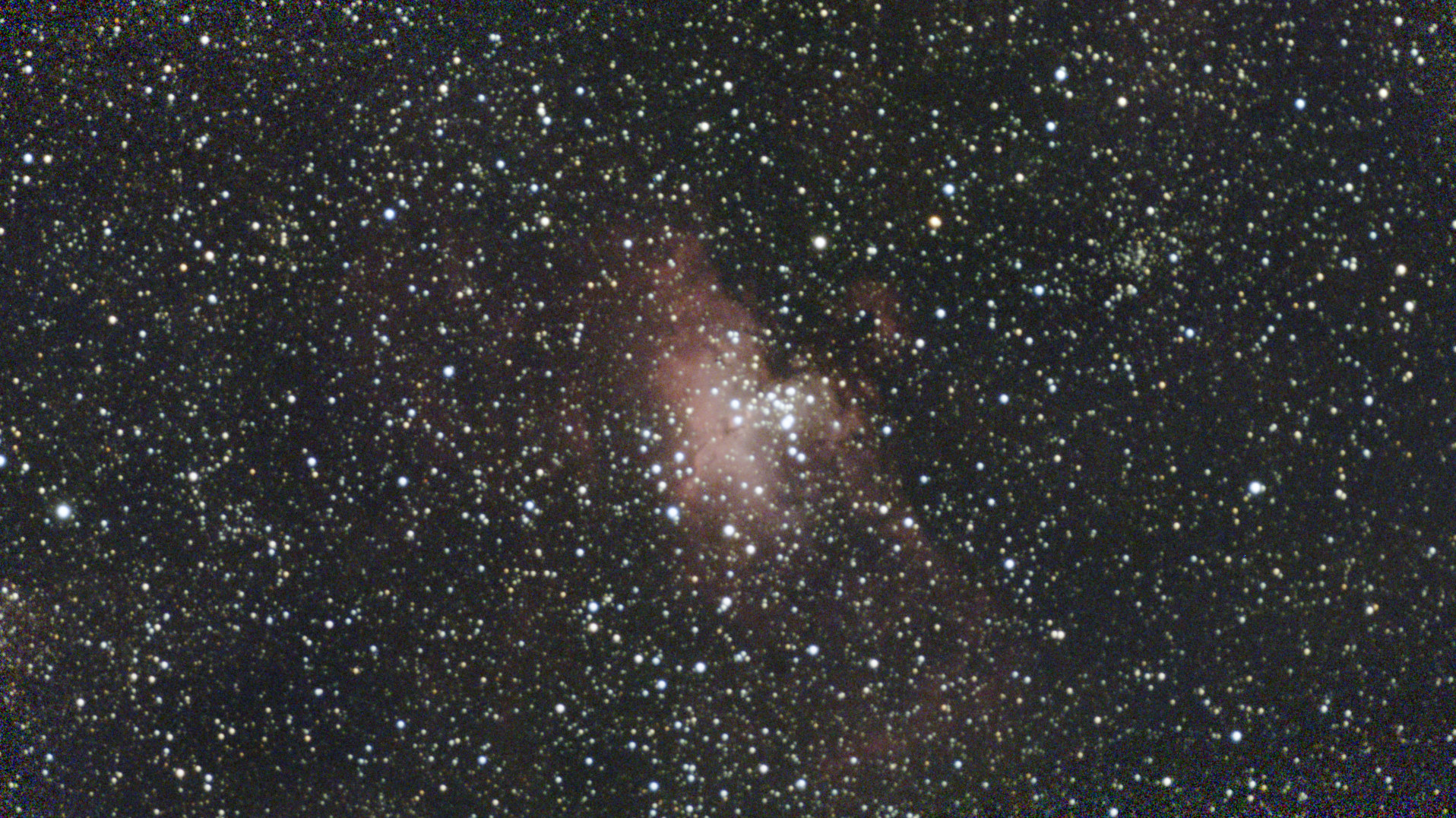
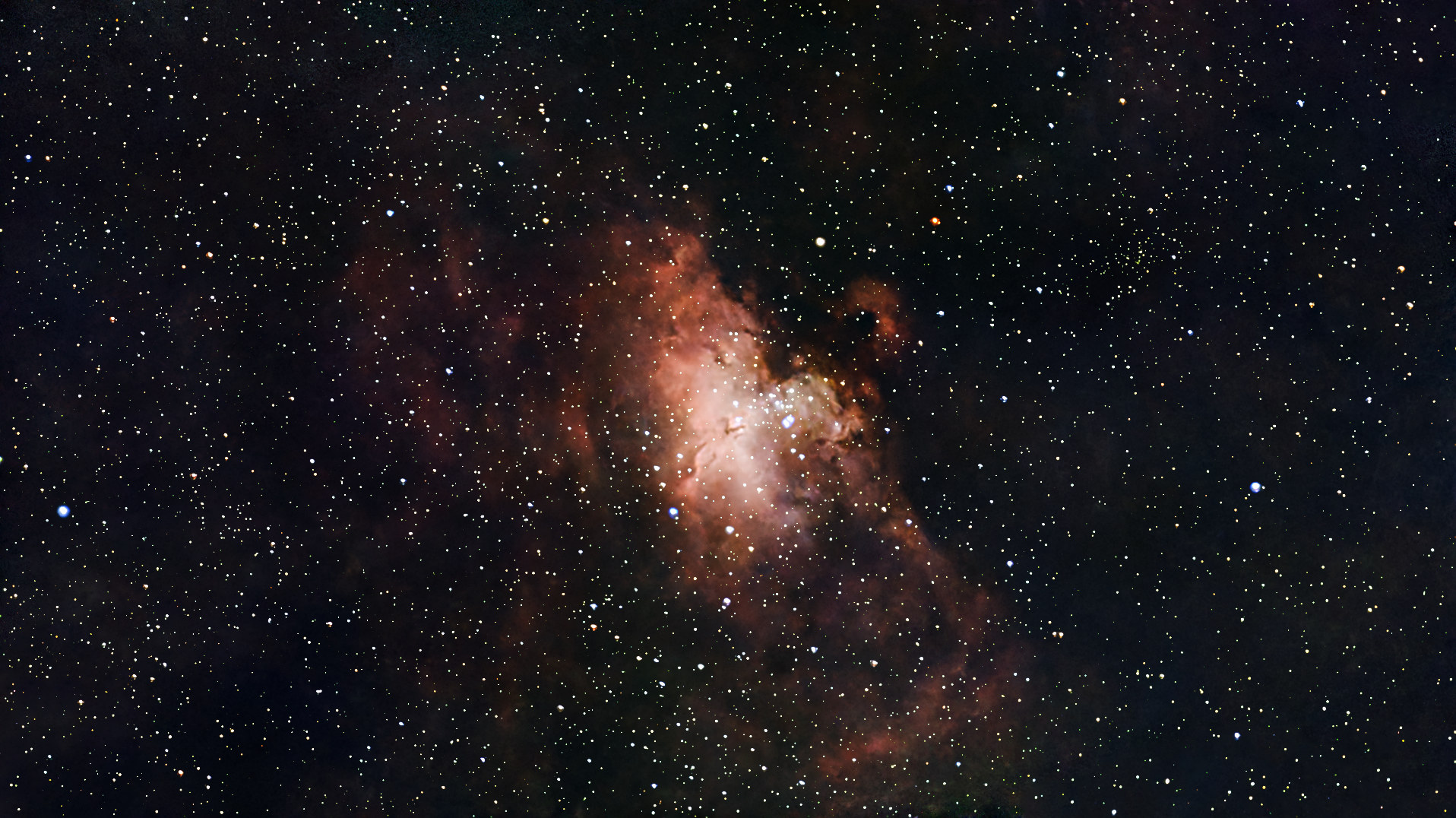
Licence: for personal use, credit Damon Scotting. Both JPEGs 1,916 x 1,076 px.
+30 C sensor temperature during imaging
150 mm focal length, plate solved DwarfLab states 150 mm
2.1 x 1.2° field of view 1,920 x 1,080 px on Sony IMX662
2.1 MP Sony IMX662 1,920 x 1,080 px, 5.6 x 3.1 mm
Should you buy it?
89/100 Stars for Your Buck
Pros
- “At 840 g it generally fits in your pocket: the perfect travel telescope.”
- “The optics are a six-element apochromatic design, which at this price is a lot more glass than you would normally expect.”
- “I am very impressed by how quickly it can be set up and running; with my Seestars I always spend a while calibrating and levelling the tripod legs.”
- “The dual narrowband filter is built in; Vaonis charge $399 for theirs, about the price of the whole DWARF mini.”
- “I felt the DWARF mini outdid the DWARF 3 on a lot of targets; its image quality is unbelievable in relation to its size.”
- “About 47 hours of use with no issues whatsoever; it truly has been a delight.”
Cons
- “The interface feels a bit more basic than the ZWO Seestar app, although it still gets the job done.”
- “You can capture better images with other smart telescopes, especially those using the IMX585 sensor, like the Seestar S30 Pro and the Vespera Pro 2.”
- “The stars in the raw stacks are a little bloated to begin with; the DWARF scopes gain the most from editing.”
- “The battery runs for about 4 hours.”
- “It is not a lot cheaper than the Seestar S30, which has the same aperture and the same sensor; it is a lot smaller.”
I think this might be the perfect beginner telescope for anyone trying to get into astrophotography, just because there were literally no hiccups whatsoever.
Who the DWARF mini is for
Complete beginner
Buy
It sets itself up, finds its own position and stacks by itself; my recommendation for a first smart telescope.
Travelling stargazer
Buy
On a mini tripod it packs into any bag; nothing I have tested travels better.
Choosing between the DWARF mini and the Seestar S30
Buy
The same aperture and sensor in a far smaller body; the DWARF mini is the one I prefer.
Wants the best images under £700
Skip
My recommendation is the Seestar S30 Pro, which captures better images.
Already owns a DWARF 3
Skip
The mini is smaller, not a step up: a 30 mm aperture and a 2 MP sensor against the DWARF 3's 35 mm and 4K.
Wants all-night sessions
Skip
A full dark night needs a power bank plugged in.
Three alternatives I have reviewed
- ZWO Seestar S30 Pro Better images: a 4K IMX585 sensor behind the same 30 mm aperture. 99/100 £649 Read the review
- ZWO Seestar S30 The same 30 mm aperture and IMX662 sensor in a bigger, heavier body. 88/100 £419 Read the review
- DwarfLab DWARF 3 The bigger sibling: 35 mm of aperture and a 4K sensor. 61/100 £459 Read the review
Questions and more about this review
Reviewed by
Damon Scotting
The Telescope Man Verified
BSc (Hons) Physics with Astrophysics and Cosmology, Loughborough University PGCE / QTS, University of Nottingham
About Damon About Damon Damon Scotting is The Telescope Man. He holds a BSc (Hons) in Physics with Astrophysics and Cosmology from Loughborough University and a PGCE with QTS from the University of Nottingham, and taught physics in secondary schools before becoming an astronomy creator. He is a contributing writer for BBC Sky at Night Magazine and the author of 42 Wonders of Our Night Sky, and his photograph of the galaxy M100 with the dwarf planet Ceres was Highly Commended in the Astronomy Photographer of the Year 2024 competition run by Royal Observatory Greenwich. He has appeared on the BBC's Blue Peter. More than 750,000 people follow his astronomy channels on YouTube, Instagram and TikTok, and he has reviewed more than 140 telescopes, mounts, cameras, filters and accessories hands-on for this site. More about Damon · How I test · Damon's book
I review all kinds of gear: most of it I buy, some is gifted and some is loaned, and all of it is reviewed the same way. How this site is funded
Seven questions, answered
Questions about the DwarfLab DWARF mini
Reviewed 28 August 2026 ·Updated 23 September 2026
I review all kinds of gear. Most of it I buy, some is gifted and some is loaned, and all of it is reviewed the same way: no company sees or approves a review before it is published. Shop links marked Ad are affiliate links: I earn a commission when you buy through them, at no extra cost to you. How this site is funded
- Is the DWARF mini better than the Seestar S30? They share the 30 mm aperture and the IMX662 sensor. The DWARF mini is more fun to use, to show off and to carry around, which is why I prefer it over the S30. From my video review The specifications and the comparison table ↓
- How does the DWARF mini compare with the DWARF 3? On Andromeda I ranked them S50 Pro, S30 Pro, DWARF mini, then DWARF 3; the two DWARFs are side by side in the versus. From my video review Versus the DWARF 3 ↓
- How many of its frames does it actually keep? Across 32 named sessions it kept 5,689 of 6,588 frames on board, 86%. The exception was the Horsehead, low in the sky, where it kept 94 of 420; restacking the subs on a computer recovered 307 of them. Tested numbers and the download ↓
- Does the battery last all night? No. It runs for about 4 hours on its 7,000 mAh battery, and no smart telescope lasts a whole winter night, so I plug in a portable power bank. The specifications and the comparison table ↓
- Can it photograph the Sun? Yes, with the ND filter from the box in front of the lens: the app shows the Sun and its sunspots live, as in the frame from my review. From the review video ↓
- What comes in the box? The DWARF mini, an ND filter, a USB-C cable and a wipe cloth. The tripod is sold separately; First Light Optics also sell it as a bundle with the tripod. In the hand ↓
- What have I not tested on the DWARF mini? I have not tested equatorial mode or its longer exposures, the wide-angle camera and its time-lapse modes, or planets and the Moon.