DwarfLab DWARF 3 review: 4K and capable, but the mini wins
Where does it rank on our leaderboard
| Rank | Telescope | Stars for Your Buck | Recorded UK price |
|---|---|---|---|
| 1 | ZWO Seestar S30 Pro | 99 out of 100 | £649 |
| 2 | ZWO Seestar S50 Pro | 91 out of 100 | £999 |
| 3 | DwarfLab DWARF mini | 89 out of 100 | £399 |
| 4 | ZWO Seestar S30 | 88 out of 100 | £419 |
| 5 | Vaonis Vespera Pro 2 | 63 out of 100 | £2,599 |
| 6 | DwarfLab DWARF 3 | 61 out of 100 | £459 |
| 7 | Vaonis Vespera III | 60 out of 100 | £2,199 |
| 9 | DwarfLab DWARF II | 22 out of 100 | £369 |
| 10 | Unistellar eVscope 2 | 8 out of 100 | £4,099 |
Contents
- 01 Where does it rank on our leaderboard
- 02 Specifications and features
- 03 In the hand
- 04 From the review video
- 05 Raw against finished
- 06 Same target, other smart telescopes
- 07 What is it for
- 08 Watch the review
- 09 Tested numbers and the download
- 10 Should you buy it?
- 11 Questions and more about this review
In 30 seconds
Stars for Your Buck 61/100
Reviewed 30 Aug 2026 Updated 23 Sep 2026
- Rank
- #6 of 10 smart telescopes
- Verdict
- Worth a look
Written by Damon Scotting 6 min read
Buy it if
- You want 4K frames of nebulae and galaxies from a telescope that fits in one hand.
- You want a dual-band filter, a solar filter and raw FITS files included, with nothing extra to buy.
- You also want a wide-angle camera for panoramas and Milky Way shots.
Skip it if
- You want the best value from DwarfLab: the DWARF mini costs less.
- You want the most polished app: the Seestar and Vespera apps are further ahead.
- You need a whole winter night on one charge: the battery is rated at up to 5.5 hours.
DwarfLab have come a very long way with the DWARF 3, and I'm not saying it is bad in any regard, but in terms of price and value the DWARF mini wins hands down.
Specifications and features
Against the smart telescopes I have reviewed
Compare with
| DwarfLab DWARF 3 reviewed #6 of 10 | DwarfLab DWARF mini #3 of 10 | ZWO Seestar S30 Pro #1 of 10 | ZWO Seestar S30 #4 of 10 | |
|---|---|---|---|---|
| Recorded UK price | £459 | £399 | £649 | £419 |
| Stars for Your Buck | 61/100 | 89/100 | 99/100 | 88/100 |
| Aperture | 35 mm (telephoto); 3.4 mm (wide-angle) | 30 mm (telephoto); 3.4 mm | 30 mm (telephoto); 3.4 mm | 30 mm |
| Focal length | 150 mm (telephoto); 6.7 mm (wide-angle) | 150 mm (telephoto); 6.7 mm | 160 mm (telephoto); 6 mm | 150 mm |
| Focal ratio | f/4.3 (telephoto); f/2 (wide-angle) | f/5 | f/5.3 (telephoto); f/1.75 | f/5 |
| Optical design | 6-element apochromatic dual-camera lens group | Six-element apochromatic lens; separate wide-angle camera | 4-element apochromatic lens with ED glass; separate wide-angle camera | Apochromatic triplet with ED glass; separate wide-angle camera |
| Sensor | Sony IMX678 Starvis 2, 1/1.8 inch (telephoto); 1/2.8 inch (wide-angle) | Sony IMX662, 1/2.8 inch | Sony IMX585 (telephoto); Sony IMX586 | Sony IMX662 (telephoto); separate wide-angle sensor |
| Resolution | 3840 x 2160, 8.3 MP (telephoto); 1920 x 1080 (wide-angle) | 1920 x 1080, 2 MP | 3840 x 2160, 8.3 MP | 1080 x 1920 (telephoto); 1920 x 1080 |
| Field of view | 3.38 degrees diagonal (telephoto); 50.6 degrees diagonal (wide-angle) | 2.45 degrees diagonal (telephoto); 50.59 degrees diagonal | 4.6 degrees (telephoto); 63 degrees | 2.46 degrees diagonal (telephoto); 23.2 degrees |
| Filters | Visible, astro and dual-band (OIII 500.7 nm and H-alpha 656.3 nm); magnetic solar filter in the box | Dark frame; astro 430 to 690 nm; dual narrowband H-alpha and OIII | UV/IR cut; light pollution (OIII 30 nm, H-alpha 20 nm); dark field | UV/IR cut; light pollution (OIII 30 nm, H-alpha 20 nm); dark field; magnetic solar filter |
| Weight | 1.35 kg | 840 g | 1.65 kg | 1.65 kg |
| Battery | 10,000 mAh built in, USB charging; up to 5.5 hours | 7,000 mAh built in, USB charging; about 4 hours | 6000 mAh, about 6 hours | 6000 mAh, about 6 hours |
| Storage | 128 GB eMMC built in | 64 GB built in | 128 GB eMMC | 64 GB eMMC |
| App | DWARFLAB app | DWARFLAB app | Seestar app | Seestar app |
In the hand
On its tripod, lenses open
Opening the lens cover
Off the tripod
Folded shut
Side on
On a full-size tripod
From the review video
Three frames from my video
Six smart telescopes under the stars
M 16 on six smart telescopes, final stacks
M 31 on four smart telescopes, final stacks
Raw against finished
Same target, other smart telescopes
The 5 targets, the unprocessed side against my finished image, each with its integration, the camera and the palette:
- M 16 Eagle Nebula: 1 h 04 min (254 x 15 s) of light, Sony IMX678 (built in), Astro, the telescope's own stack as it saved it
- M 31 Andromeda Galaxy: 1 h 26 min (345 x 15 s) of light, Sony IMX678 (built in), Astro, the telescope's own stack as it saved it
- NGC 7000 North America Nebula: 45 min (180 x 15 s) of light, Sony IMX678 (built in), Astro, the telescope's own stack as it saved it
- NGC 6960 Western Veil Nebula: 46 min (183 x 15 s) of light, Sony IMX678 (built in), Astro, the telescope's own stack as it saved it
- Omega Centauri: 34 min (137 x 15 s) of light, Sony IMX678 (built in), Astro, the telescope's own stack as it saved it
North America Nebula, Eagle Nebula, Andromeda Galaxy, Omega Centauri on the DwarfLab DWARF 3 and five other smart telescopes; the panes pan and zoom together
What is it for
Five things it is for
Two cameras in one body
At the heart of it are two lenses working together: a telephoto lens for both deep-sky astrophotography and more landscape work, and a wide-angle lens that is intended for the likes of panoramas and Milky Way shots.
A 4K Starvis 2 sensor
The sensor it uses is a Sony IMX678, a Starvis 2 chip that provides you with 8.3 megapixels at 4K resolution, which is a really good sensor to partner with a smart telescope, especially when you think the overall price is $549.
Raw files to process yourself
It does up to 60 second exposures in equatorial mode and it outputs raw FITS files, so you can process it properly for yourself. Compared to their originals, it's the DWARF scopes that have had the biggest upgrades with my edits.
A high stacking rate
I feel like when I'm using the Seestar or Vaonis telescopes, it rarely stacks more than about 70% of the images, and yet with the DWARF telescopes the efficiency of the actual stacking rate is a lot higher.
A solar filter in the box
It has a visible filter, an astro filter and a dual-band OIII and hydrogen alpha filter, as well as a magnetic solar filter in the box, so it really is a comprehensive package.
Watch the review
I Tested EVERY SMART Telescope on the Market...These are the results! · published 30 August 2026 · 11:06 · Watch on YouTube · 147,563 views, 2,544 likes on 2 Oct 2026
Jump to
- 1:00 Every spec, side by side
- 1:14 The sensor that rules them all (and the S50 Pro mystery)
- 2:06 Storage and battery: surviving a UK winter night
- 3:20 Round 1 - Eagle Nebula, six telescopes
- 4:31 Round 2 - Dumbbell Nebula (and Vaonis filter prices)
- 5:35 Round 3 - Andromeda: Seestar Pro vs DWARF
- 7:31 Round 6 - North America Nebula, my favourite of the set
- 8:37 STARS FOR BUCKS: ranking all eight
Transcript of the review video 2,333 words · 19 chapters · searchable
Press a time stamp to play from there.
0:00 The wager: price does not equal results
0:00 What is the best value smart telescope on the market right now? 0:02 Well, in tonight's video, I'm going to try and find out. 0:05 I'm pitting eight of the most popular telescopes in the world right now against each other. 0:08 But be warned going into this, a more expensive price tag definitely does not mean better results, as we'll soon find out. 0:14 I'm Damon Scotting and this is Astronomical.
0:18 Meet the contenders: DwarfLab, Vaonis, Seestar
0:19 So, let's meet the contenders and the pretenders. 0:21 Tonight's video will be focusing on three different brands of smart telescopes. 0:24 In the grey corner, we have the dwarf lab range of tiny but powerful smart telescopes. 0:29 In the white corner, we have the incredibly sleek and well-designed Vaonis Vespera telescopes. 0:33 And lastly, in the started off black, but has now changed to white, it's a Seestar range of smart telescopes from ZWO. 0:39 The main thing smart telescopes have always had going for them is their relatively affordable cost.
0:42 Why smart telescopes beat a $2,000 DIY rig
0:45 In order to buy your own astrophotography rig made up of individual components like a telescope, a camera, a mount, an autofocuser, you'd be forking out around $2,000 just to replicate what the $399 Seestar S30 can do. 0:58 Which is part of what makes smart telescopes so exciting.
1:00 Every spec, side by side
1:00 They are not just easy to use, they are affordable. 1:04 In the vast majority of cases, they are very portable and lightweight, which is of course a direct result of their small aperture sizes, with the largest of our comparison being less than 2 in in size.
1:14 The sensor that rules them all (and the S50 Pro mystery)
1:14 When it comes to imaging quality, it's the IMX585 sensors that stand head and shoulders above the rest, providing 4K quality images. 1:21 This has been the most significant step up in terms of improvements over previous models. 1:24 There are no current smart telescopes on the market that use a better sensor than the IMX585. 1:30 The Vespera Pro 2 does use a sensor with more megapixels, but in terms of imaging quality, I find the IMX585 to be better. 1:37 The Seestar S50 Pro sensor is a bit of an odd mystery at this point. 1:41 ZWO is not the IMX585 sensor, and it seems instead they've used an equally capable OmniVision sensor, which remarkably has the exact same specifications. 1:50 All I know for certain is that I've tested the telescope imaging capabilities out rigorously, and had no one have told me it wasn't the IMX585, I wouldn't have assumed otherwise. 1:59 All the telescopes have at least enough inbuilt storage for a couple nights of stargazing, with the Vespera Pro 2 topping the list at 225 GB.
2:06 Storage and battery: surviving a UK winter night
2:09 And then the final interesting comparison between these telescopes is the battery life. 2:12 The Vaonis Vespera scopes are of course the biggest and bulkiest, which also means they have the longest run times of any of the smart telescopes. 2:20 We get some very long nights in the winter here in the UK with winter solstice running beyond 16 hours and Astro Dark lasting just over 12 hours. 2:29 So, none of them can technically last an entire night, which is why I always plug in a little portable power bank just to give them some extra juice. 2:35 As you can probably already figure out, although these telescopes are all part of the same product ranges, many of them are simply improvements upon their previous model, which involve significant upgrades, such as the quality of the telescope glass or the imaging sensor being improved.
2:37 What each "Pro" upgrade actually changes
2:48 Here we can see what are the most expensive telescopes in each range and how they've improved upon their predecessors. 2:53 Now, the telescopes all offer different fields of views.
2:53 Fields of view: why fair comparisons are hard
2:55 So, the challenge in today's video is going to be trying to show them in a fair and equal light. 3:00 because if I was just to show them all by zooming into the shared field of view, then for certain telescopes off a wider field of views would be cropping off a lot of their image. 3:09 So just to give you an insight into how they each operate in terms of field of view, take a look at this graphic here that I made, which highlights just how much they wildly vary.
3:14 How every comparison works (raw → aligned → processed)
3:17 Okay, so let's get stuck in. 3:17 For each of these comparisons, I'm going to start off by showing the raw stacked images from each of the feature telescopes in their native frame, which means I haven't zoomed in at all.
3:20 Round 1 - Eagle Nebula, six telescopes
3:26 This is how it looked straight out of the box. 3:29 And then I'm going to zoom them all in so they are looking at the exact same part of the targets in order to give you a comparative view before then switching from the raw stack shots to the final processed versions of the images. 3:39 If you do like this idea, if you like these animations, then please let me know in the comments down below. 3:44 And if you think they are too boring and repetitive, please voice your feelings so I can work towards a gold standard that perfectly demonstrates the differences in image quality between different telescope gear. 3:53 As you can see, they all do a good job. 3:54 It's only the dwarf 3 and dwarf mini shots where the stars are a little bloated to begin with. 4:01 The structure of the pillars is apparent in all of the shots and then even more so once we apply some sharpening and denoising tools to really enhance the quality of each of these images. 4:10 I think I went a little overboard with the editing of the colours of the S50 Pro shot. 4:13 But to be fair, I felt like I had the flexibility to adjust them. 4:17 Compared to their originals, it's the dwarf scopes that have had the biggest upgrades with these edits. 4:22 Whilst the Vespera Pro 2 shot is the one that has remained the most similar, implying that it has the best raw stack shot, which I suppose you would assume would only be obvious since it is the most expensive scope of the bunch.
4:31 Round 2 - Dumbbell Nebula (and Vaonis filter prices)
4:34 Next up, we have the Dumbbell Nebula. 4:35 This is a funny little target to try and image, particularly now since all of the smart telescopes have their own little built-in filters that boost the nebulosity of these targets by eliminating a lot of the light pollution. 4:46 In this matchup, we have the Seestar S30 versus the S50 and the S50 Pro, as well as a very solid entry from the Dwarf Mini and the Vespera Pro 2, plus an additional light pollution filter that you have to buy separately from the Vespera telescopes, and it costs a whopping $229. 5:05 Yep. 5:05 But it gets worse. 5:05 They charge you $399 for their duo band filter. 5:07 And for that amount of money, you could get yourself a Seestar S30. 5:12 or with another $20 you can get yourself the Dwarf Mini. 5:17 Yeah, with that being said though, the Vespera Pro 2 does produce the best images of this group. 5:20 It structure is a lot clearer with finer details. 5:23 My second favourite would be the S50 Pro, but I think this heavily suffered because I only racked up 8 minutes of exposure with it. 5:30 So, it's probably best to keep your eye on the exposure times in the bottom lefthand corner of these images.
5:35 Round 3 - Andromeda: Seestar Pro vs DWARF
5:35 All right, so now we're taking a look at the Andromeda Galaxy in a strict Seestar Pro versus Dwarf telescope matchup. 5:42 Now, something very important to note for these ones is that they were all captured at the exact same time over about two and a bit hours. 5:47 So, the images that they've stacked and used is very indicative of their stacking efficiency. 5:53 Every single one of them has produced great shots. 5:55 And as far as the S30 Pro versus the S50 Pro goes, it's only obvious that the winner is the S50 Pro once you really zoom in on these galactic bands. 6:04 I'd rank these from best to worst as S50 Pro, S30 Pro, Dwarf Mini, and then Dwarf 3. 6:09 Come to think of it, I actually felt that the Dwarf Mini actually outdid the Dwarf 3 on a lot of these targets. 6:16 Next up is a Seestar battle between the S30, S50, and S50 Pro, as they've all been pitted up against the Orion Nebula.
6:16 Round 4 - Orion Nebula core
6:22 The core of the stellar nursery is quite a tricky one to get right, especially when it comes to the editing process, but I think it's very easy to tell in this one which one came out the best. 6:31 It is, of course, the most expensive scope of the group, but you can still get some relatively detailed shots even with these $500 smart telescopes. 6:39 Now, this is a very interesting comparison.
6:40 Round 5 - Swan Nebula mosaics + why sky darkness matters
6:41 So, these are all mosaic shots of the Pillars of Creation and the Swan Nebula. 6:44 But the catch is the Vaonis Vespera Pro shots were taken from my garden in the summer, which has a Bortle of about 6.8, whilst the S30 Pro was taken further down south on a recent stargazing trip where the Bortle clocked in at about 4. 6:57 So, the most obvious difference in their RAW stacks will be the gradients that you can see caused by light pollution and being low down in the horizon, which don't get me wrong, they are fixed easily by free tools like GraXpert, but also check out how much more nebulosity is visible in the S30 Pro shot compared to the others. 7:16 So perhaps less of a fair image comparison and more of a demonstration on the significance of how high above the horizon your target is and how that matters as well as the relevant change in faint detail considering similar exposure times but different bottles. 7:30 Then lastly to cap these comparisons off this is my favourite shot of the set, the North America Nebula.
7:31 Round 6 - North America Nebula, my favourite of the set
7:36 Here we have the S30, S30 Pro, S50 Pro, Vaonis Vespera Pro 2, and Vaonis Vespera 3, all having a go at imaging the Cygnus Loop. 7:44 One of the most beautiful structures to capture in our night sky. 7:48 Look at that. 7:48 Even with the Seestar S30, you can capture some beautiful shots, but there's a very clear progression in image quality going upwards towards the S50 Pro, which again, I felt it was much easier to play with its colours than any of the other shots. 8:02 I think both of the Vespera shots captured tremendous amounts of detail as well, but they weren't nearly as easy to edit in terms of colour. 8:08 I'll leave it up to you to determine which one of these was your favourite. 8:12 But yeah, there we go.
8:12 The shots I did dirty (Helix confession)
8:13 There we have it. 8:13 I did also do a few more image comparisons, but there's always one shot that's part of the bunch that I feel like I've done dirty with my editing, so I felt too ashamed to share it. 8:24 Take this example here of how much I've clipped the Helix Nebula for the S30 Pro shot. 8:27 Overall, I'm of course a huge advocate for all smart telescopes. 8:32 They're really simple and fun to use and now more capable than ever of taking stunning images from your garden that are worthy of being framed.
8:37 STARS FOR BUCKS: ranking all eight
8:37 But where do these smart telescopes rank in terms of my stars for your buck rating? 8:41 Well, at the bottom of the list is the now relatively well dated DWARF 3 telescope. 8:47 It's still got a respectable score of 69, which sees it just edged out by the Vespera free smart telescope on 70 and well beaten by its nearest competitor in the Seestar S50 smart telescope at 76. 8:59 Then we have the Vaonis Vespera Pro 2 with a stars for your buck rating of 78. 9:04 I think it was definitely top two in terms of images captured through these comparisons. 9:08 It's just its hefty price tag that's holding it back. 9:13 If it was half the price, I'd probably put it as high as 95. 9:14 The Seestar S30 takes the number four spot with a rating of 83. 9:19 I remember being blown away by this little scope when it first released at just $349, but since then its price has gone up and as a result its rating has gone down. 9:28 Taking the bronze medal is its fierce rival, the Dwarf Mini, scoring 84. 9:33 I think what gives the Mini the edge here is that it's just more fun to use, to show off, to carry around. 9:40 Its image quality is unbelievable in relation to the size of it, and that's why I prefer it over the S30. 9:43 Then at number two, we have the S30 Pro, scoring 91. 9:48 This was the first smart telescope where I really started to feel like we were entering the realms of high-quality astrophotography, and it's only pipped to the number one spot by its big brother, the Seestar S50 Pro, scoring a little more at 92.
9:57 The catch: the #1 spot expires on 15 September
10:01 But here's the but, and it's a big but. 10:04 This score is largely dependent on the current introductory price of the S50 Pro at $899. 10:12 It will soon go up to $999 and as a result, its rating in my eyes will go down. 10:17 Someone made a very interesting comment on my S30 Pro versus S50 Pro that basically said, "Provided you don't zoom in to an unholy level and you take the images at surface level, the quality of the images from the two telescopes are almost the same." 10:30 And that's why if you're comparing the $699 S30 Pro and the $999 S50 Pro, then I'd recommend going for the former as a better value purchase. 10:42 But what do you think? 10:42 Let me know your own personal thoughts, feelings, and scores for these smart telescopes in the comments down below.
10:42 Your verdict + what is next
10:46 If you do have any experience using any of them, share your honest opinion with myself and thousands of other keen stargazers. 10:52 You can find affiliate links to all the telescopes feature in today's video in the comments down below. 10:57 Thank you very much for watching. 10:58 I'm Damon Scotting and this was astronomical.
Tested numbers and the download
Finished image
- Download the raw stack JPEG · 3.9 MB · 3,852 x 2,175
- Download the finished image JPEG · 1.5 MB · 3,852 x 2,175
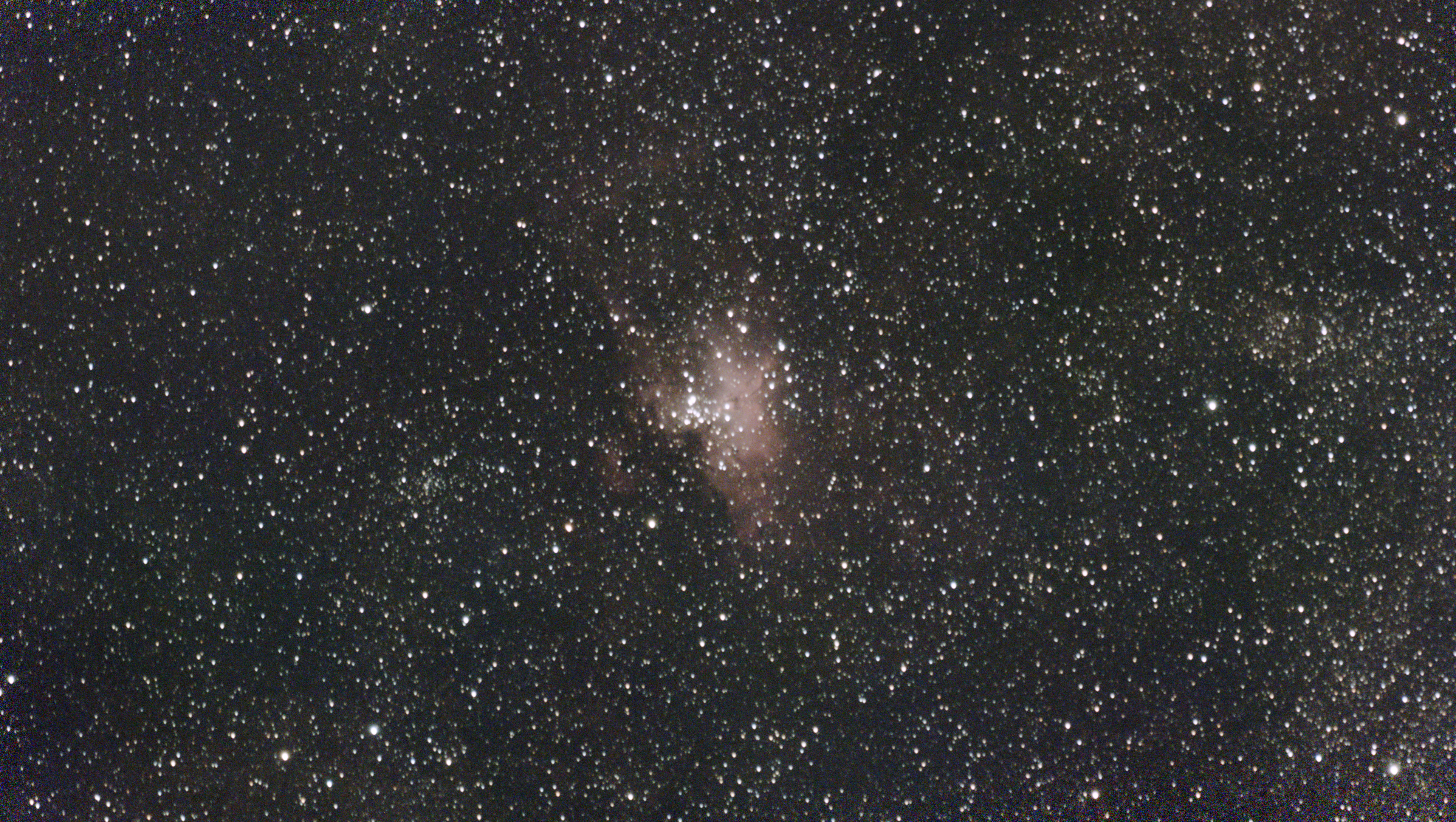
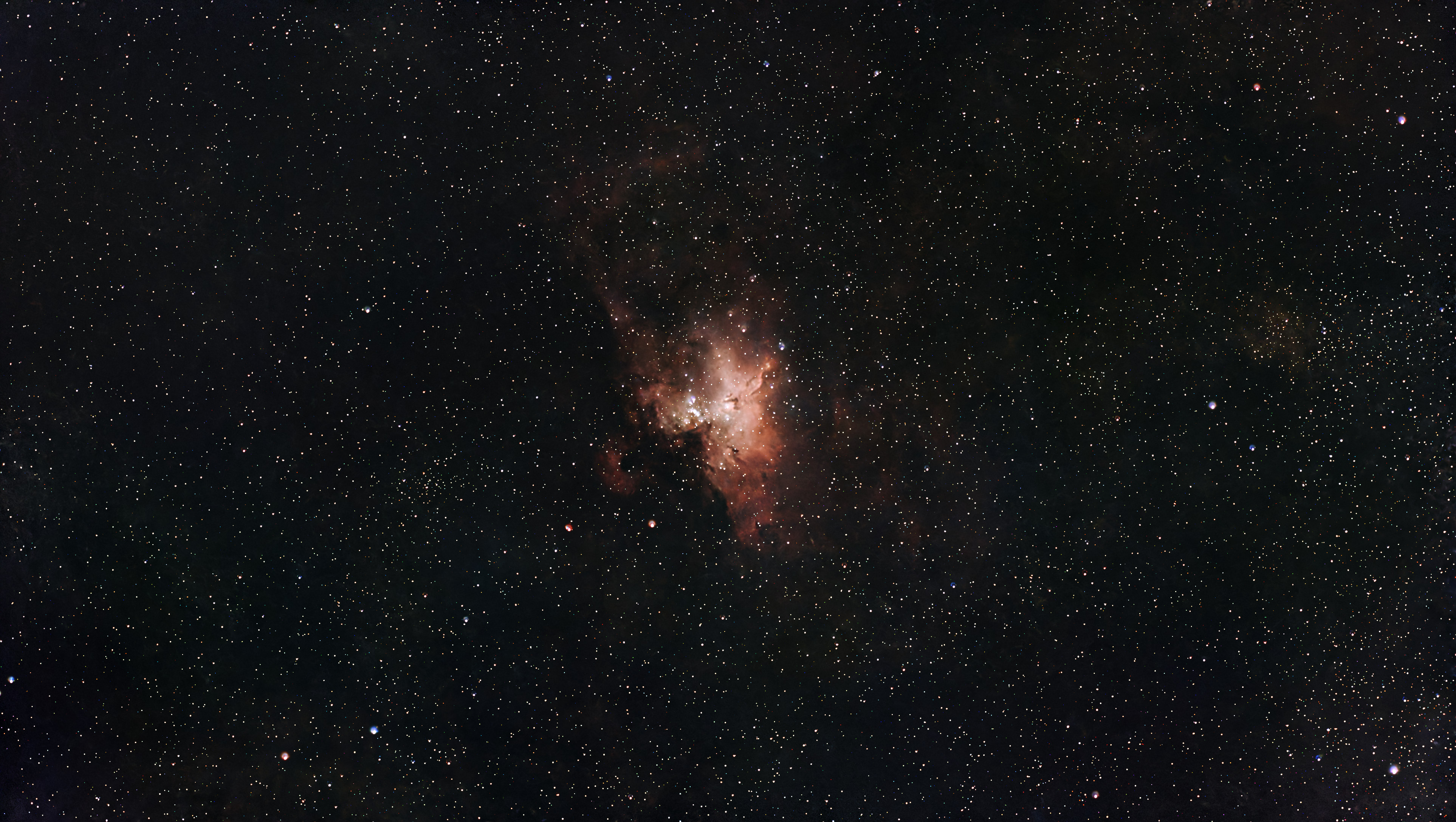
Licence: for personal use, credit Damon Scotting. Both JPEGs 3,852 x 2,175 px.
+35 C sensor temperature during imaging
148 mm focal length, plate solved DwarfLab states 150 mm
3.0 x 1.7° field of view 3,856 x 2,180 px on Sony IMX678
8.4 MP Sony IMX678 3,856 x 2,180 px, 7.7 x 4.4 mm
Should you buy it?
61/100 Stars for Your Buck
Pros
- “It is a smart telescope that fits in one hand and also has a dedicated bird-watching mode.”
- The DWARF telescopes are a little easier to use than any other smart telescope on the market, and the DWARF 3 keeps that up.
- “What the extra $130 over the DWARF mini buys you is 5 more millimetres of aperture, a far better sensor and double the storage.”
- It stacked 1,457 of the 1,693 frames it took across my ten sessions, 6 hours 4 minutes of data.
- “On the Andromeda Galaxy, every one of the four smart telescopes produced great shots, the DWARF 3 included.”
- My plate solves give a 3.0 x 1.7 degree field, wide enough for the whole Andromeda Galaxy with M 32 and M 110.
Cons
- The stars in its raw shots are a little bloated to begin with; of the smart telescopes I compared, only the two DWARFs show it.
- The app feels a little basic and limited; the Vaonis and Seestar apps are a long way ahead in design, features and interface.
- It has no more reach than the cheaper DWARF mini: exactly the same 150 mm focal length.
- On the Andromeda Galaxy it came last of the four smart telescopes I compared, behind the S50 Pro, the S30 Pro and the DWARF mini.
- The battery is rated at up to 5.5 hours.
I actually felt that the DWARF mini outdid the DWARF 3 on a lot of these targets.
Who the DWARF 3 is for
Complete beginner
Skip
My recommendation is the DWARF mini: just as simple to set up, lighter at 840 g, and it costs less.
Wants 4K detail to crop and print
Buy
Its 3840 x 2160 frames carry four times the pixels of the DWARF mini's 2 megapixels.
Images nebulae from a light-polluted sky
Buy
The dual-band H-alpha and OIII filter is built in, where Vaonis charges $399 for theirs.
Wants daytime and landscape shots too
Buy
It adds a bird-watching mode and gigapixel landscape panoramas to the night sky; I have yet to test either myself.
Choosing between the DWARF 3 and the DWARF mini
Skip
I much prefer the DWARF mini, which I think is a lot more unique than the DWARF 3.
Already owns a DWARF mini
Skip
Upgrading adds resolution, not a new view of the sky.
Three alternatives I have reviewed
- DwarfLab DWARF mini The smaller, lighter and cheaper DWARF. 89/100 £399 Read the review
- ZWO Seestar S30 Pro A 4K Seestar that came out ahead of the DWARF 3 on Andromeda. 99/100 £649 Read the review
- ZWO Seestar S30 The budget Seestar: 30 mm at f/5 with a dual-band filter built in. 88/100 £419 Read the review
Questions and more about this review
Reviewed by
Damon Scotting
The Telescope Man Verified
BSc (Hons) Physics with Astrophysics and Cosmology, Loughborough University PGCE / QTS, University of Nottingham
About Damon About Damon Damon Scotting is The Telescope Man. He holds a BSc (Hons) in Physics with Astrophysics and Cosmology from Loughborough University and a PGCE with QTS from the University of Nottingham, and taught physics in secondary schools before becoming an astronomy creator. He is a contributing writer for BBC Sky at Night Magazine and the author of 42 Wonders of Our Night Sky, and his photograph of the galaxy M100 with the dwarf planet Ceres was Highly Commended in the Astronomy Photographer of the Year 2024 competition run by Royal Observatory Greenwich. He has appeared on the BBC's Blue Peter. More than 750,000 people follow his astronomy channels on YouTube, Instagram and TikTok, and he has reviewed more than 140 telescopes, mounts, cameras, filters and accessories hands-on for this site. More about Damon · How I test · Damon's book
I review all kinds of gear: most of it I buy, some is gifted and some is loaned, and all of it is reviewed the same way. How this site is funded
Eight questions, answered
Questions about the DwarfLab DWARF 3
Reviewed 30 August 2026 ·Updated 23 September 2026
I review all kinds of gear. Most of it I buy, some is gifted and some is loaned, and all of it is reviewed the same way: no company sees or approves a review before it is published. Shop links marked Ad are affiliate links: I earn a commission when you buy through them, at no extra cost to you. How this site is funded
- Is the DWARF 3 better than the DWARF mini? Not for the money. It adds aperture and pixels, and the Andromeda Galaxy panes in the same-target compare show how close the two come. Same target, other smart telescopes ↓
- How does the DWARF 3 compare with the Seestar S30 Pro and S50 Pro? Both Seestar Pros came out ahead of it on the Andromeda Galaxy, and the same-target panes show all of them at true scale. Same target, other smart telescopes ↓
- What focal length does it really have? My plate solves put it at 148 mm, 2.79 arcseconds per pixel, against the 150 mm DwarfLab states. Tested numbers and the download ↓
- How long can a single exposure be? DwarfLab states up to 60 seconds, and it saves JPG, PNG, FITS and TIFF files. Every frame I stacked was a 15 second exposure through the astro filter. The specifications and the comparison table ↓
- Does the battery last all night? None of the smart telescopes I tested can technically last an entire UK winter night, which is why I always plug in a little portable power bank just to give them some extra juice. From my video review The specifications and the comparison table ↓
- What comes in the box? The DWARF 3, a magnetic ND solar filter, a USB-C cable, a carrying bag and a wipe cloth. A tripod is not included. What is it for ↓
- Can it stay out in the dew? DwarfLab rates it IP54 and describes it as dust and dew resistant; no dew heater is listed. The specifications and the comparison table ↓
- What have I not tested on the DWARF 3? I have not tested the DWARF 3 on the Moon or the planets, nor its equatorial mode, bird-watching mode, mosaics or wide-angle camera.