ZWO Seestar S50 Pro review: the most detailed Seestar yet
Where does it rank on our leaderboard
| Rank | Telescope | Stars for Your Buck | Recorded UK price |
|---|---|---|---|
| 1 | ZWO Seestar S30 Pro | 99 out of 100 | £649 |
| 2 | ZWO Seestar S50 Pro | 91 out of 100 | £999 |
| 3 | DwarfLab DWARF mini | 89 out of 100 | £399 |
| 5 | Vaonis Vespera Pro 2 | 63 out of 100 | £2,599 |
| 6 | DwarfLab DWARF 3 | 61 out of 100 | £459 |
| 7 | Vaonis Vespera III | 60 out of 100 | £2,199 |
| 8 | ZWO Seestar S50 | 55 out of 100 | £539 |
| 9 | DwarfLab DWARF II | 22 out of 100 | £369 |
| 10 | Unistellar eVscope 2 | 8 out of 100 | £4,099 |
Contents
- 01 Where does it rank on our leaderboard
- 02 Specifications and features
- 03 In the hand
- 04 From the review video
- 05 How good is it? Here's what I captured
- 06 Raw against finished
- 07 Same target, other smart telescopes
- 08 What is it for
- 09 Versus the ZWO Seestar S30 Pro
- 10 Watch the review
- 11 Tested numbers and the download
- 12 Should you buy it?
- 13 Questions and more about this review
In 30 seconds
Stars for Your Buck 91/100
Reviewed 25 Aug 2026 Updated 23 Sep 2026
- Rank
- #2 of 10 smart telescopes
- Verdict
- Damon's pick
Written by Damon Scotting 7 min read
Buy it if
- You want 8K mosaics of galaxies and nebulae without building a rig: set it down, pick a target and it does the rest.
- You want the most detail a Seestar can give: it pulls ahead of the S30 Pro once you zoom right in.
- You want to image all night on one charge: ZWO rates the battery at up to 9 hours.
Skip it if
- You want the best value: the S30 Pro gives almost the same images at normal viewing sizes for £350 less.
- You want the widest single frame: the S30 Pro sees 4.6 degrees to this telescope's 2.8.
- You mainly want planets: Saturn's rings show, but the finer planetary detail stays out of reach.
Across the board, the S50 Pro has either significantly improved upon its predecessors or matched them; the only thing you could argue is not in its favour is its narrower field of view, and mosaic mode doubles that.
Specifications and features
Against the smart telescopes I have reviewed
Compare with
| ZWO Seestar S50 Pro reviewed #2 of 10 | ZWO Seestar S50 #8 of 10 | Vaonis Vespera Pro 2 #5 of 10 | Vaonis Vespera III #7 of 10 | |
|---|---|---|---|---|
| Recorded UK price | £999 | £539 | £2,599 | £2,199 |
| Stars for Your Buck | 91/100 | 55/100 | 63/100 | 60/100 |
| Aperture | 50 mm | 50 mm | 50 mm | 50 mm |
| Focal length | 260 mm (telephoto); 6 mm (wide-angle) | 250 mm | 245 mm | 245 mm |
| Focal ratio | f/5.2 (telephoto); f/1.75 (wide-angle) | f/5 | f/4.9 | f/4.9 |
| Optical design | 4-element apochromatic lens with ED glass; separate wide-angle camera | Apochromatic triplet with ED glass | Apochromatic quadruplet in 3 groups with field corrector | Apochromatic quadruplet with field corrector |
| Sensor | OmniVision OS08B10 (telephoto); Sony IMX586 (wide-angle) | Sony IMX462 | Sony IMX676 | Sony IMX585 |
| Resolution | 3840 x 2160, 8.3 MP (both cameras) | 1920 x 1080 | 3536 x 3536, 12.5 MP | 3840 x 2160, 8.3 MP |
| Field of view | 2.8 degrees (telephoto); 63 degrees (wide-angle) | 1.29 x 0.73 degrees | 1.6 x 1.6 degrees | 2.5 x 1.4 degrees |
| Filters | UV/IR cut; dual-band light pollution (OIII 30 nm, H-alpha 20 nm); dark field; magnetic solar filter included | UV/IR cut; dual-band light pollution (OIII 30 nm, H-alpha 20 nm); dark field | City light suppression included; dual-band and solar sold separately | City light suppression included; dual-band and solar sold separately |
| Weight | 2.8 kg (main unit) | 2.5 kg | 5 kg | 5 kg |
| Battery | 10,000 mAh, up to 9 hours | 6000 mAh, about 6 hours | 11 hours | 11 hours |
| Storage | 128 GB eMMC (about 100 GB usable) | 64 GB eMMC | 225 GB | 115 GB |
| App | Seestar app (App Store and Google Play) | Seestar app | Singularity | Singularity |
In the hand
What comes in the box
Main lens and wide-angle camera
Arm raised
Beside the original S50
S50, S30, S30 Pro and S50 Pro
Imaging through the night
From the review video
Five frames from my video
My framed prints from the S50 Pro
Under the Milky Way
Fifty millimetres against thirty
100 hours of imaging
The raw stack, before any editing
How good is it? Here's what I captured
Three targets
IC 1805 and IC 1848, Heart and Soul Nebulae, OmniVision OS08B10 (built in), LP
- Integration
- 1 h 42 min (617 x 10 s, LP filter)
- Field
- 4.8 x 2.7 degrees
- Telescope
- ZWO Seestar S50 Pro
- Camera
- OmniVision OS08B10 (built in)
- Mount
- Built-in Seestar mount
- Target
- IC 1805 and IC 1848, Heart and Soul Nebulae
- Type
- Emission nebula
- Location
- Bortle 6.8 (in my garden)
NGC 6960 and NGC 6992, Veil Nebula, OmniVision OS08B10 (built in), LP
- Integration
- 1 h 24 min (506 x 10 s, LP filter)
- Field
- 4.8 x 2.7 degrees
- Telescope
- ZWO Seestar S50 Pro
- Camera
- OmniVision OS08B10 (built in)
- Mount
- Built-in Seestar mount
- Target
- NGC 6960 and NGC 6992, Veil Nebula
- Type
- Supernova remnant
- Location
- Bortle 6.8 (in my garden)
M 31, Andromeda Galaxy, OmniVision OS08B10 (built in), IR-cut
- Integration
- 1 h 29 min (538 x 10 s, IR-cut filter)
- Field
- 4.8 x 2.7 degrees
- Telescope
- ZWO Seestar S50 Pro
- Camera
- OmniVision OS08B10 (built in)
- Mount
- Built-in Seestar mount
- Target
- M 31, Andromeda Galaxy
- Type
- Spiral galaxy
- Location
- Bortle 6.8 (in my garden)
Raw against finished
Same target, other smart telescopes
The 3 targets, the raw combined stack against my finished image, each with its integration, the camera and the palette:
- IC 1805 and IC 1848, Heart and Soul Nebulae: 1 h 42 min (617 x 10 s, LP filter) of light, OmniVision OS08B10 (built in), LP, the raw combined stack with one automatic stretch
- NGC 6960 and NGC 6992, Veil Nebula: 1 h 24 min (506 x 10 s, LP filter) of light, OmniVision OS08B10 (built in), LP, the raw combined stack with one automatic stretch
- M 31, Andromeda Galaxy: 1 h 29 min (538 x 10 s, IR-cut filter) of light, OmniVision OS08B10 (built in), IR-cut, the raw combined stack with one automatic stretch
North America Nebula, Andromeda Galaxy, Heart Nebula, Eagle Nebula on the ZWO Seestar S50 Pro and seven other smart telescopes; the panes pan and zoom together
What is it for
Six things it is for
8K mosaics
Thanks to the mosaic mode feature, you can capture images of night sky objects at up to 8K resolution, like this shot of Orion's Belt I took just before sunrise from only 47 minutes and 20 seconds of exposures.
A field that fits Andromeda
I think the S50 Pro is pretty much the ideal size for targets like the Andromeda Galaxy and the Pleiades, since they sit within its field of view without wasting too much space. If that is still an issue, mosaic mode expands the field of view by two times.
Nine hours on one charge
Most nights I plug a power bank into these smart telescopes so they can run the entire night, especially with the dew heater on. That is noticeably less of an issue now, with an estimated battery life of 9 hours.
Two cameras at once
The Pro range also has a wide-angle lens for the Milky Way and the landscape. While I was imaging deep-sky objects I was able to do wide-field imaging at the same time; one wide shot was captured while I was imaging the Pillars of Creation.
The Sun through the included filter
The Moon looks excellent, and the included solar filter makes the Sun remarkably easy to capture.
Set it down and walk away
All of these shots were taken in the standard alt-azimuth mode: I plonked the telescope down on the grass in my garden, selected my target and away it went. It really is that easy nowadays.
Versus the ZWO Seestar S30 Pro
Veil Nebula on both, the same night, plate-solved onto one grid (residual 3.01 px per 1000)
| Target | Telescope | Integration | Subs | Filter | Nights |
|---|---|---|---|---|---|
| NGC 6960 Veil Nebula | Seestar S50 Pro | 84 min | 506 x 10 s | LP | 2026-08-24 |
| NGC 6960 Veil Nebula | Seestar S30 Pro | 144 min | 865 x 10 s | LP | 2026-08-24 |
Watch the review
The BEST $899 Telescope EVER?! - SEESTAR S50 Pro Review video · published 25 August 2026 · 9:13 · Watch on YouTube · 26,231 views, 798 likes on 2 Oct 2026
Jump to
- 0:47 S50 Pro vs S50 vs S30 Pro specs
- 1:02 Mosaic mode and Orion's Belt in 8K
- 2:04 Aperture: S50 Pro vs S30 Pro
- 2:30 Field of view compared on Andromeda
- 2:58 9 hour battery life
- 3:21 The wide angle lens and dual imaging
- 5:14 Raw vs processed, my exact steps
- 7:50 Verdict
Transcript of the review video 1,429 words · 16 chapters · searchable
Press a time stamp to play from there.
0:00 The images (and why I framed them)
0:00 These are the images I captured with this $899 smart telescope. 0:04 And yes, as you can tell, they are so good, I've decided to frame them. 0:08 In tonight's video, I'm going to be reviewing the Seestar S50 Pro Smart Telescope. 0:13 I'm the Telescope Man, and this is astronomical.
0:19 My most in-depth review yet
0:20 So, this might be the most in-depth review video I have ever done. 0:23 Seriously, I have been glued to this smart telescope for the last 2 months, and as a result, I have so much to share with you about it. 0:28 So, I'm not going to overload this video. 0:30 Instead, I'm going to be releasing five more videos throughout the week that each push the Seestar S50 Pro to its limits, as well as try and answer if this really is the best value telescope in the world right now. 0:40 Spoiler alert, the answer is a resounding yes. 0:42 So, make sure you subscribed to see those videos.
0:47 S50 Pro vs S50 vs S30 Pro specs
0:47 Okay, so first things first, we're going to take a look at the specifications of the Seestar S50 Pro versus its previous models. 0:52 So, across the board, the S50 Pro has either significantly improved upon its predecessors or it has matched them. 0:58 The only area that you could potentially argue isn't in its favor is if you prefer a wider field of view.
1:02 Mosaic mode and Orion's Belt in 8K
1:04 But even then, thanks to the incredible mosaic mode feature, you can capture up to 8K resolution images of night sky objects like this shot I did just before sunrise of Orion's belt. 1:16 Look at that. 1:18 Absolutely gorgeous shot. 1:18 And from only 47 minutes and 20 seconds worth of exposures, I think if you show people an image as beautiful as this and explain that you can capture shots like this now from your back garden for as little as $899, no additional accessories required, then millions more would be hooked on astrophotography. 1:36 These smart telescopes are gateways into the hobby. 1:39 And as those more experienced astrophotographers watching this will know, it's only the tip of the cosmic iceberg.
1:45 Why $899 is the story
1:46 Many of you watching this will very likely already own your very own Seestar smart telescope and be currently weighing up the options as to whether or not the latest model is a big enough improvement to warrant its price tag. 1:57 The S50 Pro is now the most expensive smart telescope of ZWO's range. 2:01 And yet, compared to other industry equivalents, it is still about four times cheaper, which is absolutely mad.
2:04 Aperture: S50 Pro vs S30 Pro
2:07 The S50 Pro uses the same new 4K sensor as the S30 Pro. 2:11 But of course, the biggest advantage is the increase in its aperture. 2:14 I'll be sharing a video later that highlights in detail just how significant the jump between these two telescopes is. 2:20 I've done a lot of side-by-side imaging with both telescopes in my garden to ensure a fair test. 2:23 And I think for most of the images, it's plain to see which telescope produces the best results. 2:29 To give you some sort of perspective as to how the field of view varies depending on the respective telescope due to their apertures and camera sensors.
2:30 Field of view compared on Andromeda
2:37 I've managed to overlay three pictures of the Andromeda galaxy taken by each telescope. 2:40 And I think that the S50 Pro is pretty much the ideal size for capturing targets like the Andromeda Galaxy and the Pleiades since they're all within its field of view without wasting too much space. 2:50 But of course, if that is still an issue, you can just enter into mosaic mode and expand your field of view by two times.
2:58 9 hour battery life
2:58 Now, here's a huge upgrade. 2:58 Most nights when using these smart telescopes, I plug a power bank into them just to ensure that they can run the entire night, especially when the dew heater is turned on. 3:08 But this is noticeably less of an issue now with an estimated battery life of 9 hours, which is pretty much the max of what you need. 3:14 Now, that should always be enough to allow you to image throughout the entire night. 3:18 A huge underrated quality of the Pro range of Seestar telescopes is that they also include a wide-angle lens that lets you image the Milky Way and general landscape.
3:21 The wide angle lens and dual imaging
3:27 But get this, by far the coolest thing I noticed about this is that whilst I was imaging different deep sky objects, I was also able to do some wide field imaging as well, which is just insane. 3:38 The shot on the left was captured whilst I was trying to image the pillars of creation. 3:42 Talk about maximizing your imaging time.
3:44 100 hours of testing
3:44 Over the last 2 months, I've spent over 100 hours imaging with this smart telescope. 3:49 And I've even gone on a couple of stargazing trips further down south so that I could catch a wider variety of objects and really push the scope to its limits. 3:58 Okay, so now that we know about all the specs and features, let's see actually in action.
3:59 The gallery: 8K mosaics
4:01 These are the images I managed to capture with the Seestar S50 Pro over the last month. 4:05 So these first batch of images are going to really blow your mind with just a few hours of integration time each. 4:11 But part of what makes them so spectacular is that they're all 8K mosaic shots. 4:15 That's right. 4:17 This feature really allows you to squeeze out every single pixel when imaging the night sky. 4:21 In fact, with the inbuilt filters, the telescope is also great at bringing out the fainter nebulosity in certain deep sky objects, allowing you to take stunning shots like this one of the soul and heart nebula. 4:34 All of these shots were taken in the standard alt-azimuth mode, which means I generally did just plonk the telescope down on the grass in my garden, select my target, and away it went. 4:42 Yeah, it really is that easy nowadays. 4:45 For just the next two weeks, this smart telescope is available for $100 less than its retail price.
4:46 The deal and the link
4:50 So, if you are keen to get one before they either go out of stock or the prices jump back up, I strongly urge you to use my affiliate link in the description down below. 4:59 It really helps the channel and allows me to make fair comparison videos like these that I'm hoping thousands of amateur stargazers will find useful. 5:06 If you are watching on TV right now, I've got you covered. 5:10 Scanning the QR code will load up the ZWO Seestar store for you directly. 5:12 But here's the honest truth.
5:14 Raw vs processed, my exact steps
5:15 Those images I've shown you are post-processed, which means that's not how they looked straight out of the telescope. 5:21 No sir. 5:21 I had to squeeze those beautiful, sharp, and colourful details out of it. 5:25 And these are the precise steps I used in order to do so. 5:29 Let me know if you enjoy this way of showing the real raw captures as well as the final process shots in the comments down below. 5:34 I'm always very keen to see what the raw stack shot looked like for a telescope as opposed to the final shot that someone's probably spent donkeys editing. 5:42 It's also so cool seeing the amount of detail that is really there in your shots. 5:46 I'm saving most of the shots I took for my 100 hours of imaging with the S50 Pro video, but hopefully you can enjoy these six shots and get an idea of what the S50 Pro's imaging capabilities really are.
5:47 Six final shots
6:02 Okay, so there we have it.
7:50 Verdict
7:51 That is the Seestar S50 Pro. 7:52 It really is impossible to imagine that you could have got this all-in-one package just 5 years ago. 7:57 The smart telescope Revolution has changed the face of astrophotography. 8:01 The fact that I'm able to take these incredible images with an all-in-one setup that cost just $899 is incredible. 8:07 Now, that price won't last forever. 8:09 So, if you are interested in purchasing one, make sure you do click on the link in the description down below or scan the QR code on screen. 8:15 But even when it does jump up to its normal retail price of $999, I think this is still one of the biggest bargains in astrophotography. 8:23 Thank you very much for watching. 8:23 I'm the Telescope Man and this was astronomical.
8:25 The dog ate my notes
8:30 Bro, why would you make that sound? 8:34 So, the dog has just got a hold of my notes for tonight's video. 8:44 Let's see if we can still make this work. 8:49 The dog finally, after 30 years on this planet, a dog has finally eaten my homework. 8:57 Oh, he's got your hat. 9:00 This guy. 9:03 Homework. 9:07 Sit.
Check out more videos on the ZWO Seestar S50 Pro
I Tested EVERY SMART Telescope on the Market...These are the results!
30 Aug 2026
Tested numbers and the download
Finished image
- Download the raw stack JPEG · 5.7 MB · 4,096 x 2,303
- Download the finished image JPEG · 2.0 MB · 4,096 x 2,303
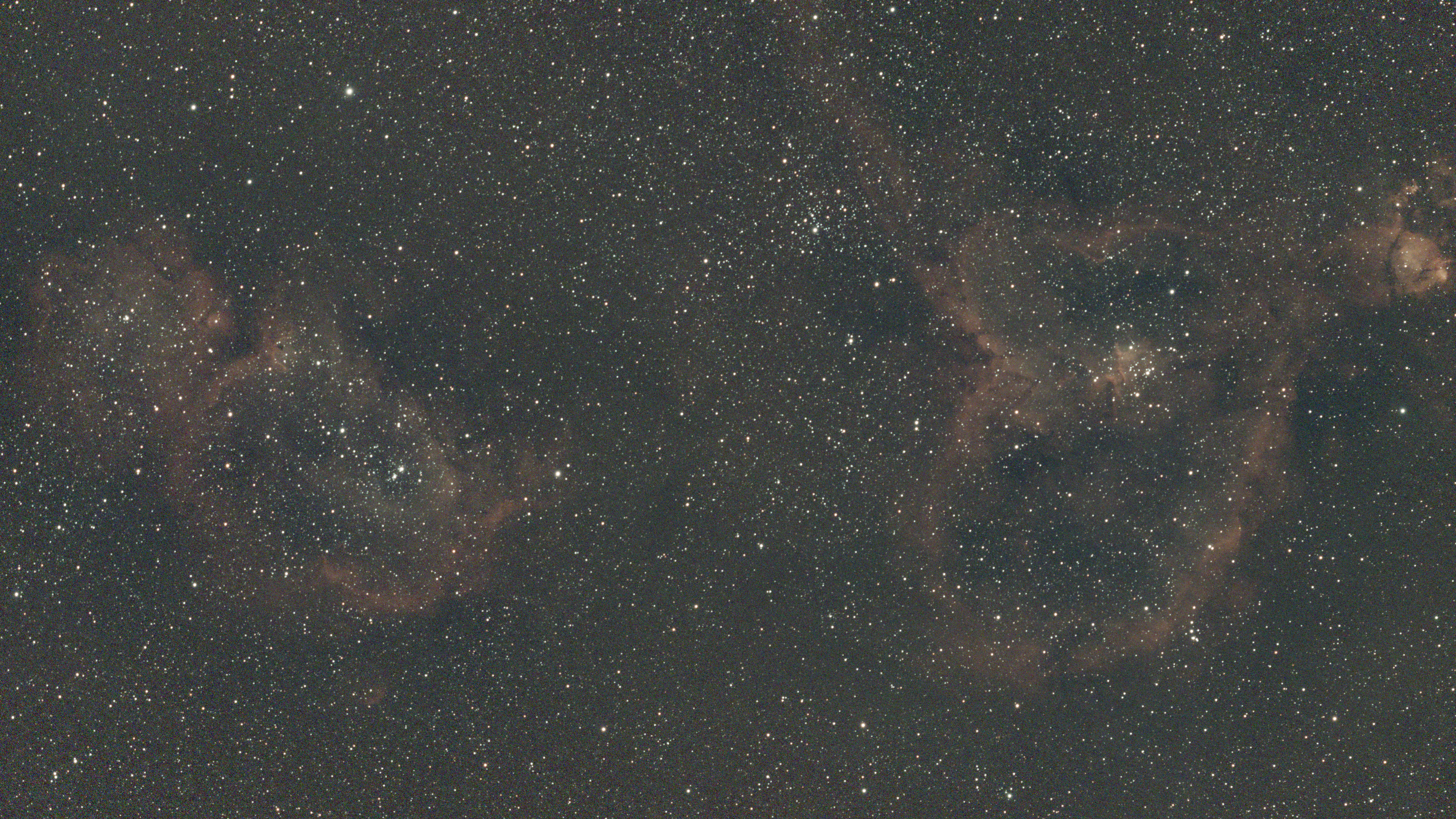
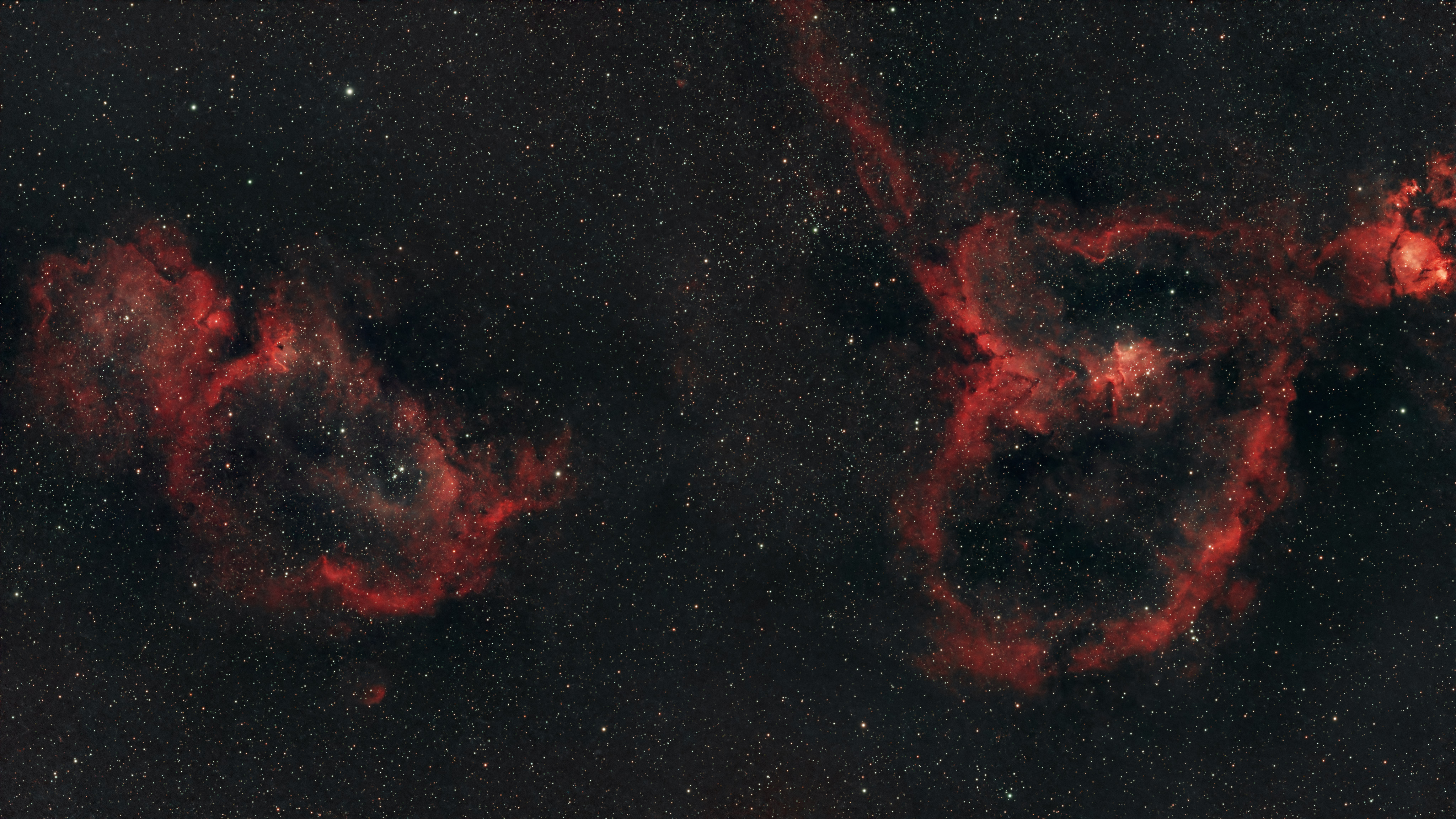
Licence: for personal use, credit Damon Scotting. Both JPEGs 4,096 x 2,303 px.
+17 C sensor temperature during imaging
267 mm focal length, plate solved ZWO states 260 mm
2.39 x 1.34° field of view 3,840 x 2,160 px on OmniVision OS08B10
8.3 MP OmniVision OS08B10 3,840 x 2,160 px, 11.1 x 6.3 mm
Should you buy it?
91/100 Stars for Your Buck
Pros
- “Mosaic mode captures images up to 8K; my Orion's Belt came from only 47 minutes and 20 seconds of exposures.”
- It wins on detail against the S30 Pro: on the same night the Veil showed more once I zoomed right in.
- An estimated 9 hours of battery, which is about as much as a night of imaging needs.
- “The wide-angle lens images the Milky Way and the landscape while the main lens images a deep-sky target.”
- “The built-in filters bring out the fainter nebulosity, as in my Heart and Soul Nebulae.”
- “Its images take editing well: I found it much easier to play with its colours than the other smart telescopes' shots.”
Cons
- A narrower field than the S30 Pro, 2.8 degrees against 4.6, so wide targets need mosaic mode.
- Taken at surface level, its images and the S30 Pro's are almost the same, so at $999 it is not the better value purchase.
- “The images do not look like my finished shots straight out of the telescope; the detail has to be squeezed out in editing.”
- “It is now the most expensive smart telescope in ZWO's range.”
Even when it does jump up to its normal retail price of $999, I think this is still one of the biggest bargains in astrophotography.
Who the Seestar S50 Pro is for
Complete beginner
Buy
Plonk it on the grass, pick a target and walk away: it focuses, tracks and stacks by itself, with no extra accessories needed.
Already owns a Seestar S50
Buy
It improves on the S50 or matches it everywhere: a 4K sensor, a wide-angle camera and a far longer battery.
Already owns a Seestar S30 Pro
Skip
The S30 Pro remains a genuinely capable telescope; the S50 Pro only pulls clearly ahead once you zoom right in.
Choosing between the S30 Pro and S50 Pro
Skip
My recommendation is the S30 Pro as the better value purchase; at normal viewing sizes the images are almost the same.
Experienced astrophotographer
Buy
It works as a second rig beside your main one, and in my eight-scope comparison its colours were the easiest to edit.
Planet imager
Skip
Saturn's rings resolve, but the Cassini Division and the markings on Mars stay just beyond a 50 mm aperture.
Three alternatives I have reviewed
- ZWO Seestar S30 Pro My better-value pick: almost the same images at normal viewing sizes, with a wider 4.6 degree field. 99/100 £649 Read the review
- DwarfLab DWARF mini A smaller, cheaper rival from DwarfLab that is more fun to carry around. 89/100 £399 Read the review
- Vaonis Vespera Pro 2 The same 50 mm aperture with a bigger square sensor, at well over twice the price. 63/100 £2,599 Read the review
Questions and more about this review
Reviewed by
Damon Scotting
The Telescope Man Verified
BSc (Hons) Physics with Astrophysics and Cosmology, Loughborough University PGCE / QTS, University of Nottingham
About Damon About Damon Damon Scotting is The Telescope Man. He holds a BSc (Hons) in Physics with Astrophysics and Cosmology from Loughborough University and a PGCE with QTS from the University of Nottingham, and taught physics in secondary schools before becoming an astronomy creator. He is a contributing writer for BBC Sky at Night Magazine and the author of 42 Wonders of Our Night Sky, and his photograph of the galaxy M100 with the dwarf planet Ceres was Highly Commended in the Astronomy Photographer of the Year 2024 competition run by Royal Observatory Greenwich. He has appeared on the BBC's Blue Peter. More than 750,000 people follow his astronomy channels on YouTube, Instagram and TikTok, and he has reviewed more than 140 telescopes, mounts, cameras, filters and accessories hands-on for this site. More about Damon · How I test · Damon's book
I review all kinds of gear: most of it I buy, some is gifted and some is loaned, and all of it is reviewed the same way. How this site is funded
Eight questions, answered
Questions about the ZWO Seestar S50 Pro
Reviewed 25 August 2026 ·Updated 23 September 2026
I review all kinds of gear. Most of it I buy, some is gifted and some is loaned, and all of it is reviewed the same way: no company sees or approves a review before it is published. Shop links marked Ad are affiliate links: I earn a commission when you buy through them, at no extra cost to you. How this site is funded
- Is the Seestar S50 Pro better than the S30 Pro? On detail, yes: on the same night the S50 Pro showed more in the Veil once zoomed right in. At normal viewing sizes the two are almost the same, so at £999 against £649 the S30 Pro is my better-value pick. Versus the ZWO Seestar S30 Pro ↓
- What sensor is in the S50 Pro? ZWO lists an OmniVision OS08B10 with 3840 x 2160 pixels of 2.9 microns, the same format as the IMX585 in the S30 Pro. Having tested it rigorously, I would not have guessed it was not the IMX585. Tested numbers and the download ↓
- How big are the mosaics? My mosaics are 7680 x 4320 pixels, about 33 megapixels. The Heart and Soul mosaic covers 4.8 x 2.7 degrees from 617 frames of 10 seconds. What I captured ↓
- Does the battery last all night? ZWO rates the 10,000 mAh battery at up to 9 hours, against about 6 hours for the S50. No smart telescope lasts a whole UK winter night, so I still keep a portable power bank plugged in. What is it for ↓
- Can it image the planets? The Moon looks excellent and the Sun is easy with the included solar filter. Venus shows its crescent and Saturn's rings resolve, but the Cassini Division and the markings on Mars stay just out of reach. What is it for ↓
- How does it compare with the Vespera telescopes? The Vespera Pro 2 and Vespera 3 share its 50 mm aperture at £2,599 and £2,199. On the North America Nebula I found the S50 Pro's colours much easier to edit than either Vespera's.
- Do I need a separate mount or tripod? No. The tripod and a solar filter come in the box, and every image here was shot in standard alt-azimuth mode on the S50 Pro's own mount. In the hand ↓
- What have I not tested on the Seestar S50 Pro? I have not tested equatorial mode or exposures longer than 10 seconds, and I have not timed a full battery run.