Askar 185APO review: best images, too big for its own good
Where does it rank on our leaderboard
| Rank | Telescope | Stars for Your Buck | Recorded UK price |
|---|---|---|---|
| 1 | Askar 50P | 95 out of 100 | £299 |
| 2 | ToupTek Hope D60 | 93 out of 100 | £749 |
| 3 | Sky-Watcher HAC125DX | 92 out of 100 | £589 |
| 16 | SVBONY SV555 | 79 out of 100 | £509 |
| 25 | Askar 185APO | 71 out of 100 | £5,049 |
| 29 | William Optics RedCat 51 | 69 out of 100 | £849 |
| 39 | Celestron C5 | 49 out of 100 | £850 |
| 41 | Celestron 114 LCM | 42 out of 100 | £361 |
| 42 | Celestron AstroMaster LT 76 | 13 out of 100 | £200 |
Contents
- 01 Where does it rank on our leaderboard
- 02 Specifications and features
- 03 In the hand
- 04 How good is it? Here's what I captured
- 05 Raw against finished
- 06 The rig on the mount
- 07 What is it for
- 08 Watch the review
- 09 Tested numbers and the download
- 10 Should you buy it?
- 11 Questions and more about this review
In 30 seconds
Stars for Your Buck 71/100
Reviewed 24 Jul 2025 Updated 24 Sep 2026
- Rank
- #25 of 42 telescopes
- Verdict
- Worth a look
Written by Damon Scotting 5 min read
Buy it if
- You image from a permanent pier or observatory with a mount rated well above 20 kg
- You want the most light and detail per frame from an Askar triplet: 185 mm at 1295 mm, filling a full-frame sensor
Skip it if
- You set up and pack away each night: it weighs 17.2 kg with rings and plate and is over a metre long
- Your mount is rated at 20 kg, like the ZWO AM5N or the EM31 Pro
- You already own an Askar 140 or 103: the step up in image quality is small for the money
In terms of my user experience this telescope is just about too big for its own good, yet it without a doubt captures the best quality images of the entire line-up.
Specifications and features
Against the telescopes I have reviewed
Compare with
| Askar 185APO reviewed #25 of 42 | Askar 140APO #15 of 42 | Askar 103APO #13 of 42 | |
|---|---|---|---|
| Recorded UK price | £5,049 | £2,098 | £999 |
| Stars for Your Buck | 71/100 | 80/100 | 81/100 |
| Aperture | 185 mm | 140 mm | 103 mm |
| Focal length | 1295 mm | 980 mm | 700.4 mm |
| Focal ratio | f/7 | f/7 | f/6.8 |
| Optical design | Air-spaced triplet APO, one ED element | Air-spaced triplet APO, one ED element | Air-spaced triplet APO, one ED element |
| Image circle | 44 mm with the optional flattener | 44 mm with the optional flattener or 0.8x reducer | 44 mm with the optional flattener |
| Back focus | 55 mm with the optional flattener | 55 mm with the optional flattener or 0.8x reducer | 55 mm with the optional flattener |
| Focuser | 3.5 inch dual-speed rack and pinion, 1:10, 100 mm travel | 3.5 inch dual-speed rack and pinion, 1:10, 360 degree rotator | 3.3 inch dual-speed rack and pinion, 1:10, 360 degree rotator |
| Weight, tube | 14.9 kg tube; 17.2 kg with rings and plate | 9.2 kg tube; 10.9 kg with rings and plate | 4.75 kg tube; 5.5 kg with rings and plate |
| Length, tube | 1081 mm dew shield in; 1222 mm out | 735 mm dew shield in; 870 mm out | 600 mm dew shield in; 711 mm out |
| Dew shield | Retractable | Retractable | Retractable |
| In the box | Tube, tube rings, handle, 400 mm Losmandy dovetail, aluminium case, manual | Tube, tube rings, handle, 300 mm Losmandy dovetail, Oxford cloth case, manual | Tube, tube rings, handle, 290 mm Vixen dovetail, cloth case, manual |
In the hand
Six frames from my review video
On the EM31 Pro
185 APO
Pointed at the night sky
Rings, plate and focuser
The dew shield
At full length
How good is it? Here's what I captured
Four targets over two nights
NGC 6960 Veil Nebula, ASI6200MC Pro, Optolong L-Ultimate
- Integration
- 30 min (6 x 300 s)
- Field
- 1.59 x 1.06 deg
- Telescope
- Askar 185APO
- Camera
- ZWO ASI6200MC Pro
- Mount
- EM31 Pro
- Target
- NGC 6960 Veil Nebula
- Type
- Supernova remnant
- Location
- Bortle 6.8 (in my garden)
IC 1396 Elephant's Trunk Nebula, ASI6200MC Pro, Optolong L-Ultimate
- Integration
- 30 min (6 x 300 s)
- Field
- 1.59 x 1.06 deg
- Telescope
- Askar 185APO
- Camera
- ZWO ASI6200MC Pro
- Mount
- EM31 Pro
- Target
- IC 1396 Elephant's Trunk Nebula
- Type
- Emission nebula
- Location
- Bortle 6.8 (in my garden)
NGC 7000 North America Nebula, ASI6200MC Pro, Optolong L-Ultimate
- Integration
- 30 min (6 x 300 s)
- Field
- 1.59 x 1.06 deg
- Telescope
- Askar 185APO
- Camera
- ZWO ASI6200MC Pro
- Mount
- EM31 Pro
- Target
- NGC 7000 North America Nebula
- Type
- Emission nebula
- Location
- Bortle 6.8 (in my garden)
Albireo (Beta Cygni), ASI6200MC Pro
- Integration
- 30 min (6 x 300 s)
- Field
- 1.59 x 1.06 deg
- Telescope
- Askar 185APO
- Camera
- ZWO ASI6200MC Pro
- Mount
- EM31 Pro
- Target
- Albireo (Beta Cygni)
- Type
- Double star
- Location
- Bortle 6.8 (in my garden)
Raw against finished
The rig on the mount
The 4 targets, the raw combined stack against my finished image, each with its integration, the camera and the palette:
- NGC 6960 Veil Nebula: 30 min (6 x 300 s) of light, ASI6200MC Pro, Optolong L-Ultimate, the raw combined stack with one automatic stretch
- IC 1396 Elephant's Trunk Nebula: 30 min (6 x 300 s) of light, ASI6200MC Pro, Optolong L-Ultimate, the raw combined stack with one automatic stretch
- NGC 7000 North America Nebula: 30 min (6 x 300 s) of light, ASI6200MC Pro, Optolong L-Ultimate, the raw combined stack with one automatic stretch
- Albireo (Beta Cygni): 30 min (6 x 300 s) of light, ASI6200MC Pro, the raw combined stack with one automatic stretch
On the EM31 Pro, then on six other mounts
What is it for
Four things it is for
The length of my wingspan
It is absolutely huge. It is pretty much the length of my entire wingspan, especially once we get a camera attached to this.
A stress test for a 20 kg mount
At 18 kg it really is pushing the limit of most traditional mounts. Certainly pushing the limits of a strain wave mount like the EM31 Pro here, which can handle payloads of up to 20 kg.
Imaging under a full Moon
Just at the very back here, I have an Optolong L-Ultimate filter. And that is doubly important tonight because tonight is a full Moon, which as far as deep sky imaging goes is pretty much the worst time ever to image the night sky.
More aperture, more detail
It's simple physics. The larger aperture of the same design telescope means it has increased light gathering capabilities and therefore can capture more detailed images of the night sky.
Watch the review
Is BIGGER always BETTER? (Askar 103 v 140 v 185 Telescope) · published 24 July 2025 · 10:21 · Watch on YouTube · 55,018 views, 1,493 likes on 2 Oct 2026
Jump to
- 1:53 The Askar 140 on a full-frame sensor
- 3:06 The Askar 185 arrives
- 3:43 As long as my wingspan, on a 20 kg mount
- 4:14 An L-Ultimate filter under a full Moon
- 4:48 Askar 185 results
- 7:09 The Askar 185 verdict
- 8:17 Five times the price for 3.23 times the light
- 8:45 The Askar 203, and which mount carries what
Transcript of the review video 1,869 words · 11 chapters · searchable
Press a time stamp to play from there.
0:00 Is bigger always better? Three Askar triplets
0:02 Is bigger really better? 0:02 In today's video, I'm going to be comparing a 4 in, a 6 in, and an 8 in telescope to see what deep sky wonders each of them are capable of capturing. 0:09 Over the last 7 months, I've been testing each of them out, whilst also utilizing some of their unique accessories, such as the Askar 103's 0.6 times reducer, which makes it a very fast telescope. 0:19 And never before have I owned a refractor telescope as stupendously large as the Askar 185. 0:27 Costing over 5,000 British pounds and weighing almost 20 kg, I'd expect that this scope will let me see the aliens on the moon Europa. 0:33 So, let's see what they can capture. 0:36 I'm Damon Scotting and this is Astronomical.
0:42 The Askar 103 and its 0.6x reducer
0:44 To start off with, I'm going to be reviewing the cheapest telescope of the range, the Askar 103. 0:45 Much like all of the other telescopes in its range, you can buy a 0.8 times reducer and or a one times flattener to complement it. 0:55 But here's the really unique aspect when it comes to the Askar 103. 0:56 You can also purchase a 0.6 times reducer that gives this scope a focal length of 420 mm and an F ratio of 4.0, which is really fast. 1:08 It's worth pointing out at this point that although this telescope is just under £1,000, this particular reducer will set you back another £300. 1:13 And to be completely honest with you, it's not worth it. 1:17 Particularly when it comes to astrophotography. 1:19 Unfortunately, the quality of the images suffer thanks to the 0.6 times reduction. 1:23 Lots of the images start to feature stars with magenta rings. 1:27 Visually observing for a scope is fine. 1:29 It's an enjoyable experience. 1:31 But since I started imaging with the Askar 103 telescope first and a 0.6 times reducer already attached, I immediately had the fear of are these telescopes rubbish? 1:39 But it turns out without the 0.6 times reducer. 1:41 The telescope is extremely capable and produces especially nice images considering its price tag. 1:47 So, the Askar 103 gets a tick in my book, but I wouldn't invest in a 0.6 times reducer, but that's just my opinion.
1:53 The Askar 140 on a full-frame sensor
1:54 Moving on to its slightly bigger brother, the Askar 140, I decided to also use the one times flattener to accompany it in my explorations, especially since I was going to be testing this telescope out with this ginormous full-frame sensor in the ASI6200MC. 2:11 Yeah, with a sensor this big, there is no place to hide any dodgy stars. 2:12 It's time to find out if there's a reason these telescopes are so cheap. 2:17 The company that makes these telescopes, Askar, does say that the telescope is suitable for full-frame sensors, but let's see how true that statement is. 2:24 I must admit, I'm surprised by the quality, especially on the edges of the images. 2:30 These are the raw stack shots, and as you can see from its corners, the stars look a very healthy shape. 2:37 Overall, it is a really nice telescope. 2:39 I'm very happy with the Askar 140 and out of the three telescopes, this is the one I've spent the most time with. 2:43 And based on these images, you can see why. 2:47 So, I think given the price tag, size, and image quality produced on the Askar 140, I may have found a sweet spot for us amateur astrophotographers who have a more than modest budget and are looking for a large and capable refractor telescope. 2:58 With a refractor this size, it's even viable to take images and videos of the planets. 3:02 Videos that are, in fact, of a very high quality, such as these.
3:06 The Askar 185 arrives
3:06 But I didn't stop there. 3:06 I was obsessed with this range of Askar telescopes and decided to do something I'd never done before and tried an absolutely gargantuan monster of a telescope. 3:22 Right. 3:22 So, we've had big, we've had bigger, and yet surprisingly somehow this isn't the biggest. 3:24 Yeah, as of the time of releasing this video, there is actually a model that's even bigger than this called the Askar 203. 3:31 Now, I won't be reviewing that for multiple reasons. 3:36 The main one being due to the expense of the telescope. 3:37 But the secondary reason, which is more than adequate, is because of the colossal weight of the telescope.
3:43 As long as my wingspan, on a 20 kg mount
3:43 I mean, look at this one here. 3:43 It is absolutely huge. 3:45 It is pretty much the length of my entire wingspan, especially once we get a camera attached to this. 3:52 And then in terms of weight, I mean, at 18 kg, it really is pushing the limit of most traditional mounts. 3:57 Certainly pushing the limits of a strain wave mount like the EM31 Pro here, which can handle payloads of up to 20 kg. 4:03 So, because of this telescope, we are very much putting this to a stress test. 4:06 But I am quite confident that it's going to be more than capable of doing so. 4:10 In fact, I'm so confident that, as you can see, I've attached a bunch of different accessories.
4:14 An L-Ultimate filter under a full Moon
4:15 Just at the very back here, I have an Optolong L-Ultimate filter. 4:19 Using this filter is supposedly going to cut through a large chunk of it and allow me to image the night sky. 4:24 And that is doubly important tonight because tonight is a full moon which as far as deep sky imaging goes is pretty much the worst time ever to image the night sky. 4:35 Yeah, I'm not going to say it's pointless, but compared to the images that you achieve under moonless skies, they just look rubbish. 4:40 The goal that I'm hoping to achieve tonight is I want to image the same objects with the filter attached. 4:46 So without a further ado, we've seen the Askar 103, we've seen the Askar 140.
4:48 Askar 185 results
4:50 Now, let's see what the Askar 185 can really do. 4:57 Right. 5:38 So, there we go. 5:38 These are the results achieved after several months of using this range of Askar telescopes.
5:40 Final thoughts and ratings
5:42 And here are my final thoughts and ratings. 5:44 The Askar 103 is an absolute steal at 999 British pounds. 5:47 The 4-in triplet refractor telescope at this price feels like a no-brainer. 5:52 Like I said earlier, I was very worried when the images I first captured with a telescope were filled with magenta ring stars. 5:56 So steering clear of the unique 0.6 reducer would be my best bet. 6:01 Most experienced astrophotographers will tell you that telescopes like this aren't designed to have their focal ratio be this low. 6:06 It does all sorts of weird things to the image, but normally as just a £999 scope that it is, it takes some pretty special images. 6:16 So, factoring in the price, it gets a 7.8 rating from me. 6:18 Next was actually my favourite scope of the three, I think I'll start referring to the Askar 140 as the Goldilocks scope simply because it's not too big, it's not too small, it's just right. 6:28 Its huge aperture means that it makes light work of imaging the most popular deep sky objects, but it can also handle imaging the planets, which makes this scope a very good comparison for the Celestron 8 in EdgeHD for £1,899. 6:44 I did have the two of these telescopes imaging the same planet at the same time side by side. 6:47 Now, presented with these planetary imaging comparisons, I think I'd still say that the C8 EdgeHD is the favourite. 6:54 But for that telescope, planetary imaging is its main purpose. 6:55 I personally still prefer the Askar 140 over it when it comes to imaging the entirety of our night sky. 7:01 So yeah, it's definitely my favourite. 7:03 It sits right there in a sweet spot and that's why I'm giving it a 9.1 rating out of 10, which then leaves us with only the biggest telescope left to discuss.
7:09 The Askar 185 verdict
7:12 Now, given that the question at the start of this episode was, is bigger always better? 7:17 And the Askar 103 and Askar 140 have had increasingly higher ratings, what can we expect from the Askar 185? 7:22 Well, the bottom line in terms of my user experience is this telescope is just about too big for its own good. 7:28 What I mean by that is that with the accessories and a guide scope attached to the telescope, it is knocking right on the door of the AM5N or the EM31 Pro mount's payload capabilities, which are both stated to be 20 kg. 7:41 Perhaps this wouldn't be as noticeable or as concerning if the sheer size of this telescope wasn't so enormous. 7:46 It's a true spectacle that without a doubt captures the best quality images of the entire lineup. 7:52 It's simple physics. 7:52 The larger aperture of the same design telescope means it has increased light gathering capabilities and therefore can capture more detail images of the night sky. 8:02 So, here's the thing. 8:02 Even though the Askar 185 is the most powerful of the three telescopes, I wouldn't actually say that the improvement in image quality is significant enough for me to choose it over the Askar 140 or the Askar 103. 8:12 Therefore, I think a 7.6 rating is well deserved. 8:16 And I mean, look, if we go through a comparison of the relative light gathering capabilities of each of the scopes, then we're looking at five times the cost of the Askar 103 for the 185 with just 3.23 times multiplier in terms of light gathering capabilities.
8:17 Five times the price for 3.23 times the light
8:30 As for the Askar 140, it's about a 75% increase in light gathering for 2 1/2 times the cost. 8:36 So, this is the viewpoint that I'm taking for this video. 8:38 Yes, bigger is always going to be better, but in terms of user experience and pound-for-pound value, no. 8:44 If we add the top-of-the-line Askar 203 to the mix, then this becomes even more apparent.
8:45 The Askar 203, and which mount carries what
8:49 This enormous scope has only just been released, and it truly is the monster of this family. 8:55 Priced at just under 8,000 British pounds, it's almost twice the aperture size of our beginner telescope, the Askar 103. 9:01 So, the Askar 203 is eight times the cost of the Askar 103 with four times the light gathering capabilities. 9:06 Meanwhile, the Askar 140 is four times cheaper than the Askar 203 with just less than half the light gathering capabilities. 9:13 So, these two metrics don't exactly increase in line with each other, but that's because of different variables that have to be accounted for, such as manufacturing costs. 9:21 Yeah, you'll be able to decide for yourself what the max payload of a telescope is that you'll be willing to handle. 9:26 But at 23.5 kg, the Askar 203 is the last thing I'd be looking to try and place on my mounts on a dark, cold night in the middle of winter. 9:34 Whereas, even a little baby mount like the JUWEI-14 can handle the payload of the Askar 140, provided you use a counterweight. 9:40 In conclusion, a very good line of budget friendly triplet telescopes released from Askar. 9:46 If you're interested in checking out any of them for yourself, then be sure to click one of the links listed in the description below and make sure you subscribed for more videos like this. 9:55 Thanks for watching. 9:55 I'm Damon Scotting and this was Astronomical
Check out more videos on the Askar 185APO
£999 Telescope V.S £2000 Telescope V.S £5000 Telescope!?
25 Jul 2025
Tested numbers and the download
Finished image
- Download the raw stack JPEG · 5.7 MB · 4,096 x 2,728
- Download the finished image JPEG · 3.5 MB · 4,096 x 2,728
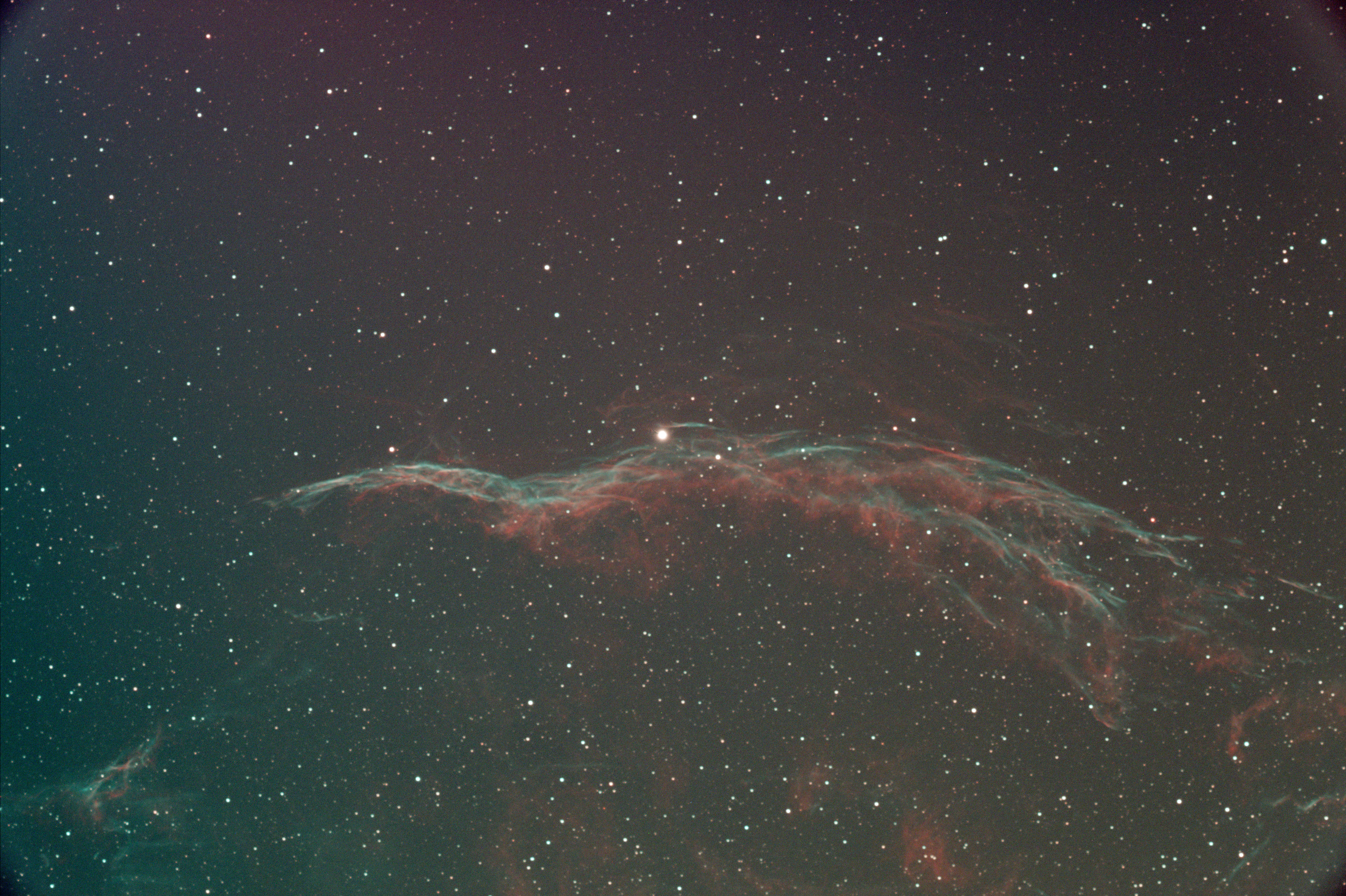
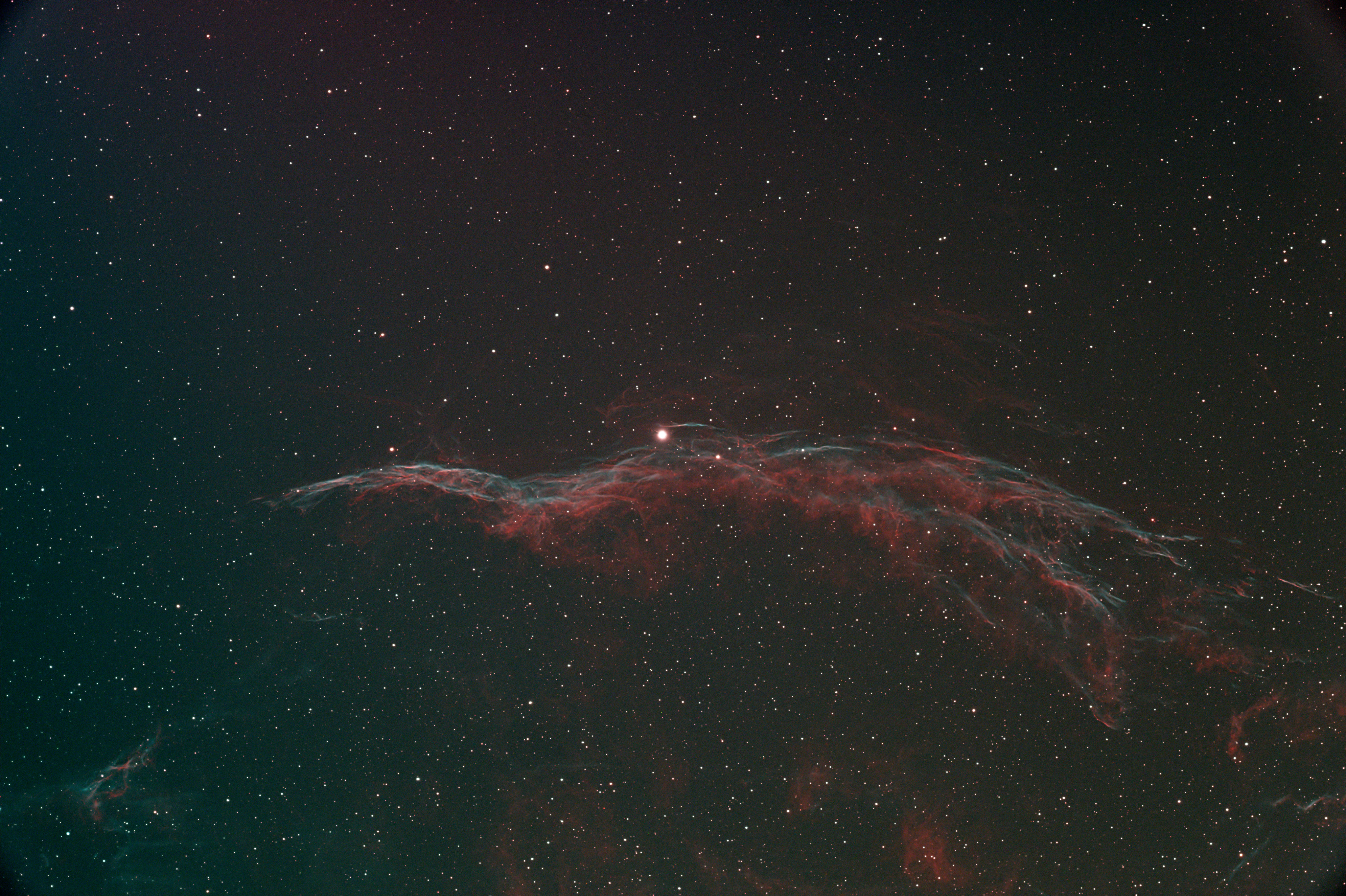
Licence: for personal use, credit Damon Scotting. Both JPEGs 4,096 x 2,728 px.
-10 C sensor temperature during imaging set point -10 C
1294 mm focal length, plate solved Askar states 1295 mm
1.59 x 1.06° field of view 9,576 x 6,388 px on ASI6200MC Pro
61 MP ASI6200MC Pro 9,576 x 6,388 px, 36.0 x 24.0 mm
Should you buy it?
71/100 Stars for Your Buck
Pros
- It is the most powerful of the Askar 103, 140 and 185 triplets: 185 mm of aperture collects 1.75 times the light of the Askar 140.
- At 1295 mm a full-frame sensor frames 1.59 x 1.06 degrees, the tightest field of the three Askar triplets.
- With a dual-band filter it still pulled the Veil, the North America Nebula and the Elephant's Trunk out of a full-Moon sky in an hour or so each.
- The focal length is honest: my plate solve reads 1294 mm against the 1295 mm Askar states.
- It comes with tube rings, a handle and a 400 mm Losmandy plate in an aluminium case, and the 3.5 inch focuser has 100 mm of travel with 1:10 fine focus.
Cons
- “With the accessories and a guide scope attached to the telescope, it is knocking right on the door of the AM5N or the EM31 Pro mount's payload capabilities, which are both stated to be 20 kg.”
- At 17.2 kg with its rings and plate and over a metre long, it is not a telescope to carry out every night.
- “I wouldn't actually say that the improvement in image quality is significant enough for me to choose it over the Askar 140 or the Askar 103.”
- “We're looking at five times the cost of the Askar 103 for the 185 with just 3.23 times multiplier in terms of light gathering capabilities.”
- No flattener in the box: the 1x full-frame flattener and the 0.8x reducer are optional extras.
Yes, bigger is always going to be better, but in terms of user experience and pound-for-pound value, no.
Who the 185APO is for
Imager with a permanent pier and a heavy-duty mount
Buy
It captures the best quality images of the three Askar triplets I tested, and a fixed pier takes away the lifting of 17.2 kg of tube, rings and plate every night.
Galaxy and small-nebula imager with a full-frame camera
Buy
Small targets fill far more of a full-frame sensor through the 185 than through the Askar 103 or 140.
Askar 140 owner thinking of upgrading
Skip
Keep the 140: the 185 costs more than twice as much and needs a mount rated well above 20 kg.
Owner of a 20 kg strain-wave mount
Skip
With a camera and guide scope the 185 sits right at the limit of a 20 kg mount like the AM5N or EM31 Pro. My recommendation for those mounts is the Askar 140.
Imager who sets up and packs away every night
Skip
It is over a metre long and 17.2 kg with rings and plate. My recommendation is the Askar 103: the same triplet design at 5.5 kg with rings and plate.
Complete beginner
Skip
Start with the Askar 103 at £999: it takes some pretty special images for its price and weighs about a third as much.
Three alternatives I have reviewed
- Askar 140APO 140 mm f/7 triplet at 980 mm, the same design and my favourite of the three 80/100 £2,098 Read the review
- Askar 103APO 103 mm f/6.8 triplet at 700 mm, the same design for a fifth of the price 81/100 £999 Read the review
- Celestron 8" EdgeHD 203 mm EdgeHD at 2032 mm, the long-focal-length scope I set against the 140 90/100 £1,999 Read the review
Questions and more about this review
Reviewed by
Damon Scotting
The Telescope Man Verified
BSc (Hons) Physics with Astrophysics and Cosmology, Loughborough University PGCE / QTS, University of Nottingham
About Damon About Damon Damon Scotting is The Telescope Man. He holds a BSc (Hons) in Physics with Astrophysics and Cosmology from Loughborough University and a PGCE with QTS from the University of Nottingham, and taught physics in secondary schools before becoming an astronomy creator. He is a contributing writer for BBC Sky at Night Magazine and the author of 42 Wonders of Our Night Sky, and his photograph of the galaxy M100 with the dwarf planet Ceres was Highly Commended in the Astronomy Photographer of the Year 2024 competition run by Royal Observatory Greenwich. He has appeared on the BBC's Blue Peter. More than 750,000 people follow his astronomy channels on YouTube, Instagram and TikTok, and he has reviewed more than 140 telescopes, mounts, cameras, filters and accessories hands-on for this site. More about Damon · How I test · Damon's book
I review all kinds of gear: most of it I buy, some is gifted and some is loaned, and all of it is reviewed the same way. How this site is funded
Nine questions, answered
Questions about the Askar 185APO
Reviewed 24 July 2025 ·Updated 24 September 2026
I review all kinds of gear. Most of it I buy, some is gifted and some is loaned, and all of it is reviewed the same way: no company sees or approves a review before it is published. Shop links marked Ad are affiliate links: I earn a commission when you buy through them, at no extra cost to you. How this site is funded
- What is the focal length of the Askar 185APO? Askar states 1295 mm at f/7. My plate solve of the Veil stack reads 1294 mm, and the plate solutions in all twelve of my stack headers read 1293 to 1295 mm. Tested numbers and the download ↓
- Does the Askar 185APO come with a field flattener? No. Askar sells the 1x full-frame flattener, which keeps f/7 with a 44 mm image circle and 55 mm of back focus, and a 0.8x full-frame reducer as optional extras. In the box are the tube, a pair of rings, a handle, a 400 mm Losmandy plate, an aluminium case and a manual. The specifications and the comparison table ↓
- What mount does the Askar 185APO need? Askar gives 14.9 kg for the tube and 17.2 kg with the rings and plate, and my ZWO ASI6200MC Pro adds 0.7 kg, so with a guide scope it sits right at the 20 kg rating of mounts like the ZWO AM5N and the EM31 Pro. I imaged with it on the EM31 Pro with a counterweight. The rig on the mount ↓
- Is the Askar 185APO worth it over the Askar 140? Not for me. On my board the 140 scores 80 and the 185 scores 71, and First Light Optics lists the 140 at £2,098 against £5,049 for the 185.
- Can you image with the Askar 185APO under a full Moon? Yes, with a dual-band filter. With an Optolong L-Ultimate I captured the Veil, the North America Nebula and the Elephant's Trunk the night before a full Moon, 1 h to 1 h 20 min each, and the raw stacks sit beside the finished images on this page. What I captured ↓
- How big and heavy is the Askar 185APO? Askar gives 1081 mm with the dew shield retracted and 1222 mm extended, 14.9 kg for the tube and 17.2 kg with the rings and dovetail plate. The specifications and the comparison table ↓
- What camera suits the Askar 185APO? I used a ZWO ASI6200MC Pro full-frame colour camera cooled to -10 C, 9576 x 6388 pixels of 3.76 microns. At 1294 mm that is 0.60 arcsec per pixel and a field of 1.59 x 1.06 degrees, guided with a ZWO ASI120MM Mini. Tested numbers and the download ↓
- How much does the Askar 185APO cost and where can I buy it? The prices I recorded: £5,049 at First Light Optics (UK), awaiting stock; $5,279 at Agena Astro (US), in stock; $7,782 at AliExpress (Astronomical Equipment Store), Global, listed. A record, not a live price The verdict, the readers and the sellers ↓
- What have I not tested on the 185APO? I did not image planets or observe visually with the 185, no target got more than 1 h 20 min, and both imaging nights were within three days of full Moon.