Askar 91F review: a print-worthy quadruplet under $1,000
Where does it rank on our leaderboard
| Rank | Telescope | Stars for Your Buck | Recorded UK price |
|---|---|---|---|
| 1 | Askar 50P | 95 out of 100 | £299 |
| 2 | ToupTek Hope D60 | 93 out of 100 | £749 |
| 4 | Askar SQA106 | 91 out of 100 | £3,395 |
| 6 | Askar 91F | 89 out of 100 | £995 |
| 19 | Sky-Watcher Heliostar 76Ha | 74 out of 100 | £2,399 |
| 32 | Sky-Watcher HAC125 | 61 out of 100 | £405 |
| 36 | Nakoh 60GT | 52 out of 100 | £899 |
| 41 | Celestron 114 LCM | 42 out of 100 | £361 |
| 42 | Celestron AstroMaster LT 76 | 13 out of 100 | £200 |
Contents
- 01 Where does it rank on our leaderboard
- 02 Specifications and features
- 03 In the hand
- 04 From the review video
- 05 How good is it? Here's what I captured
- 06 Raw against finished
- 07 The rig on the mount
- 08 What is it for
- 09 Watch the review
- 10 Tested numbers and the download
- 11 Should you buy it?
- 12 Questions and more about this review
In 30 seconds
Stars for Your Buck 89/100
Reviewed 11 Nov 2025 Updated 26 Sep 2026
- Rank
- #6 of 42 telescopes
- Verdict
- Damon's pick
Written by Damon Scotting 5 min read
Buy it if
- You want a flat, full-frame field at 609 mm from one tube, with no flattener to buy or space.
- You image nebulae and galaxies from a garden and want a step up from a 60 to 80 mm refractor.
- Your budget is about £1,000 or $1,000 for the telescope on its own.
Skip it if
- You want speed under light pollution: f/6.7 is slow next to an f/4.8 Petzval.
- You are starting out on a tight budget: the 60F and 71F cost roughly half as much.
- You want the Moon and the planets up close: 609 mm is a deep-sky focal length.
“It is a quadruplet astrograph. The Askar 91F is the latest addition to the Askar F range of telescopes, with the Askar 60F and 71F also available at roughly half the cost.”
Specifications and features
Against the telescopes I have reviewed
Compare with
| Askar 91F reviewed #6 of 42 | Askar 71F #14 of 42 | Askar 103APO #13 of 42 | ZWO FF110 #22 of 42 | |
|---|---|---|---|---|
| Recorded UK price | £995 | £599 | £999 | £1,499 |
| Stars for Your Buck | 89/100 | 81/100 | 81/100 | 73/100 |
| Aperture | 91 mm | 71 mm | 103 mm | 110 mm |
| Focal length | 609 mm | 490 mm | 700.4 mm | 766 mm |
| Focal ratio | f/6.7 | f/6.9 | f/6.8 | f/7.0 |
| Optical design | Quadruplet air-spaced APO with one ED element, self-flattened | Quadruplet air-spaced APO with one ED element, self-flattened | Triplet air-spaced APO with one ED element | Four-element air-spaced apochromat with one ED element, native flat field |
| Image circle | 44 mm (full frame) | 44 mm | 44 mm (full frame) with the optional 1x flattener; not stated for the bare triplet | 44 mm |
| Back focus | 45 to 75 mm from the M48x0.75 thread base (63 to 93 mm from the M54x0.75) | Up to 82.5 mm from the M48x0.75 thread base | 55 mm from the M48 thread base with the optional 1x flattener; not stated for the bare triplet | 42 to 73 mm from the M54 to M48 shoulder |
| Focuser | 3 inch dual-speed rack and pinion, 1:10 fine focus, 30 mm travel, 360 degree scaled rotator | 2.4 inch dual-speed rack and pinion, 1:10 fine focus, 360 degree scaled rotator | 3.3 inch dual-speed rack and pinion, 1:10 fine focus | 3 inch rack and pinion, 1:10 dual speed |
| Weight, tube | 3.92 kg tube; 4.52 kg with rings and dovetail | 2.5 kg tube; 3.0 kg with rings and dovetail | 4.75 kg tube; 5.5 kg with rings and dovetail | 5.74 kg tube; 6.76 kg with handle, rings and dovetail |
| Length, tube | 513 mm dew shield retracted; 599 mm extended (with the 1.25 inch adapter) | 372.5 mm dew shield retracted; 430.9 mm extended | 600 mm dew shield retracted; 711 mm extended | 728 mm photo tube retracted; 815 mm with photo tube and dew shield extended |
| Dew shield | Retractable | Retractable | Retractable, felt-lined | Retractable |
| In the box | Tube, pair of tube rings, handle, 230 mm Vixen dovetail plate, photographic adapters | Tube, tube rings, handle, Vixen dovetail plate, photographic adapters | Tube, pair of tube rings, handle, 290 mm Vixen dovetail plate, manual, Oxford cloth case | Photo extension tube, M48 and M54 adapters, quick-release rings, handle and dovetail, inspection report |
In the hand
From the review video
Two frames from my Askar 60F review
How good is it? Here's what I captured
Six targets
IC 1396 Elephant's Trunk Nebula, ASI2600MM
- Integration
- 3 h 45 min (HSO narrowband)
- Field
- 2.2 x 1.5 degrees
- Telescope
- Askar 91F
- Camera
- ZWO ASI2600MM
- Mount
- JUWEI-14
- Target
- IC 1396 Elephant's Trunk Nebula
- Type
- Emission nebula
- Location
- Bortle 6.8 (in my garden)
NGC 7000 North America Nebula, ASI2600MC
- Integration
- 1 h 6 min (22 x 180 s)
- Field
- 2.1 x 1.5 degrees
- Telescope
- Askar 91F
- Camera
- ZWO ASI2600MC
- Mount
- JUWEI-14
- Target
- NGC 7000 North America Nebula
- Type
- Emission nebula
- Location
- Bortle 6.8 (in my garden)
M 45 Pleiades, ASI2600MC
- Integration
- 2 h (40 x 180 s)
- Field
- 2.1 x 1.4 degrees
- Telescope
- Askar 91F
- Camera
- ZWO ASI2600MC
- Mount
- JUWEI-14
- Target
- M 45 Pleiades
- Type
- Open cluster with reflection nebula
- Location
- Bortle 6.8 (in my garden)
M 31 Andromeda Galaxy, Unknown
- Integration
- Unknown
- Field
- 2.2 x 1.5 degrees
- Telescope
- Askar 91F
- Camera
- Unknown
- Mount
- JUWEI-14
- Target
- M 31 Andromeda Galaxy
- Type
- Spiral galaxy
- Location
- Bortle 6.8 (in my garden)
NGC 2237 Rosette Nebula, ASI2600MM
- Integration
- 1 h 30 min (Ha, SII and OIII, 10 x 180 s each)
- Field
- 2.2 x 1.5 degrees
- Telescope
- Askar 91F
- Camera
- ZWO ASI2600MM
- Mount
- JUWEI-14
- Target
- NGC 2237 Rosette Nebula
- Type
- Emission nebula
- Location
- Bortle 6.8 (in my garden)
IC 1805 Heart Nebula, ToupTek SkyEye 24AC
- Integration
- 9 min (3 x 180 s)
- Field
- 3.4 x 2.3 degrees
- Telescope
- Askar 91F
- Camera
- ToupTek SkyEye 24AC
- Mount
- JUWEI-14
- Target
- IC 1805 Heart Nebula
- Type
- Emission nebula
- Location
- Bortle 6.8 (in my garden)
Raw against finished
The rig on the mount
The 4 targets, the raw combined stack against my finished image, each with its integration, the camera and the palette:
- NGC 7000 North America Nebula: 30 min (10 x 180 s) of light, ToupTek SkyEye 24AC, the raw combined stack with one automatic stretch
- IC 1805 Heart Nebula: 9 min (3 x 180 s) of light, ToupTek SkyEye 24AC, the raw combined stack with one automatic stretch
- M 31 Andromeda Galaxy: 30 min (10 x 180 s) of light, ToupTek SkyEye 24AC, the raw combined stack with one automatic stretch
- NGC 2237 Rosette Nebula: 1 h 30 min (Ha, SII and OIII, 10 x 180 s each) of light, ASI2600MM, the raw combined stack with one automatic stretch
On the JUWEI-17, then on six other mounts
What is it for
Three things it is for
A quadruplet astrograph
It is a quadruplet astrograph: four air-spaced elements, one of them ED glass, that flatten the field on their own.
Full frame, corner to corner
Askar rate the image circle at 44 mm, enough for a full-frame sensor. This is my own aberration check through the 91F on a full-frame camera: the centre, the four edges and the four corners of one frame.
The big one in the F range
Askar stepped the F range up with the bigger 91F at $999, beside the 60F at $499. I have captured some amazing images with each of the 60F, 71F and 91F.
Watch the review
Is this the BEST Telescope for under $1,000?! · published 11 November 2025 · 0:39 · Watch on YouTube · 155,560 views, 3,266 likes on 2 Oct 2026
Jump to
- 0:04 The Askar 91F and my images through it
- 0:08 A quadruplet astrograph
- 0:11 The F range: 60F, 71F and 91F
- 0:19 Images from the 60F and 71F
- 0:28 The Pleiades through the 91F
- 0:31 The Andromeda Galaxy through the 91F
- 0:32 The Elephant's Trunk through the 91F
- 0:34 The three F-range prices
Transcript of the review video 86 words · 6 chapters · searchable
Press a time stamp to play from there.
0:00 Is this the best telescope for under $1,000?
0:00 Is this the best telescope in the world for under $1,000?
0:04 The Askar 91F and my images through it
0:04 This is the Askar 91F, and here are the images that I captured with it last night.
0:08 A quadruplet astrograph
0:09 It is a quadruplet astrograph.
0:11 The F range: 60F, 71F and 91F
0:11 The Askar 91F is the latest addition to the Askar F range of telescopes, with the Askar 60F and 71F also available at roughly half the cost.
0:19 Images from the 60F and 71F
0:19 And these are some of the images I captured with these scopes.
0:34 The three F-range prices
0:35 Let me know which telescope you prefer the most in the comments down below.
Check out more videos on the Askar 91F
This $499 TELESCOPE is AMAZING!? (Askar 60F Review + RAW images)
2 Dec 2025
I tried out this Monsterous $2400 Camera from ToupTek astro!
24 Oct 2025
Tested numbers and the download
Finished image
- Download the raw stack JPEG · 3.7 MB · 4,096 x 2,723
- Download the finished image JPEG · 3.8 MB · 4,096 x 2,723
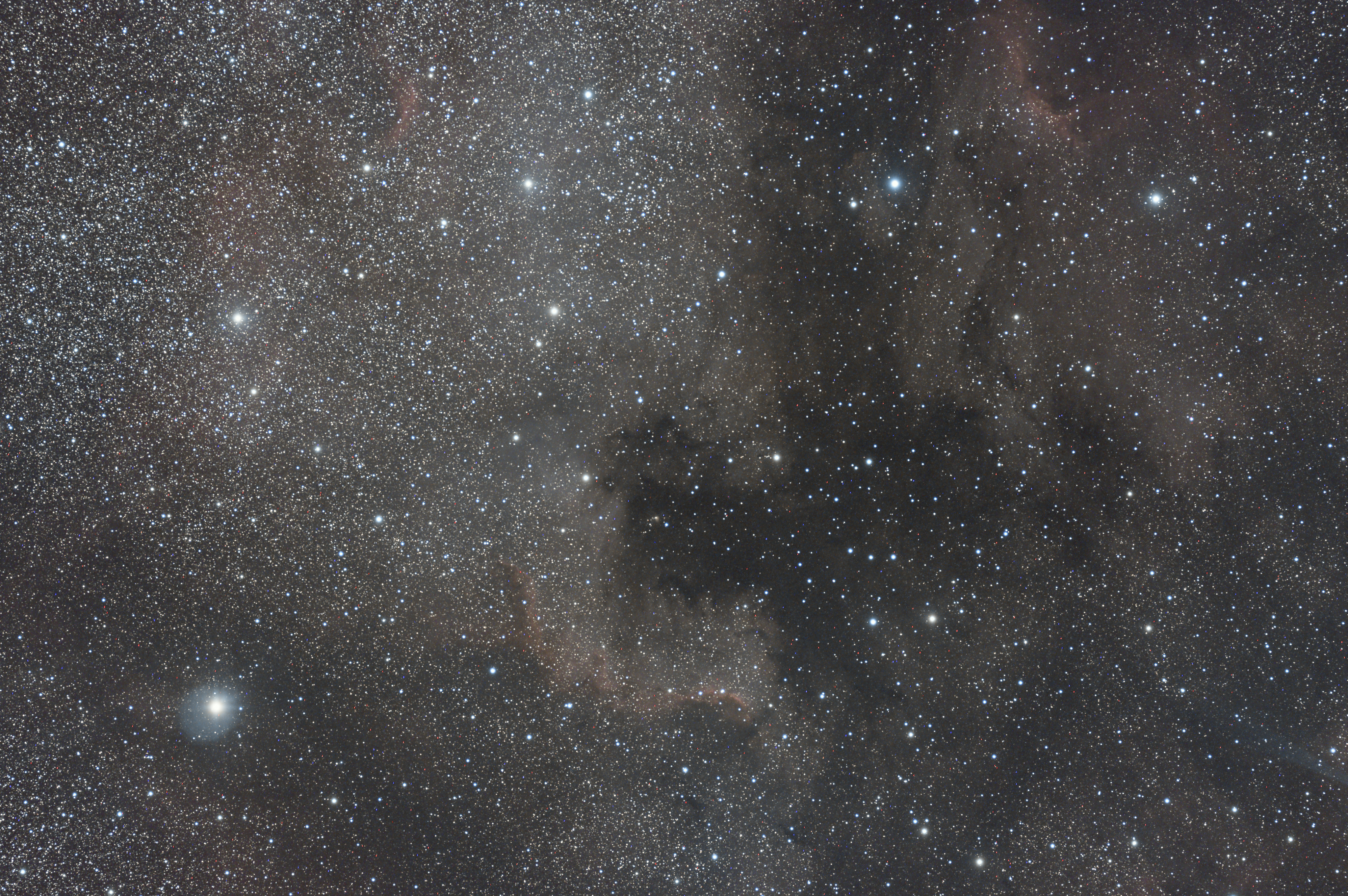
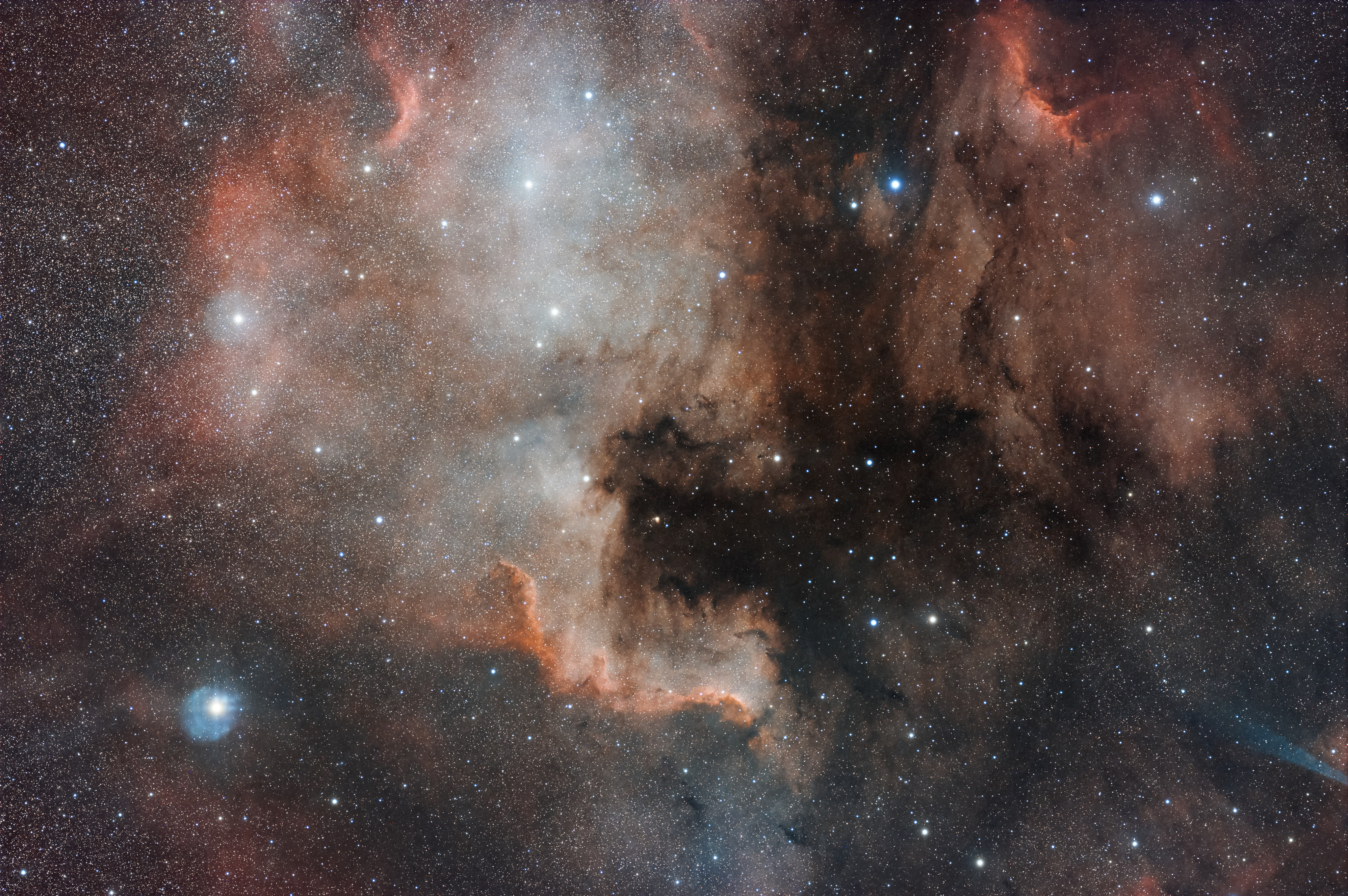
Licence: for personal use, credit Damon Scotting. Both JPEGs 4,096 x 2,723 px.
-10 C sensor temperature during imaging set point -10 C
610 mm focal length, plate solved Askar states 609 mm
2.21 x 1.47° field of view 6,248 x 4,176 px on ASI2600MC
26.1 MP ASI2600MC 6,248 x 4,176 px, 23.5 x 15.7 mm
Should you buy it?
89/100 Stars for Your Buck
Pros
- “I pretty much never print any of my images because I don't think they're good enough, but the shots I've got with this are really good.”
- It is a self-flattened quadruplet astrograph: four air-spaced elements with one ED glass, so there is no flattener to buy or space.
- The 44 mm image circle covers full frame, and I have checked the centre, edges and corners of a full-frame sensor through it.
- It handled every kind of target I pointed it at: HSO narrowband nebulae, an LRGB Andromeda and one-shot colour clusters.
- At £995 it costs about the same as Askar's 103 mm triplet, which needs its optional flattener for a flat full-frame field, and it is about a kilogram lighter.
- A 3 inch dual-speed rack and pinion focuser with 1:10 fine focus and a 360 degree rotator, and my ZWO EAF fits it.
Cons
- It is the priciest of Askar's F range: £995, against £599 for the 71F of the same quadruplet design.
- At 3.92 kg bare and 4.52 kg with rings and dovetail it is the heaviest of the F range; the 71F is 3.0 kg.
- f/6.7 is slow for a light-polluted garden: an f/4.8 Petzval like the SQA85 needs about half the time for the same exposure.
- It is a deep-sky astrograph: 609 mm is too short for detail on the planets.
I genuinely think my images so far with it are sick and honestly print worthy.
Who the 91F is for
Imager stepping up from a 60 to 80 mm refractor
Buy
The 91F adds aperture and reach on a flat full-frame field, with nothing extra to bolt on.
Full-frame camera owner
Buy
Flat to the corners of a full-frame sensor at 609 mm, with no flattener to space.
Complete beginner on a first budget
Skip
My recommendation is the Askar 60F: the same quadruplet design for roughly half the cost.
Imager chasing speed under light pollution
Skip
f/6.7 is slow; my recommendation is the Askar SQA85 at f/4.8.
Moon and planet imager
Skip
609 mm is a deep-sky focal length; this telescope will not show planetary detail.
Owner of an Askar 71F
Skip
Stay with the 71F: it is the same design, and the 91F adds 20 mm of aperture and 1.5 kg.
Three alternatives I have reviewed
- Askar 71F 71 mm f/6.9, quadruplet air-spaced APO 81/100 £599 Read the review
- Askar 103APO 103 mm f/6.8, triplet air-spaced APO 81/100 £999 Read the review
- Askar SQA85 85 mm f/4.8, quintuplet Petzval APO 88/100 £2,395 Read the review
Questions and more about this review
Reviewed by
Damon Scotting
The Telescope Man Verified
BSc (Hons) Physics with Astrophysics and Cosmology, Loughborough University PGCE / QTS, University of Nottingham
About Damon About Damon Damon Scotting is The Telescope Man. He holds a BSc (Hons) in Physics with Astrophysics and Cosmology from Loughborough University and a PGCE with QTS from the University of Nottingham, and taught physics in secondary schools before becoming an astronomy creator. He is a contributing writer for BBC Sky at Night Magazine and the author of 42 Wonders of Our Night Sky, and his photograph of the galaxy M100 with the dwarf planet Ceres was Highly Commended in the Astronomy Photographer of the Year 2024 competition run by Royal Observatory Greenwich. He has appeared on the BBC's Blue Peter. More than 750,000 people follow his astronomy channels on YouTube, Instagram and TikTok, and he has reviewed more than 140 telescopes, mounts, cameras, filters and accessories hands-on for this site. More about Damon · How I test · Damon's book
I review all kinds of gear: most of it I buy, some is gifted and some is loaned, and all of it is reviewed the same way. How this site is funded
Nine questions, answered
Questions about the Askar 91F
Reviewed 11 November 2025 ·Updated 26 September 2026
I review all kinds of gear. Most of it I buy, some is gifted and some is loaned, and all of it is reviewed the same way: no company sees or approves a review before it is published. Shop links marked Ad are affiliate links: I earn a commission when you buy through them, at no extra cost to you. How this site is funded
- Have I used the Askar 91F myself? This is the Askar 91F, and here are the images that I captured with it last night. From my Short What I captured ↓
- Is the Askar 91F good for astrophotography? Yes. Six targets on this page were taken through it on three different cameras, and four raw stacks through it sit beside their finished images. What I captured ↓
- What is the real focal length of the Askar 91F? Askar states 609 mm at f/6.7. My plate solves through it read 610 to 611 mm on three different cameras, and an APS-C ASI2600MC frames 2.2 x 1.5 degrees of sky. Tested numbers and the download ↓
- Does the Askar 91F need a field flattener? No. It is self-flattened, with a 44 mm image circle that covers a full-frame sensor; my corner check through it on a full-frame camera is pictured on this page. What is it for ↓
- Should I buy the Askar 91F or the Askar 71F? The 71F is the same quadruplet design at 71 mm, 490 mm and 3.0 kg for £599. The 91F adds 20 mm of aperture and 119 mm of focal length for £995 and 4.52 kg.
- Should I buy the Askar 91F or the Askar 103APO? They cost about the same at First Light Optics, £995 against £999. The 103APO is a triplet with 12 mm more aperture at 700 mm, but it needs its optional flattener for a flat full-frame field; the 91F is flat as it comes and about a kilogram lighter.
- What mount does the Askar 91F need? The tube weighs 4.52 kg with its rings and 230 mm Vixen dovetail. With an ASI2600MC Pro, a 50 mm guide scope, an ASI120MM Mini and a kilogram of accessories, the rig sits well inside the JUWEI-17's 13 kg rating without a counterweight. The rig on the mount ↓
- Where can I buy the Askar 91F? First Light Optics lists it at £995, Agena Astro at $999, and the international tab is an AliExpress listing at $1,296. The verdict, the readers and the sellers ↓
- What have I not tested on the 91F? I have not imaged the Moon or the planets through the 91F, used it visually, or shot it on the same night and target as another telescope.