Askar SQA106 review: the SQA85's bigger brother at $3,395
Where does it rank on our leaderboard
| Rank | Telescope | Stars for Your Buck | Recorded UK price |
|---|---|---|---|
| 1 | Askar 50P | 95 out of 100 | £299 |
| 2 | ToupTek Hope D60 | 93 out of 100 | £749 |
| 4 | Askar SQA106 | 91 out of 100 | £3,395 |
| 6 | Askar 91F | 89 out of 100 | £995 |
| 16 | SVBONY SV555 | 79 out of 100 | £509 |
| 32 | Sky-Watcher HAC125 | 61 out of 100 | £405 |
| 39 | Celestron C5 | 49 out of 100 | £850 |
| 41 | Celestron 114 LCM | 42 out of 100 | £361 |
| 42 | Celestron AstroMaster LT 76 | 13 out of 100 | £200 |
Contents
- 01 Where does it rank on our leaderboard
- 02 Specifications and features
- 03 In the hand
- 04 How good is it? Here's what I captured
- 05 Raw against finished
- 06 The rig on the mount
- 07 Versus the Nakoh 60GT
- 08 Watch the review
- 09 Tested numbers and the download
- 10 Should you buy it?
- 11 Questions and more about this review
In 30 seconds
Stars for Your Buck 91/100
Reviewed 12 Feb 2026 Updated 29 Sep 2026
- Rank
- #4 of 42 telescopes
- Verdict
- Damon's pick
Written by Damon Scotting 6 min read
Buy it if
- You want a fast f/4.8 astrograph that needs no reducer and no flattener.
- You image with a full-frame camera and want a 55 mm image circle.
- You own the SQA85 and want the same Petzval design with 56% more light grasp.
Skip it if
- You are starting out: the Askar F range from $499 is where I point beginners.
- You want the same optical design for less: the $795 SQA55 has it with a smaller aperture.
- You mostly image planets or small galaxies, which sit small in the frame at 509 mm.
“This is an observatory level telescope, similar in many ways to the Takahashi 106 telescope, except the one key difference here is that it costs almost half the price.”
Specifications and features
Against the telescopes I have reviewed
Compare with
| Askar SQA106 reviewed #4 of 42 | Askar SQA85 #7 of 42 | Askar SQA130 #11 of 42 | ZWO FF110 #22 of 42 | Askar 103APO #13 of 42 | Askar 91F #6 of 42 | |
|---|---|---|---|---|---|---|
| Recorded UK price | £3,395 | £2,395 | £4,695 | £1,499 | £999 | £995 |
| Stars for Your Buck | 91/100 | 88/100 | 82/100 | 73/100 | 81/100 | 89/100 |
| Aperture | 106 mm | 85 mm | 130 mm | 110 mm | 103 mm | 91 mm |
| Focal length | 509 mm | 408 mm | 624 mm | 766 mm | 700.4 mm | 609 mm |
| Focal ratio | f/4.8 | f/4.8 | f/4.8 | f/7.0 | f/6.8 | f/6.7 |
| Optical design | Quintuplet Petzval APO with two SD elements | Quintuplet Petzval APO, two SD elements | Quintuplet Petzval APO with two SD elements | Four-element air-spaced apochromat with one ED element; native flat field | Air-spaced triplet APO, one ED element | Quadruplet air-spaced APO with one ED element, self-flattened |
| Image circle | 55 mm (medium format); covers full frame (44 mm) | Full frame | 55 mm | 44 mm | 44 mm with the optional flattener | 44 mm |
| Back focus | 48 to 78 mm, 55 mm recommended | 40 to 70 mm, 55 mm recommended | 46 to 76 mm | 42 to 73 mm from the M54 to M48 interface | 55 mm with the optional flattener | 45 to 75 mm from the M48x0.75 thread base |
| Focuser | 2.8 inch rigid dual-speed, 30 mm travel, engraved drawtube scale, 360 degree rotator | 2.8 inch dual-speed rack and pinion, 32 mm travel | 3.2 inch heavy-duty, 30 mm travel, engraved drawtube scale, 360 degree rotator | 3 inch rack and pinion, 1:10 dual speed, 360 degree rotator with an engraved scale | 3.3 inch dual-speed rack and pinion, 1:10, 360 degree rotator | 3 inch dual-speed rack and pinion, 1:10 fine focus, 30 mm travel, 360 degree scaled rotator |
| Weight, tube | 5.82 kg tube; 8.12 kg with the tube ring and dovetail plate | 3.64 kg; 4.62 kg with ring and dovetail | 9.18 kg tube; 11.76 kg with tube ring and dovetail | 5.74 kg tube; 6.76 kg with the handle, rings and dovetail | 4.75 kg tube; 5.5 kg with rings and plate | 3.92 kg tube; 4.52 kg with rings and dovetail |
| Length, tube | 516 mm dew shield in; 586 mm out | 403 mm; 439 mm dew shield out | 650 mm dew shield retracted; 764 mm extended | 664 to 815 mm | 600 mm dew shield in; 711 mm out | 513 mm dew shield retracted; 599 mm extended |
| Dew shield | Retractable | Retractable | Retractable | Retractable | Retractable | Retractable |
| In the box | SQA106 tube and an Oxford cloth case; M48, M54 and M68 adapters | OTA in an Oxford cloth case | SQA130 tube with integrated ring and handle, 300 mm Losmandy-compatible dovetail, Oxford cloth case | Tube, handle, rings, dovetail, photo extension tube, M48 and M54 adapters | Tube, tube rings, handle, 290 mm Vixen dovetail, cloth case, manual | Tube, pair of tube rings, handle, 230 mm Vixen dovetail plate, photographic adapters |
In the hand
On the ZWO AM3N at night
Fitting it to the saddle
Lifting the tube in its ring
Seating the dovetail
The Askar dovetail plate
On the pier
How good is it? Here's what I captured
Six targets
Horsehead, Flame and Orion Nebulae, ASI4400MC Pro, one-shot colour
- Integration
- 2 h 21 min (47 x 180 s)
- Field
- 4.08 x 2.72 degrees
- Telescope
- Askar SQA106
- Camera
- ZWO ASI4400MC Pro
- Mount
- Unknown
- Target
- Horsehead, Flame and Orion Nebulae
- Type
- Emission and dark nebulae
- Location
- Bortle 6.8 (in my garden)
My first night out with this telescope, I decided to partner it with the ASI 4400MC colour camera and shoot both of the Horsehead Nebula and the Orion Nebula. I was also able to just about squeeze in the Flame Nebula as well. And from just over 2 hours worth of exposure time from my light polluted garden, I can't really find a fault with its performance so far.
NGC 7000 North America Nebula, ASI2600MM Air, SHO
- Integration
- 1 h 30 min (30 x 180 s)
- Field
- 2.67 x 1.78 degrees
- Telescope
- Askar SQA106
- Camera
- ZWO ASI2600MM Air
- Mount
- ZWO AM3N
- Target
- NGC 7000 North America Nebula
- Type
- Emission nebula
IC 1805 Heart Nebula, ASI2600MM Air, SHO
- Integration
- 1 h 30 min (30 x 180 s)
- Field
- 2.67 x 1.78 degrees
- Telescope
- Askar SQA106
- Camera
- ZWO ASI2600MM Air
- Mount
- ZWO AM3N
- Target
- IC 1805 Heart Nebula
- Type
- Emission nebula
M 81 and M 82, ASI2600MM Air, LRGB
- Integration
- 36 min (12 x 180 s)
- Field
- 2.67 x 1.78 degrees
- Telescope
- Askar SQA106
- Camera
- ZWO ASI2600MM Air
- Mount
- ZWO AM3N
- Target
- M 81 and M 82
- Type
- Galaxies
M 31 Andromeda Galaxy, ASI4400MC Pro, one-shot colour
- Integration
- Unknown
- Field
- 4.08 x 2.72 degrees
- Telescope
- Askar SQA106
- Camera
- ZWO ASI4400MC Pro
- Mount
- Unknown
- Target
- M 31 Andromeda Galaxy
- Type
- Galaxy
Veil Nebula, ASI4400MC Pro, one-shot colour
- Integration
- Unknown
- Field
- 4.08 x 2.72 degrees
- Telescope
- Askar SQA106
- Camera
- ZWO ASI4400MC Pro
- Mount
- Unknown
- Target
- Veil Nebula
- Type
- Supernova remnant
Raw against finished
The rig on the mount
The 9 targets, the raw combined stack against my finished image, each with its integration, the camera and the palette:
- Horsehead, Flame and Orion Nebulae: 2 h 21 min (47 x 180 s) of light, ASI4400MC Pro, one-shot colour, the raw combined stack with one automatic stretch
- NGC 7000 North America Nebula: 1 h 30 min (30 x 180 s) of light, ASI2600MM Air, SHO, the raw combined stack with one automatic stretch
- IC 1805 Heart Nebula: 1 h 30 min (30 x 180 s) of light, ASI2600MM Air, SHO, the raw combined stack with one automatic stretch
- M 81 and M 82: 36 min (12 x 180 s) of light, ASI2600MM Air, LRGB, the raw combined stack with one automatic stretch
- M 31 Andromeda Galaxy: Unknown of light, ASI4400MC Pro, one-shot colour, the raw combined stack with one automatic stretch
- M 31 Andromeda Galaxy, mono: Unknown of light, ASI2600MM, RGB, the raw combined stack with one automatic stretch
- M 45 Pleiades: Unknown of light, ASI4400MC Pro, one-shot colour, the raw combined stack with one automatic stretch
- Veil Nebula: Unknown of light, ASI4400MC Pro, one-shot colour, the raw combined stack with one automatic stretch
- NGC 2237 Rosette Nebula: Unknown of light, ASI2600MM, SHO, the raw combined stack with one automatic stretch
On the JUWEI-17, then on six other mounts
Versus the Nakoh 60GT
The Elephant's Trunk on both, plate-solved and star-aligned (residual 0.17 px per 1000)
| Target | Telescope | Integration | Subs | Filter | Nights |
|---|---|---|---|---|---|
| IC 1396 Elephant's Trunk Nebula | Askar SQA106 + ZWO ASI2600MM Pro | 90 min | 30 x 180 s | HSO (Laida 5 nm) | 2026-04-24 |
| IC 1396 Elephant's Trunk Nebula | Nakoh 60GT + ZWO ASI2600MM Air | 42 min | 14 x 180 s | SHO (Scorpio 3 nm) | 2026-03-28 |
Watch the review
I Tested the $3,395 Askar SQA 106 (f/4.8) - Pinpoint Stars, Full-Frame Ready · published 12 February 2026 · 8:23 · Watch on YouTube · 10,313 views, 408 likes on 2 Oct 2026
Jump to
- 0:22 An observatory-level telescope at almost half the price
- 1:16 First night: the Horsehead, Flame and Orion Nebulae
- 1:39 The full list of specifications
- 2:28 Setting up on the AM3N
- 3:35 North America Nebula
- 4:50 Heart Nebula
- 6:10 Bode's and Cigar Galaxies
- 6:50 Elephant's Trunk Nebula
- 7:22 The bottom line
Transcript of the review video 831 words · 11 chapters · searchable
Press a time stamp to play from there.
0:00 The SQA85's bigger brother
0:00 At the start of last year, I was fortunate enough to review the Askar SQA85 telescope, and it was breathtaking. 0:08 The stars were pinpoint and the colours were more vibrant than any other telescope I'd ever used before. 0:11 Now though, I'm reviewing its bigger brother. 0:14 Same remarkable Petzval design, capable of stunning deep sky images. 0:18 Except this time, the aperture is 56% bigger, meaning my images are only going to get even better.
0:22 An observatory-level telescope at almost half the price
0:22 This is an observatory level telescope, similar in many ways to the Takahashi 106 telescope, except the one key difference here is that it costs almost half the price. 0:32 But at $3,395, does it offer enough Stars for Your Buck? 0:38 Let's find out. 0:38 I'm Damon Scotting and this is Astronomical.
0:45 Build quality and the Askar range
0:45 Now, this is a very nice looking telescope. 0:47 It feels like you'd expect a premium telescope to feel. 0:49 I reviewed a lot of Sharpstar Askar telescopes in the past and they all do have a similar solid build quality. 0:55 I'm particularly a really big fan of the Askar quadruplet refractor F range of telescopes. 0:59 I've captured some amazing images with each of the 60F, 71F, and 91F telescopes. 1:07 Starting at just $499, they offer exceptional value for money for anyone starting to seriously get into astrophotography. 1:12 But out of all of the telescopes that they offer, it's the SQA line that are their most impressive.
1:16 First night: the Horsehead, Flame and Orion Nebulae
1:16 My first night out with this telescope, I decided to partner it with the ASI 4400MC colour camera and shoot both of the Horse Head Nebula and the Orion Nebula. 1:27 I was also able to just about squeeze in the Flame Nebula as well. 1:31 Look at that beautiful image. 1:31 And from just over 2 hours worth of exposure time from my light polluted garden, I can't really find a fault with its performance so far. 1:39 So, let's take a look at this telescope's full list of specifications.
1:39 The full list of specifications
1:42 As you can guess, it has an aperture of 106 mm with a fast focal ratio of just f/4.8, meaning you won't need to introduce any additional reducers in order to increase the speed. 1:51 It's fast enough already. 1:53 Its focal length of 516 mm make it adapt for imaging a wide variety of deep sky objects. 1:58 And with a 55 mm image circle, your full-frame cameras will love it. 2:02 And thanks to its Petzval design, you don't have to sweat perfecting the back focus. 2:06 Anywhere between 48 and 78 mm connection distance, you should be fine. 2:10 In fact, I actually used my ASI 2600 monochrome Air and I had my back focus at 65 mm and it was still absolutely golden. 2:18 Pinpoint stars across the board. 2:20 Yeah, I love it. 2:22 I think it's a phenomenal telescope. 2:22 So, let's now take a deep dive into some of the images I captured recently with it. 2:28 Here I am with my little brother on the edge of a volcano where it just snowed the entire day before.
2:28 Setting up on the AM3N
2:31 Our imaging window is brief, but I set up my Askar SQA 106 telescope on an AM3 mount and attached a 7 x 2 inch filter wheel, a camera angle adjuster, and then a 10 mm spacer because I couldn't get the camera angle adjuster to connect as it kept colliding with a surrounding adapter plate. 2:48 I did bring a counterweight bar with the intention of taping a couple of water bottles to it. 2:52 But to tell you the truth, the AM3N handled the payload like a champ. 2:56 No issues or concerns whatsoever. 2:58 Overall, it tracked really nicely. 3:00 I'm now going to show you the images I managed to capture in one night, as well as a raw stack shot and how it looked at various stages of editing. 3:07 Let me know what you think in the comments down below.
3:35 North America Nebula
3:54 Hey. 3:54 Hey. 3:54 Hey.
4:50 Heart Nebula
5:00 Hey. 5:10 Hey. 5:10 Hey. 5:26 Hey, hey, hey.
5:30 Pleiades
5:52 Oh no. 6:09 Woo.
6:10 Bode's and Cigar Galaxies
6:46 Are you la?
7:22 The bottom line
7:22 So the bottom line is this is a premium telescope at a relatively affordable price compared to its competition. 7:26 From this same range of telescopes, you have the 55, 70, 85, 106, and as of this month, the SQA130 as well. 7:35 Basically, the whole of social media is filled with raving reviews about the $795 SQA55. 7:39 It's the exact same optical design, just a smaller aperture. 7:45 I don't think you can go wrong with any of these telescopes from this range. 7:48 I've tried all of them now bar the SQA70 and the newly released SQA130. 7:54 But I have to say, I've been blown away every single time I've used one of these telescopes. 7:57 I don't have an observatory myself, but if I did, this telescope would certainly be at the centre of it. 8:04 If you'd like to check out the telescope in full for yourself, then you can click the link in the description below to head straight to their product page. 8:08 Let me know what your thoughts are on the telescope and my images in the comments down below. 8:13 I'm Damon Scotting and this was Astronomical.
Check out more videos on the Askar SQA106
I Captured a Gigapixel Orion Mosaic! - ASI 4400MC Review
30 Jan 2026
One of the BEST Mounts in the WORLD or Underwhelming...? (AM7 Review)
4 May 2026
£58 vs £1369 Filters, Can You Tell the Difference?
18 May 2026
What is the BEST Astro Filter on the Market in 2026?
2 May 2026
I Bought £58 Astrophotography Filters, Here's What Happened
19 May 2026
Tested numbers and the download
Finished image
- Download the raw stack JPEG · 3.4 MB · 4,096 x 2,682
- Download the finished image JPEG · 2.0 MB · 4,096 x 2,682
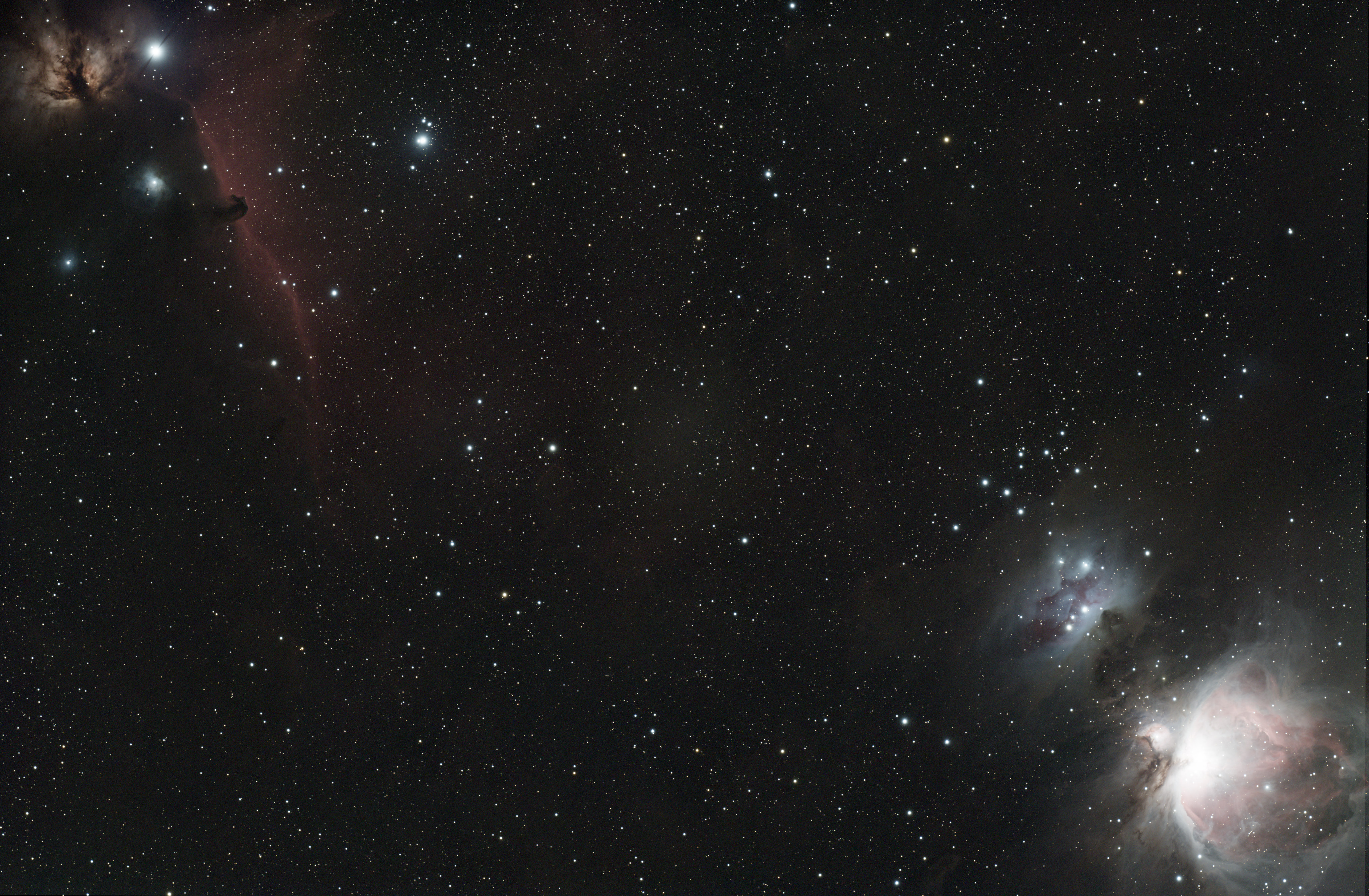
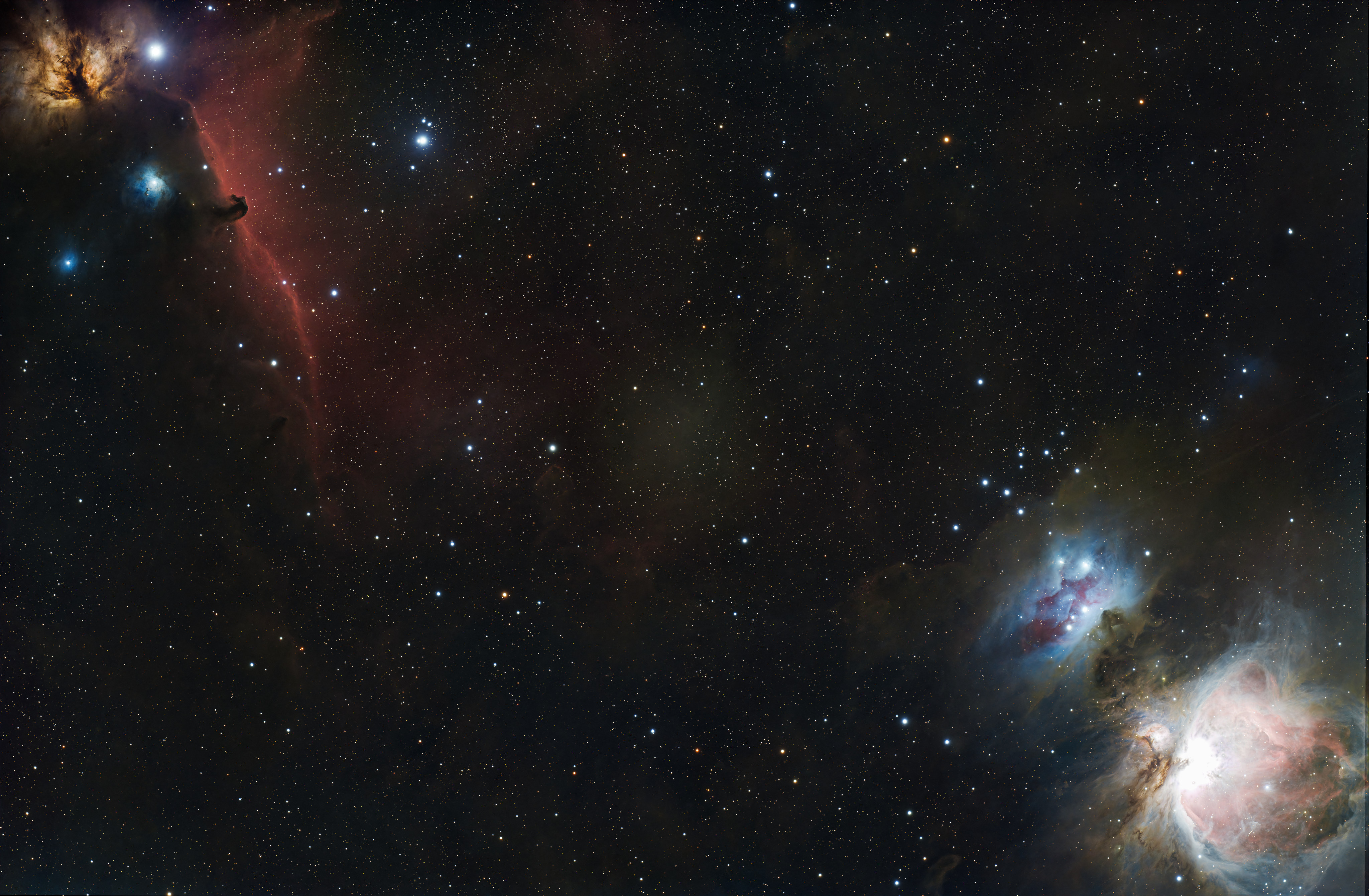
Licence: for personal use, credit Damon Scotting. Both JPEGs 4,096 x 2,682 px.
-10 C sensor temperature during imaging set point -10 C
505 mm focal length, plate solved Askar states 509 mm
2.67 x 1.78° field of view 6,248 x 4,176 px on ASI2600MM Air
26 MP ASI2600MM Air 6,248 x 4,176 px, 23.5 x 15.7 mm
Should you buy it?
91/100 Stars for Your Buck
Pros
- “Pinpoint stars across the board.”
- “And with a 55 mm image circle, your full-frame cameras will love it.”
- “It has an aperture of 106 mm with a fast focal ratio of just f/4.8, meaning you won't need to introduce any additional reducers in order to increase the speed.”
- “And thanks to its Petzval design, you don't have to sweat perfecting the back focus.”
- “It feels like you'd expect a premium telescope to feel.”
- “I think it's a phenomenal telescope.”
Cons
- “But at $3,395, does it offer enough Stars for Your Buck?”
- It is heavy for its size: 5.82 kg for the tube and 8.12 kg with its ring and dovetail, before the camera goes on.
- My camera angle adjuster collided with the adapter plate at the back, so I needed a 10 mm spacer to connect it.
- The $795 SQA55 is the exact same optical design with a smaller aperture.
The bottom line is this is a premium telescope at a relatively affordable price compared to its competition. I don't have an observatory myself, but if I did, this telescope would certainly be at the centre of it.
Who the SQA106 is for
Full-frame imager
Buy
The 55 mm image circle covers a full-frame sensor at f/4.8, with no reducer or flattener to buy.
SQA85 owner
Buy
The same Petzval design with 56% more light grasp: step up when you want more aperture on the same targets.
Owner of a small harmonic mount
Buy
It rode on my ZWO AM3N with no counterweight and tracked well; check your rating first, as the tube is 8.12 kg with its ring and dovetail.
Complete beginner
Skip
Start with the Askar F range from $499, which offers exceptional value for anyone getting serious about astrophotography.
SQA55 or SQA70 shopper
Skip
The $795 SQA55 shares the optical design; pay for the SQA106 only if you want the extra aperture.
Observatory builder
Buy
An observatory-level tube for almost half the price of the Takahashi 106 it resembles.
Three alternatives I have reviewed
- Askar SQA85 85 mm f/4.8, quintuplet Petzval APO 88/100 £2,395 Read the review
- ZWO FF110 110 mm f/7.0, four-element air-spaced apochromat 73/100 £1,499 Read the review
- Askar 103APO 103 mm f/6.8, triplet air-spaced APO 81/100 £999 Read the review
Questions and more about this review
Reviewed by
Damon Scotting
The Telescope Man Verified
BSc (Hons) Physics with Astrophysics and Cosmology, Loughborough University PGCE / QTS, University of Nottingham
About Damon About Damon Damon Scotting is The Telescope Man. He holds a BSc (Hons) in Physics with Astrophysics and Cosmology from Loughborough University and a PGCE with QTS from the University of Nottingham, and taught physics in secondary schools before becoming an astronomy creator. He is a contributing writer for BBC Sky at Night Magazine and the author of 42 Wonders of Our Night Sky, and his photograph of the galaxy M100 with the dwarf planet Ceres was Highly Commended in the Astronomy Photographer of the Year 2024 competition run by Royal Observatory Greenwich. He has appeared on the BBC's Blue Peter. More than 750,000 people follow his astronomy channels on YouTube, Instagram and TikTok, and he has reviewed more than 140 telescopes, mounts, cameras, filters and accessories hands-on for this site. More about Damon · How I test · Damon's book
I review all kinds of gear: most of it I buy, some is gifted and some is loaned, and all of it is reviewed the same way. How this site is funded
Nine questions, answered
Questions about the Askar SQA106
Reviewed 12 February 2026 ·Updated 29 September 2026
I review all kinds of gear. Most of it I buy, some is gifted and some is loaned, and all of it is reviewed the same way: no company sees or approves a review before it is published. Shop links marked Ad are affiliate links: I earn a commission when you buy through them, at no extra cost to you. How this site is funded
- What is the real focal length of the Askar SQA106? Askar states 509 mm. The plate solutions written into 19 of my masters and subs read 504.6 to 505.5 mm, a median of 504.9 mm, about 0.8% short. With 3.76 micron pixels that is 1.54 arcseconds per pixel. Tested numbers and the download ↓
- Does the Askar SQA106 need a field flattener or reducer? No. At f/4.8 it is fast enough already, and the Petzval design flattens the field itself, so anywhere from 48 to 78 mm of back focus works; Askar recommends 55 mm. The specifications and the comparison table ↓
- What back focus did I use on the SQA106? In fact, I actually used my ASI 2600 monochrome Air and I had my back focus at 65 mm and it was still absolutely golden. From my video review The specifications and the comparison table ↓
- Which cameras and mount did I use with the SQA106? The images on this page came through the ZWO ASI4400MC Pro (full-frame colour) and the ZWO ASI2600MM Air (APS-C mono). Every header of mine through it names the ZWO AM3N mount. What I captured ↓
- Can a small harmonic mount carry the SQA106? My ZWO AM3N carried it with the ASI2600MM Air, a filter wheel and no counterweight, and it tracked really nicely. The telescope weighs 8.12 kg with its ring and dovetail, so add your camera and guide scope before you check your own mount's no-counterweight rating. The rig on the mount ↓
- How does the SQA106 compare with the Askar SQA85? The SQA106 is the SQA85's bigger brother: the same Petzval design with 106 mm of aperture against 85 mm, which is 56% more light grasp. The two sit side by side in the comparison table. The specifications and the comparison table ↓
- Should I buy the SQA106 or the SQA130? Both are quintuplet Petzval astrographs at f/4.8. The SQA130 adds aperture and reaches 624 mm, but weighs 11.76 kg with its ring and dovetail against 8.12 kg for the SQA106, so it needs a bigger mount. The specifications and the comparison table ↓
- How much does the Askar SQA106 cost? £3,395 at First Light Optics in the UK and $3,395 at Agena Astro in the US; the tabs at the top of the page link to both. The verdict, the readers and the sellers ↓
- What have I not tested on the SQA106? I have not measured corner stars or tilt, taken flats through it, or used it visually.