Askar SQA130 review: the most powerful setup I have owned
Where does it rank on our leaderboard
| Rank | Telescope | Stars for Your Buck | Recorded UK price |
|---|---|---|---|
| 1 | Askar 50P | 95 out of 100 | £299 |
| 2 | ToupTek Hope D60 | 93 out of 100 | £749 |
| 4 | Askar SQA106 | 91 out of 100 | £3,395 |
| 11 | Askar SQA130 | 82 out of 100 | £4,695 |
| 17 | Askar 80ED | 77 out of 100 | £379 |
| 25 | Askar 185APO | 71 out of 100 | £5,049 |
| 35 | Celestron 8 inch RASA | 53 out of 100 | £2,595 |
| 41 | Celestron 114 LCM | 42 out of 100 | £361 |
| 42 | Celestron AstroMaster LT 76 | 13 out of 100 | £200 |
Contents
- 01 Where does it rank on our leaderboard
- 02 Specifications and features
- 03 In the hand
- 04 How good is it? Here's what I captured
- 05 Raw against finished
- 06 The rig on the mount
- 07 What is it for
- 08 Versus the ZWO FF110
- 09 Watch the review
- 10 Tested numbers and the download
- 11 Should you buy it?
- 12 Questions and more about this review
In 30 seconds
Stars for Your Buck 82/100
Reviewed 30 Apr 2026 Updated 24 Sep 2026
- Rank
- #11 of 42 telescopes
- Verdict
- Damon recommends
Written by Damon Scotting 7 min read
Buy it if
- You want to be considered a professional astrophotographer.
- You image with a full-frame or larger sensor and want a 55 mm image circle at f/4.8.
- You chase big nebulae in narrowband and want wide, detailed frames from a light-polluted sky.
Skip it if
- This is your first telescope for astrophotography.
- You mostly image small galaxies, which sit in a lot of empty sky at 624 mm.
- You want this design for less: the smaller SQA106 uses the same quintuplet Petzval layout.
“This might be the best amateur telescope in the world when it comes to imaging our night sky. The sharpness of the images is unmatched, not to mention the colours are like a dream.”
Specifications and features
Against the telescopes I have reviewed
Compare with
| Askar SQA130 reviewed #11 of 42 | Askar SQA106 #4 of 42 | Askar 140APO #15 of 42 | ZWO FF110 #22 of 42 | Askar 103APO #13 of 42 | |
|---|---|---|---|---|---|
| Recorded UK price | £4,695 | £3,395 | £2,098 | £1,499 | £999 |
| Stars for Your Buck | 82/100 | 91/100 | 80/100 | 73/100 | 81/100 |
| Aperture | 130 mm | 106 mm (4.17") | 140 mm | 110 mm | 103 mm |
| Focal length | 624 mm | 509 mm | 980 mm | 766 mm | 700.4 mm |
| Focal ratio | f/4.8 | f/4.8 | f/7 | f/7.0 | f/6.8 |
| Optical design | Quintuplet Petzval APO with two SD elements | Quintuplet Petzval APO · 2× SD elements | Triplet air-spaced APO | Four-element air-spaced apochromat with one ED element, native flat field | Triplet air-spaced APO |
| Image circle | 55 mm (95% illumination at the edge of 44 mm) | 55 mm medium-format rated · 44 mm illuminated full-frame | not stated by the maker for the bare triplet; 44 mm full frame with the optional 1x flattener or 0.8x reducer | 44 mm | not stated by the maker for the bare triplet; 44 mm full frame with the optional 1x flattener |
| Back focus | 46 to 76 mm (55 mm recommended) | 48 to 78 mm; recommended 55 mm | not stated by the maker for the bare triplet; 55 mm from the base of the M48 male thread with the optional 1x flattener or 0.8x reducer | 42 to 73 mm from the M54 to M48 shoulder | not stated by the maker for the bare triplet; 55 mm from the base of the M48 male thread with the optional 1x flattener |
| Focuser | 3.2 inch heavy-duty, 30 mm travel, engraved drawtube scale, 360 degree rotator | 2.8 inch rigid dual-speed focuser, 30 mm travel, engraved drawtube scale, motor-focuser compatible | 3.5 inch dual-speed rack and pinion, 1:10 fine focus, 360 degree rotator, 2 inch and 1.25 inch visual adapters | 3″ rack-and-pinion, 1:10 dual speed | 3.3 inch dual-speed rack and pinion, 1:10 fine focus, 2 inch and 1.25 inch visual adapters |
| Weight, tube | 9.18 kg tube; 11.76 kg with tube ring and dovetail | 5.82 kg | 9.2 kg OTA; 10.9 kg gross with tube rings and dovetail | 5.74 kg OTA; 6.76 kg full package | 4.75 kg OTA; 5.5 kg gross with tube rings and dovetail |
| Length, tube | 650 mm dew shield retracted; 764 mm extended | 516 mm dew shield contracted; 586 mm dew shield extended | 735 mm dew shield retracted; 870 mm extended; rear tube extension 125 mm | 664 mm shortest (1.25 inch interface, all retracted); 728 mm photo tube retracted; 751 mm dew shield out; 815 mm photo tube plus dew shield extended | 600 mm dew shield retracted; 711 mm extended |
| Dew shield | Retractable | Retractable | Retractable | Retractable, internal anti-reflection coating | Retractable, felt-lined interior |
| In the box | SQA130 tube with integrated ring and handle, 300 mm Losmandy-compatible dovetail, Oxford cloth case | SQA106 OTA, Oxford cloth case | 140APO OTA, pair of tube rings, handle, Askar 300 mm Losmandy dovetail plate, Oxford cloth case, manual | Photo extension tube, M48 and M54 adapters, quick-release rings, handle/dovetail, inspection report | 103APO OTA, pair of tube rings, handle, 290 mm Vixen dovetail plate, manual, Oxford cloth case |
In the hand
Four A7S frames and two from my review video
The ring and handle
On the ZWO AM7
Ring and dovetail
Super Quintuplet Astrograph
Lens cap on
At night
How good is it? Here's what I captured
Seven targets
Veil Nebula (NGC 6960 and NGC 6992), ASI6200MM Pro
- Integration
- 1 h 30 min
- Field
- 2.9 x 1.9 degrees
- Telescope
- Askar SQA130
- Camera
- ZWO ASI6200MM Pro
- Mount
- ZWO AM7
- Target
- Veil Nebula (NGC 6960 and NGC 6992)
- Type
- Supernova remnant
- Location
- Bortle 6.8 (in my garden)
Elephant's Trunk Nebula (IC 1396), ASI6200MM Pro
- Integration
- 1 h 30 min
- Field
- 3.3 x 2.2 degrees
- Telescope
- Askar SQA130
- Camera
- ZWO ASI6200MM Pro
- Mount
- ZWO AM7
- Target
- Elephant's Trunk Nebula (IC 1396)
- Type
- Emission nebula
- Location
- Bortle 6.8 (in my garden)
North America Nebula (NGC 7000), ASI6200MM Pro
- Integration
- 3 h
- Field
- 3.3 x 2.2 degrees
- Telescope
- Askar SQA130
- Camera
- ZWO ASI6200MM Pro
- Mount
- ZWO AM7
- Target
- North America Nebula (NGC 7000)
- Type
- Emission nebula
- Location
- Bortle 6.8 (in my garden)
Rosette Nebula (NGC 2237), ASI6200MM Pro
- Integration
- 36 min (12 x 180 s)
- Field
- 3.3 x 2.2 degrees
- Telescope
- Askar SQA130
- Camera
- ZWO ASI6200MM Pro
- Mount
- ZWO AM7
- Target
- Rosette Nebula (NGC 2237)
- Type
- Emission nebula
- Location
- Bortle 6.8 (in my garden)
Bode's and Cigar Galaxies (M81 and M82), ASI6200MM Pro
- Integration
- 1 h
- Field
- 3.2 x 2.1 degrees
- Telescope
- Askar SQA130
- Camera
- ZWO ASI6200MM Pro
- Mount
- ZWO AM7
- Target
- Bode's and Cigar Galaxies (M81 and M82)
- Type
- Galaxies
- Location
- Bortle 6.8 (in my garden)
Leo Triplet (M65, M66 and NGC 3628), ASI6200MM Pro
- Integration
- 1 h
- Field
- 3.2 x 2.2 degrees
- Telescope
- Askar SQA130
- Camera
- ZWO ASI6200MM Pro
- Mount
- ZWO AM7
- Target
- Leo Triplet (M65, M66 and NGC 3628)
- Type
- Galaxy group
- Location
- Bortle 6.8 (in my garden)
Iris Nebula (NGC 7023), ASI6200MM Pro, Altair LRGB
- Integration
- 1 h
- Field
- 3.3 x 2.2 degrees
- Telescope
- Askar SQA130
- Camera
- ZWO ASI6200MM Pro
- Mount
- Unknown
- Target
- Iris Nebula (NGC 7023)
- Type
- Reflection nebula
- Location
- Bortle 6.8 (in my garden)
Raw against finished
The rig on the mount
The 6 targets, the raw combined stack against my finished image, each with its integration, the camera and the palette:
- Elephant's Trunk Nebula (IC 1396): 1 h 30 min of light, ASI6200MM Pro, the raw combined stack with one automatic stretch
- North America Nebula (NGC 7000): 3 h of light, ASI6200MM Pro, the raw combined stack with one automatic stretch
- Rosette Nebula (NGC 2237): 36 min (12 x 180 s) of light, ASI6200MM Pro, the raw combined stack with one automatic stretch
- Bode's and Cigar Galaxies (M81 and M82): 1 h of light, ASI6200MM Pro, the raw combined stack with one automatic stretch
- Leo Triplet (M65, M66 and NGC 3628): 1 h of light, ASI6200MM Pro, the raw combined stack with one automatic stretch
- Iris Nebula (NGC 7023): 1 h of light, ASI6200MM Pro, Altair LRGB, the raw combined stack with one automatic stretch
On the ZWO AM7, then on six other mounts
What is it for
Five things it is for
Built for imaging
This telescope is a quintuplet Petzval astrograph. They may sound like fancy made-up words, but they translate into one of the most powerful imaging telescopes in the world.
Room to crop
The Veil came out at a whopping 62 megapixels, about 50% larger than an 8K image, so I can crop into a 4K view of a single stretch of filaments.
Narrowband through light pollution
Through 2.5 nm narrowband filters under a light-polluted sky, it still captures the most violent events in our universe in ridiculous detail.
Galaxy groups in one frame
The field is so wide that one frame holds not one but three galaxies, all having their own little party.
Colour from a short window
I barely managed 36 minutes on the Rosette before it dipped behind a house, and yet the fine structure is there to be seen, as well as its vibrant colours.
Versus the ZWO FF110
North America Nebula (NGC 7000) on both, plate-solved and star-aligned (residual 0.06 px per 1000)
| Target | Telescope | Integration | Subs | Filter | Nights |
|---|---|---|---|---|---|
| North America Nebula (NGC 7000) | Askar SQA130 + ZWO ASI6200MM Pro | 180 min | not recorded | SHO (Antlia 2.5 nm) | 2026-03-26, 2026-03-29 |
| North America Nebula (NGC 7000) | ZWO FF110 + ZWO ASI6200MM Pro | 249 min | 83 x 180 s | SHO (Antlia 2.5 nm) | not recorded |
Watch the review
The $5,000 Telescope That's Closing the Gap With Hubble!? · published 30 April 2026 · 8:39 · Watch on YouTube · 15,261 views, 587 likes on 2 Oct 2026
Jump to
- 0:30 Why this Askar SQA130 setup is so powerful
- 1:30 First light: North America Nebula
- 2:00 The galactic trio (Bode, Cigar and Hamburger Galaxies)
- 3:30 Iris Nebula
- 4:00 Rosette Nebula
- 4:30 Elephant Trunk Nebula
- 5:00 My best image ever: the Veil Nebula
- 6:30 Comparing the Askar SQA130 to Hubble
- 7:30 How close are amateurs really getting to Hubble?
Transcript of the review video 1,567 words · 10 chapters · searchable
Press a time stamp to play from there.
0:00 The best amateur telescope in the world?
0:02 Now this might be the best amateur telescope in the world when it comes to imaging our night sky. 0:04 The sharpness of the images is unmatched, not to mention the colours are like a dream. 0:08 But here in my garden, the Bortle is 6.8, meaning it is drenched in suffocating light pollution. 0:15 So the question is, can this state-of-the-art telescope outdo the Hubble Space Telescope by piercing through and capturing our cosmos in jaw-dropping detail? 0:22 Let's find out. 0:22 I'm Damon Scotting and this is Astronomical. 0:29 Now I've been doing this whole stargazing shindig for almost 15 years now, but never have I had the good fortune of owning a setup this powerful.
0:30 Why this Askar SQA130 setup is so powerful
0:37 What makes it so special? 0:37 Let me show you. 0:39 This telescope is a quintuplet Petzval astrograph. 0:41 Now they may sound like some fancy made-up words, but what they translate into is that this is one of the most powerful imaging telescopes in the world. 0:49 I've taken images before with telescopes 10% of the cost that I felt would be worthy featuring in an art gallery. 0:55 So the expectations for this almost $5,000 telescope is that it should be able to make even the dullest deep sky object seem mind-blowing. 1:01 And in order to help ensure that I'm using a camera and a set of filters that will penetrate the messy atmosphere and skyglow, revealing only the natural beauty of our cosmos. 1:11 This is the 62-megapixel ASI6200, partnered with the top-of-the-range Antlia 2.5 nanometre narrowband filters. 1:21 So theoretically speaking, these filters will isolate the wavelengths of light that reach the camera sensor so well that my Bortle should effectively drop from a hazy 6.8 to a mesmerizing two. 1:29 In fact, I'm so confident about that that I'm going to leave my fairy lights on.
1:30 First light: North America Nebula
1:36 Okay, so here we go. 1:36 Let's put this telescope to its very first test by pointing it at the North America Nebula. 1:52 >> The sharpness of this shot is breathtaking, and yet it is only a 90-minute stacked exposure, which means it's only going to get better and better the more time I spent imaging it.
2:00 The galactic trio (Bode, Cigar and Hamburger Galaxies)
2:00 But alas, I have more in mind than just this deep sky target. 2:05 How about a galactic trio? 2:09 Almost unbelievably for this shot, the camera sensor is unnecessarily large, capturing way more of the field of view than required to capture not one, but three galaxies, all having their own little party. 2:20 Maybe it's a gathering of the local galactic committees having a natter about what to do about the mysterious expansion of the universe. 2:28 Whilst most galaxies have relatively boring names, this fluffy-looking one at the top is known as the Hamburger Galaxy. 2:34 Do with that knowledge as you wish. 2:36 Well, moving on, it's like they always say, "Three's a crowd." 2:38 Which is why this galactic partnership makes for an even more beautiful image than before. 2:44 Don't get me wrong, there are still a couple of galaxies trying to photobomb this image, but it's impossible to steal the show from the gorgeous spiraling arms of Bode's Galaxy and the unique chaotic structure of the Cigar Galaxy. 2:56 This is what we like to call a starburst galaxy due to the high rate of star formation in its core. 3:00 This also means a lot of dazzling supernovas are happening here all the time. 3:04 So, I'll be keeping an eye out on this one for sure. 3:08 I'm not sticking around for long though when it comes to imaging these wonders tonight. 3:11 And I think as a result, it means I'm missing out on some of the more fainter details. 3:14 Take our next target for example. 3:16 This is the Iris Nebula. 3:18 It is a bright reflection nebula, and yet right now it looks like a dark glowing mysterious portal to another world. 3:25 I love the way there's this blanket of thick dark dust and gas that's blocking the light of the surrounding stars from getting through to us.
3:30 Iris Nebula
3:33 It's wonders like this that make exploring the night sky so intriguing. 3:37 Now, for the next target, I must admit I barely managed to get an image before it moved behind my neighbour's house and dipped below the horizon. 3:43 So, this is just 36 minutes of imaging the Rosette Nebula. 3:48 That's five times three-minute exposures of hydrogen alpha images, five times 3-minute exposures of sulfur two images, and just two 3-minute exposures of O3 images. 3:58 And yet, nevertheless, the fine structure is there to be seen as well as its vibrant colours.
4:00 Rosette Nebula
4:04 But, I assure you the colours do not get much better than our penultimate target of this episode, the Elephant Trunk Nebula is an absolute hall of famer when it comes to images of our night sky. 4:15 Here are some shots I've captured of it with other telescopes. 4:19 But, the question is how does it fare through our observatory-level telescope?
4:30 Elephant Trunk Nebula
4:40 >> And as beautiful as this image is, let me tell you I have saved the very best until last. 4:43 This right here is my Mona Lisa, my starry night. 4:46 This is the kind of image I'd make a video about saying, "My telescope versus the Hubble Space Telescope." 4:53 because I'd have a good feeling that there's like a 10% chance my image could win. 4:57 I present to you a supernova remnant known as the Veil Nebula.
5:00 My best image ever: the Veil Nebula
5:03 You are looking at the aftermath of a star 20 times the size of our own sun which reached the end of its life about 10,000 years ago and went out in the most spectacular blaze of glory imaginable. 5:15 The full-resolution copy of this image is free to download from my Patreon. 5:19 It is a whopping 62 megapixels, meaning it is about 50% larger than an 8K image. 5:25 In fact, if you crop into a 4K resolution shot, this is the type of view you would get. 5:32 >> >> Gosh, this is crazy, isn't it? 5:33 An hour and a half of imaging from this light-polluted English garden and you can still capture the most violent event in our universe in ridiculous detail. 5:43 Who knew that all you needed to do so was a state-of-the-art $5,000 telescope? 5:48 I am kidding, of course. 5:48 You can image these objects with telescopes that cost far less. 5:51 In fact, here's an image that I took with a $399 all-in-one smart telescope. 5:55 It comes with a camera, mount, and telescope in an integrated all-in-one setup and still produces decent images of our night sky. 6:04 But, this bloody juggernaut from Sharpstar, the Askar SQA130, is the top of their very successful SQA line. 6:10 And yeah, if we want to actually compare its images to the billion-dollar Hubble Space Telescope, let's do it. 6:16 I looked up Hubble's images for a comparison shot of the Veil Nebula, and as it turns out, with Hubble being a lot bigger than the SQA130, its field of view is a lot narrower, meaning this is its view of the Veil Nebula, which correlates to just about here on my back garden telescope's image.
6:30 Comparing the Askar SQA130 to Hubble
6:32 So, it's clearly better, but I tell you what, I tell you what, we are closing the gap between the two. 6:38 Better optics, image sensors, and filters meaning it's getting less and less difficult for imagers like myself to go toe-to-toe with the absolute giants of the astrophotography world. 6:47 Will the gap ever be completely closed? 6:49 Unlikely. 6:52 Hubble's got benefits that us amateurs could only dream of. 6:53 Number one, 24/7 clear skies up there out in space. 6:56 No atmospheric disturbance, as crystal clear as it possibly gets. 7:01 But yeah, I've got to admit, this is genuinely the first time I felt like this is it. 7:05 We are capturing stuff from our back gardens now that you just wouldn't have believed 30 years ago, let alone a century or two ago, when the likes of Hubble and Messier were looking through their fat freaking telescopes and trying to figure out if this was a tiny little piece of icy rock or a star, only to then realize, "Oh, it's actually an entire freaking galaxy, an island of roughly a trillion stars. 7:27 My bad, guys.
7:30 How close are amateurs really getting to Hubble?
7:30 Maybe the telescope's just not big enough." 7:32 Today, we have the tremendous benefit of using super-sensitive camera sensors to gobble up every last photon of light being emitted by by astronomical curiosities, revealing more of the wonder in our universe than ever before. 7:45 And yet, we're still only at the tip of the iceberg. 7:50 >> If you'd like to check out the telescopes and gear featured in today's video, I've included product links in the description down below. 7:54 If you want to see more videos like this, then you can give it a like and subscribe to boost its performance and ensure I can dedicate more time to making them. 8:00 And if you want to take a deeper dive into the specs and the finer details of the equipment used in today's video, be sure to check out my sister channel, The Telescope Man, for more. 8:09 Thanks for watching. 8:11 I'm Damon Scotting, and this was Astronomical. 8:15 >> It is finally here. 8:18 The 42 Wonders of the Night Sky book has officially been released. 8:20 What started as my biggest astronomy series on YouTube is now a full book. 8:24 140 pages packed with stunning deep sky objects, practical stargazing tips, fun facts, puzzles, games, and side-by-side comparisons showing what each of these wonders look like through three very different setups.
Tested numbers and the download
Finished image
- Download the raw stack JPEG · 2.4 MB · 4,096 x 2,728
- Download the finished image JPEG · 1.9 MB · 4,096 x 2,728
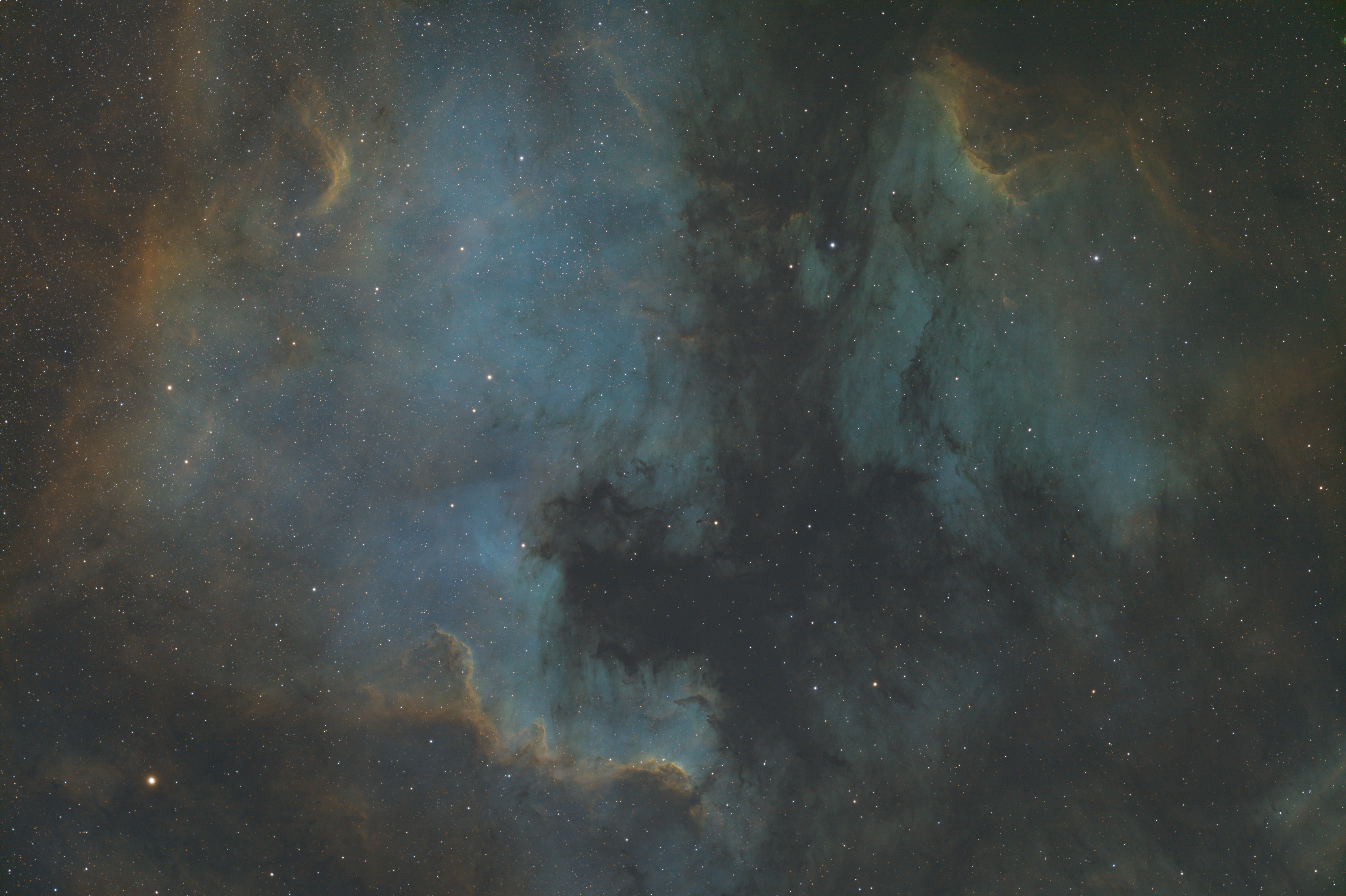
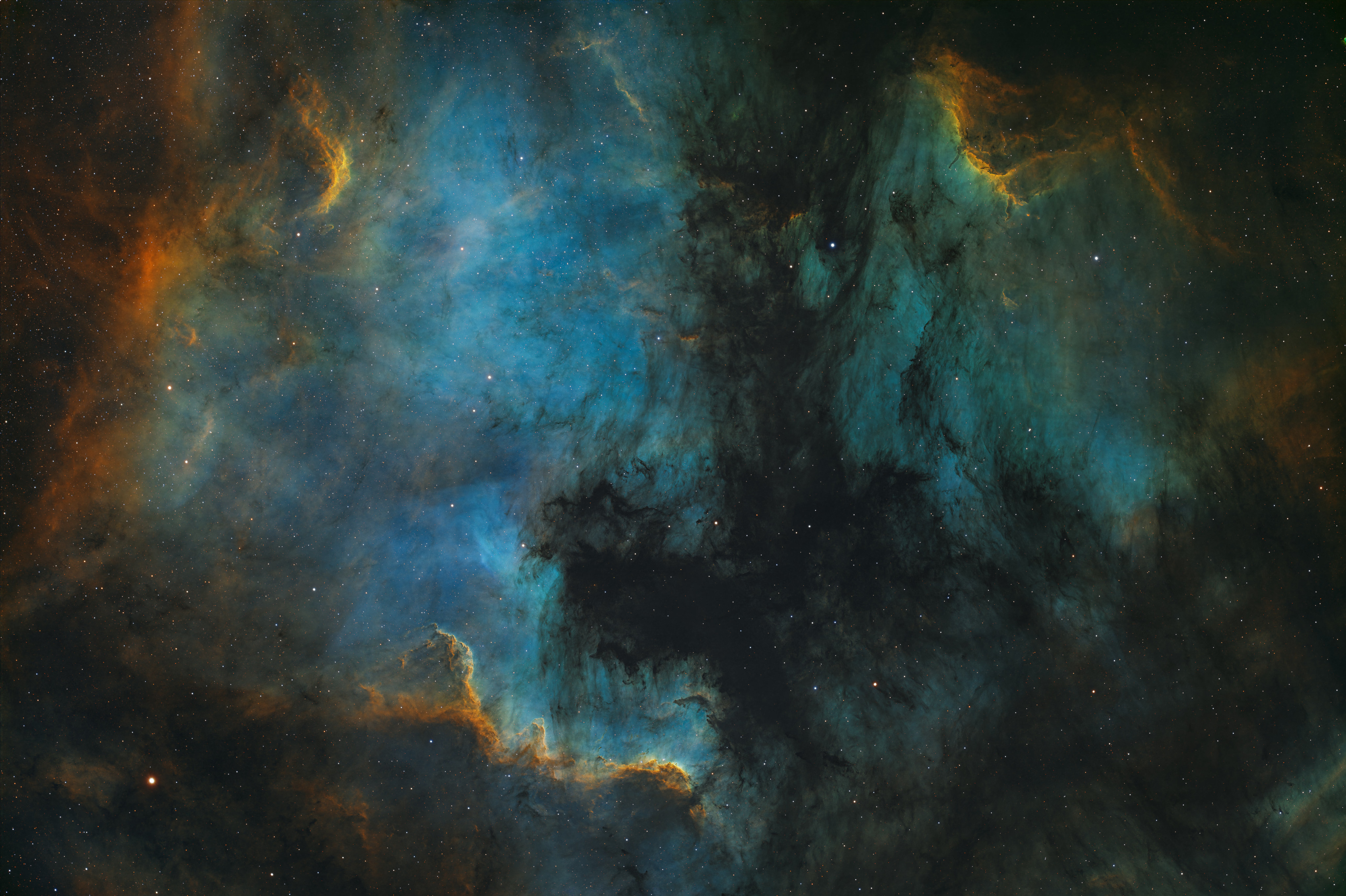
Licence: for personal use, credit Damon Scotting. Both JPEGs 4,096 x 2,728 px.
-10 C sensor temperature during imaging set point -10 C
619 mm focal length, plate solved Askar states 624 mm
3.3 x 2.2° field of view 9,576 x 6,388 px on ASI6200MM Pro
61 MP ASI6200MM Pro 9,576 x 6,388 px, 36.0 x 24.0 mm
Should you buy it?
82/100 Stars for Your Buck
Pros
- A quintuplet Petzval astrograph with two SD elements: the most powerful imaging setup I have ever had the good fortune of owning.
- Fine structure and vibrant colour even from a short window: 36 minutes on the Rosette Nebula was enough.
- Ridiculous detail through heavy light pollution: with 2.5 nm narrowband filters the Veil Nebula became my Mona Lisa.
- A 55 mm image circle covers full frame with room to spare, so a 62 megapixel frame can be cropped to a 4K view.
Cons
- It is an almost $5,000 telescope, and you can image the same objects with telescopes that cost far less.
- It is heavy: 9.18 kg for the tube and 11.76 kg with its ring and dovetail, so it needs a big mount before the camera goes on.
- On a full-frame sensor the field is wider than a galaxy group needs: a trio of galaxies sat in far more sky than the shot required.
- The tube is only part of the bill: images like these also need a cooled full-frame camera and narrowband filters.
This is genuinely the first time I felt like this is it. We are capturing stuff from our back gardens now that you just wouldn't have believed 30 years ago.
Who the SQA130 is for
Complete beginner
Skip
Start smaller: you can image these objects with telescopes that cost far less, and this one needs a heavy mount, a cooled camera and filters.
Full-frame narrowband imager
Buy
The 55 mm image circle and f/4.8 suit a 62 megapixel mono camera; it is the most powerful imaging setup I have owned.
Galaxy specialist
Skip
At 624 mm most galaxies sit small in a full-frame field; a longer focal length frames them better.
SQA106 owner
Skip
Do not upgrade: the SQA106 uses the same quintuplet Petzval design and scores higher on my board.
Owner of a mid-size mount
Skip
The tube alone is 11.76 kg with its ring and dovetail; add the camera and guide scope before you check your mount's capacity.
Observatory builder
Buy
If you want one refractor at the heart of a permanent full-frame rig, this is the top of Askar's SQA line.
Three alternatives I have reviewed
- Askar SQA106 106 mm f/4.8, quintuplet Petzval APO · 2× SD elements 91/100 £3,395 Read the review
- ZWO FF110 110 mm f/7.0, four-element air-spaced apochromat 73/100 £1,499 Read the review
- Askar 140APO 140 mm f/7, triplet air-spaced APO 80/100 £2,098 Read the review
Questions and more about this review
Reviewed by
Damon Scotting
The Telescope Man Verified
BSc (Hons) Physics with Astrophysics and Cosmology, Loughborough University PGCE / QTS, University of Nottingham
About Damon About Damon Damon Scotting is The Telescope Man. He holds a BSc (Hons) in Physics with Astrophysics and Cosmology from Loughborough University and a PGCE with QTS from the University of Nottingham, and taught physics in secondary schools before becoming an astronomy creator. He is a contributing writer for BBC Sky at Night Magazine and the author of 42 Wonders of Our Night Sky, and his photograph of the galaxy M100 with the dwarf planet Ceres was Highly Commended in the Astronomy Photographer of the Year 2024 competition run by Royal Observatory Greenwich. He has appeared on the BBC's Blue Peter. More than 750,000 people follow his astronomy channels on YouTube, Instagram and TikTok, and he has reviewed more than 140 telescopes, mounts, cameras, filters and accessories hands-on for this site. More about Damon · How I test · Damon's book
I review all kinds of gear: most of it I buy, some is gifted and some is loaned, and all of it is reviewed the same way. How this site is funded
Nine questions, answered
Questions about the Askar SQA130
Reviewed 30 April 2026 ·Updated 24 September 2026
I review all kinds of gear. Most of it I buy, some is gifted and some is loaned, and all of it is reviewed the same way: no company sees or approves a review before it is published. Shop links marked Ad are affiliate links: I earn a commission when you buy through them, at no extra cost to you. How this site is funded
- Is the Askar SQA130 good for beginners? No. It is a 9.18 kg imaging tube that needs a heavy mount, a cooled camera and filters, and you can image the same objects with telescopes that cost far less. The specifications and the comparison table ↓
- What focal length does the SQA130 really have? Askar states 624 mm. The plate solutions in 80 of my North America Nebula subs put it at 618.6 mm, 1.254 arcseconds per pixel on the ZWO ASI6200MM Pro. Tested numbers and the download ↓
- What field of view does it give on a full-frame camera? 3.3 x 2.2 degrees on the ASI6200MM Pro, wide enough for the whole Veil Nebula or the Elephant's Trunk region in one frame. What I captured ↓
- What cameras suit the SQA130? I used the ZWO ASI6200MM Pro with 2.5 nm narrowband and LRGB filters, guided with a ZWO ASI120MM Mini, plus the ZWO ASI4400MC colour camera for the Iris Nebula. What I captured ↓
- How long did the images on this page take? The Rosette Nebula here is 36 minutes and the North America Nebula 3 hours, both in 180 second subs. The raw stacks against the finished images ↓
- How sharp are the stars? Across nine of my stacks the star size ranged from 2.2 to 3.4 pixels, 2.8 to 4.3 arcseconds at 1.25 arcseconds per pixel, with a median of 3.2 arcseconds. Tested numbers and the download ↓
- Should I buy the SQA130 or the SQA106? The SQA106 uses the same quintuplet Petzval design with 106 mm of aperture, costs less and scores 91 on my board against 82 for the SQA130. Pick the SQA130 for the extra aperture and focal length. The specifications and the comparison table ↓
- Can the SQA130 compete with Hubble? No. Hubble's view of the Veil is clearly better and far narrower, but better optics, sensors and filters mean amateurs are closing the gap. Watch the review ↓
- What have I not tested on the SQA130? I have not used the SQA130 visually, measured its corner stars or tilt, or tried it under a dark sky.