ToupTek ATR2600C review: a cooled IMX571 APS-C colour camera
Where does it rank on our leaderboard
| Rank | Camera | Stars for Your Buck | Recorded UK price |
|---|---|---|---|
| 1 | SVBONY SV705C | 93 out of 100 | £229 |
| 2 | SVBONY SC571CC | 90 out of 100 | £1,029 |
| 8 | ZWO ASI2600MC Duo | 83 out of 100 | £1,849 |
| 10 | ToupTek ATR2600C | 80 out of 100 | £1,127 |
| 11 | Player One Saturn-C | 78 out of 100 | £514 |
| 17 | ZWO ASI120MM | 75 out of 100 | £199 |
| 27 | ZWO ASI6200MC | 59 out of 100 | £3,999 |
| 28 | ZWO ASI183MC | 38 out of 100 | £549 |
| 29 | Nikon COOLPIX P1000 | 32 out of 100 | £787 |
Contents
- 01 Where does it rank on our leaderboard
- 02 Specifications and features
- 03 In the hand
- 04 The rig on the mount
- 05 How good is it? Here is what it captured
- 06 Raw against finished
- 07 What is it for
- 08 Watch the review
- 09 Tested numbers and the download
- 10 Should you buy it?
- 11 Questions and more about this review
In 30 seconds
Stars for Your Buck 80/100
Reviewed 20 Nov 2024 Updated 26 Sep 2026
- Rank
- #10 of 29 cameras
- Verdict
- Damon recommends
Written by Damon Scotting 5 min read
Buy it if
- You want the IMX571 APS-C sensor in a cooled camera that is not tied to one maker's controller.
- You want a camera that reaches -10 C in seconds rather than minutes.
- You image galaxies and nebulae at 400 to 600 mm and want a wide 26 MP field.
Skip it if
- You run everything from a ZWO ASIAIR: it only connects ZWO cameras.
- You want mono narrowband: the ToupTek ATR2600MM is the mono version.
- You want the cheapest route to the IMX571: the SVBONY SC571CC uses the same sensor.
“The bottom line is the ATR2600 is breathtakingly good.”
Specifications and features
Against the cameras I have reviewed
Compare with
| ToupTek ATR2600C reviewed #10 of 29 | ZWO ASI2600MC Duo #8 of 29 | ZWO ASI2600MC #21 of 29 | SVBONY SC571CC #2 of 29 | |
|---|---|---|---|---|
| Recorded UK price | £1,127 | £1,849 | £1,599 | £1,029 |
| Stars for Your Buck | 80/100 | 83/100 | 72/100 | 90/100 |
| Sensor | Sony IMX571 colour, back-illuminated | Sony IMX571 colour, plus an SC2210 guide sensor | Sony IMX571 colour | Sony IMX571 colour |
| Format | APS-C, 23.4 x 15.7 mm, 28.3 mm diagonal | APS-C, 23.5 x 15.7 mm | APS-C, 23.5 x 15.7 mm | APS-C, 23.5 x 15.7 mm |
| Colour or mono | Colour | Colour | Colour | Colour |
| Resolution | 6224 x 4168, 26 MP | 6248 x 4176, 26 MP | 6248 x 4176, 26 MP | 6224 x 4168, 26 MP |
| Pixel size | 3.76 um | 3.76 um | 3.76 um | 3.76 um |
| Cooling | Two-stage TEC, 35 C below ambient (short exposures) to 42 C (long) | TEC, 30 to 35 C below ambient | TEC, 30 to 35 C below ambient | TEC, about 35 C below ambient |
| Read noise | 0.79 to 2.77 e- (low noise mode) | 0.9 to 4.2 e- | 1.0 to 3.3 e- | 1.14 to 2.6 e- |
| Full well | 51 ke- (100 ke- in high full-well mode) | 50 ke- | 73 ke- | Approximately 16,000 electrons at the lowest plotted HCG gain (0 dB); graph-derived, not an all-mode maximum |
| ADC | 16-bit | 16-bit | 16-bit | 16-bit |
| Weight | 577 g | 700 g | 700 g | 557 g |
| Back focus | 17.5 mm (55 mm with the supplied spacers) | 17.5 mm | 55 mm with the supplied spacers | 17.5 mm |
| Interface | USB 3.0, two-port USB 2.0 hub, 512 MB DDR3 buffer | USB 3.0, 512 MB DDR3 buffer | USB 3.0, 512 MB DDR3 buffer | USB Type-C |
| In the box | Camera with its 2 inch adapter, 12 V 3.3 A power adapter and cable, 1.5 m USB 3.0 cable, M48 to M42 adapter, 16.5 mm and 21 mm extenders, 12.5 mm M42 adapter, cover | Camera, soft padded case, 2 m USB 3.0 cable, two 0.5 m USB 2.0 cables, 16.5 mm and 21 mm M54 extenders, M54 to M48 ring, hex key, quick start guide | The camera, a cover, M42-M48 16.5 mm and M42 21 mm extenders, an M42M-M48F adapter, a hex key, two 0.5 m USB 2.0 cables, a 2 m USB 3.0 cable, a quick guide and a camera bag | The camera, three adapter rings (M42 to M42, M48 to M42, M42 to M48), a dust cap, a USB cable, a 12 V 3 A power supply, desiccant, a manual and a cleaning cloth |
In the hand
On the imaging train
At night
Rear ports
Beside an ASIAIR Plus
The slip-on cap
On the Askar 71F
The rig on the mount
On the JUWEI-17, then on six other mounts
How good is it? Here is what it captured
Two targets
Andromeda, ToupTek ATR2600C, Askar 71F
- Integration
- 5 h 31 min (331 x 60 s)
- Field
- 2.54 x 1.65 degrees
- Telescope
- Askar 71F
- Camera
- ToupTek ATR2600C
- Mount
- ZWO AM5N
- Target
- M 31 Andromeda Galaxy with M 32 and M 110
- Type
- Spiral galaxy
Pleiades, ToupTek ATR2600C, Askar 71F
- Integration
- Unknown
- Field
- Unknown
- Telescope
- Askar 71F
- Camera
- ToupTek ATR2600C
- Mount
- Unknown
- Target
- M 45 Pleiades
- Type
- Open cluster with reflection nebula
Raw against finished
What is it for
The 1 target, the raw combined stack against my finished image, each with its integration, the camera and the palette:
- M 31 Andromeda Galaxy with M 32 and M 110: 5 h 31 min (331 x 60 s) of light, ToupTek ATR2600C, the raw combined stack with one automatic stretch
Three things it is for
The same sensor as the ZWO ASI2600MC
Why am I comparing these two cameras? Simple: they use the same sensor, an IMX571. You can wrap up the camera however you like, but the core, most essential component is its sensor.
Cooled in seconds
With the ASI2600 it takes about 6 minutes to get from just over 10 C to minus 10. The ToupTek reached minus 10 in 22 seconds, and the AstroStation read -10.0 C while it imaged in my JUWEI-17 test.
Behind an off-axis guider
I'm taking 0.5 second exposures for my guiding and 5 minute long exposures with my main camera, using a ToupTek off-axis guider with a QHY585 Mark III as a guide camera and the ToupTek ATR2600C as my main.
Watch the review
I tried out the SUPER POWERFUL ToupTek ATR2600C! (Who are ToupTek??) · published 20 November 2024 · 7:11 · Watch on YouTube · 13,944 views, 452 likes on 2 Oct 2026
Jump to
- 0:57 The same IMX571 sensor
- 1:16 16-bit, 26 megapixels, zero amp glow
- 1:43 A direct image comparison
- 2:00 Andromeda: raw stack against finished
- 3:05 Cooling to -10 C in 22 seconds
- 3:33 Low and high conversion gain
- 3:43 The rubber dust cap
- 4:19 The ASIAIR and the AstroStation
- 5:46 The ToupTek AAF focuser
- 6:17 Verdict
Transcript of the review video 1,387 words · 13 chapters · searchable
Press a time stamp to play from there.
0:00 A bargain against the ASI2600MC
0:02 now I love a good bargain and in astrophotography that generally means finding a product that does the same job as a familiar favourite but at a much 0:07 cheaper price which is what has led me to discovering the super powerful ToupTek ATR2600C camera a worthy adversary to the extremely beloved ASI2600MC by ZWO 0:19 in today's video I'm going to be putting this ToupTek camera to the test but perhaps more excitedly I'm going to be exploring who on Earth ToupTek are and 0:27 how they are offering some of the most exciting products in our field for a fraction of the mainstream cost I'm Damon Scotting and this is 0:42 astronomical 16-bit 26 megapixel images wow that must cost a lot right well here in the UK it can certainly be purchased for a lot cheaper 0:49 than the ASI2600MC as for the US it seems to basically be the same price across the board with the ToupTek being marginally cheaper now why am I
0:57 The same IMX571 sensor
0:58 comparing these two cameras simple they use the same sensor an IMX571 you can wrap up the camera however you like but the core most essential component is its 1:08 sensor the IMX571 is fast becoming one of the most universally loved sensors for amateur astrophotographers when used for this ToupTek camera it offers
1:16 16-bit, 26 megapixels, zero amp glow
1:16 stunning 16-bit 26 megapixel images with decently large pixels at 3.76 micron it also provides zero amp glow and extremely low read noise between 1.14 to 1:27 2.4 and then finally this isn't to do with a sensor but still a feature of the camera worth mentioning it provides a regulated two-stage TEC cooling of 42° 1:36 below ambient temperature if you're looking for a more advanced camera than this you're going to have to spend at least two to three times more money all right
1:43 A direct image comparison
1:43 time for a direct image comparison which to be honest I don't necessarily agree with since for a perfect comparison you would need two identical telescopes 1:50 mounted onto the same mount capturing images at the exact same time which is more difficult than it sounds instead here are images of the Andromeda galaxy 1:57 captured by each of the cameras on separate nights and for fair different exposure times you can pixel peep all you want or whatever you feel you need
2:00 Andromeda: raw stack against finished
2:04 to do but I could already tell from their raw stacked images that they were very similar you can of course raise the question as to which camera produces 2:10 images that contain better data and are therefore edited better but there's just too many variables for my liking I think you can agree that the 2:20 image quality is to a similar level in either image I have actually been doing a number of comparison videos on this trip and in my soon to be released video 2:28 comparing the Player One Uranus camera the ASI585MC camera and the SVBONY 705 camera the Player One and ASI cameras were impossible to separate for some 2:37 reason the SVBONY camera really suffered now all three of these cameras have the exact same sensor so I'd love to say it's as simple as it's the same 2:44 sensor therefore the exact same camera but it's not some brands will undercut the quality of their cameras just to say that they are the cheapest however ToupTek
2:50 Build quality
2:52 has held its own here and rightfully deserves its place alongside ZWO and Player One cameras in terms of quality builds so explicitly what is it 3:00 that ToupTek cameras are better at than the ASI2600MC Pro and what is it worse at well as for better I have never
3:05 Cooling to -10 C in 22 seconds
3:08 used a camera that has so efficiently cooled itself down before with the ASI2600 it takes about 6 minutes to go down from just over 10 C to minus 10 now 3:17 that's a lot of time waiting around to image with the ToupTek though I had to assume there was some sort of error because it was able to cool down to 3:24 minus 10 in 22 seconds that's absurd I searched up other users' reviews of this camera and they are all in agreement the cooling system on the ToupTek is
3:33 Low and high conversion gain
3:34 phenomenal ToupTek also has a unique low conversion gain and a high conversion gain feature that gives you a bit more freedom into how you wish to 3:41 capture your images which I'm sure some users will find very handy as for the bad what is this why have they gone for this as the cap for the camera for
3:43 The rubber dust cap
3:49 comparison this is the screw cap for the ASI2600 it's solid it's tight and it stops air and dust from getting in I'll put it into its carry case and I know 3:58 it's safe but this little rubber thing here is essentially a dust magnet don't get me wrong it's nice only having to slip or peel this thing in or out it's a 4:06 lot quicker than unscrewing and far more quieter but yeah not really a fan of that otherwise there's not too much to compare between the cameras obviously 4:14 one's blue one's red and the ToupTek is a lot more compact than the ASI2600 now as I was finishing this review on
4:19 The ASIAIR and the AstroStation
4:20 the balcony I came to the conclusion that I should give the ASI2600 the edge simply because of how incredibly useful I find the ASIAIR the ASIAIR is a 4:29 little piece of magic it allows you to control all of your astrophotography gear from your smartphone the one major issue users have with it is that it only 4:36 allows the connection of ZWO cameras and a ZWO focuser which makes it incredibly restrictive but get this ToupTek the same company that made this ATR2600 4:47 camera has just started releasing its own version of the ASIAIR known as the AstroStation and like the brilliant boogers that they are they have made 4:56 their version accessible to all nice there are no limits whatsoever on the gear that can be attached which means this new AstroStation device could 5:04 possibly be about to change the game for many astrophotographers but the more you go digging into what this lesser known company ToupTek has to offer the more
5:07 ToupTek's product range
5:12 gems you start to find which is why for the remainder of this review I'm not going to solely focus on the ATR2600 camera even though I said I would 5:19 because I think it would be far more interesting to explore their diverse product range check it out they have their own product versions of 5:26 practically every single popular astronomy camera how have I never heard of this before now the prices are not significantly cheaper but perhaps just enough to warrant your attention 5:35 I've only heard positive things from other users when discussing their customer service interactions and I can hand on heart say from my own discussions with them that they have been a delight 5:43 to deal with extremely attentive it only took them 3 days to have the camera delivered to me from China they've even released their own electronic focuser
5:46 The ToupTek AAF focuser
5:51 which I was tempted to buy when I saw it listed on the website at $179 which is cheaper than ZWO but I then had no choice but to buy it when it 6:00 somehow popped up on my AliExpress feed at half the price yeah that's really weird isn't it the funny thing is it's the real deal as well I've been using 6:08 the AAF on my Askar 71F and it has been doing the job very nicely it's easy to control and even comes with a temperature sensor and a remote control 6:17 although I mostly use my computer to control the focuser so the bottom line is the ATR2600 is breathtakingly good and even if the camera is still outside
6:17 Verdict
6:25 your current price range then there's no need to worry because there's still a wide list of worthy cost-effective alternatives available on their website from what I've experienced so far solid 6:34 company good products and great prices with the very soon to be released AstroStation exciting times are still yet to come once I get some clear skies I'll be 6:43 releasing a full review video on the AstroStation until then I've attached links to the ATR2600C and the rest of ToupTek products in the description 6:51 below thanks for watching I'm Damon Scotting and this was astronomical
Check out more videos on the ToupTek ATR2600C
I BOUGHT the £800 JUWEI-17 Mount! (HALF the Price and TWICE as Nice?)
1 Dec 2024
Tested numbers and the download
Finished image
- Download the raw stack JPEG · 2.8 MB · 4,078 x 3,595
- Download the finished image JPEG · 3.1 MB · 4,078 x 3,595
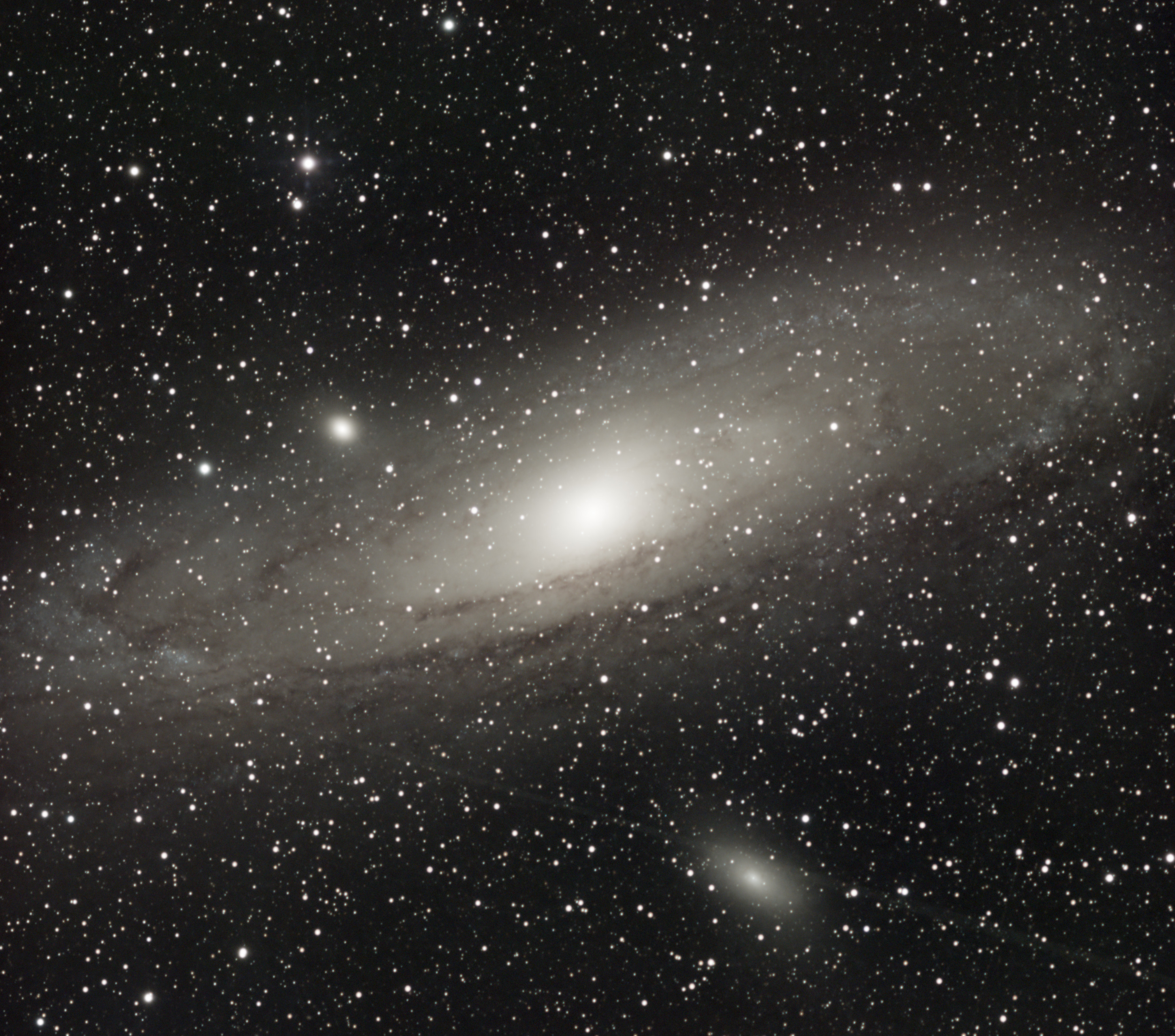
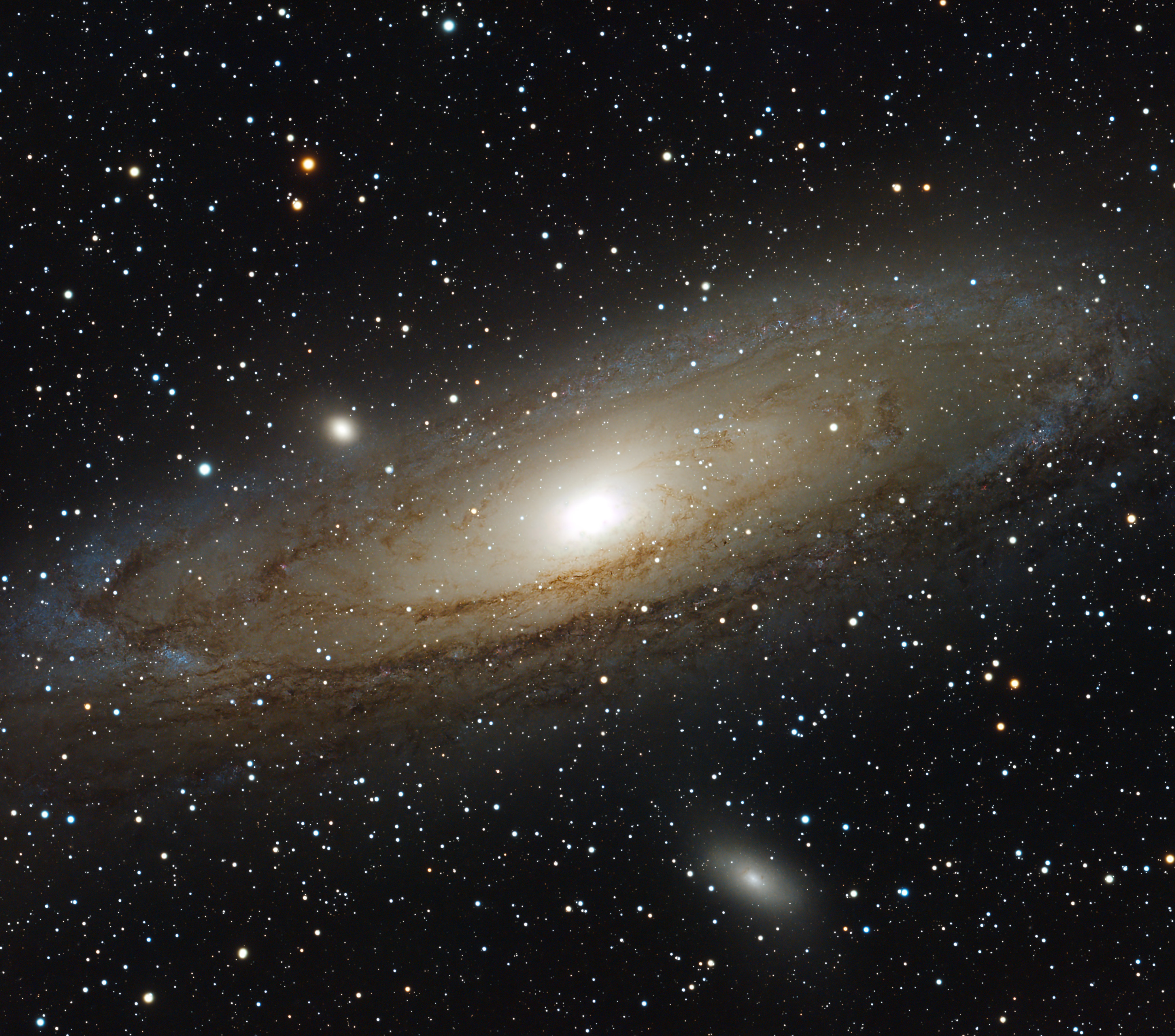
Licence: for personal use, credit Damon Scotting. Both JPEGs 4,078 x 3,595 px.
-10 C sensor set point the set point I run every cooled camera at
489 mm focal length, plate solved stated 490 mm, on the Askar 71F
2.74 x 1.84° field of view 6,224 x 4,168 px on ToupTek ATR2600C
26 MP ToupTek ATR2600C 6,224 x 4,168 px, 23.4 x 15.7 mm
Should you buy it?
80/100 Stars for Your Buck
Pros
- “I have never used a camera that has so efficiently cooled itself down before.”
- “It offers stunning 16-bit, 26 megapixel images with decently large pixels at 3.76 micron. It also provides zero amp glow and extremely low read noise.”
- “ToupTek also has a unique low conversion gain and a high conversion gain feature that gives you a bit more freedom into how you wish to capture your images.”
- “The ToupTek is a lot more compact than the ASI2600.”
Cons
- “This little rubber thing here is essentially a dust magnet.”
- It needs a computer or ToupTek's own AstroStation to run.
- An APS-C sensor needs a telescope with a corrected image circle of at least 28.3 mm to keep the corners sharp.
ToupTek has held its own here and rightfully deserves its place alongside ZWO and Player One cameras in terms of quality builds.
Who the ATR2600C is for
Complete beginner
Skip
A cooled APS-C camera also needs a tracking mount, a telescope with a 28 mm image circle and a computer; a smart telescope is simpler to start with.
DSLR imager moving to a cooled camera
Buy
The same APS-C area as many DSLRs, with regulated cooling and, on the AR-window version, no IR-cut filter in the way of H-alpha.
ASIAIR user
Skip
The ZWO ASI2600MC or ASI2600MC Air has the same sensor and keeps the whole rig in one app.
Laptop or AstroStation user
Buy
It has ASCOM, native and WDM drivers, so capture software drives it like any other camera, and ToupTek's AstroStation runs it from a phone.
Narrowband imager
Skip
A colour sensor behind narrowband filters wastes signal; the ToupTek ATR2600MM is the mono version of this camera.
Already own a ZWO ASI2600MC
Skip
It is the same IMX571 sensor, so the images will not improve; only the cooling is quicker.
Three alternatives I have reviewed
- ZWO ASI2600MC Duo The same IMX571 with a built-in guide sensor, and ASIAIR support 83/100 £1,849 Read the review
- SVBONY SC571CC The same IMX571 cooled colour sensor from SVBONY 90/100 £1,029 Read the review
- ToupTek ATR2600MM The mono version of this camera, for narrowband 73/100 £1,488 Read the review
Questions and more about this review
Reviewed by
Damon Scotting
The Telescope Man Verified
BSc (Hons) Physics with Astrophysics and Cosmology, Loughborough University PGCE / QTS, University of Nottingham
About Damon About Damon Damon Scotting is The Telescope Man. He holds a BSc (Hons) in Physics with Astrophysics and Cosmology from Loughborough University and a PGCE with QTS from the University of Nottingham, and taught physics in secondary schools before becoming an astronomy creator. He is a contributing writer for BBC Sky at Night Magazine and the author of 42 Wonders of Our Night Sky, and his photograph of the galaxy M100 with the dwarf planet Ceres was Highly Commended in the Astronomy Photographer of the Year 2024 competition run by Royal Observatory Greenwich. He has appeared on the BBC's Blue Peter. More than 750,000 people follow his astronomy channels on YouTube, Instagram and TikTok, and he has reviewed more than 140 telescopes, mounts, cameras, filters and accessories hands-on for this site. More about Damon · How I test · Damon's book
I review all kinds of gear: most of it I buy, some is gifted and some is loaned, and all of it is reviewed the same way. How this site is funded
Seven questions, answered
Questions about the ToupTek ATR2600C
Reviewed 20 November 2024 ·Updated 26 September 2026
I review all kinds of gear. Most of it I buy, some is gifted and some is loaned, and all of it is reviewed the same way: no company sees or approves a review before it is published. Shop links marked Ad are affiliate links: I earn a commission when you buy through them, at no extra cost to you. How this site is funded
- Is the ToupTek ATR2600C as good as the ZWO ASI2600MC? For images, yes in my test: the same IMX571 sensor, and my raw Andromeda stacks through each on the Askar 71F were very similar. The raw stacks against the finished images ↓
- How fast does the ATR2600C cool? ToupTek rates the two-stage cooler at 35 C below ambient on short exposures and 42 C on long ones; my own timing against the ASI2600 is under What is it for. What is it for ↓
- Does the ATR2600C work with a ZWO ASIAIR? No. It runs from a computer or from ToupTek's own AstroStation, which I used in my JUWEI-17 test. What is it for ↓
- What field of view does the ATR2600C give? My plate solves put the full sensor at 2.74 x 1.84 degrees on the Askar 71F at 489 mm, enough for the whole of Andromeda with M 32 and M 110. Tested numbers and the download ↓
- How much integration is the Andromeda on this page? 331 one-minute exposures, 5 hours 31 minutes, through the Askar 71F, processed in GraXpert, PixInsight and Photoshop. What I captured ↓
- What comes in the box? The camera with its 2 inch adapter, a 12 V 3.3 A power adapter and cable, a 1.5 m USB 3.0 cable, spacers and adapters for 55 mm back focus, and a slip-on cover. The specifications and the comparison table ↓
- What have I not tested on the ATR2600C? I did not measure the ATR2600C's read noise, dark current or amp glow myself, and I did not test it behind narrowband filters.