ZWO ASI2600MC Duo review: APS-C colour with a guide sensor
Where does it rank on our leaderboard
| Rank | Camera | Stars for Your Buck | Recorded UK price |
|---|---|---|---|
| 1 | SVBONY SV705C | 93 out of 100 | £229 |
| 2 | SVBONY SC571CC | 90 out of 100 | £1,029 |
| 3 | ZWO ASI585MC Air | 89 out of 100 | £799 |
| 8 | ZWO ASI2600MC Duo | 83 out of 100 | £1,849 |
| 12 | ZWO ASI533MC | 77 out of 100 | £859 |
| 21 | ZWO ASI2600MC | 72 out of 100 | £1,599 |
| 25 | ZWO ASI2600MM | 62 out of 100 | £2,059 |
| 28 | ZWO ASI183MC | 38 out of 100 | £549 |
| 29 | Nikon COOLPIX P1000 | 32 out of 100 | £787 |
Contents
- 01 Where does it rank on our leaderboard
- 02 Specifications and features
- 03 In the hand
- 04 The rig on the mount
- 05 How good is it? Here is what it captured
- 06 Raw against finished
- 07 What is it for
- 08 Watch the review
- 09 Tested numbers and the download
- 10 Should you buy it?
- 11 Questions and more about this review
In 30 seconds
Stars for Your Buck 83/100
Reviewed 22 Apr 2024 Updated 24 Sep 2026
- Rank
- #8 of 29 cameras
- Verdict
- Damon recommends
Written by Damon Scotting 7 min read
Buy it if
- You want to guide without a guide scope, a second camera or the cables between them.
- You already run an ASIAIR or a laptop and want a 26 MP APS-C colour sensor that guides itself.
- You travel with your rig and want one camera and one telescope to pack.
Skip it if
- You want no separate controller at all: the ASI2600MC Air builds the ASIAIR in.
- You want the IMX571 sensor for the least money: the SVBONY SC571CC costs far less.
- You image in narrowband with a mono camera and a filter wheel.
“I'm very impressed by it. It certainly packs a punch, and I cannot emphasise how incredibly helpful it is to have your guide sensor included in your main camera.”
Specifications and features
Against the cameras I have reviewed
Compare with
| ZWO ASI2600MC Duo reviewed #8 of 29 | ZWO ASI2600MC Air #4 of 29 | SVBONY SC571CC #2 of 29 | ToupTek ATR2600C #10 of 29 | ZWO ASI2600MC #21 of 29 | ZWO ASI2600MM Air #7 of 29 | |
|---|---|---|---|---|---|---|
| Recorded UK price | £1,849 | £2,149 | £1,029 | £1,127 | £1,599 | £2,499 |
| Stars for Your Buck | 83/100 | 88/100 | 90/100 | 80/100 | 72/100 | 84/100 |
| Sensor | Sony IMX571 with an SC2210 guide sensor | Sony IMX571 | Sony IMX571 | Sony IMX571 | Sony IMX571 | Sony IMX571 |
| Format | APS-C, 23.5 x 15.7 mm | APS-C, 23.5 x 15.7 mm | APS-C, 23.5 x 15.7 mm | APS-C, 28.3 mm diagonal | APS-C, 23.5 x 15.7 mm | APS-C, 23.5 x 15.7 mm |
| Colour or mono | Colour | Colour | Colour | Colour | Colour | Mono |
| Resolution | 6248 x 4176, 26 MP | 6248 x 4176, 26 MP | 6224 x 4168, 26 MP | 6224 x 4168, 26 MP | 6248 x 4176, 26 MP | 6248 x 4176, 26 MP |
| Pixel size | 3.76 um | 3.76 um | 3.76 um | 3.76 um | 3.76 um | 3.76 um |
| Cooling | Two-stage TEC, 30 to 35 C below ambient | 30 to 35 C below ambient | Dual-stage TEC, about 35 C below ambient | Up to 42 C below ambient | Two-stage TEC, 30 to 35 C below ambient | 30 to 35 C below ambient |
| Read noise | 0.9 to 4.2 e- | 0.9 to 4.2 e- | 1.14 to 2.6 e- | as low as 0.883 e- | 1.0 to 3.3 e- | 0.9 to 4.2 e- |
| Full well | 50 ke- (73 ke- in extended mode) | 50 ke- | Approximately 16,000 electrons at the lowest plotted HCG gain (0 dB); graph-derived, not an all-mode maximum | 51 ke- | 73 ke- | 50 ke- |
| ADC | 16-bit | 16-bit | 16-bit | 16-bit | 16-bit | 16-bit |
| Weight | 700 g | 775 g | 557 g | 577 g | 700 g | 775 g |
| Back focus | 17.5 mm | 12.5 or 17.5 mm | 17.5 mm | 17.5 mm | 17.5 mm | 12.5 or 17.5 mm |
| Interface | USB 3.0 for imaging, USB 2.0 for guiding | Wi-Fi 5 and Bluetooth; USB-C output, four USB 2.0 ports, three 12 V DC ports, any one of them the power input | USB-C | USB 3.0, two-port USB 2.0 hub, 512 MB DDR3 buffer | USB 3.0 | Wi-Fi 5 and Bluetooth; USB-C output, four USB 2.0 ports, three 12 V DC ports, any one of them the power input |
| In the box | Camera, soft padded case, 2 m USB 3.0 cable, two 0.5 m USB 2.0 cables, 16.5 mm and 21 mm M54 extenders, M54 to M48 ring, hex key, quick start guide | Camera, external antenna, two 1 m DC power cords, 1.5 m DC extension, two 0.5 m USB 2.0 cables, 16.5 mm and 21 mm M54 spacers, M48 to M54 ring, cable strap, hex wrench, quick start guide, soft bag | The camera, three adapter rings (M42 to M42, M48 to M42, M42 to M48), a dust cap, a USB cable, a 12 V 3 A power supply, desiccant, a manual and a cleaning cloth | Camera with its 2 inch adapter, 12 V 3.3 A power adapter and cable, 1.5 m USB 3.0 cable, M48 to M42 adapter, 16.5 mm and 21 mm extenders, 12.5 mm M42 adapter, cover | The camera, a cover, M42-M48 16.5 mm and M42 21 mm extenders, an M42M-M48F adapter, a hex key, two 0.5 m USB 2.0 cables, a 2 m USB 3.0 cable, a quick guide and a camera bag | Camera, two 1 m DC power cords, 1.5 m DC extension, two 0.5 m USB 2.0 cables, 16.5 mm and 21 mm M54 spacers, M48 to M54 ring, cable strap, hex wrench, quick start guide |
In the hand
The Duo
Fan and ports
On the ZWO FF80
With the ASIAIR Plus
From the other side
At the telescope
The rig on the mount
On the JUWEI-17, then on six other mounts
How good is it? Here is what it captured
Six targets
IC 434 Horsehead and NGC 2024 Flame Nebulae, ASI2600MC Duo
- Integration
- 42 min (21 x 120 s)
- Field
- 2.97 x 1.98 degrees
- Telescope
- ZWO FF80 APO with the 0.76x reducer
- Camera
- ZWO ASI2600MC Duo
- Mount
- ZWO AM5
- Target
- IC 434 Horsehead and NGC 2024 Flame Nebulae
- Type
- Dark and emission nebulae
The exposure time is still only a very modest 42 minutes.
M 45 Pleiades, ASI2600MC Duo
- Integration
- 56 min (28 x 120 s)
- Field
- 2.97 x 1.98 degrees
- Telescope
- ZWO FF80 APO with the 0.76x reducer
- Camera
- ZWO ASI2600MC Duo
- Mount
- ZWO AM5
- Target
- M 45 Pleiades
- Type
- Open cluster and reflection nebula
It was clear from the second I lined them up in my field of view that the delicate dust clouds enveloping this young star cluster were already visible.
M 31 Andromeda Galaxy, ASI2600MC Duo
- Integration
- 14 min (14 x 60 s)
- Field
- 2.97 x 1.98 degrees
- Telescope
- ZWO FF80 APO with the 0.76x reducer
- Camera
- ZWO ASI2600MC Duo
- Mount
- ZWO AM5
- Target
- M 31 Andromeda Galaxy
- Type
- Galaxy
Remember, this is just 14 minutes of exposure time.
NGC 3628 Hamburger Galaxy, ASI2600MC Duo
- Integration
- 29 min (29 x 60 s)
- Field
- 0.90 x 0.60 degrees
- Telescope
- Celestron C8 EdgeHD with the 0.7x reducer
- Camera
- ZWO ASI2600MC Duo
- Mount
- Unknown
- Target
- NGC 3628 Hamburger Galaxy
- Type
- Galaxy
NGC 2237 Rosette Nebula, ASI2600MC Duo
- Integration
- 35 min (7 x 300 s)
- Field
- 3.24 x 2.17 degrees
- Telescope
- Askar SQA85
- Camera
- ZWO ASI2600MC Duo
- Mount
- ZWO AM5N
- Target
- NGC 2237 Rosette Nebula
- Type
- Emission nebula with an open cluster
- Location
- Bortle 6.8 (in my garden)
I only took seven five-minute long exposures to create this stacked image.
NGC 2174 Monkey Head Nebula and IC 443 Jellyfish Nebula, ASI2600MC Duo
- Integration
- 1 h 30 min (18 x 300 s)
- Field
- 3.28 x 2.18 degrees
- Telescope
- Askar SQA85
- Camera
- ZWO ASI2600MC Duo
- Mount
- ZWO AM5N
- Target
- NGC 2174 Monkey Head Nebula and IC 443 Jellyfish Nebula
- Type
- Emission nebula and supernova remnant
- Location
- Bortle 6.8 (in my garden)
I carried on imaging this area and stacked 18 five-minute long exposures to give me this one and a half hour stacked image.
Raw against finished
What is it for
The 4 targets, the raw combined stack against my finished image, each with its integration, the camera and the palette:
- IC 434 Horsehead and NGC 2024 Flame Nebulae: 42 min (21 x 120 s) of light, ASI2600MC Duo, the raw combined stack with one automatic stretch
- M 45 Pleiades: 56 min (28 x 120 s) of light, ASI2600MC Duo, the raw combined stack with one automatic stretch
- M 31 Andromeda Galaxy: 14 min (14 x 60 s) of light, ASI2600MC Duo, the raw combined stack with one automatic stretch
- NGC 3628 Hamburger Galaxy: 29 min (29 x 60 s) of light, ASI2600MC Duo, the raw combined stack with one automatic stretch
Two things it is for
Guiding without a guide scope
If you want to guide your telescope with an additional camera and guide scope, you'd have to mount another smaller telescope on top of your telescope, add a camera, plug in a bunch of new cables and do separate setups. That is such a headache.
A clean rig on a small refractor
I then attached an ASI2600MC Duo camera and placed the telescope upon an AM5N mount, which all in all still makes the entirety of this setup very lightweight and portable.
Watch the review
The Most POWERFUL Astronomy Camera I've Ever Owned! (ASI2600MC DUO) · published 22 April 2024 · 7:29 · Watch on YouTube · 36,674 views, 1,323 likes on 2 Oct 2026
Jump to
- 0:30 The camera itself: 26 megapixels
- 0:59 Duo: two sensors in one camera
- 1:18 What a separate guide scope and camera takes
- 2:08 A bigger front thread, and the adapters
- 2:22 The ASIAIR Plus and live stacking
- 3:15 The Andromeda Galaxy in 14 minutes
- 4:03 The Pleiades
- 4:23 The Horsehead and Flame in 42 minutes
- 5:26 Mosaics and the Orion Nebula
- 6:17 My verdict
Transcript of the review video 1,152 words · 10 chapters · searchable
Press a time stamp to play from there.
0:00 The opening
0:03 never before have I owned a camera this powerful this is the ASI 2600 MC Duo camera and it's not just your average high resolution astronomy camera it's 0:10 capable of so much more it has one very special unique skill that is going to make all your observations 10 times easier in today's video I'm going to be 0:18 reviewing it in detail I'm Damon Scotting and this is astronomical okay so first things first there is a lot going on with this whole setup so
0:30 The camera itself: 26 megapixels
0:34 let's focus on the camera itself so we are looking at a very chunky boy indeed it is a phenomenal camera 2600 that's a reference to its total resolution 0:45 capabilities it can take 26-megapixel photos I do have the colour version which means I don't need to keep putting in filters to my setup but here is the 0:54 twist this is what makes this camera stand out above all the rest because at the end of its name you'll see the word Duo
0:59 Duo: two sensors in one camera
1:01 referring to two because inside here it has two sensors now why does it need two sensors well the first one is the main sensor which we use for our Imaging 26 1:11 map photos but the second one is a much smaller sensor which can be used for guiding your telescope without having to add a finderscope on top of it so let's
1:18 What a separate guide scope and camera takes
1:21 just go through what we'd actually have to do if you want to guide our telescope with an additional camera and guide scope we'd have to mount on top of our 1:29 telescope another smaller telescope and then we're going to add an additional camera we're going to say for instance the ASI 220 going to plug it into the 1:37 back and then put in a bunch of new cables and attach it to either our computer or in this instance I have the ASIAIR Plus and then we're going to have 1:45 to do separate setups in order to get it guiding that is such a headache it's so much extra effort whereas with the ASI 2600 MC Duo it's much more simplified 1:55 because they're both included in one package you don't need any extra equipment on it you you just need the one camera and the one telescope that's 2:04 it and for me that truly is a game changer so because they do have two sensors included on the same camera it has actually changed the filter screw that
2:08 A bigger front thread, and the adapters
2:12 you attach to the camera itself because it needs to be a little bit bigger now so you can include light going to both of the sensors that's not too much of a 2:19 difficulty because they do include the adapters to allow you to do so so what I've been using to test out this camera is the ASIAIR Plus and then I've got out my
2:22 The ASIAIR Plus and live stacking
2:27 smartphone to actually control this entire setup all is one and see the images produced from this live on my phone in fact the ASIAIR actually has a 2:35 very cool feature that allows you to live stack the images you take so not only am I seeing the images appear right on my phone before me as they're being 2:42 captured I'm also seeing them gradually get better and better with the higher amount of exposures taken because the resultant image is a lot clearer the 2:50 signals to noise ratio is much higher and images produced are incredibly clear but don't just take my word for it why not analyze them for yourself during my 2:59 observations I looked at quite a few targets but my time with each of them was very limited here are my three favourites from left to right we have the 3:06 Andromeda galaxy the Pleiades and the Flame and Horsehead Nebulae it's extremely important to note the total exposure times for each of these images all of
3:15 The Andromeda Galaxy in 14 minutes
3:15 which were less than 1 hour so let's start with the shortest exposure time of the three my 14 minutes stacked image of the Andromeda galaxy it does have a 3:24 slightly odd orientation that you may not be used to with our neighbouring Galaxy being imaged in portrait as opposed to landscape here it is 3:31 perfectly framed for being shared to Instagram but since this is a YouTube video Let's alter the orientation to landscape this is especially easy to do 3:38 so as the resolution of the image is a colossal 26 megapixels meaning we can crop it in quite significantly and still see a lot of detail in fact what you're 3:47 seeing right now is the image being cropped down to 12 megapixels or 4K resolution there's no denying how spectacular it looks but remember this 3:56 is just 14 minutes of exposure time some astrophotographers will take single exposures in one filter longer than this I spent the majority of my time looking
4:03 The Pleiades
4:05 at the Seven Sisters as it was clear from the second lined them up in my field of view that the delicate dust clouds enveloping this young star cluster were 4:13 already visible and with each passing exposure more and more of its intricate features were captured until I settled on this gorgeous image but I've saved the very best till
4:23 The Horsehead and Flame in 42 minutes
4:26 last when first getting into astrophotography more than 10 years ago my equipment was very rudimentary meaning objects like the Horsehead nebula were impossible to make out or so 4:36 it seemed at the time with only a DSLR camera and a 4-in reflector telescope I struggled over and over again to reveal this dark nebula which is why this is so 4:45 special to me it truly feels like unlocking an entire different Universe with the ridiculous amounts of detail and structures that this camera can pick 5:00 up the exposure time is still only very modest 42 minutes I'm very much looking forward to dedicating an entire night to Imaging these deep Sky objects the 5:07 wonderful array of different colours featured in the third image is really highlighted by the ASI 2600 MC Duo it truly is astonishing to think that this 5:15 camera captured all three of these stunning landscapes in just under 2 hours time I think I've already spent more time than that zooming in and 5:23 marveling at the level of detail in each of these images they're absolutely amazing what I'm also really excited about is fact that I can create super
5:26 Mosaics and the Orion Nebula
5:31 in-depth Mosaic images which means I can take multiple frames side by side and then stitch them all together to create a resulting image that could easily 5:41 exceed 100 megapixels so if a Target is like the Orion Nebula which I'm going to point to right now actually which is just up 5:52 there but then also just a tiny bit up to the left is the Horsehead and Flame nebulas so I'd really like to be able to 5:57 put all of those in the same shot so I
Check out more videos on the ZWO ASI2600MC Duo
Askar SQA85 Review
20 Jan 2025
Tested numbers and the download
Finished image
- Download the raw stack JPEG · 3.7 MB · 4,096 x 2,687
- Download the finished image JPEG · 1.8 MB · 4,096 x 2,687
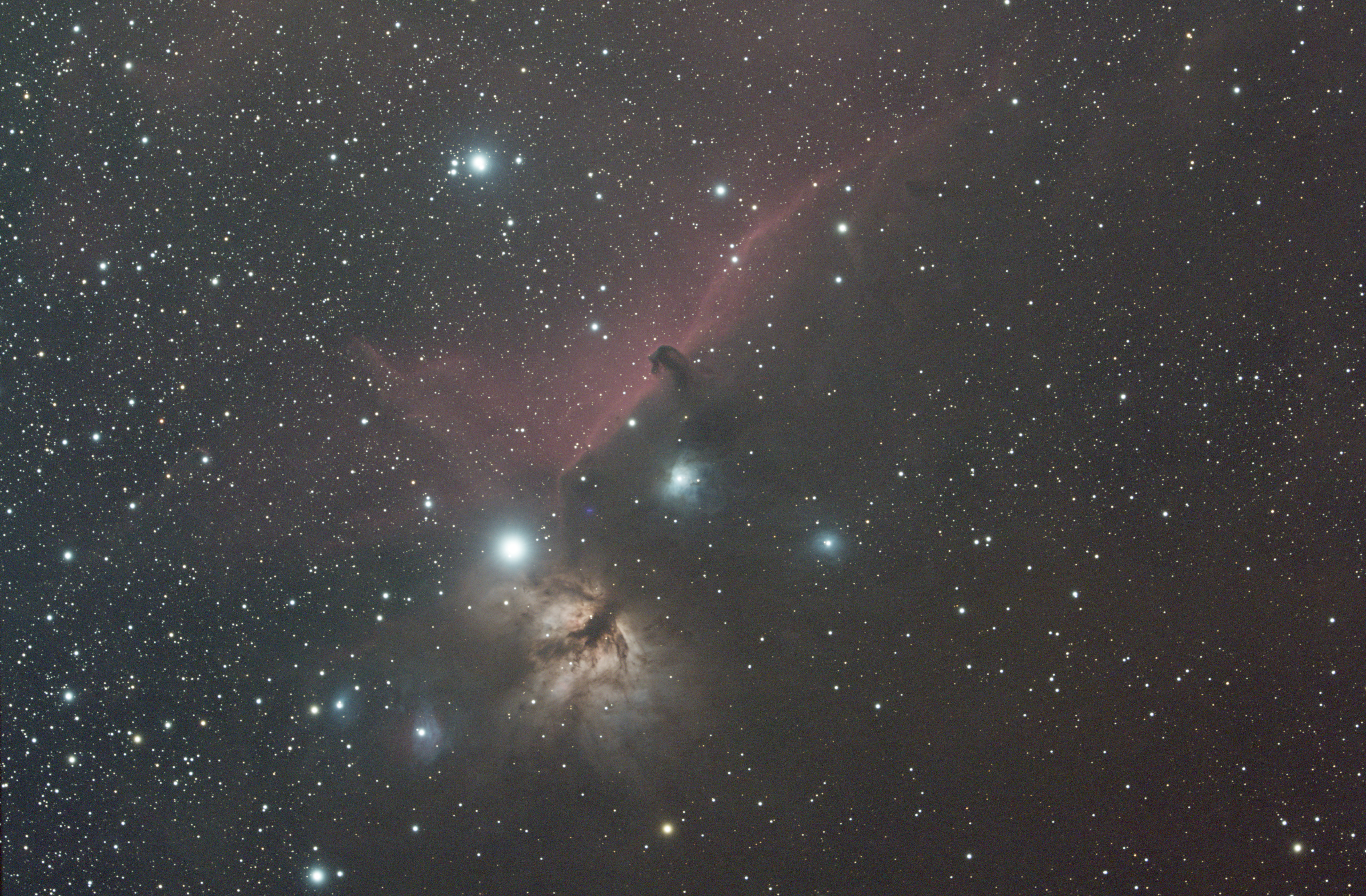
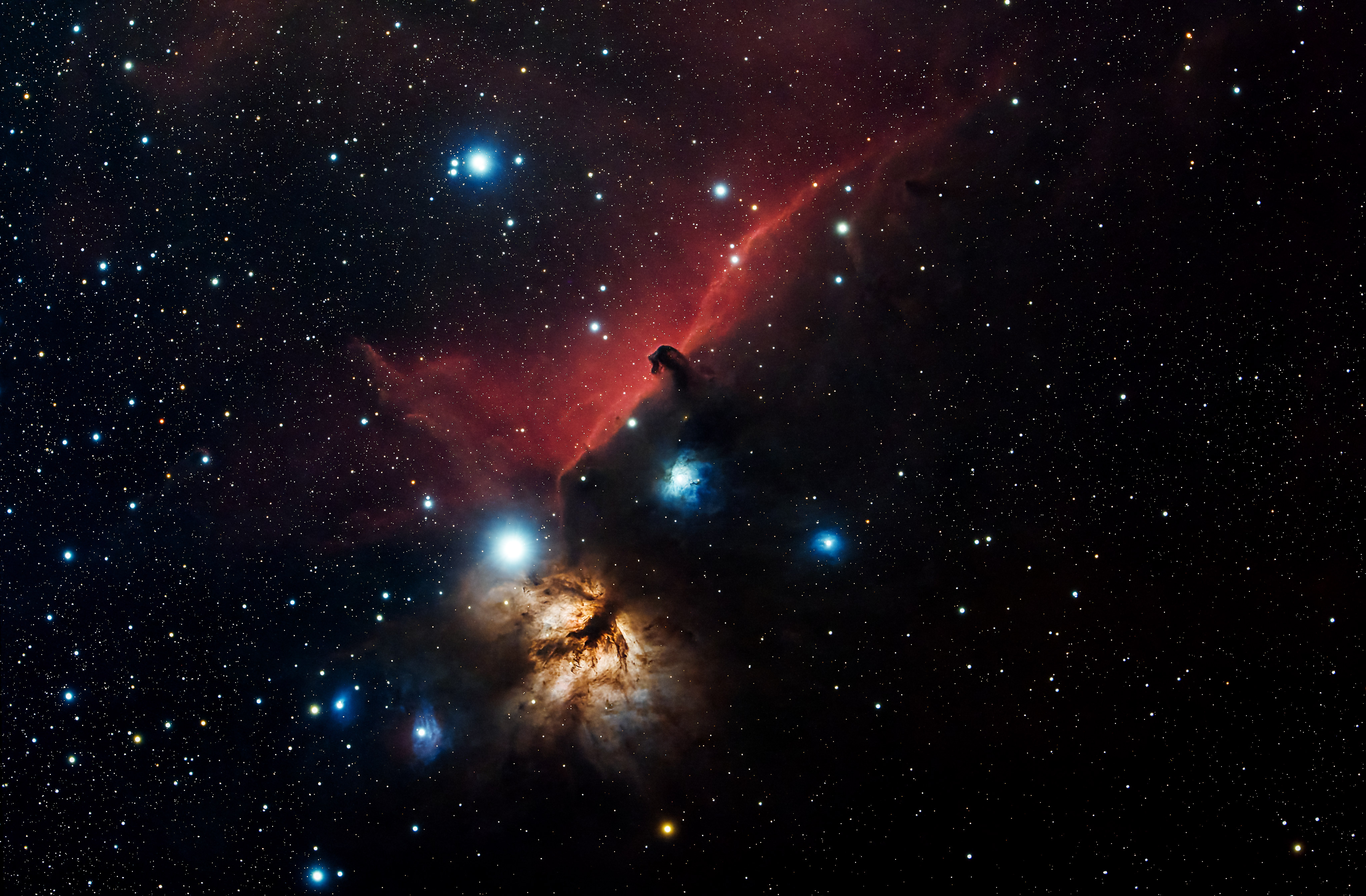
Licence: for personal use, credit Damon Scotting. Both JPEGs 4,096 x 2,687 px.
-10 C sensor set point the set point I run every cooled camera at
453 mm focal length, plate solved on the ZWO FF80 with its 0.76x reducer (454 mm by ZWO)
2.97 x 1.98° field of view 6,248 x 4,176 px on ASI2600MC Duo
26 MP ASI2600MC Duo 6,248 x 4,176 px, 23.5 x 15.7 mm
Should you buy it?
83/100 Stars for Your Buck
Pros
- “Inside here it has two sensors. The first one is the main sensor, which we use for our imaging, 26-megapixel photos, but the second one is a much smaller sensor which can be used for guiding your telescope.”
- “It truly is astonishing to think that this camera captured all three of these stunning landscapes in just under 2 hours' time.”
- “The colours that the SQA85 and the ASI2600MC Duo have managed to bring out together make this a gorgeous astro image.”
- Its built-in guide sensor guided the ZWO FF80 and the Askar SQA85 with no guide scope on top.
- At 700 g it is 75 g lighter than the ASI2600MC Air, and £300 cheaper at First Light Optics.
Cons
- With two sensors in one body the front thread has changed: it is bigger, so that light reaches both sensors.
- It still needs a controller: I ran it from an ASIAIR Plus and my phone, where the ASI2600MC Air has the ASIAIR inside.
- Under the ASIAIR it took five minutes or more to cool to -10 C in my AstroStation comparison, where the ToupTek ATR2600C got there in under 30 seconds.
- It is one-shot colour only: for narrowband mono ZWO sells the ASI2600MM Duo, which I have not used.
You don't need any extra equipment on it. You just need the one camera and the one telescope. That's it.
Who the ASI2600MC Duo is for
Imager tired of guide scopes
Buy
The guide sensor is inside the camera: one camera, one telescope, and no guide scope or second camera to align and cable.
ASIAIR or laptop owner
Buy
It runs from the controller you already have and costs £300 less than the ASI2600MC Air.
Travelling astrophotographer
Buy
A self-guiding APS-C camera on an 80 mm refractor makes a rig with nothing extra to pack for guiding.
No-computer imager
Skip
My recommendation is the ASI2600MC Air: the ASIAIR, Wi-Fi and 256 GB of storage are built in.
Budget colour imager
Skip
My recommendation is the SVBONY SC571CC: the same IMX571 sensor for far less, with a separate guide camera.
Narrowband imager
Skip
My recommendation is the ASI2600MM Air: a mono IMX571 with the guide sensor and ASIAIR inside.
Three alternatives I have reviewed
- ZWO ASI2600MC Air The same sensor and guide sensor with the ASIAIR built in 88/100 £2,149 Read the review
- SVBONY SC571CC The same IMX571 colour sensor in a plain cooled body 90/100 £1,029 Read the review
- ToupTek ATR2600C The IMX571 colour sensor cooled to 42 C below ambient 80/100 £1,127 Read the review
Questions and more about this review
Reviewed by
Damon Scotting
The Telescope Man Verified
BSc (Hons) Physics with Astrophysics and Cosmology, Loughborough University PGCE / QTS, University of Nottingham
About Damon About Damon Damon Scotting is The Telescope Man. He holds a BSc (Hons) in Physics with Astrophysics and Cosmology from Loughborough University and a PGCE with QTS from the University of Nottingham, and taught physics in secondary schools before becoming an astronomy creator. He is a contributing writer for BBC Sky at Night Magazine and the author of 42 Wonders of Our Night Sky, and his photograph of the galaxy M100 with the dwarf planet Ceres was Highly Commended in the Astronomy Photographer of the Year 2024 competition run by Royal Observatory Greenwich. He has appeared on the BBC's Blue Peter. More than 750,000 people follow his astronomy channels on YouTube, Instagram and TikTok, and he has reviewed more than 140 telescopes, mounts, cameras, filters and accessories hands-on for this site. More about Damon · How I test · Damon's book
I review all kinds of gear: most of it I buy, some is gifted and some is loaned, and all of it is reviewed the same way. How this site is funded
Seven questions, answered
Questions about the ZWO ASI2600MC Duo
Reviewed 22 April 2024 ·Updated 24 September 2026
I review all kinds of gear. Most of it I buy, some is gifted and some is loaned, and all of it is reviewed the same way: no company sees or approves a review before it is published. Shop links marked Ad are affiliate links: I earn a commission when you buy through them, at no extra cost to you. How this site is funded
- Do I need a guide scope with the ASI2600MC Duo? No. The second sensor inside the camera guides the telescope: on the ZWO FF80 and the Askar SQA85 I used no guide scope and no second camera. What I captured ↓
- How well does the built-in guide sensor guide? When I swapped an off-axis guider and a separate guide camera for the ASI2600MC Duo on the JUWEI-17, the guiding numbers were far smoother. What I captured ↓
- ASI2600MC Duo or ASI2600MC Air? Both have the IMX571 sensor and a built-in guide sensor. The Duo runs over USB from an ASIAIR or a computer and costs £1,849 at First Light Optics; the Air puts the ASIAIR, Wi-Fi and 256 GB of storage inside for £2,149. The specifications and the comparison table ↓
- What field does it give? On the ZWO FF80 with its 0.76x reducer my stacks plate-solve at 453 mm, a field of 2.97 x 1.98 degrees; on the Askar SQA85 at 408 mm, about 3.3 x 2.2 degrees. Tested numbers and the download ↓
- What comes in the box? The camera, a soft padded case, a USB 3.0 cable, two short USB 2.0 cables, 16.5 mm and 21 mm M54 extenders, an M54 to M48 ring, a hex key and a quick start guide, so the bigger front thread still reaches the standard 55 mm. The specifications and the comparison table ↓
- What mount does it need? The camera weighs 700 g. On the ZWO FF80 at 4.7 kg, with a guide scope, a guide camera and 1 kg of accessories, the rig is 6.7 kg, well inside what a 13 kg strain-wave mount carries without a counterweight. The rig on the mount ↓
- What have I not tested on the ASI2600MC Duo? I have not measured its read noise, dark current or the guide sensor's field, and I have not used the mono ASI2600MM Duo.