ZWO ASI183MC review: 20 megapixels on a 1 inch sensor
Where does it rank on our leaderboard
| Rank | Camera | Stars for Your Buck | Recorded UK price |
|---|---|---|---|
| 1 | SVBONY SV705C | 93 out of 100 | £229 |
| 2 | SVBONY SC571CC | 90 out of 100 | £1,029 |
| 6 | Altair Hypercam 585C | 84 out of 100 | £359 |
| 8 | ZWO ASI2600MC Duo | 83 out of 100 | £1,849 |
| 14 | Player One Apollo-M MAX | 76 out of 100 | £485 |
| 20 | ASI 4400MC | 72 out of 100 | £3,299 |
| 23 | ZWO ASI220MM | 67 out of 100 | £299 |
| 28 | ZWO ASI183MC | 38 out of 100 | £549 |
| 29 | Nikon COOLPIX P1000 | 32 out of 100 | £787 |
Contents
- 01 Where does it rank on our leaderboard
- 02 Specifications and features
- 03 In the hand
- 04 The rig on the mount
- 05 How good is it? Here is what it captured
- 06 Raw against finished
- 07 Watch the review
- 08 Tested numbers and the download
- 09 Should you buy it?
- 10 Questions and more about this review
In 30 seconds
Stars for Your Buck 38/100
Reviewed 7 Nov 2024 Updated 24 Sep 2026
- Rank
- #28 of 29 cameras
- Verdict
- With reservations
Written by Damon Scotting 5 min read
Buy it if
- You image with a short refractor, about 250 to 500 mm, where its 2.4 um pixels give about 1 to 2 arcsec per pixel.
- You want 20 megapixels from a 120 g camera that an ASIAIR runs.
- You will take dark frames every session to remove amp glow.
Skip it if
- You image at long focal lengths: its tiny pixels oversample.
- You want a cooled camera with a set point.
- You want the most for your money: newer IMX585 cameras cost less.
“The main difference between this camera and the SVBONY 705C is that the pixel size of the ASI183 is smaller than that of the SVBONY, but the resolution is significantly higher, which sounds like a worthy payoff.”
Specifications and features
Against the small-sensor colour cameras I have reviewed
Compare with
| ZWO ASI183MC reviewed #28 of 29 | SVBONY SV705C #1 of 29 | QHY 585C #26 of 29 | Player One Uranus-C #15 of 29 | ZWO ASI585MC Air #3 of 29 | ZWO ASI533MC #12 of 29 | |
|---|---|---|---|---|---|---|
| Recorded UK price | £549 | £229 | £359 | £395 | £799 | £859 |
| Stars for Your Buck | 38/100 | 93/100 | 59/100 | 76/100 | 89/100 | 77/100 |
| Sensor | Sony IMX183, back-illuminated | Sony IMX585 | Sony IMX585, back-illuminated STARVIS 2 | Sony IMX585 | Sony IMX585, with a separate guide sensor | Sony IMX533 |
| Format | 1 inch, 13.2 x 8.8 mm | 1/1.2 inch, 11.2 x 6.3 mm | 1/1.2 inch, 11.2 x 6.3 mm | 1/1.2 inch | 1/1.2 inch, 11.2 x 6.3 mm | 1 inch, 11.3 x 11.3 mm |
| Colour or mono | Colour | Colour | Colour | Colour | Colour | Colour |
| Resolution | 5496 x 3672, 20.2 MP | 3856 x 2180, 8.3 MP | 3856 x 2180, 8.4 MP | 3856 x 2180, 8.3 MP | 3840 x 2160, 8.3 MP | 3008 x 3008, 9 MP |
| Pixel size | 2.4 um | 2.9 um | 2.9 um | 2.9 um | 2.9 um | 3.76 um |
| Cooling | Uncooled | Uncooled | Uncooled | Uncooled | Cooled, 30 to 35 C below ambient | Cooled, 35 C below ambient |
| Read noise | 1.6 e- at 30 dB gain | 0.7 to 6.5 e- | 0.77 to 8 e- | 0.7 to 7.2 e- | 0.7 to 6.67 e- | 1.0 e- |
| Full well | 15 ke- | 38 ke- | 52 ke- | 47 ke- | 40 ke- | 50 ke- |
| ADC | 12-bit | 12-bit | 12-bit | 12-bit | 12-bit | 14-bit |
| Weight | 120 g | 160 g | 90 g | 160 g | 620 g | 470 g |
| Back focus | 6.5 mm | 6.5 mm, 12.5 mm with the adapter | 8 mm, 17 mm with the adapter | 12.5 mm | 12.5 mm or 17.5 mm | 17.5 mm |
| Interface | USB 3.0, ST4 guide port | USB 3.0 | USB 3.0 Type-C, ST-4 guide port, 512 MB DDR3 | USB 3.0 | USB-C, built-in controller with four USB 2.0 ports | USB 3.0 |
| In the box | T2 to 1.25 inch nosepiece, 1.25 and 2 inch caps, 2 m USB 3.0 cable, ST4 cable, quick start guide | The camera, a USB 3.0 cable, an ST4 guide cable, an M42 to CS adapter, a T2 adapter, a 1.25 inch T-adapter, a 2 inch dust cover, a manual and a cleaning cloth | IR-cut and IR850 filters; a 1.25 inch nosepiece with CS and C-mount adapters | Camera; T-mount; USB 3.0 cable; ST4 cable; M2 hex key; 1.25 inch cap; air blower | The camera, a camera bag, the external antenna, a 1 m DC cable, a 1.5 m DC extension, two 0.5 m USB 2.0 cables, a 21 mm T2 extender, a 16.5 mm T2 to M48 extender, an M42 to M48 tilter, a 1 m hook-and-loop strap, a 2 mm hex wrench and a quick guide | Camera, padded case, T2 nosepieces and adapters, 1.25 inch cap, USB cables, T2 and M48 extenders, M42 to M48 adapter, spacers |
In the hand
Three frames from my videos
The rig on the mount
On the TeSeek 11, then on six other mounts
How good is it? Here is what it captured
Four targets through the ASI183MC
M 45 Pleiades, ASI183MC
- Integration
- 1 h (30 s subs)
- Field
- 1.82 x 1.22 degrees
- Telescope
- Celestron 63ED
- Camera
- ZWO ASI183MC
- Mount
- ZWO AM5
- Target
- M 45 Pleiades
- Type
- Open cluster with reflection nebula
- Location
- Bortle 6.8 (in my garden)
We have some dust and cloud structure visible in our image, which is very exciting.
M 31 Andromeda Galaxy, ASI183MC
- Integration
- Unknown
- Field
- 1.95 x 1.28 degrees
- Telescope
- Celestron 63ED
- Camera
- ZWO ASI183MC
- Mount
- Unknown
- Target
- M 31 Andromeda Galaxy
- Type
- Spiral galaxy
- Location
- Bortle 6.8 (in my garden)
M 13 Hercules Globular Cluster, ASI183MC
- Integration
- 15 min (15 x 60 s)
- Field
- 0.27 x 0.18 degrees
- Telescope
- Sky-Watcher Skymax 180
- Camera
- ZWO ASI183MC
- Mount
- ZWO AM5N
- Target
- M 13 Hercules Globular Cluster
- Type
- Globular star cluster
- Location
- Bortle 6.8 (in my garden)
Nevertheless, this image is surprisingly solid.
M 33 Triangulum Galaxy, ASI183MC
- Integration
- Unknown (30 s subs)
- Field
- 1.15 x 0.75 degrees
- Telescope
- Unknown
- Camera
- ZWO ASI183MC
- Mount
- Unknown
- Target
- M 33 Triangulum Galaxy
- Type
- Galaxy
- Location
- Bortle 6.8 (in my garden)
Raw against finished
Watch the review
The 1 target, the raw combined stack against my finished image, each with its integration, the camera and the palette:
- M 45 Pleiades: 1 h (30 s subs) of light, ASI183MC, the raw combined stack with one automatic stretch
Why it is BETTER than most Mounts? | AM5N Review. · published 7 November 2024 · 9:24 · Watch on YouTube · 18,802 views, 578 likes on 2 Oct 2026
Jump to
- 0:18 The test: deep sky at 2,700 mm
- 2:37 The Skymax 180 with an ASI183MC
- 3:00 Against the RedCat 51
- 3:27 The Skymax on the AM5N
- 3:33 M 13 through both telescopes
- 3:50 The Skymax 180's M 13 and its focuser
- 4:02 Unguided at 2,700 mm
- 4:13 M 27 through both telescopes
Transcript of the review video 317 words · 6 chapters · searchable
Press a time stamp to play from there.
2:36 The test: deep sky at 2,700 mm
2:37 recommended weight limit right let's test it out alongside the Skymax 180 I'm using an ASI183MC now this is a dumb idea so dumb not only to be deep Sky
2:37 The Skymax 180 with an ASI183MC
2:46 Imaging at a ridiculous focal length of 2,700 mm and an F ratio of 15 but to be shooting at such a high focal length 2:53 with a camera like the ASI183MC which has a very small pixel size it's just foolish these two things don't go together at all by the way for
3:00 Against the RedCat 51
3:01 comparison my RedCat shoots at 250 mm and an F ratio of 4.9 as you can imagine I use each of these items for different purposes right now 3:11 however I'm filming a video for my Patreon members thanking them for their support and showcasing their new stickers i've made to attach to my gear that they are 3:18 funded each image includes every single one of my members names multiple times with the bigger names corresponding to those who have donated more I did want 3:25 to showcase some images captured with this gear so I popped the Skymax onto the AM5 and and mounted my RedCat onto the AM5 to take some comparison images
3:33 M 13 through both telescopes
3:34 so I pointed both telescopes at the same time to M13 the great globular cluster in Hercules now this is a raw stacked image of 15 1 minute exposures captured 3:44 with the RedCat and the powerful ASI 2600 MC Duo not bad whilst this is a raw stacked image of 15 * 1 minute exposures
3:50 The Skymax 180's M 13 and its focuser
3:54 captured with a Skymax 180 and the ASI183MC if you've ever used this scope before you'll be well aware that the focuser is a bit of a nightmare
4:02 Unguided at 2,700 mm
4:02 nevertheless this image is surprisingly solid I have no doubt if you'd put forward the question to a group of Elder astrophotographers and asked whether or 4:10 not the AM5N Mount could capture unguided 60-second long deep Sky Images
Check out more videos on the ZWO ASI183MC
Is this the BEST Telescope to buy for under £300?
19 Nov 2024
Tiny Telescope V.S CHUNKY Telescope!
4 Sep 2024
Tested numbers and the download
Finished image
- Download the raw stack JPEG · 3.5 MB · 4,096 x 2,753
- Download the finished image JPEG · 1.8 MB · 4,096 x 2,753
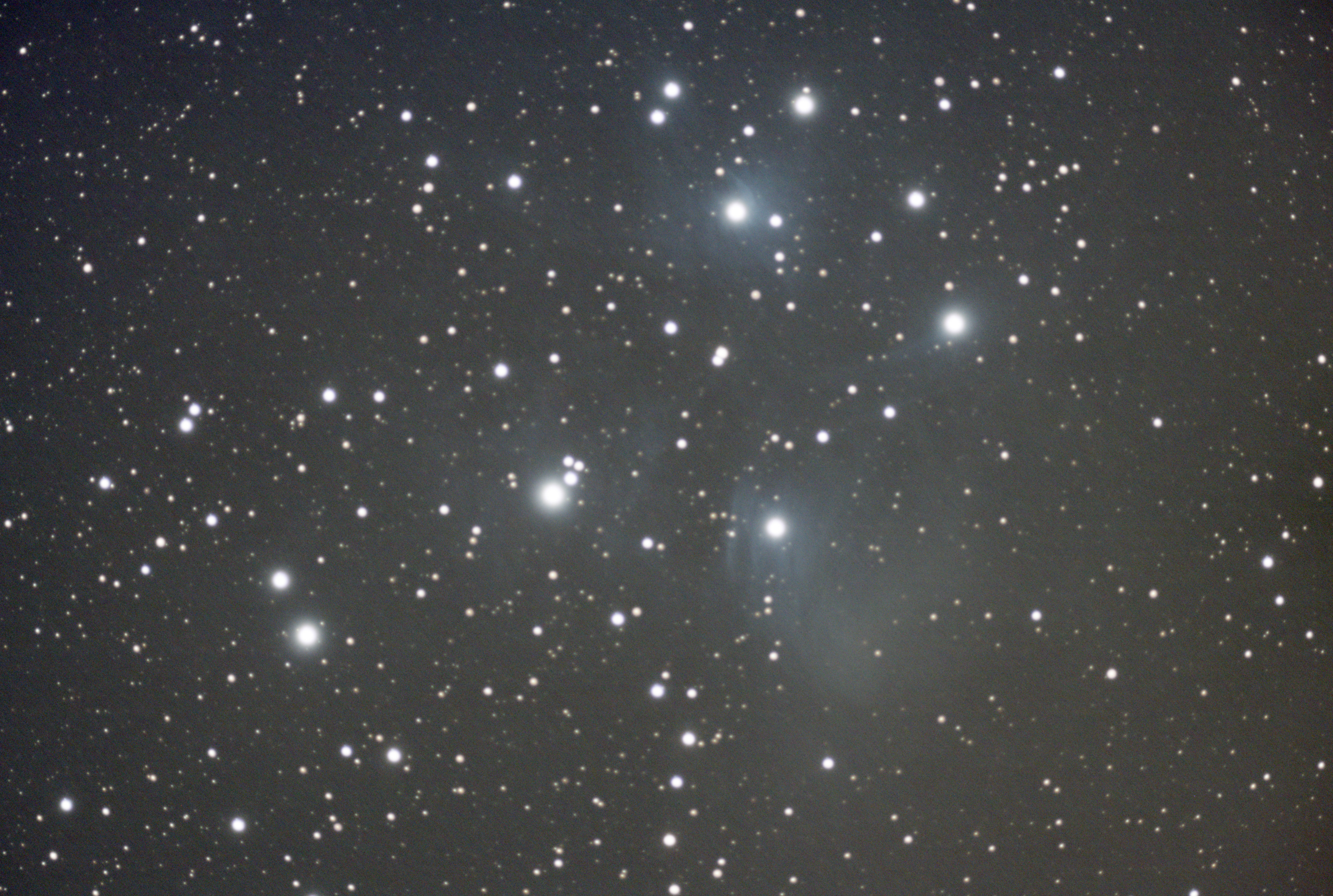
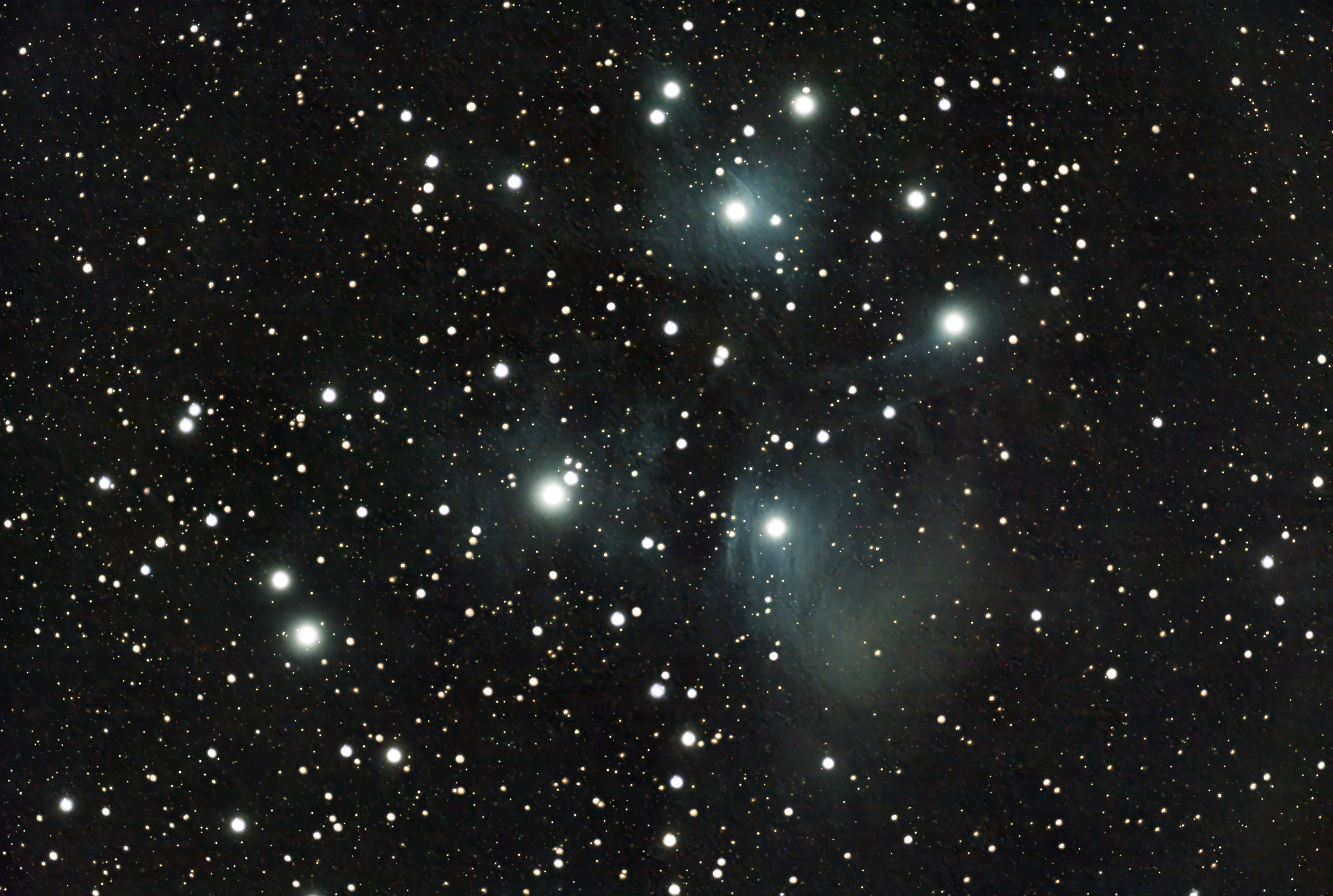
Licence: for personal use, credit Damon Scotting. Both JPEGs 4,096 x 2,753 px.
+8 C sensor temperature during imaging uncooled camera
382 mm focal length, plate solved on the Celestron 63ED, which Celestron states at 381 mm
1.98 x 1.32° field of view 5,496 x 3,672 px on ASI183MC
20.2 MP ASI183MC 5,496 x 3,672 px, 13.2 x 8.8 mm
Should you buy it?
38/100 Stars for Your Buck
Pros
- “I did take some very nice images with it.”
- 20.2 megapixels from a 1 inch sensor: 5496 x 3672 pixels of 2.4 um.
- At 381 mm on the Celestron 63ED the frame is 1.98 x 1.32 degrees at 1.30 arcsec per pixel: the whole of the Pleiades.
- A 120 g body with USB 3.0 and an ST4 port.
Cons
- “Shooting at such a high focal length with a camera like the ASI183MC, which has a very small pixel size, it's just foolish. These two things don't go together at all.”
- Uncooled: my M 45 stack ran at +8 C with no set point, so dark frames have to match each night's temperature.
- £549 at First Light Optics, awaiting stock, against £229 for the SVBONY SV705C.
- A 1 inch sensor, 13.2 x 8.8 mm: a smaller field than APS-C on the same telescope.
The ASI183 suffers heavily from amp glow, but this can be mostly reduced through the use of dark frames.
Who the ASI183MC is for
Owner of a short refractor
Buy
At 381 mm on my Celestron 63ED it gave 1.3 arcsec per pixel and fitted the whole Pleiades in one frame.
ASIAIR user on a budget
Buy
It is a ZWO camera, so the ASIAIR runs it; my M 45 stack came straight from the ASIAIR Plus.
Imager at very long focal lengths
Skip
At 2,700 mm its 2.4 um pixels give 0.18 arcsec per pixel; a camera with bigger pixels suits a long Maksutov better.
First-time buyer of a small colour camera
Skip
The SVBONY SV705C, an IMX585, is £229 at Rother Valley Optics against £549 for the ASI183MC at FLO.
Beginner who wants simple calibration
Skip
Its amp glow needs matched dark frames, and the uncooled sensor changes temperature through the night.
Imager who wants a cooled camera
Skip
This is the uncooled ASI183MC; the cooled ASI183MC Pro is £819 at FLO and the ZWO ASI533MC Pro £859.
Three alternatives I have reviewed
- SVBONY SV705C an uncooled IMX585 with bigger 2.9 um pixels for less 93/100 £229 Read the review
- ZWO ASI533MC a cooled 1 inch square sensor with 3.76 um pixels 77/100 £859 Read the review
- ZWO ASI585MC Air the IMX585 cooled, with a guide sensor and a controller built in 89/100 £799 Read the review
Questions and more about this review
Reviewed by
Damon Scotting
The Telescope Man Verified
BSc (Hons) Physics with Astrophysics and Cosmology, Loughborough University PGCE / QTS, University of Nottingham
About Damon About Damon Damon Scotting is The Telescope Man. He holds a BSc (Hons) in Physics with Astrophysics and Cosmology from Loughborough University and a PGCE with QTS from the University of Nottingham, and taught physics in secondary schools before becoming an astronomy creator. He is a contributing writer for BBC Sky at Night Magazine and the author of 42 Wonders of Our Night Sky, and his photograph of the galaxy M100 with the dwarf planet Ceres was Highly Commended in the Astronomy Photographer of the Year 2024 competition run by Royal Observatory Greenwich. He has appeared on the BBC's Blue Peter. More than 750,000 people follow his astronomy channels on YouTube, Instagram and TikTok, and he has reviewed more than 140 telescopes, mounts, cameras, filters and accessories hands-on for this site. More about Damon · How I test · Damon's book
I review all kinds of gear: most of it I buy, some is gifted and some is loaned, and all of it is reviewed the same way. How this site is funded
Seven questions, answered
Questions about the ZWO ASI183MC
Reviewed 7 November 2024 ·Updated 24 September 2026
I review all kinds of gear. Most of it I buy, some is gifted and some is loaned, and all of it is reviewed the same way: no company sees or approves a review before it is published. Shop links marked Ad are affiliate links: I earn a commission when you buy through them, at no extra cost to you. How this site is funded
- Is the ASI183MC cooled? Not the one I used: my M 45 stack header shows the sensor at +8 C with no set point. ZWO also sells a cooled ASI183MC Pro, a different body. Tested numbers and the download ↓
- Does the ASI183MC have amp glow? Yes. Dark frames taken at the same temperature remove most of it. The specifications and the comparison table ↓
- Which telescopes did I use the ASI183MC on? The Celestron 63ED at 381 mm on a ZWO AM5, and the Sky-Watcher Skymax 180 at 2,700 mm on a ZWO AM5N for M 13. What I captured ↓
- Is the ASI183MC good at long focal lengths? Not at 2,700 mm: its 2.4 um pixels give 0.18 arcsec per pixel there. My unguided M 13 through the Skymax 180 still came out solid. What I captured ↓
- ASI183MC or SVBONY SV705C? The SV705C has bigger 2.9 um pixels on an IMX585 and costs £229 against £549; the ASI183MC has more of them, 20.2 megapixels against 8.3. The specifications and the comparison table ↓
- How much does the ASI183MC cost? The prices I recorded: £549 at First Light Optics (UK), awaiting stock; $499 at Agena Astro (US), in stock; $499 at ZWO store (Global), in stock. A record, not a live price The verdict, the readers and the sellers ↓
- What have I not tested on the ASI183MC? No dark, bias or amp-glow measurement of this camera is on file, and it was never compared on the same night with another camera.