ZWO ASI533MC review: a square 9 MP cooled colour camera
Where does it rank on our leaderboard
| Rank | Camera | Stars for Your Buck | Recorded UK price |
|---|---|---|---|
| 1 | SVBONY SV705C | 93 out of 100 | £229 |
| 2 | SVBONY SC571CC | 90 out of 100 | £1,029 |
| 4 | ZWO ASI2600MC Air | 88 out of 100 | £2,149 |
| 12 | ZWO ASI533MC | 77 out of 100 | £859 |
| 14 | Player One Apollo-M MAX | 76 out of 100 | £485 |
| 17 | ZWO ASI120MM | 75 out of 100 | £199 |
| 23 | ZWO ASI220MM | 67 out of 100 | £299 |
| 28 | ZWO ASI183MC | 38 out of 100 | £549 |
| 29 | Nikon COOLPIX P1000 | 32 out of 100 | £787 |
Contents
- 01 Where does it rank on our leaderboard
- 02 Specifications and features
- 03 The rig on the mount
- 04 How good is it? Here is what it captured
- 05 Planets and the Moon
- 06 Raw against finished
- 07 Watch the review
- 08 Tested numbers and the download
- 09 Should you buy it?
- 10 Questions and more about this review
In 30 seconds
Stars for Your Buck 77/100
Reviewed 9 Jul 2025 Updated 24 Sep 2026
- Rank
- #12 of 29 cameras
- Verdict
- Damon recommends
Written by Damon Scotting 5 min read
Buy it if
- You want a cooled colour camera that runs straight from a ZWO ASIAIR.
- Your telescope works at around 1,000 mm, where galaxies and globular clusters fill a 1 inch square frame.
- You want regulated -10 C subs from a camera ZWO builds with zero amp glow.
Skip it if
- You want wide nebula fields from a short refractor: an APS-C sensor covers about 2.9 times the area.
- You want the IMX533 for the least money: the ToupTek ATR533C uses the same sensor for less.
- You shoot narrowband with filters: the mono ASI533MM suits that better.
“It's a square crop sensor version of the immensely powerful ASI 2600 colour camera, which I really enjoy.”
Specifications and features
Against the cameras I have reviewed
Compare with
| ZWO ASI533MC reviewed #12 of 29 | ToupTek ATR533C #16 of 29 | Player One Saturn-C #11 of 29 | ZWO ASI533MM #24 of 29 | SVBONY SC571CC #2 of 29 | |
|---|---|---|---|---|---|
| Recorded UK price | £859 | £799 | £514 | £999 | £1,029 |
| Stars for Your Buck | 77/100 | 76/100 | 78/100 | 66/100 | 90/100 |
| Sensor | Sony IMX533 colour | Sony IMX533 colour | Sony IMX533 colour | Sony IMX533 mono | Sony IMX571 colour |
| Format | 1 inch square, 11.31 x 11.31 mm, 15.97 mm diagonal | 1 inch square, 11.31 x 11.28 mm, 15.97 mm diagonal | 1 inch square, 11.31 x 11.31 mm, 16 mm diagonal | 1 inch square, 11.31 x 11.31 mm, 15.97 mm diagonal | APS-C, 23.5 x 15.7 mm |
| Colour or mono | Colour | Colour | Colour | Mono | Colour |
| Resolution | 3008 x 3008, 9 MP | 3008 x 3008, 9 MP | 3008 x 3008, 9 MP | 3008 x 3008, 9 MP | 6224 x 4168, 26 MP |
| Pixel size | 3.76 um | 3.76 um | 3.76 um | 3.76 um | 3.76 um |
| Cooling | Two-stage TEC, 35 C below ambient | Two-stage TEC with fan, up to 42 C below ambient | Uncooled (passive); Active Cooling System optional | Two-stage TEC, 35 C below ambient | Dual-stage TEC, about 35 C below ambient |
| Read noise | 1.0 to 3.8 e- | 1.11 to 1.26 e- | 1.0 to 4.46 e- | 1.0 to 3.8 e- | 1.14 to 2.6 e- |
| Full well | 50 ke- | 52 ke- | 73 ke- | 50 ke- | Approximately 16,000 electrons at the lowest plotted HCG gain (0 dB); graph-derived, not an all-mode maximum |
| ADC | 14-bit | 14-bit | 14-bit | 14-bit | 16-bit |
| Weight | 470 g | 577 g | 160 g | 470 g | 557 g |
| Back focus | 17.5 mm | 17.5 mm | 12.5 mm | 17.5 mm | 17.5 mm |
| Interface | USB 3.0, 256 MB DDR3 buffer | USB 3.0, 512 MB DDR3 buffer, two-port USB 2.0 hub | USB 3.0, 256 MB DDR3 buffer | USB 3.0 | USB Type-C, 512 MB DDR3 buffer |
| In the box | Camera, padded case, T2 nosepieces and adapters, 1.25 inch cap, USB cables, T2 and M48 extenders, M42 to M48 adapter, spacers | Camera, M42 adapter (12.5 mm), 16.5 mm and 21 mm extenders, M48 to M42 extender, 12 V power adapter and cable, 1.5 m USB 3.0 cable | Camera; T-mount; USB 3.0 cable; ST4 cable; M2 hex key; 1.25 inch cap; air blower | Camera, lens cover, T2-M48 16.5 mm extender, T2 21 mm extender, M42-M48 adapter ring, T2-1.25 inch adapter, four spacer rings, 1.25 inch nosepiece, two USB 2.0 cables, USB 3.0 cable, padded bag, quick start guide | The camera, three adapter rings (M42 to M42, M48 to M42, M42 to M48), a dust cap, a USB cable, a 12 V 3 A power supply, desiccant, a manual and a cleaning cloth |
The rig on the mount
On the JUWEI-17, then on six other mounts
How good is it? Here is what it captured
Five targets
M 81, ZWO ASI533MC Pro, Celestron C5
- Integration
- 2 h 21 min (47 x 180 s)
- Field
- 0.61 x 0.41 degrees
- Telescope
- Celestron C5
- Camera
- ZWO ASI533MC Pro
- Mount
- JUWEI-14
- Target
- M 81 Bode's Galaxy
- Type
- Spiral galaxy
- Location
- Bortle 6.8 (in my garden)
M 101, ZWO ASI533MC Pro, Celestron C5
- Integration
- 39 min (13 x 180 s)
- Field
- 0.63 x 0.42 degrees
- Telescope
- Celestron C5
- Camera
- ZWO ASI533MC Pro
- Mount
- JUWEI-14
- Target
- M 101 Pinwheel Galaxy
- Type
- Spiral galaxy
- Location
- Bortle 6.8 (in my garden)
M 13, ZWO ASI533MC Pro, Celestron C5
- Integration
- 35 min (106 x 20 s)
- Field
- 0.63 x 0.42 degrees
- Telescope
- Celestron C5
- Camera
- ZWO ASI533MC Pro
- Mount
- JUWEI-14
- Target
- M 13 Great Globular Cluster in Hercules
- Type
- Globular star cluster
- Location
- Bortle 6.8 (in my garden)
NGC 4565, ZWO ASI533MC Pro, Celestron C5
- Integration
- 14 min (41 x 20 s)
- Field
- 0.63 x 0.42 degrees
- Telescope
- Celestron C5
- Camera
- ZWO ASI533MC Pro
- Mount
- JUWEI-14
- Target
- NGC 4565 Needle Galaxy
- Type
- Edge-on spiral galaxy
- Location
- Bortle 6.8 (in my garden)
M 27, ZWO ASI533MC, Starfield 115
- Integration
- Unknown
- Field
- 0.80 x 0.80 degrees
- Telescope
- Starfield Optics 115 Triplet
- Camera
- ZWO ASI533MC
- Mount
- Unknown
- Target
- M 27 Dumbbell Nebula
- Type
- Planetary nebula
- Location
- Bortle 6.8 (in my garden)
Planets and the Moon
Jupiter and the Moon
Jupiter and its moons
- Date
- 5 Mar 2025
- Gear
- Celestron 8 inch EdgeHD, no Barlow, ZWO ASI533
I didn't even bother to use a Barlow lens for this shot, which is crazy.
The Moon
- Date
- 5 Mar 2025
- Gear
- Celestron 8 inch EdgeHD, IMX533 sensor
Raw against finished
Watch the review
The 3 targets, the raw combined stack against my finished image, each with its integration, the camera and the palette:
- M 81 Bode's Galaxy: 2 h 21 min (47 x 180 s) of light, ASI533MC Pro, the raw combined stack with one automatic stretch
- M 101 Pinwheel Galaxy: 39 min (13 x 180 s) of light, ASI533MC Pro, the raw combined stack with one automatic stretch
- M 13 Great Globular Cluster in Hercules: 35 min (106 x 20 s) of light, ASI533MC Pro, the raw combined stack with one automatic stretch
I Pointed a £200 TELESCOPE at JUPITER!? (+ Bonus stuff) · published 9 July 2025 · 8:52 · Watch on YouTube · 21,159 views, 991 likes on 2 Oct 2026
Jump to
- 6:00 A 0.63x reducer for galaxies
- 6:17 The Needle Galaxy
- 6:37 The Pinwheel Galaxy
- 6:46 The Hercules globular cluster
- 7:28 Against the 8 inch EdgeHD
- 7:57 My thoughts on the C5
Transcript of the review video 395 words · 6 chapters · searchable
Press a time stamp to play from there.
5:56 Jupiter and its moons in motion
5:56 I'm going to try and image a couple of galaxies and an immense cluster of stars with this telescope.
6:00 A 0.63x reducer for galaxies
6:00 So, to help me out, I'm using a focal reducer. 6:02 With the help of this little attachment, I'm going to reduce my focal ratio from f/10 to f/6.3, which in short means that under the same exposure times, objects will now appear precisely 2 and 1/2 times brighter than before, which is a huge plus, allowing me to try and tackle the needle galaxy, a perfectly viewed side galaxy, which is a super cool, rare perspective of a galaxy.
6:17 The Needle Galaxy
6:25 It makes it seem super neat and tidy with a slight but noticeable bulge around the centre of it where likely lies a super massive black hole helping keep this massive collection of stars together. 6:36 But just to remind ourselves of what a galaxy generally looks like face on, here's my shot of the Pinwheel galaxy with its long spiraling arms.
6:37 The Pinwheel Galaxy
6:44 And then lastly, I've decided to try and image one of the gems of our night sky, the great globular cluster in Hercules, Messier Object 13.
6:46 The Hercules globular cluster
6:52 This immense collection of over 700,000 stars is an easy target for amateur astronomers. 6:57 These stars are packed so tightly together that some of them often collide and produce new stars. 7:04 Our nearest stellar neighbour is about 4 and a/4 light years away. 7:08 Meanwhile, these stars are on average just 0.1 to 0.3 light years apart. 7:09 So close in fact that any planets orbiting these stars would suffer from highly chaotic orbits and therefore have a very slim chance of forming any life. 7:19 which is extra interesting considering the globular cluster is about 11.65 billion years old, making it almost as old as our galaxy itself. 7:28 So, just out of interest to give you all a reference point as to the quality of this £200 telescope, here are shots I captured of the pinwheel galaxy and the great globular cluster in Hercules through a £2,000 Celestron 8in Edge HD telescope and a 0.7 times reducer with the same camera as a £200 C5 telescope and its £50 0.63 times reducer.
7:28 Against the 8 inch EdgeHD
7:48 Obviously, the images from a £2,000 telescope are better, but are they 10 times better? 7:55 Where would you rather invest your money? 7:56 Let me know what your final thoughts are on a £200 C5 telescope in the comments down below.
Check out more videos on the ZWO ASI533MC
Is this the BEST value ASTRONOMY Mount?! (I BOUGHT the £600 JUWEI-14 Mount!)
18 Jul 2025
What YOU can SEE with a £2000 "USED" Telescope setup?!
12 Jul 2025
Tested numbers and the download
Finished image
- Download the raw stack JPEG · 1.0 MB · 2,906 x 1,935
- Download the finished image JPEG · 0.5 MB · 2,906 x 1,935
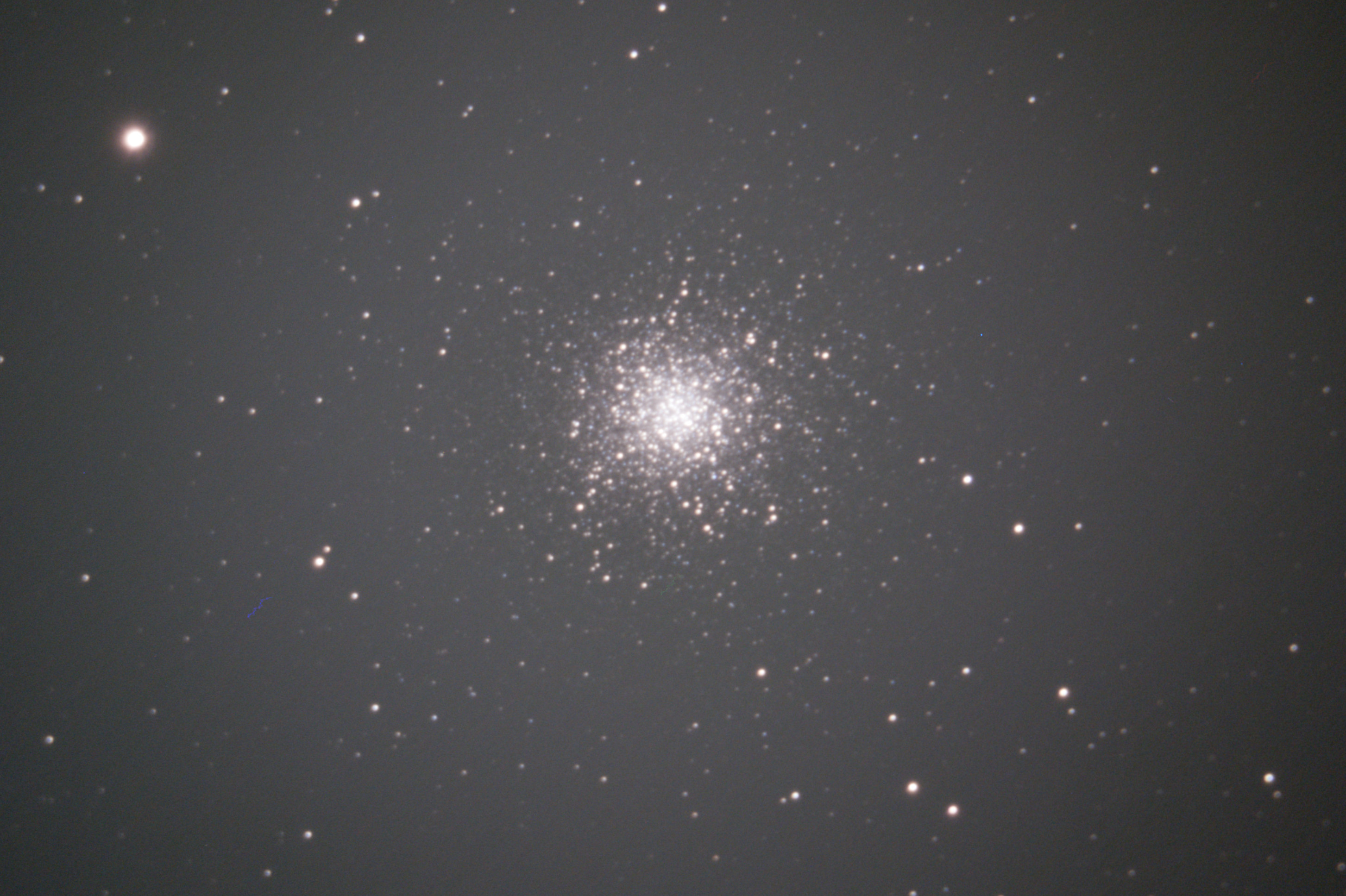
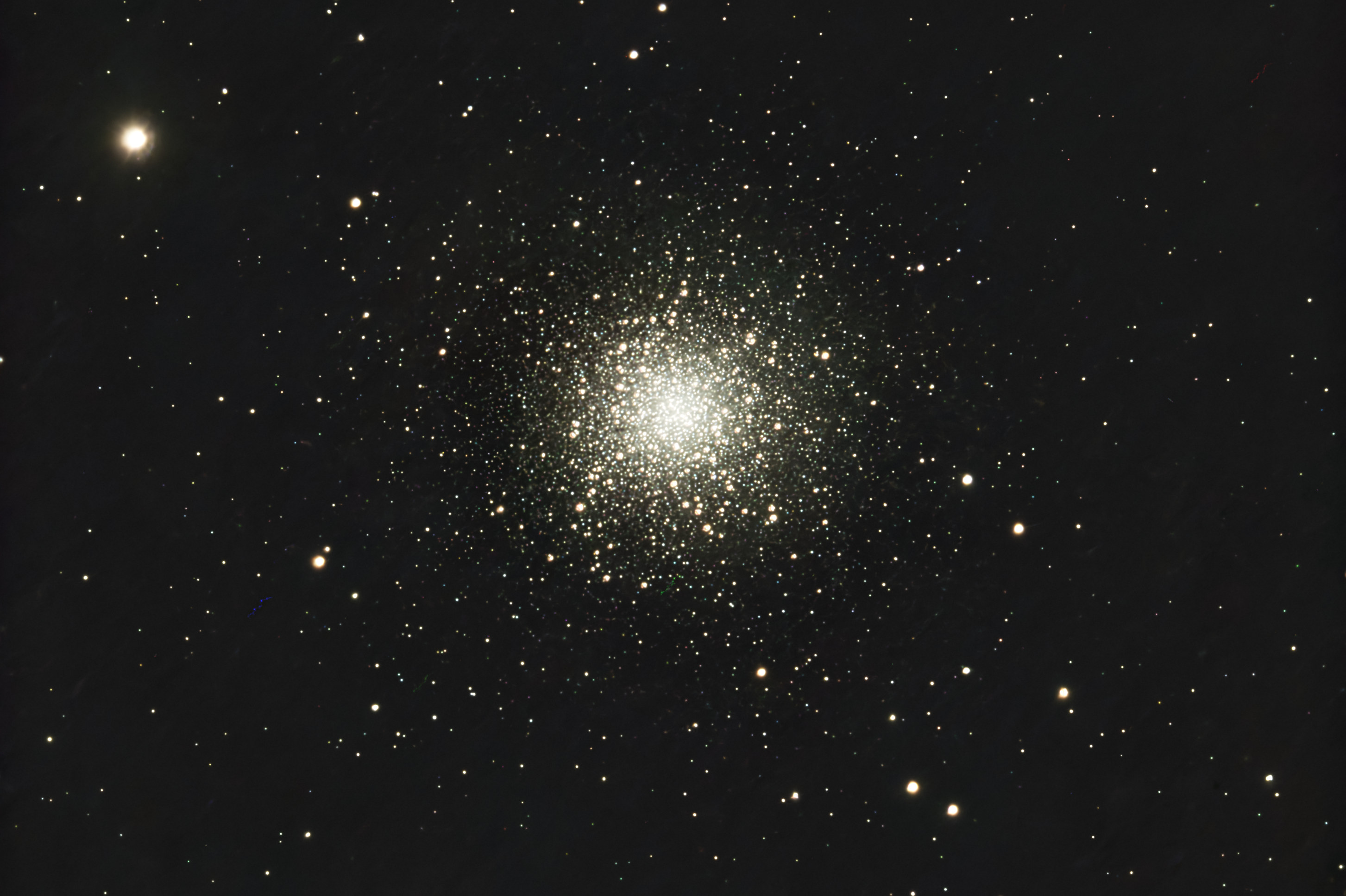
Licence: for personal use, credit Damon Scotting. Both JPEGs 2,906 x 1,935 px.
-10 C sensor set point the set point I run every cooled camera at
996 mm focal length, plate solved stated 1250 mm, on the Celestron C5, measured with its 0.63x reducer
0.65 x 0.65° field of view 3,008 x 3,008 px on ASI533MC Pro
9 MP ASI533MC Pro 3,008 x 3,008 px, 11.31 x 11.31 mm
Should you buy it?
77/100 Stars for Your Buck
Pros
- Every ASIAIR stack I made with it records the -10 C set point, from 20 second cluster subs to 3 minute galaxy subs.
- 2 h 21 min of M 81 through a 5 inch SCT from 47 guided 3 minute subs.
- A square 1 inch sensor: 3008 x 3008 pixels of 3.76 um, 11.31 mm a side.
- ZWO build it with zero amp glow circuitry.
- It runs from the ASIAIR: every C5 stack on this page came straight out of my ASIAIR Plus.
Cons
- 9 MP on a 1 inch square: an APS-C IMX571 camera covers about 2.9 times the sensor area.
- It costs more than the ToupTek ATR533C, which uses the same IMX533 sensor.
- At 470 g it weighs almost three times as much as an uncooled IMX533 camera such as the Player One Saturn-C (160 g).
It's an amazing deep sky imaging sensor, but also more than capable when it comes to planetary imaging.
Who the ASI533MC is for
Complete beginner
Skip
A cooled camera needs a telescope, a tracking mount and a controller before it takes a picture; a smart telescope is the simpler start.
ASIAIR owner
Buy
It plugs straight into the ASIAIR, which connects only ZWO astronomy cameras (and some DSLRs), so it is the IMX533 camera for that system.
Galaxy imager with a small SCT
Buy
At 996 mm the square frame is 0.65 degrees wide, a good fit for M 81, M 101 and M 13.
Wide-field nebula imager
Skip
The 1 inch square covers about a third of an APS-C sensor's area; an APS-C camera such as the SVBONY SC571CC frames big nebulae whole.
Budget buyer who wants a cooled IMX533
Skip
The ToupTek ATR533C uses the same sensor for less; the ZWO earns its price only if you use the ASIAIR.
Narrowband imager
Skip
The mono ASI533MM with filters gets more from hydrogen, sulphur and oxygen light than a colour sensor.
Three alternatives I have reviewed
- ToupTek ATR533C The same cooled IMX533 sensor for less money 76/100 £799 Read the review
- SVBONY SC571CC A cooled APS-C IMX571 colour camera for wider fields 90/100 £1,029 Read the review
- Player One Saturn-C The IMX533 uncooled in a 160 g body 78/100 £514 Read the review
Questions and more about this review
Reviewed by
Damon Scotting
The Telescope Man Verified
BSc (Hons) Physics with Astrophysics and Cosmology, Loughborough University PGCE / QTS, University of Nottingham
About Damon About Damon Damon Scotting is The Telescope Man. He holds a BSc (Hons) in Physics with Astrophysics and Cosmology from Loughborough University and a PGCE with QTS from the University of Nottingham, and taught physics in secondary schools before becoming an astronomy creator. He is a contributing writer for BBC Sky at Night Magazine and the author of 42 Wonders of Our Night Sky, and his photograph of the galaxy M100 with the dwarf planet Ceres was Highly Commended in the Astronomy Photographer of the Year 2024 competition run by Royal Observatory Greenwich. He has appeared on the BBC's Blue Peter. More than 750,000 people follow his astronomy channels on YouTube, Instagram and TikTok, and he has reviewed more than 140 telescopes, mounts, cameras, filters and accessories hands-on for this site. More about Damon · How I test · Damon's book
I review all kinds of gear: most of it I buy, some is gifted and some is loaned, and all of it is reviewed the same way. How this site is funded
Eight questions, answered
Questions about the ZWO ASI533MC
Reviewed 9 July 2025 ·Updated 24 September 2026
I review all kinds of gear. Most of it I buy, some is gifted and some is loaned, and all of it is reviewed the same way: no company sees or approves a review before it is published. Shop links marked Ad are affiliate links: I earn a commission when you buy through them, at no extra cost to you. How this site is funded
- Which sensor does the ZWO ASI533MC use? The 1 inch square Sony IMX533 colour sensor: 3008 x 3008 pixels of 3.76 um, 11.31 mm a side and 15.97 mm across the diagonal. The specifications and the comparison table ↓
- What field does it give on a 5 inch SCT? My plate solve puts it at 0.65 x 0.65 degrees on a Celestron C5 with its 0.63x reducer, measured at 996 mm. Tested numbers and the download ↓
- Does the ASI533MC work with the ASIAIR? Yes. Every C5 stack on this page came from my ASIAIR Plus, with a ZWO ASI120MM Mini as the guide camera on the M 81 and M 101 nights. The ASIAIR only connects ZWO astronomy cameras (and some DSLRs), so this is the IMX533 to choose for it. What I captured ↓
- How cold does it run? ZWO state 35 C below ambient. I run it at a -10 C set point, and every one of my stacks records it. Tested numbers and the download ↓
- ASI533MC or ToupTek ATR533C? They share the IMX533 sensor. The ATR533C costs less and weighs more (577 g against 470 g); the ASI533MC runs from the ZWO ASIAIR, which does not connect ToupTek cameras. The specifications and the comparison table ↓
- Can it image the planets? Yes. My Jupiter time-lapse on this page came from the ASI533 on an 8 inch EdgeHD without a Barlow, and the Moon from the same night. Planets and the Moon ↓
- How heavy is the ASI533MC? 470 g, with a 78 mm body and 17.5 mm of back focus. The rig on the mount ↓
- What have I not tested on the ASI533MC? I did not measure its read noise, amp glow or cooling time, and I have not made a review video about the camera on its own.