Askar 50P review: a 190 mm f/3.8 quadruplet astrograph
Where does it rank on our leaderboard
| Rank | Telescope | Stars for Your Buck | Recorded UK price |
|---|---|---|---|
| 1 | Askar 50P | 95 out of 100 | £299 |
| 2 | ToupTek Hope D60 | 93 out of 100 | £749 |
| 5 | Celestron 8" EdgeHD | 90 out of 100 | £1,999 |
| 16 | SVBONY SV555 | 79 out of 100 | £509 |
| 23 | ZWO FF80 APO | 73 out of 100 | £1,175 |
| 29 | William Optics RedCat 51 | 69 out of 100 | £849 |
| 39 | Celestron C5 | 49 out of 100 | £850 |
| 41 | Celestron 114 LCM | 42 out of 100 | £361 |
| 42 | Celestron AstroMaster LT 76 | 13 out of 100 | £200 |
Contents
- 01 Where does it rank on our leaderboard
- 02 Specifications and features
- 03 In the hand
- 04 How good is it? Here's what I captured
- 05 Raw against finished
- 06 The rig on the mount
- 07 What is it for
- 08 Versus the William Optics RedCat 51
- 09 Watch the review
- 10 Tested numbers and the download
- 11 Should you buy it?
- 12 Questions and more about this review
In 30 seconds
Stars for Your Buck 95/100
Reviewed 1 May 2026 Updated 22 Sep 2026
- Rank
- #1 of 42 telescopes
- Verdict
- Damon's pick
Written by Damon Scotting 7 min read
Buy it if
- You want a real imaging telescope that packs smaller than most camera lenses.
- Your camera has a sensor of 1 inch or smaller, such as an IMX585.
- You want a cheap second scope to image or guide beside your main rig.
Skip it if
- You image with an APS-C or full-frame sensor and need sharp stars to the corners.
- You mainly want galaxies: at 190 mm most of them are small in the frame.
- You want one box that does everything: a smart telescope is simpler at this price.
“It's a very welcome addition to the telescope market. It has a lot of potential and is one of the most versatile and travel friendly scopes I've ever used.”
Specifications and features
Against the telescopes I have reviewed
Compare with
| Askar 50P reviewed #1 of 42 | ToupTek Hope D60 #2 of 42 | SVBONY SV545 #9 of 42 | Askar SQA55 #12 of 42 | SVBONY SV555 #16 of 42 | William Optics RedCat 51 #29 of 42 | |
|---|---|---|---|---|---|---|
| Recorded UK price | £299 | £749 | £459 | £795 | £509 | £849 |
| Stars for Your Buck | 95/100 | 93/100 | 85/100 | 82/100 | 79/100 | 69/100 |
| Aperture | 50 mm | 60 mm | 45 mm | 55 mm | 54 mm | 51 mm |
| Focal length | 190 mm | 280 mm | 203 mm | 264 mm | 243 mm | 250 mm |
| Focal ratio | f/3.8 | f/4.66 | f/4.5 | f/4.8 | f/4.5 | f/4.9 |
| Optical design | Quadruplet Petzval APO, one SD element | 5-element planar apochromat, built-in flattener, SD and lanthanum glass | Petzval, 5 elements in 3 groups | Quintuplet Petzval APO, one SD and one ED element | Petzval, 5 elements in 3 groups | 4-element Petzval, FPL-53 |
| Image circle | APS-C, optimised for 1 inch sensors | 44 mm | 44 mm | 44 mm | 44 mm | 48 mm |
| Back focus | 55 mm, M48 x 0.75 | 55 mm | 55 mm camera-train spacing has been used successfully by owners; maximum/minimum usable spacing not established | 55 mm, M48 x 0.75 | 55 mm | 55 mm |
| Focuser | Single-speed focus ring with MXL teeth, 15 mm travel, rear rotator | 3 inch rack and pinion, dual speed, 30 mm travel, 360 degree rotator | Helical, lockable 360 degree rotator | Dual-speed focus ring, separate coarse and fine controls, MXL teeth | Helical, lockable 360 degree rotator | Internal rack and pinion, EAF compatible |
| Weight, tube | 1.4 kg with tube ring and dovetail plate | About 3.5 kg as supplied, not a bare-tube figure | 0.98 kg, tube only | 1.84 kg, 2.18 kg with handle and dovetail | 2.45 kg | 1.77 kg OTA, 2.38 kg total |
| Length, tube | 147 mm retracted, 182 mm extended | 255 mm, dew shield retracted | not recorded | 316 mm with dew shield | not recorded | 298 mm |
| Dew shield | Retractable | Retractable | Removable | Removable | Lens hood, 93 mm | Fixed |
| In the box | 50P OTA with tube ring and dovetail plate, manual | Tube ring, dovetail plate, handle, M48 adapter, tilt adjuster, manual | EAF mount kit, handle, dovetail plate, 2 inch filter holder, padded case | SQA55 OTA, waterproof hard case | EAF mount kit, handle, dovetail plate, 2 inch filter holder, padded case | Bahtinov mask cap, M48 adapter, dovetail plate, ring with handle, soft case |
In the hand
With a camera on the dovetail bar
50P F3.8 and the handle
Focus ring
Rear adapter and clamp
In the hand
With the DayStar Chromosphere eyepiece and a Player One camera
How good is it? Here's what I captured
Eight targets
NGC 7000 North America Nebula, ASI2600MC Pro, SVBONY SV220
- Integration
- 1 h (20 x 180 s)
- Field
- 7.1 x 4.7 degrees
- Telescope
- Askar 50P
- Camera
- ZWO ASI2600MC Pro
- Mount
- MLAstro SAL-33
- Target
- NGC 7000 North America Nebula
- Type
- Emission nebula
- Location
- Bortle 6.8 (in my garden)
It is one of my very favourite deep-sky objects to image, particularly because it is so colourful.
NGC 6888 Crescent Nebula and the Sadr region, ASI2600MC Pro, SVBONY SV220
- Integration
- 1 h (20 x 180 s)
- Field
- 7.1 x 4.7 degrees
- Telescope
- Askar 50P
- Camera
- ZWO ASI2600MC Pro
- Mount
- MLAstro SAL-33
- Target
- NGC 6888 Crescent Nebula and the Sadr region
- Type
- Emission nebula
- Location
- Bortle 6.8 (in my garden)
IC 1396 Elephant's Trunk Nebula, ASI2600MC Pro, SVBONY SV220
- Integration
- 1 h (20 x 180 s)
- Field
- 7.1 x 4.7 degrees
- Telescope
- Askar 50P
- Camera
- ZWO ASI2600MC Pro
- Mount
- MLAstro SAL-33
- Target
- IC 1396 Elephant's Trunk Nebula
- Type
- Emission nebula
- Location
- Bortle 6.8 (in my garden)
NGC 6960 and NGC 6992 Veil Nebula, ASI2600MC Pro, SVBONY SV220
- Integration
- 1 h (20 x 180 s)
- Field
- 7.1 x 4.7 degrees
- Telescope
- Askar 50P
- Camera
- ZWO ASI2600MC Pro
- Mount
- MLAstro SAL-33
- Target
- NGC 6960 and NGC 6992 Veil Nebula
- Type
- Supernova remnant
- Location
- Bortle 6.8 (in my garden)
The supernova remnant spans a huge area of our night sky, roughly 36 times larger than the area of a full Moon.
M 13 Hercules Globular Cluster, SVBONY SV705C
- Integration
- 1 h (20 x 180 s)
- Field
- 3.4 x 1.9 degrees
- Telescope
- Askar 50P
- Camera
- SVBONY SV705C
- Mount
- TeSeek 11
- Target
- M 13 Hercules Globular Cluster
- Type
- Globular cluster
- Location
- Bortle 6.8 (in my garden)
It's not a bad shot: the cluster looks dazzling and the stars are vibrant.
M 51 Whirlpool Galaxy, SVBONY SV705C
- Integration
- 1 h (20 x 180 s)
- Field
- 3.4 x 1.9 degrees
- Telescope
- Askar 50P
- Camera
- SVBONY SV705C
- Mount
- TeSeek 11
- Target
- M 51 Whirlpool Galaxy
- Type
- Spiral galaxy
- Location
- Bortle 6.8 (in my garden)
The galaxy is clear and distinct enough, which isn't easy for a scope with a focal length of 190 mm.
Markarian's Chain, SVBONY SV705C
- Integration
- 1 h (20 x 180 s)
- Field
- 3.4 x 1.9 degrees
- Telescope
- Askar 50P
- Camera
- SVBONY SV705C
- Mount
- TeSeek 11
- Target
- Markarian's Chain
- Type
- Galaxy cluster
- Location
- Bortle 6.8 (in my garden)
This dense cluster of galaxies gives plenty to look at: Markarian's Chain as well as the immense Messier 87, the first black hole we ever directly imaged.
NGC 7023 Iris Nebula, SVBONY SV705C
- Integration
- 1 h (20 x 180 s)
- Field
- 3.4 x 1.9 degrees
- Telescope
- Askar 50P
- Camera
- SVBONY SV705C
- Mount
- TeSeek 11
- Target
- NGC 7023 Iris Nebula
- Type
- Reflection nebula
- Location
- Bortle 6.8 (in my garden)
It has captured the central blue glow really well and even highlights the surrounding thick clouds of dust and gas, giving a very spooky looking image.
Raw against finished
The rig on the mount
The 8 targets, the raw combined stack against my finished image, each with its integration, the camera and the palette:
- NGC 7000 North America Nebula: 1 h (20 x 180 s) of light, ASI2600MC Pro, SVBONY SV220, the raw combined stack with one automatic stretch
- NGC 6888 Crescent Nebula and the Sadr region: 1 h (20 x 180 s) of light, ASI2600MC Pro, SVBONY SV220, the raw combined stack with one automatic stretch
- IC 1396 Elephant's Trunk Nebula: 1 h (20 x 180 s) of light, ASI2600MC Pro, SVBONY SV220, the raw combined stack with one automatic stretch
- NGC 6960 and NGC 6992 Veil Nebula: 1 h (20 x 180 s) of light, ASI2600MC Pro, SVBONY SV220, the raw combined stack with one automatic stretch
- M 13 Hercules Globular Cluster: 1 h (20 x 180 s) of light, SVBONY SV705C, the raw combined stack with one automatic stretch
- M 51 Whirlpool Galaxy: 1 h (20 x 180 s) of light, SVBONY SV705C, the raw combined stack with one automatic stretch
- Markarian's Chain: 1 h (20 x 180 s) of light, SVBONY SV705C, the raw combined stack with one automatic stretch
- NGC 7023 Iris Nebula: 1 h (20 x 180 s) of light, SVBONY SV705C, the raw combined stack with one automatic stretch
On the TeSeek 11, then on six other mounts
What is it for
Four things it is for
A quadruplet Petzval at f/3.8
It has a quadruplet Petzval design and a very fast focal ratio of f/3.8, so the possibilities for it are quite exciting indeed.
Room on the dovetails
The 50P never leaves me short in the dovetail department: there is room for my guide scope and ASIAIR, and the base dovetail detaches into a bar suited to carrying a second 50P as a guide scope or little brother telescope.
Smaller than a camera lens
The scope boils down to something that takes up less space in my bag than most camera lenses.
A modular rig
When it inevitably comes to improving the likes of your camera and mount, you will have the flexibility to do so.
Versus the William Optics RedCat 51
The Veil Nebula on both, plate-solved and star-aligned (residual 0.61 px per 1000)
| Target | Telescope | Integration | Subs | Filter | Nights |
|---|---|---|---|---|---|
| NGC 6960 and NGC 6992 Veil Nebula | Askar 50P + ZWO ASI2600MC Pro | 60 min | 20 x 180 s | SVBONY SV220 | not recorded |
| NGC 6960 and NGC 6992 Veil Nebula | William Optics RedCat 51 + ZWO ASI2600MC | 21 min | 21 x 60 s | no filter | 2024-06-23 |
Watch the review
The $299 Telescope so GOOD, I Bought THREE of Them?! · published 1 May 2026 · 10:11 · Watch on YouTube · 124,079 views, 2,163 likes on 2 Oct 2026
Jump to
- 0:31 Dovetails, and why three
- 1:09 Specifications
- 1:59 M 13, the Great Globular Cluster
- 3:08 The Iris Nebula
- 3:56 The North America Nebula
- 4:18 A rig for under $500
- 5:19 Test rig 2: an IMX571 camera and the processing
- 7:22 The Veil Nebula, raw against finished
- 8:13 The 1 inch sensor caveat
- 8:52 Verdict
Transcript of the review video 2,106 words · 17 chapters · searchable
Press a time stamp to play from there.
0:00 The $299 quadruplet Petzval
0:00 $299 for a quadruplet pestful f/3.8 telescope. 0:04 No, you're not dreaming. 0:04 This looks like the telescope bargain of the century. 0:09 This is the Askar 50P and it weighs just 1.4 kg, but it boasts the specifications of telescopes three times its price. 0:16 In tonight's video, I'm going to be putting it through the ringer and pushing it to its limits in order to determine if this scope should be top of everyone's wish list or if its specifications are a little bit deceptive. 0:26 Let's find out. 0:26 I'm Damon Scotting and this is Astronomical.
0:31 Dovetails, and why three
0:32 I am a huge fan of the Askar range of telescopes. 0:34 They are extremely versatile and one of my favourite features is that they never leave you lacking in the dovetail department. 0:40 I've got plenty of room for choice here for my guide scope and ASI air. 0:44 But what really surprised me the most was that the base dovetail mount can be detached and then provides you with a bar that is perfectly suited for being utilized as a guide scope or you know just a little brother telescope which means you could actually buy three of these telescopes and make a rig like this. 0:59 Yes, it looks silly but it works. 1:01 It's insanely easy to use this little scope as your own backup scope. 1:03 And with a very fast f ratio of f/3.8, the possibilities for it are quite exciting indeed.
1:09 Specifications
1:10 So here's a list of its full specifications. 1:12 Yes, the focal length is under 200 mm, meaning it's practically smaller than a lot of professional camera lenses, but it is impressively compact. 1:20 In many ways, it's just as travel friendly and versatile as a standard camera lens, except, you know, it has a quadruplet petful design. 1:28 Cha-ching. 1:28 Now, these are a pair of buzzwords that are certain to make any amateur astronomers ears per cup. 1:31 The quality of astro images promised by those specs are mouthwatering. 1:35 So, let's test it out.
1:37 Test rig 1: an IMX585 camera
1:38 In order to make it an interesting test and compensate for the very wild field of view, I'm going to be using the very cheap SV705 camera from SV Bonnie to get things moving. 1:46 It uses an IMX585 sensor, which is great for both planetary and deep sky objects. 1:53 Tonight though, we're just going to be focusing on deep sky objects. 1:54 Gosh, can you imagine trying to image Uranus with this? 1:58 You'd be lucky to even find it.
1:59 M 13, the Great Globular Cluster
2:00 So, first up, we have the Great Globular Cluster in Hercules. 2:02 This is a 1-hour stacked and processed image of this star cluster that is almost as old as our galaxy and the universe itself. 2:08 I quite like it. 2:11 It's not a bad shot. 2:11 Cluster looks dazzling. 2:12 Stars are vibrant. 2:12 But to tell you the complete truth, I'm not in love with the colour of the stars. 2:16 It doesn't quite feel like how I would have predicted a quadruplet refractor telescopes images would have looked. 2:24 I've had a lot of fun with the entire Ascot F range, producing some jaw-droppingly good images with the scopes that cost as little as $499. 2:32 and they are also quadruplet telescopes, but it appears there's more than meets the eye here. 2:36 Moving on to the Whirlpool Galaxy, and I've captured another nice little shot.
2:36 The Whirlpool and Pinwheel galaxies
2:39 The galaxy is clear and distinct enough, which isn't easy for a scope with a focal length of 190 mm, but I like it. 2:46 It's done a similarly good job for the Pinwheel Galaxy. 2:48 Yeah, I think the best way to describe these shots is cute. 2:51 All anyone wants to do when they get into astrophotography is take pictures of cool deep sky objects. 2:58 It doesn't have to be Hubble level. 2:58 The fact that you yourself have captured these photons of light that have been traveling unimpeded through the vacuum of space for a longer time than man has walked earth is absolutely bat insane.
3:08 The Iris Nebula
3:10 Yeah. 3:10 So, here's another shot. 3:10 This one is of the Iris Nebula and I think this one is nice again. 3:14 It's captured the central blue glow really well and even highlights the surrounding thick clouds of dust and gas, giving us a very spooky looking image.
3:22 The Veil Nebula
3:22 The Veil Nebula is perhaps the first target that correctly uses up the majority of the field of view. 3:27 It's a very colourful deep sky object that is just starting to reappear in our morning skies right now. 3:31 This dense cluster of galaxies also gives us plenty to look at.
3:32 Markarian's Chain and M 87
3:35 Here we can see the Mararian chain as well as the immense Messia 87, the first black hole we ever directly imaged. 3:42 It doesn't really look like much in the photos captured by the world's smartest scientists. 3:45 But then to be fair, none of these galaxies look too interesting. 3:49 Mostly just cloudy little blobs of trillions of stars. 3:51 Where are the dazzling colourful spiraling arms, you know? 3:55 Oh wow, talk about finishing a style.
3:56 The North America Nebula
3:56 This is the North America Nebula, and it is one of my very favourite deep sky objects to image, particularly because it is so colourful. 4:02 Yeah, I think that's the cherry on top. 4:04 In one night, I've created quite the stellar collection of astronomical wonders. 4:08 And most impressive of all, I've managed to do so with nothing more than a $260 camera, $380 mount, and a $299 telescope.
4:18 A rig for under $500
4:18 Truth be told, I wonder if this insanely cheap telescope mount is even necessary. 4:22 With a focal length of 190 mm, I've seen the likes of nano trackers like this quote figures for a minute unguided. 4:30 The payload is still certainly light enough. 4:32 I'd still highly recommend going with an actual go-to tracking mount, but I mean, the whole point of this video is exploring whether or not astrophotography is finally starting to become affordable. 4:41 I mean, really, I could probably absolutely sweat it and build this setup for a cheaper SV Bonnie 8 megapixel camera for $78 and nanot tracker for less than $100. 4:52 And then, of course, the Askar 50p for $299. 4:56 So, there's an astrophotography rig for under $500. 4:58 With a bit of love, care, and patience, you can indeed capture images of our night sky. 5:04 The beauty of this design as well is that it's modular. 5:07 I can say this because I think it would generally be easier to get a Seestar S50 at this price. 5:11 But when it inevitably comes to improving the likes of your camera and mount, you will have the flexibility to do so. 5:17 Now, one very important thing to note that a few of you will have spotted at the start of this video, it says that this telescope supports sensors up to 1 in.
5:19 Test rig 2: an IMX571 camera and the processing
5:24 So, let's test the Askar 50P with a fat sensor like the IMX571 capable of capturing 26 megapixel images with huge 3.76 micron pixels. 5:37 For these shots, I really want to explore the corners of the raw images and give you a sense of the layers of processing that go through the images to reach the final output. 5:44 If you thought the field of view was wide enough to begin with, well, now with a 571 sensor, it just got even wider. 5:50 Now, I'm not in love with the star colours. 5:52 They seem to lean a little bit to the bluey magenta end of the spectrum. 5:56 But as for their shape, I can't discern any noticeable issues in the corners of the images. 6:00 I corrected the gradient using the free software Grappert, which might be the biggest edit I made to this image. 6:06 I then applied the Blur X and Noise X tools to sharpen the shots and reduce the noisiness, but it's worth noting that these tools aren't cheap. 6:13 And then we have my final image where I've tweaked the levels and colours in Photoshop till I've reached something I'm happy with. 6:19 So, that was M13, the great globular cluster captured with the Askar 50p and an IMX571 sensor. 6:23 Here is the raw stacked image versus the final processed one. 6:29 Next up, I went back to my little garden of galaxies.
6:29 Galaxies on the IMX571
6:31 With the previous camera, we got a close-up peek at the central galaxies, but now we can see a lot more variety, including its more fancy spiral galaxies with lovely colourful arms, including at the very top of the frame, almost out of shot actually, Messia 100. 6:46 Meanwhile, at the opposite end of the image, we have two galaxies having a tango. 6:51 There are plenty of cool sites to be observed in this image that certainly lead to your mind having a wonder about all of the possibilities out there in our universe, which is really cool and basically what astrophotography is all about. 7:02 Then we also have the North American Nebula once again, although there's not really much else being picked up by the bigger sensor here. 7:09 This final image, however, should serve as a stark reminder that astrophotography is almost as much about the gear you have as the post-processing you have to do with your images, especially if you live somewhere where you are drowning in light pollution. 7:21 And finally, our last image of the entire video is the Veil Nebula.
7:22 The Veil Nebula, raw against finished
7:24 The supernova remnant spans a huge area of our night sky, roughly 36 times larger than the area of a full moon. 7:31 But the key here is really making that nebulosity pop. 7:34 I mean, look at this compared to the original. 7:37 It's like I'm showing you a filter comparison. 7:39 That's how stark the difference is. 7:41 The data is there. 7:41 Your masterpiece awaits. 7:43 You've just got to be willing to fish out the data from your image and make a vibrant work of art like this. 7:49 So, here's our complication of huge camera sensor images. 7:53 This is the upper limit of what you can capture with the Askar 50p. 7:58 Granted, my exposure times are always just knocking on the doorstep. 7:59 With an hour's worth of data, you can make out the gist of what you're looking at. 8:03 But once you start imaging over that during the course of the night, your images start to look a lot more pristine and won't require the heavy lifting of tools like Noise X.
8:13 The 1 inch sensor caveat
8:13 There is an elephant in the room that does need addressing, however, and that is that this scope is optimized for imaging sensors smaller than 1 in. 8:21 So, in the case of the IMX571 sensor, which is a bit larger than 1 in, the stars at the edges do not look great. 8:27 Shopar have of course mentioned this in the product description and I wasn't exactly expecting a full-frame 44mm field of view, but I tell you what did surprise me was the spot diagrams they featured in the product description. 8:39 Yeah, they're a little underwhelming and I think you can see their full effects on my images. 8:41 I think we've got a really good collection of images with our IMX585 camera, especially considering it was all done in just one night. 8:48 There are thousands of potential targets for you to test this scope on.
8:52 Verdict
8:53 It's difficult to find fair criticisms of a telescope that cost just $299. 8:57 But what I will say is that I've always preferred dual speed focuses, but then again, this radial design is a lot more efficient. 9:03 I mean, the fact that the scope boils down to this means it takes up less space in your bag than most camera lenses, which is absolutely crazy. 9:11 I've tested $500 telescopes before that haven't even been able to match this level of sharpness. 9:17 So, yeah, I will give the scope it flowers. 9:19 It's a very welcome addition to the telescope market. 9:21 It has a lot of potential and is one of the most versatile and travel friendly scopes I've ever used. 9:26 Let me know what your thoughts are on the Askar 50P in the comments down below. 9:30 I now have three of these. 9:32 I know, what a madman. 9:33 As I plan on doing a few projects with them in the future. 9:35 So, be sure to subscribe in order to catch more videos of me using it. 9:39 You can find a direct product linked to all of the gear featured in today's video in the description down below. 9:44 Thanks for watching. 9:46 I'm Damon Scotting and this was astronomical.
9:48 42 Wonders book
9:48 It is finally here. 9:48 42 Wonders of Our Night Sky book has officially been released. 9:53 What started as my biggest astronomy series on YouTube is now a full book. 9:57 140 pages packed with stunning deep sky objects, practical stargazing tips, fun facts, puzzles, games, and side-by-side comparisons showing what each of these wonders look like through three very different setups.
Tested numbers and the download
Finished image
- Download the raw stack JPEG · 3.7 MB · 4,096 x 2,733
- Download the finished image JPEG · 3.1 MB · 4,096 x 2,733
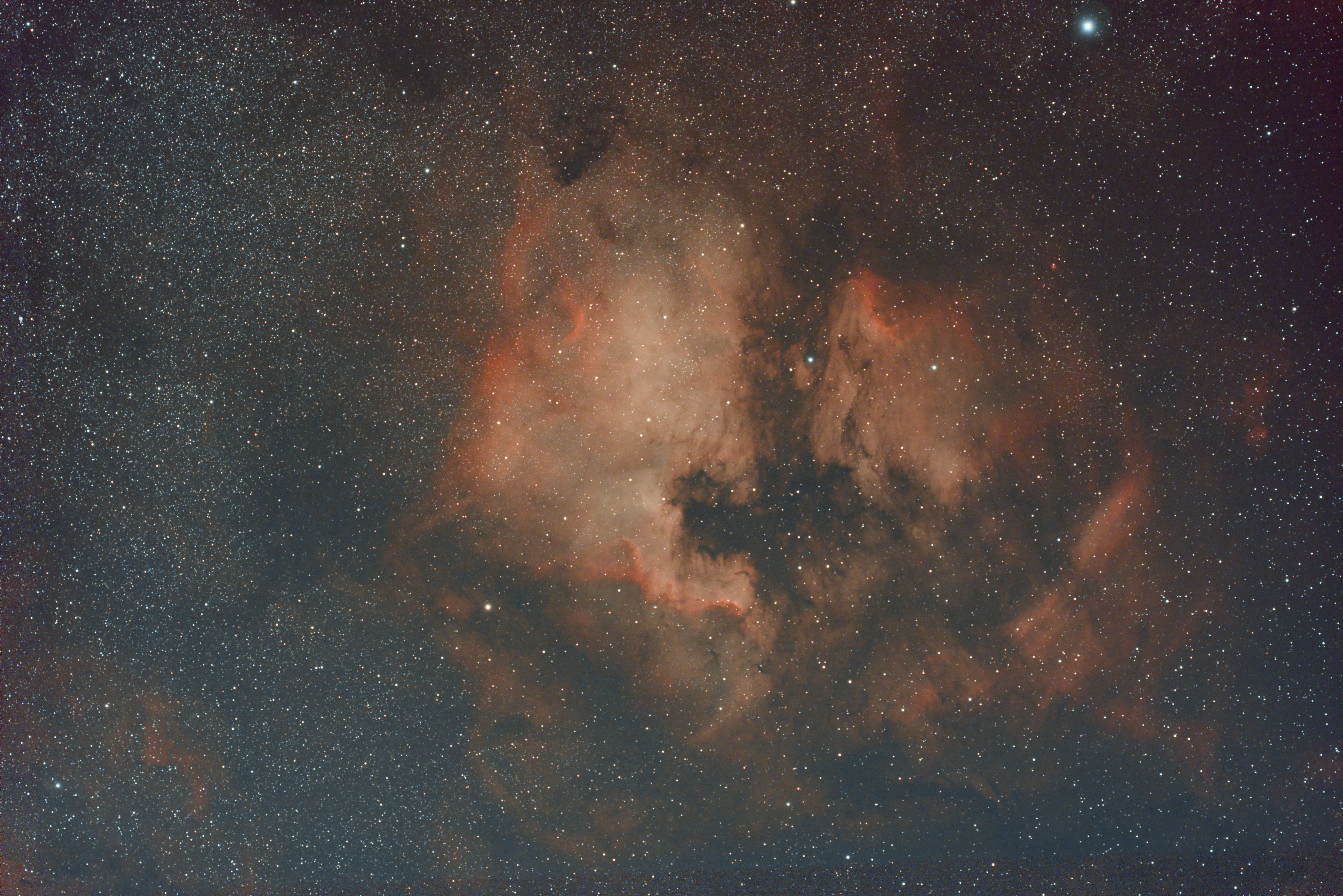
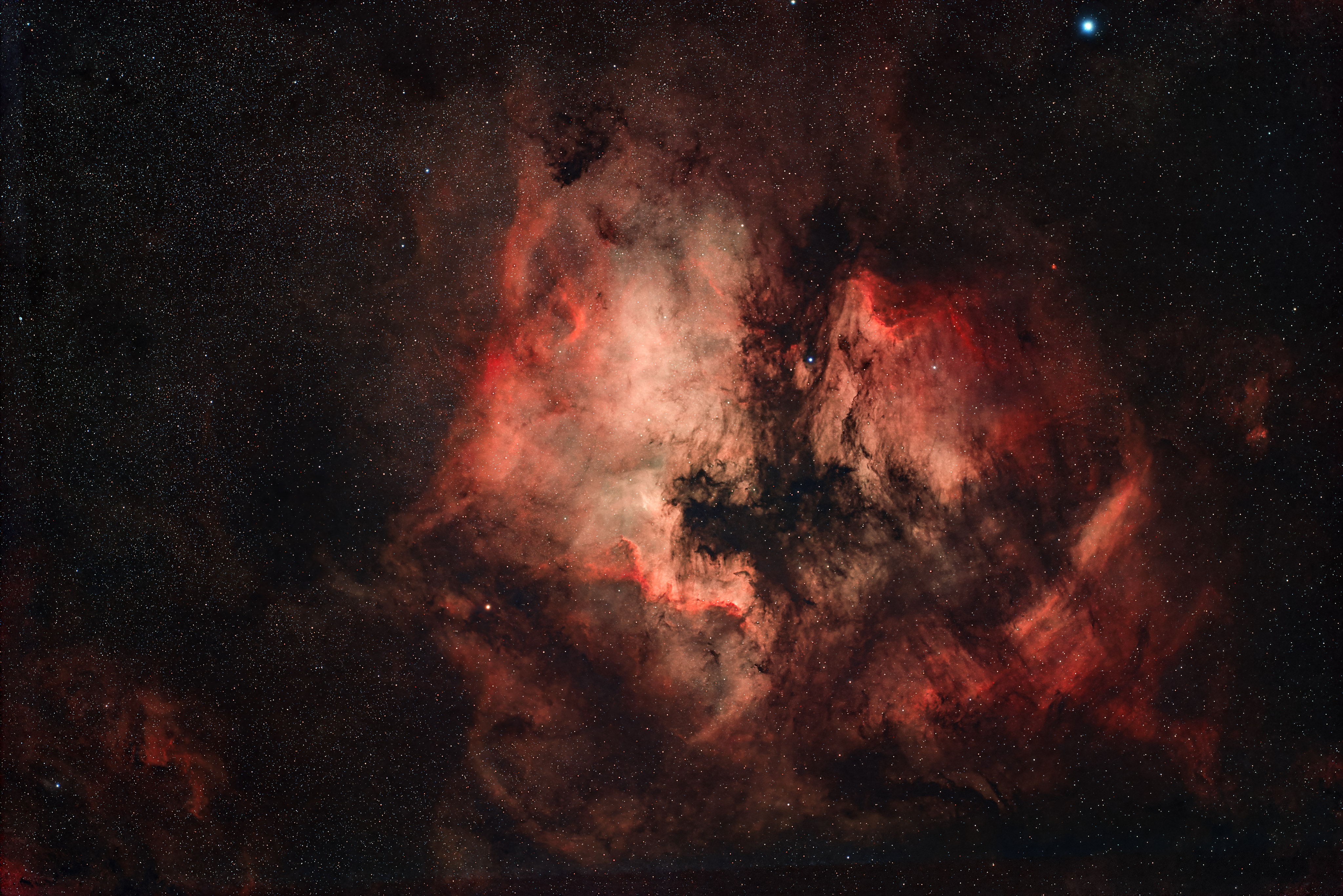
Licence: for personal use, credit Damon Scotting. Both JPEGs 4,096 x 2,733 px.
-10 C sensor temperature during imaging set point -10 C
190 mm focal length, plate solved Askar states 190 mm
7.1 x 4.7° field of view 6,248 x 4,176 px on ASI2600MC Air
26 MP ASI2600MC Air 6,248 x 4,176 px, 23.5 x 15.7 mm
Should you buy it?
95/100 Stars for Your Buck
Pros
- “It weighs just 1.4 kg, but it boasts the specifications of telescopes three times its price.”
- “It's insanely easy to use this little scope as your own backup scope.”
- “The data is there. You've just got to be willing to fish out the data from your image and make a vibrant work of art.”
- “The beauty of this design as well is that it's modular.”
- “With an hour's worth of data, you can make out the gist of what you're looking at.”
Cons
- “I'm not in love with the star colours. They seem to lean a little bit to the bluey magenta end of the spectrum.”
- “This scope is optimised for imaging sensors smaller than 1 inch. So in the case of the IMX571 sensor, which is a bit larger than 1 inch, the stars at the edges do not look great.”
- “The spot diagrams they featured in the product description are a little underwhelming, and I think you can see their full effects on my images.”
- The focuser is a single-speed radial ring, not a dual-speed focuser.
I've tested $500 telescopes before that haven't even been able to match this level of sharpness.
Who the 50P is for
Complete beginner
Skip
At this price a smart telescope such as the Seestar S50 is easier; the 50P needs its own mount, camera and software.
First imaging rig on a budget
Buy
With a small tracking mount and an IMX585 camera it makes one of the cheapest real deep-sky rigs, and every part can be upgraded later.
Travelling imager
Buy
The whole tube, with its ring and dovetail plate, fits in a camera bag and travels with a small mount and camera.
Main rig owner wanting a second scope
Buy
Its detachable dovetail bar lets it ride beside a bigger telescope as a wide-field imaging scope or a guide scope.
APS-C or full-frame camera owner
Skip
It is optimised for sensors under 1 inch; the Askar SQA55 and ToupTek Hope D60 cover a 44 mm image circle.
Already own a 50 mm Petzval
Skip
Against a RedCat 51, SV555 or SQA55 the 50P is faster and wider but covers a smaller sensor, so it is not an upgrade.
Three alternatives I have reviewed
- Askar SQA55 55 mm f/4.8 quintuplet Petzval with a 44 mm image circle 82/100 £795 Read the review
- ToupTek Hope D60 60 mm f/4.66 five-element apochromat for full frame 93/100 £749 Read the review
- ZWO Seestar S50 50 mm f/5 smart telescope, camera and mount in one 55/100 £539 Read the review
Questions and more about this review
Reviewed by
Damon Scotting
The Telescope Man Verified
BSc (Hons) Physics with Astrophysics and Cosmology, Loughborough University PGCE / QTS, University of Nottingham
About Damon About Damon Damon Scotting is The Telescope Man. He holds a BSc (Hons) in Physics with Astrophysics and Cosmology from Loughborough University and a PGCE with QTS from the University of Nottingham, and taught physics in secondary schools before becoming an astronomy creator. He is a contributing writer for BBC Sky at Night Magazine and the author of 42 Wonders of Our Night Sky, and his photograph of the galaxy M100 with the dwarf planet Ceres was Highly Commended in the Astronomy Photographer of the Year 2024 competition run by Royal Observatory Greenwich. He has appeared on the BBC's Blue Peter. More than 750,000 people follow his astronomy channels on YouTube, Instagram and TikTok, and he has reviewed more than 140 telescopes, mounts, cameras, filters and accessories hands-on for this site. More about Damon · How I test · Damon's book
I review all kinds of gear: most of it I buy, some is gifted and some is loaned, and all of it is reviewed the same way. How this site is funded
Eight questions, answered
Questions about the Askar 50P
Reviewed 1 May 2026 ·Updated 22 September 2026
I review all kinds of gear. Most of it I buy, some is gifted and some is loaned, and all of it is reviewed the same way: no company sees or approves a review before it is published. Shop links marked Ad are affiliate links: I earn a commission when you buy through them, at no extra cost to you. How this site is funded
- Does the Askar 50P cover an APS-C sensor? It covers APS-C, but Askar optimise it for sensors smaller than 1 inch, and the corners of my IMX571 frames show it. What I captured ↓
- What field of view does the Askar 50P give? My plate solves give 7.1 x 4.7 degrees on a 26 megapixel APS-C sensor and 3.4 x 1.9 degrees on an IMX585 camera, at a measured 190 mm. Tested numbers and the download ↓
- What mount does the Askar 50P need? Very little: it weighs 1.4 kg with its ring and dovetail plate. At 190 mm the payload is light enough even for a small star tracker, but I still recommend a proper go-to tracking mount. The rig on the mount ↓
- Is the Askar 50P good for galaxies? Galaxies are small at 190 mm. M 51 and Markarian's Chain come out clear but small; wide nebulae such as the Veil and the North America Nebula suit it far better. What I captured ↓
- Can the Askar 50P be used as a guide scope? Yes. It rides on the dovetail bar of a bigger telescope as a guide scope or a second imaging scope, and I have run three of them together on one mount. What is it for ↓
- How does the Askar 50P compare with the SVBONY SV555? I imaged the North America Nebula through both with the same ZWO ASI2600MC Air. The 50P frames it wider at 190 mm and f/3.8; the SV555 is 243 mm at f/4.5 with a 44 mm image circle. Versus the William Optics RedCat 51 ↓
- How much processing do Askar 50P images need? I remove the gradient in GraXpert, sharpen and denoise with BlurXTerminator and NoiseXTerminator, then set levels and colour in Photoshop. Longer nights of data need less of that heavy lifting. The raw stacks against the finished images ↓
- What have I not tested on the 50P? I did not test the 50P with a full-frame camera, with an electronic focuser on its focus ring, or on a small star tracker.