ToupTek Hope D60 review: five elements, full frame, f/4.66
Where does it rank on our leaderboard
| Rank | Telescope | Stars for Your Buck | Recorded UK price |
|---|---|---|---|
| 1 | Askar 50P | 95 out of 100 | £299 |
| 2 | ToupTek Hope D60 | 93 out of 100 | £749 |
| 7 | Askar SQA85 | 88 out of 100 | £2,395 |
| 15 | Askar 140APO | 80 out of 100 | £2,098 |
| 17 | Askar 80ED | 77 out of 100 | £379 |
| 29 | William Optics RedCat 51 | 69 out of 100 | £849 |
| 34 | Coronado PST | 55 out of 100 | £859 |
| 41 | Celestron 114 LCM | 42 out of 100 | £361 |
| 42 | Celestron AstroMaster LT 76 | 13 out of 100 | £200 |
Contents
- 01 Where does it rank on our leaderboard
- 02 Specifications and features
- 03 In the hand
- 04 From the review video
- 05 How good is it? Here's what I captured
- 06 Raw against finished
- 07 The rig on the mount
- 08 What is it for
- 09 Versus the Askar SQA60 Pro
- 10 Watch the review
- 11 Tested numbers and the download
- 12 Should you buy it?
- 13 Questions and more about this review
In 30 seconds
Stars for Your Buck 93/100
Reviewed 23 Oct 2025 Updated 23 Sep 2026
- Rank
- #2 of 42 telescopes
- Verdict
- Damon's pick
Written by Damon Scotting 7 min read
Buy it if
- You want a 60 mm astrograph that covers a full-frame sensor with the flattener already built in, for £749
- You image large nebulae, big galaxies or mosaics and want a wide 280 mm field at f/4.66
- You want a compact tube that rides a small harmonic mount with a guide scope on top
Skip it if
- You want small galaxies and planetary nebulae large in the frame: at 280 mm they stay small
- You want the lightest 60 mm tube: this one is listed at about 3.5 kg as supplied
- You want the cheapest way into astrographs: the Askar 50P is £299
ToupTek's first telescope is a 60 mm five-element full-frame astrograph at f/4.66, and I am a huge fan of it.
Specifications and features
Against the telescopes I have reviewed
Compare with
| ToupTek Hope D60 reviewed #2 of 42 | Askar SQA60 Pro #26 of 42 | Askar SQA55 #12 of 42 | William Optics RedCat 51 #29 of 42 | Nakoh 60GT #36 of 42 | SVBONY SV555 #16 of 42 | |
|---|---|---|---|---|---|---|
| Recorded UK price | £749 | £1,249 | £795 | £849 | £899 | £509 |
| Stars for Your Buck | 93/100 | 71/100 | 82/100 | 69/100 | 52/100 | 79/100 |
| Aperture | 60 mm | 60 mm | 55 mm | 51 mm | 60 mm | 54 mm |
| Focal length | 280 mm | 276 mm | 264 mm | 250 mm | 360 mm | 243 mm |
| Focal ratio | f/4.66 | f/4.6 | f/4.8 | f/4.9 | f/6 | f/4.5 |
| Optical design | Five-element planar apochromat (PAPO), SD and lanthanum glass, flattener built in | Six-element air-spaced Petzval, two SD elements, flattener built in | Quintuplet Petzval APO, one SD and one ED element, integrated flattener | 4-element Petzval, FPL-53 | Triplet apochromat with one Japanese-made SD element and one ED element | Petzval, 5 elements in 3 groups, fully multi-coated |
| Image circle | 44 mm (full frame) | 44 mm | 44 mm | 48 mm | 44 mm full frame with the optional 1x flattener or 0.65x reducer | 44 mm full frame |
| Back focus | 55 mm from the rear thread (50 to 58 mm supported) | 41 to 66 mm (55 mm recommended), flattener built in | 50 to 60 mm range; 55 mm recommended | 55 mm plus or minus 3 mm recommended back spacing | not stated by the maker for the bare triplet; 55 mm with the optional 60GT 1.0x flattener (camera side M48 x 0.75 or M54 x 0.75), 44 mm image circle | 55 mm standard, with room already left for a filter |
| Focuser | 3 inch dual speed, 30 mm travel, zero backlash; 360 degree camera angle adjuster | 2.8 inch dual speed with 360 degree rotator | Manual dual-speed helical style focuser: independent coarse and fine controls, fine travel plus or minus 1 mm with locking screw, coarse ring with metric and imperial distance scale and MXL timing teeth for a belt drive | WIFD internal rack and pinion focuser, ZWO EAF compatible | 2.5 inch dual-speed metal rack and pinion, 32 mm travel, 360 degree rotator, 2 inch and 1.25 inch adapters | Helical, with a lockable 360 degree rotator and a 2 inch filter holder; optional EAF mount kit |
| Weight, tube | About 3.5 kg as supplied, not a bare-tube figure | 2.79 kg tube; 3.54 kg with the ring and dovetail | 1.84 kg OTA; 2.18 kg with handle and dovetail plate | 1.77 kg OTA; 2.38 kg with accessories | about 2.94 kg | 2450 g net, excluding accessories |
| Length, tube | 255 mm, dew shield retracted | 283 mm | 316 mm with dew shield; 244 mm without | 298 mm tube length | 270 mm | not stated by the maker |
| Dew shield | Retractable, magnetic positioning | Fixed | Removable | 84 mm diameter | Retractable slide-in dew shield | Reversible lens hood, reduced from 97 mm to 93 mm |
| In the box | Tube ring, handle, dovetail plate and rail, front cap, dust cover, M48 adapter, tilt adjuster, threaded insert, hex wrench, manual | Tube, tube ring, 290 mm Vixen dovetail, handle, Oxford cloth case | SQA55 OTA, military-grade waterproof hand-carrying case | Main tube, Bahtinov mask dust cap, M48 camera adapter, dual-side plate, mounting ring with handle bar, soft carry case, Allen key set | Main tube, carrying handle, tube rings, 230 mm Vixen dovetail plate, 1.25 inch and 2 inch eyepiece adapters, manual and warranty card | SV555 54 mm f/4.5 tube, EAF mount kit, handle with integrated Vixen finder saddle, dovetail plate with M6 threaded holes, camera angle adjuster, 2 inch filter holder assembled with the lens, plastic lens cover, soft padded case, instruction manual |
In the hand
Six photographs
Beside the Askar SQA60 Pro
Beside the Askar SQA60 Pro (2)
On the ZWO AM3N mount with the ASI585MC camera
Three-quarter front view
Side view
Rear view
From the review video
Two frames from my videos
On the ZWO AM3N with the ASI585MM Air
Three-quarter rear view
How good is it? Here's what I captured
Four targets
IC 1805 Heart Nebula, ASI4400MC Pro, none
- Integration
- 43 x 180 s captured (2 h 9 min)
- Field
- 7.40 x 4.93 degrees
- Telescope
- ToupTek Hope D60
- Camera
- ZWO ASI4400MC Pro
- Mount
- ZWO AM3N
- Target
- IC 1805 Heart Nebula
- Type
- Emission nebula
M 8 Lagoon Nebula, ASI4400MC Pro, none
- Integration
- 31 x 180 s captured (1 h 33 min)
- Field
- 7.40 x 4.93 degrees
- Telescope
- ToupTek Hope D60
- Camera
- ZWO ASI4400MC Pro
- Mount
- ZWO AM3N
- Target
- M 8 Lagoon Nebula
- Type
- Emission nebula
NGC 6960 Western Veil Nebula, ASI4400MC Pro, none
- Integration
- 17 x 180 s captured (51 min)
- Field
- 7.40 x 4.93 degrees
- Telescope
- ToupTek Hope D60
- Camera
- ZWO ASI4400MC Pro
- Mount
- ZWO AM3N
- Target
- NGC 6960 Western Veil Nebula
- Type
- Supernova remnant
NGC 7000 North America Nebula, ASI4400MC Pro, none
- Integration
- 55 x 180 s captured (2 h 45 min)
- Field
- 7.40 x 4.93 degrees
- Telescope
- ToupTek Hope D60
- Camera
- ZWO ASI4400MC Pro
- Mount
- ZWO AM3N
- Target
- NGC 7000 North America Nebula
- Type
- Emission nebula
Raw against finished
The rig on the mount
The 4 targets, the raw combined stack against my finished image, each with its integration, the camera and the palette:
- IC 1805 Heart Nebula: 43 x 180 s captured (2 h 9 min) of light, ASI4400MC Pro, none, the raw combined stack with one automatic stretch
- M 8 Lagoon Nebula: 31 x 180 s captured (1 h 33 min) of light, ASI4400MC Pro, none, the raw combined stack with one automatic stretch
- NGC 6960 Western Veil Nebula: 17 x 180 s captured (51 min) of light, ASI4400MC Pro, none, the raw combined stack with one automatic stretch
- NGC 7000 North America Nebula: 55 x 180 s captured (2 h 45 min) of light, ASI4400MC Pro, none, the raw combined stack with one automatic stretch
On the JUWEI-17, then on six other mounts
What is it for
Three things it is for
A five-element full-frame astrograph
ToupTek, the company behind the StellaVita and countless cheaper variations of popular astronomy cameras, joined the refractor market with this 60 mm five-element full-frame f/4.66 beast.
Orion in ten panels
For my Orion mosaic I swapped the Askar SQA106 for the Hope D60, which has a significantly wider field of view, meaning I could fit the entire constellation within just 10 image panels.
A small, portable rig
I used the JUWEI-14 mount with an SVBONY 30 mm guide scope and an ASI120 monochrome guide camera, all attached to the tiny Hope D60. It is a very portable and powerful setup.
Versus the Askar SQA60 Pro
The Heart Nebula on both, plate-solved and star-aligned (residual 1.00 px per 1000)
| Target | Telescope | Integration | Subs | Filter | Nights |
|---|---|---|---|---|---|
| IC 1805 Heart Nebula | ToupTek Hope D60 + ZWO ASI533MM Pro | 45 min | 15 x 180 s | Ha, SII, OIII | not recorded |
| IC 1805 Heart Nebula | Askar SQA60 Pro + ZWO ASI2600MM Air | 75 min | 25 x 180 s | SII, Ha, OIII | 2026-07-20, 2026-07-21 |
Watch the review
I tried out this BRAND NEW $849 telescope from ToupTek astro! · published 23 October 2025 · 1:00 · Watch on YouTube · 51,145 views, 1,157 likes on 2 Oct 2026
Jump to
- 0:00 ToupTek's first telescope
- 0:08 60 mm, five elements, full frame, f/4.66
- 0:18 A compact telescope with its own carry bag
- 0:32 The North America Nebula on a full-frame camera
- 0:35 Andromeda: a huge field of view
- 0:39 A mono camera and narrowband filters
- 0:49 Andromeda and the North America Nebula in mono
Transcript of the review video 210 words · 5 chapters · searchable
Press a time stamp to play from there.
0:00 ToupTek's first telescope
0:00 ToupTek have just released their first ever telescope that's right the company behind the StellaVita and countless cheaper variations of popular astronomy cameras have joined the refractor telescope market with this 60 millimetre five element full frame f/4.66 beast I've had the pleasure of testing out this week and I've been very impressed by its quality currently available for 849 dollars this telescope is a tiny compact marvel that arrives with its own personalised ToupTek astro foam carry bag I've got a four hour window tonight with some clear skies so I'm going to be trialling this telescope out.
0:32 The North America Nebula on a full-frame camera
0:32 First up is the North America Nebula. 0:32 Very nice.
0:35 Andromeda: a huge field of view
0:36 Then I went for the Andromeda Galaxy and as you can see the field of view produced with this telescope and camera is huge.
0:39 A mono camera and narrowband filters
0:39 I tried the Hope D60 telescope with a monochrome camera with some filters instead and took these much narrower shots of our night sky which have turned out very nice. 0:49 All of the exposure times for these targets were really short since I had to make the most of it before the clouds rolled in but But what do you think of this little taster?
0:49 Andromeda and the North America Nebula in mono
0:55 Let me know what you think of it in the comments down below.
Check out more videos on the ToupTek Hope D60
I Captured a Gigapixel Orion Mosaic! - ASI 4400MC Review
30 Jan 2026
ZWO ASI585MM Air Review: Is This the BEST Beginner MONO Astro Camera?!
28 Jan 2026
What YOU Can See With a £1,249 Telescope! (Askar SQA60 Pro Review)
1 Sep 2026
Tested numbers and the download
Finished image
- Download the raw stack JPEG · 3.5 MB · 4,096 x 2,728
- Download the finished image JPEG · 4.4 MB · 4,096 x 2,728
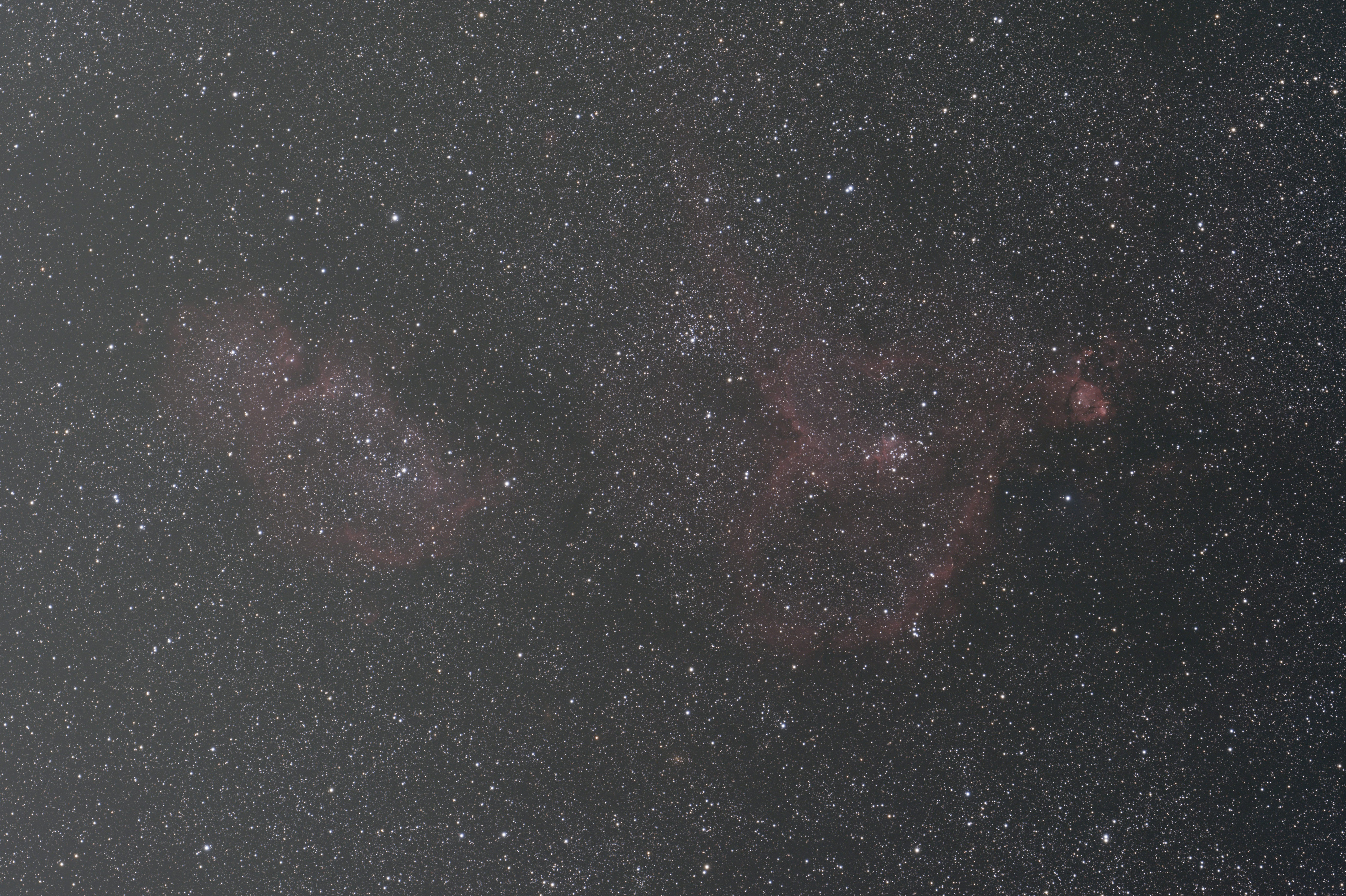
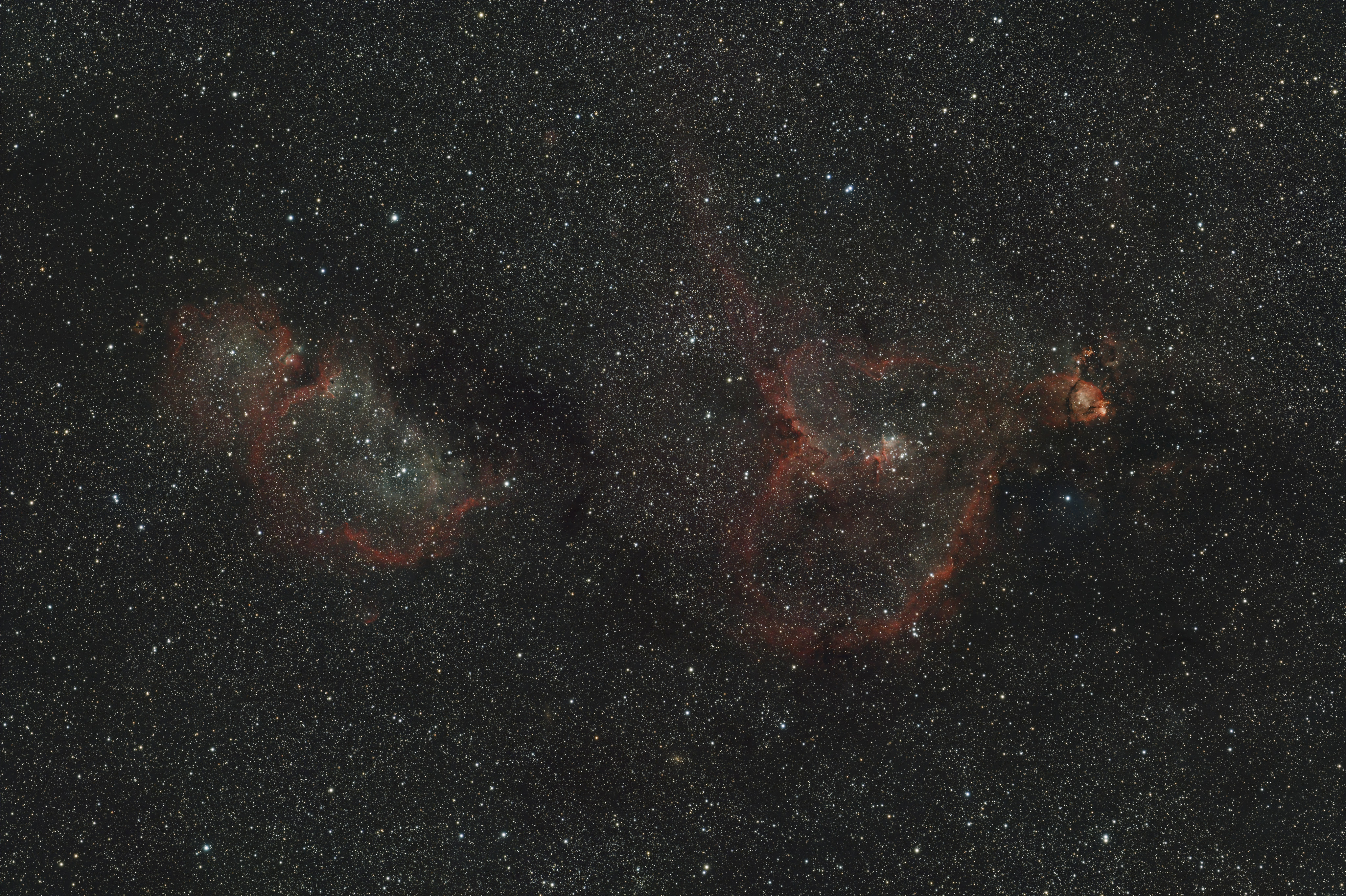
Licence: for personal use, credit Damon Scotting. Both JPEGs 4,096 x 2,728 px.
-10 C sensor temperature during imaging set point -10 C
279 mm focal length, plate solved ToupTek states 280 mm
7.40 x 4.93° field of view 8,192 x 5,460 px on ASI4400MC Pro
44.7 MP ASI4400MC Pro 8,192 x 5,460 px, 36.0 x 24.0 mm
Should you buy it?
93/100 Stars for Your Buck
Pros
- Five elements with the flattener built in and a 44 mm image circle, so a full-frame camera needs nothing extra.
- “The field of view with this telescope and camera is huge; Andromeda and the North America Nebula came out very nice in a four hour window.”
- “I tried it with a monochrome camera and some filters, and those much narrower shots of the night sky turned out very nice.”
- “This telescope rig is going to be phenomenal at picking up faint dust.”
- “A tiny compact marvel that arrives with its own personalised ToupTek astro foam carry bag.”
- “It is a lot more affordable than the Askar SQA60 Pro: £749 against £1,249.”
Cons
- A very short 280 mm focal length, so it suits wide fields rather than small targets: the Crab Nebula stays a small patch in the frame.
- It is listed at about 3.5 kg, dense for a 60 mm tube: heavier than the 2.86 kg Askar 60F with its rings and dovetail, and about the same as the SQA60 Pro all in.
- Stock is thin in the UK: Dark Clear Skies is the one UK stockist I found, and First Light Optics does not list it.
- Prices vary a lot by seller: US $1,140 on AliExpress against $850 at ToupTek and Agena Astro, so buy it from a dealer or the maker.
I've been very impressed by its quality.
Who the Hope D60 is for
Wide-field nebula imager with about £750 to spend
Buy
At 280 mm and f/4.66 it frames the whole Heart Nebula or the North America Nebula in one shot, with the flattener already inside.
Full-frame camera owner
Buy
ToupTek quotes a 44 mm image circle with nothing extra to buy, and my full-frame Andromeda through it spans 7.4 degrees.
Mosaic and travel imager
Buy
A 280 mm full-frame field takes Orion in 10 panels, and the whole rig rides a small harmonic mount with a 30 mm guide scope.
Mono narrowband imager under light-polluted skies
Buy
With a mono camera and Ha, SII and OIII filters, 45 minutes each was enough for the Rosette, the Horsehead and the Elephant's Trunk.
Galaxy and planetary nebula imager
Skip
At 280 mm the Crab Nebula is a small patch in a 2.3 degree field; my recommendation is a longer astrograph such as the Askar 91F.
First astrograph on a tight budget
Skip
My recommendation is the Askar 50P at £299: a smaller, lighter Petzval that tops my telescope board.
Three alternatives I have reviewed
- Askar SQA60 Pro 60 mm f/4.6 six-element Petzval with the flattener built in, the rival I compared it with 71/100 £1,249 Read the review
- Nakoh 60GT 60 mm f/6 triplet with Japanese SD glass at a similar price; full frame needs its optional corrector 52/100 £899 Read the review
- Askar 50P 50 mm f/3.8 Petzval, lighter and far cheaper, for a first astrograph 95/100 £299 Read the review
Questions and more about this review
Reviewed by
Damon Scotting
The Telescope Man Verified
BSc (Hons) Physics with Astrophysics and Cosmology, Loughborough University PGCE / QTS, University of Nottingham
About Damon About Damon Damon Scotting is The Telescope Man. He holds a BSc (Hons) in Physics with Astrophysics and Cosmology from Loughborough University and a PGCE with QTS from the University of Nottingham, and taught physics in secondary schools before becoming an astronomy creator. He is a contributing writer for BBC Sky at Night Magazine and the author of 42 Wonders of Our Night Sky, and his photograph of the galaxy M100 with the dwarf planet Ceres was Highly Commended in the Astronomy Photographer of the Year 2024 competition run by Royal Observatory Greenwich. He has appeared on the BBC's Blue Peter. More than 750,000 people follow his astronomy channels on YouTube, Instagram and TikTok, and he has reviewed more than 140 telescopes, mounts, cameras, filters and accessories hands-on for this site. More about Damon · How I test · Damon's book
I review all kinds of gear: most of it I buy, some is gifted and some is loaned, and all of it is reviewed the same way. How this site is funded
Nine questions, answered
Questions about the ToupTek Hope D60
Reviewed 23 October 2025 ·Updated 23 September 2026
I review all kinds of gear. Most of it I buy, some is gifted and some is loaned, and all of it is reviewed the same way: no company sees or approves a review before it is published. Shop links marked Ad are affiliate links: I earn a commission when you buy through them, at no extra cost to you. How this site is funded
- What is the real focal length of the ToupTek Hope D60? ToupTek states 280 mm. My plate solves give 278.9 mm on a full-frame sub (3.254 arcsec per pixel with 4.4 micron pixels) and 280.4 mm on my Heart Nebula (2.766 arcsec per pixel with 3.76 micron pixels); the ASIAIR wrote 279 mm into 466 of my 487 subs. Tested numbers and the download ↓
- Does the Hope D60 cover a full-frame sensor? ToupTek quotes a 44 mm image circle with the flattener built in. My full-frame frames through it, 8192 x 5460 pixels on the ZWO ASI4400MC Pro and 6064 x 3899 on the ToupTek SkyEye 24AC, cover about 7.4 x 4.9 degrees. I have not measured the corner stars. Tested numbers and the download ↓
- Does the Hope D60 need a flattener or spacers? No separate flattener: it is a five-element planar apochromat with the flattener built in. ToupTek gives a 55 mm connection distance from the rear thread, with an M48 adapter as standard and an M54 adapter as an option; astronomyplus lists 50 to 58 mm as supported. The specifications and the comparison table ↓
- How does the Hope D60 compare with the Askar SQA60 Pro? Both are 60 mm full-frame astrographs at about 280 mm with the flattener built in; the SQA60 Pro has six elements and is £1,249 at First Light Optics against £749 for the Hope D60. My Heart Nebula through each is in Versus on one star-aligned grid, from different cameras on different nights, so it compares the fields and the finish, not a controlled test. Versus the Askar SQA60 Pro ↓
- How does it compare with the Nakoh 60GT? I was mostly comparing the Nakoh 60GT in my mind to the ToupTek Hope D60, which I really enjoyed and is a very similar price, but with some very different specs. The 60GT is a 360 mm f/6 triplet that needs its optional flattener or reducer for a 44 mm circle; the Hope D60 is 280 mm at f/4.66 with the flattener inside. Both are column by column in the comparison table. From my video review
- How heavy is it, and what mount does it need? About 3.5 kg as listed by astronomyplus and in ToupTek's store data; neither says whether the fitted ring, handle and dovetail are included, and I have not weighed it. I imaged with it on the JUWEI-14 and on a ZWO AM3N, and the carrying module shows the whole rig on each mount. The rig on the mount ↓
- Which cameras did I use with the Hope D60? A ZWO ASI533MM Pro with Ha, SII and OIII and LRGB filters, a ZWO ASI585MM Air with Ha, SII and OIII filters, the full-frame ToupTek SkyEye 24AC and the full-frame ZWO ASI4400MC Pro for my Orion mosaic. What I captured ↓
- How much does the Hope D60 cost and where can I buy it? The prices I recorded: £749 at Dark Clear Skies (UK), in stock; $850 at Agena Astro (US), in stock; $850 at ToupTek Astro (Global), in stock. A record, not a live price The verdict, the readers and the sellers ↓
- What have I not tested on the Hope D60? Corner star shapes on a full-frame sensor, visual use and the planets: not tested.