Nakoh 60GT review: Japanese SD glass, very accurate colour
Where does it rank on our leaderboard
| Rank | Telescope | Stars for Your Buck | Recorded UK price |
|---|---|---|---|
| 1 | Askar 50P | 95 out of 100 | £299 |
| 2 | ToupTek Hope D60 | 93 out of 100 | £749 |
| 8 | Askar 60F | 87 out of 100 | £498 |
| 19 | Sky-Watcher Heliostar 76Ha | 74 out of 100 | £2,399 |
| 29 | William Optics RedCat 51 | 69 out of 100 | £849 |
| 36 | Nakoh 60GT | 52 out of 100 | £899 |
| 39 | Celestron C5 | 49 out of 100 | £850 |
| 41 | Celestron 114 LCM | 42 out of 100 | £361 |
| 42 | Celestron AstroMaster LT 76 | 13 out of 100 | £200 |
Contents
- 01 Where does it rank on our leaderboard
- 02 Specifications and features
- 03 In the hand
- 04 How good is it? Here's what I captured
- 05 Raw against finished
- 06 The rig on the mount
- 07 What is it for
- 08 Versus the Askar SQA60 Pro
- 09 Watch the review
- 10 Tested numbers and the download
- 11 Should you buy it?
- 12 Questions and more about this review
In 30 seconds
Stars for Your Buck 52/100
Reviewed 5 May 2026 Updated 23 Sep 2026
- Rank
- #36 of 42 telescopes
- Verdict
- With reservations
Written by Damon Scotting 6 min read
Buy it if
- You want very accurate colour from a 60 mm triplet with Japanese SD glass.
- You image nebulae on an APS-C camera and want 360 mm, or 234 mm at f/3.9 with the optional reducer.
Skip it if
- You want a guide scope and an ASIAIR on the tube at once: there is one accessory slot.
- You want full-frame coverage without buying the flattener or reducer on top.
- You want the most 60 mm for the money: the ToupTek Hope D60 costs less in the UK and has its flattener built in.
It has very accurate colours, amongst the best I have seen, but there is only one accessory slot and the reducer and flattener cost extra.
Specifications and features
Against the telescopes I have reviewed
Compare with
| Nakoh 60GT reviewed #36 of 42 | ToupTek Hope D60 #2 of 42 | Askar SQA60 Pro #26 of 42 | Askar 60F #8 of 42 | Askar 71F #14 of 42 | William Optics RedCat 51 #29 of 42 | |
|---|---|---|---|---|---|---|
| Recorded UK price | £899 | £749 | £1,249 | £498 | £599 | £849 |
| Stars for Your Buck | 52/100 | 93/100 | 71/100 | 87/100 | 81/100 | 69/100 |
| Aperture | 60 mm | 60 mm | 60 mm | 60 mm | 71 mm | 51 mm |
| Focal length | 360 mm | 280 mm | 276 mm | 408 mm | 490 mm | 250 mm |
| Focal ratio | f/6 | f/4.66 | f/4.6 | f/6.8 | f/6.9 | f/4.9 |
| Optical design | Triplet apochromat, one Japanese-made SD and one ED element | Five-element planar apochromat, built-in flattener, SD and lanthanum glass | Six-element Petzval, two SD elements, integrated flattener | Quadruplet air-spaced APO, one ED element, self-flattening | Quadruplet air-spaced APO, one ED element, self-flattening | Four-element Petzval, FPL-53 |
| Image circle | 44 mm with the optional 1.0x flattener or 0.65x reducer | 44 mm | 44 mm | 44 mm | 44 mm | 48 mm |
| Back focus | 55 mm with the optional flattener or reducer | 55 mm | 41 to 66 mm | 31 to 81 mm from the M48 thread | Up to 82.5 mm from the M48 thread | 55 mm, plus or minus 3 mm |
| Focuser | 2.5 inch dual-speed rack and pinion, 32 mm travel, 360 degree rotator | 3 inch dual-speed rack and pinion, 30 mm travel, 360 degree rotator | 2.8 inch dual-speed, 360 degree rotator | 2.4 inch dual-speed rack and pinion, 50 mm travel, 360 degree rotator | 2.4 inch dual-speed rack and pinion, 360 degree rotator | Internal rack and pinion (WIFD), EAF compatible |
| Weight, tube | 2.94 kg | About 3.5 kg as supplied, not a bare-tube figure | 2.79 kg | 2.36 kg | 2.5 kg | 1.77 kg |
| Length, tube | 270 mm | 255 mm, dew shield retracted | 283 mm | 289 mm, dew shield retracted | 372.5 mm, dew shield retracted | 298 mm |
| Dew shield | Fixed length; lifts off | Retractable | Fixed | Retractable | Retractable | Fixed, 84 mm |
| In the box | Tube, carrying handle, tube rings, 230 mm Vixen-style dovetail, 1.25 and 2 inch adapters, manual, warranty card | Lens cap, tube ring, dovetail, handle, M48 adapter, dust cover, manual | Tube, Oxford cloth case, 290 mm Vixen-style dovetail | Tube, tube rings, handle, 230 mm Vixen dovetail, photographic adapters | Tube, tube rings, handle, Vixen dovetail, photographic adapters | Tube, Bahtinov mask cap, M48 adapter, plate, ring with handle, soft case, Allen keys |
In the hand
On the ZWO AM3N
The white dew shield
Triplet SD Super APO
The objective end
Focuser and rotator
The dew shield lifts off
How good is it? Here's what I captured
Three targets
IC 1396 Elephant's Trunk Nebula, ASI2600MM Air, SHO
- Integration
- 42 min (14 x 180 s)
- Field
- 3.74 x 2.50 degrees
- Telescope
- Nakoh 60GT
- Camera
- ZWO ASI2600MM Air
- Mount
- ZWO AM3N
- Target
- IC 1396 Elephant's Trunk Nebula
- Type
- Emission nebula
- Location
- Bortle 6.8 (in my garden)
NGC 6888 Crescent Nebula and Sadr, ASI2600MM Air, SHO
- Integration
- 45 min
- Field
- 3.72 x 2.48 degrees
- Telescope
- Nakoh 60GT
- Camera
- ZWO ASI2600MM Air
- Mount
- ZWO AM3N
- Target
- NGC 6888 Crescent Nebula and Sadr
- Type
- Emission nebula
- Location
- Bortle 6.8 (in my garden)
NGC 6960 and NGC 6992 Veil Nebula, ASI2600MM Air, HSO
- Integration
- 1 h 30 min
- Field
- 5.13 x 3.42 degrees
- Telescope
- Nakoh 60GT with the 0.65x reducer
- Camera
- ZWO ASI2600MM Air
- Mount
- ZWO AM3N
- Target
- NGC 6960 and NGC 6992 Veil Nebula
- Type
- Supernova remnant
- Location
- Bortle 6.8 (in my garden)
Raw against finished
The rig on the mount
The 3 targets, the raw combined stack against my finished image, each with its integration, the camera and the palette:
- IC 1396 Elephant's Trunk Nebula: 42 min (14 x 180 s) of light, ASI2600MM Air, SHO, the raw combined stack with one automatic stretch
- NGC 6888 Crescent Nebula and Sadr: 45 min of light, ASI2600MM Air, SHO, the raw combined stack with one automatic stretch
- NGC 6960 and NGC 6992 Veil Nebula: 1 h 30 min of light, ASI2600MM Air, HSO, the raw combined stack with one automatic stretch
On the JUWEI-17, then on six other mounts
What is it for
Four things it is for
Narrowband nebulae
I pointed this razor-sharp 60 mm scope at the Elephant's Trunk Nebula with a Scorpio 3 nm HSO set. It was a brief, whistle-stop image, but even with the limited exposure time there's still a lot to be admired about it.
f/3.9 with the 0.65x reducer
For the Veil Nebula I also used the 0.65x reducer. It hasn't really taken much to bring out the nebula in this shot: it's already there, shining and dazzling in the original.
Two targets in one frame
I kept the Crescent Nebula and Sadr in the traditional Hubble palette, and I think this one is indeed a lovely shot.
Your own bracket on the handle
There are several holes on the dovetail handle for you to install your own dovetail bracket, which is what I ended up doing in the end.
Versus the Askar SQA60 Pro
IC 1396 Elephant's Trunk Nebula on both, plate-solved and star-aligned (residual 0.25 px per 1000)
| Target | Telescope | Integration | Subs | Filter | Nights |
|---|---|---|---|---|---|
| IC 1396 Elephant's Trunk Nebula | Nakoh 60GT + ASI2600MM Air | 42 min | 14 x 180 s | SHO (Scorpio 3 nm) | 2026-03-28 |
| IC 1396 Elephant's Trunk Nebula | Askar SQA60 Pro + ASI2600MM Air | 84 min | 28 x 180 s | SHO (Scorpio 3 nm) | 2026-07-19, 2026-07-20, 2026-07-21 |
Watch the review
Is this NOW the BEST 60mm Telescope on the market? (Nakoh 60GT Review) · published 5 May 2026 · 5:01 · Watch on YouTube · 4,447 views, 195 likes on 2 Oct 2026
Jump to
- 0:26 Elephant Trunk Nebula, narrowband test
- 1:06 Veil Nebula with the 0.65x reducer
- 2:15 Crescent Nebula and Sadr in Hubble palette
- 3:01 Likes and dislikes
- 3:22 The fixed dew shield
- 3:28 Only one accessory slot
- 3:48 The reducer and flattener cost extra
- 4:20 Against the ToupTek Hope D60
Transcript of the review video 939 words · 13 chapters · searchable
Press a time stamp to play from there.
0:00 Meet the $999 Japanese-glass triplet
0:00 This right here is the Nakoh 60 mm triplet refractor telescope. 0:03 It retails at $999 and can be purchased alongside a one times field flattener or a 0.65 times reducer. 0:11 Both of which improve the quality of this scope to a quadruplet. 0:15 In tonight's video, I'm going to be putting this scope through its paces and seeing how good the images are that you can capture with it from your own light polluted garden. 0:21 I'm Damon Scotting and this is Astronomical.
0:26 Elephant Trunk Nebula, narrowband test
0:26 So, let's kick things off with an explosion of colour. 0:28 Let's point this razor sharp 60 mm scope at the Elephant Trunk Nebula and start capturing some narrow band images. 0:34 For these shots, I used a Scorpio 3 nanometre HSO set. 0:36 As far as specialized narrowband filters go, this was very cheap and in my limited experience produces some insanely good results in comparison to the others. 0:47 What you're seeing right now is five times three minute exposures in each filter stacked together. 0:51 Then BlurX, NoiseX, and colour corrected in Photoshop to give me this very brief whistle stop 45minute image of the elephant trunk. 1:00 But even with the limited exposure time, there's still a lot to be admired about this image. 1:04 Next up was the Veil Nebula.
1:06 Veil Nebula with the 0.65x reducer
1:06 This supernova remnant always promises some exceptional shots, especially when you really isolate the nebulosity through powerful narrowband filters. 1:15 I think it's a lovely little shot framed really well. 1:19 For this one, I also used the 0.65 times reducer. 1:22 Yeah, it hasn't really taken much to bring out the nebula in this shot. 1:25 It's already there shining and dazzling in the original. 1:27 This was 1 hour 30 minutes worth of exposures. 1:30 Then mixing things up and switching over to the broadband filters, I used the Altair LRGB set here in order to image the Great Globular cluster in Hercules.
1:32 M13 in LRGB
1:39 The colours are once again fantastic. 1:41 Stars are very sharp across the board, and as you can see, there's no real concern whatsoever about star shapes, regardless of where you look. 1:50 I think the final result here is a lovely rendition of a star cluster several hundred thousand thick.
1:56 Markarian's Chain
1:57 Imaging the Markarian chain is never an easy task really. 1:59 And yet, I can't help but feel a little bit disappointed with its attempt here. 2:03 I don't know, maybe maybe you can judge my own editing to be the real issue here, but I really struggle to make anything pop or any galaxies in particular look that sharp. 2:12 So, I guess the less said about this image, the better. 2:13 Dipping back over towards the summer targets that are just starting to appear during the early hours of the morning.
2:15 Crescent Nebula and Sadr in Hubble palette
2:19 And I've kept the Crescent Nebula and Sadr in the traditional Hubble palette. 2:22 I think this one is indeed a lovely shot. 2:24 The nebula is sharp and the colours tell a story. 2:27 It was once again a very limited 45 minutes stacked image, but I'm quite happy with how this turned out. 2:33 Then lastly, our final target of the episode is the illustrious North America Nebula.
2:34 North America Nebula in LRGB
2:40 Imaged over the course of 2 hours with the LRGB filters. 2:42 This region is filled with lots of varying reds and blues. 2:46 Although, compared to my previous attempts at NGC 7000, this shot felt a little muted. 2:50 I'm also not too sure what to think of the star haloing in the bottom left-hand corner here. 2:55 Yeah, I think the jury is still out as to whether that is a result of the telescope or the 2 inch LRGB filters.
3:01 Likes and dislikes
3:01 So overall, here are my likes and dislikes. 3:03 Likes, it's very accurate colours. 3:06 I think this was amongst the best I'd seen in this regard. 3:07 Clearly, the Japanese lenses using these telescopes are superior to whatever everyone else is using. 3:13 I am also a big fan of the option for reducers like the 0.65, especially since that takes the f ratio down from f/6 to f/3.9.
3:22 The fixed dew shield
3:22 My dislikes, however, include the fact that the dew shield is fixed. 3:24 I weirdly didn't like that. 3:27 Perhaps it's just a personal preference.
3:28 Only one accessory slot
3:28 I also didn't like the fact that I couldn't add my own guide scope and my ASIAIR at the same time. 3:33 There's just one accessory slot, which as silly as it sounds, is almost archaic in today's era. 3:37 Even the newly released Askar 50P for $299 has three slots for you to choose from. 3:44 There are several holes on the dovetail handle for you to install your own dovetail bracket, which is what I ended up doing in the end.
3:48 The reducer and flattener cost extra
3:49 And then lastly, I did just say that I like the option for a reducer and of course a flattener, but I hate that when scopes already cost $999, I now need to fork out an extra $399 to step it up from a triplet to a quadruplet and then an extra $299 on top of that for the same option as a separate one times flattener. 4:08 It does say it supports full-frame 44mm camera sensors, but specifically with the attachments, I'd like to assume it still can without. 4:16 So yeah, a lot to ponder on. 4:18 I am mostly comparing this telescope in my mind to the ToupTek Hope D60 telescope which I really enjoyed and is a very similar price but with some very different specs.
4:20 Against the ToupTek Hope D60
4:27 What are your thoughts on the Nakoh 60 mm?
4:28 Outro
4:28 Let me know in the comments down below. 4:31 If you're interested in checking out a telescope for yourself, then you can do so by clicking on the link in the description down below. 4:36 Thanks for watching. 4:38 I'm Damon Scotting and this was astronomical.
Tested numbers and the download
Finished image
- Download the raw stack JPEG · 7.5 MB · 4,096 x 2,733
- Download the finished image JPEG · 3.2 MB · 4,096 x 2,733
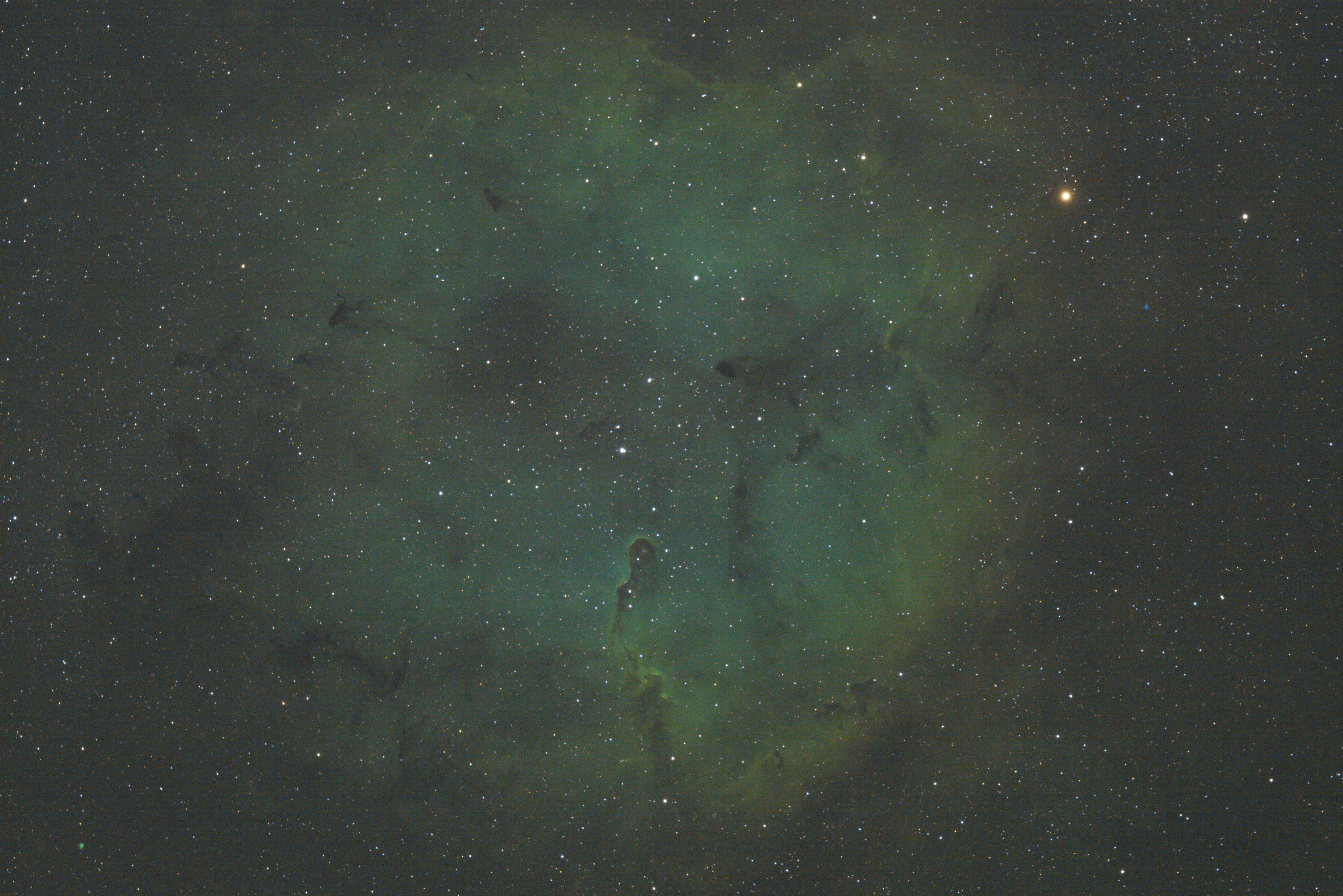
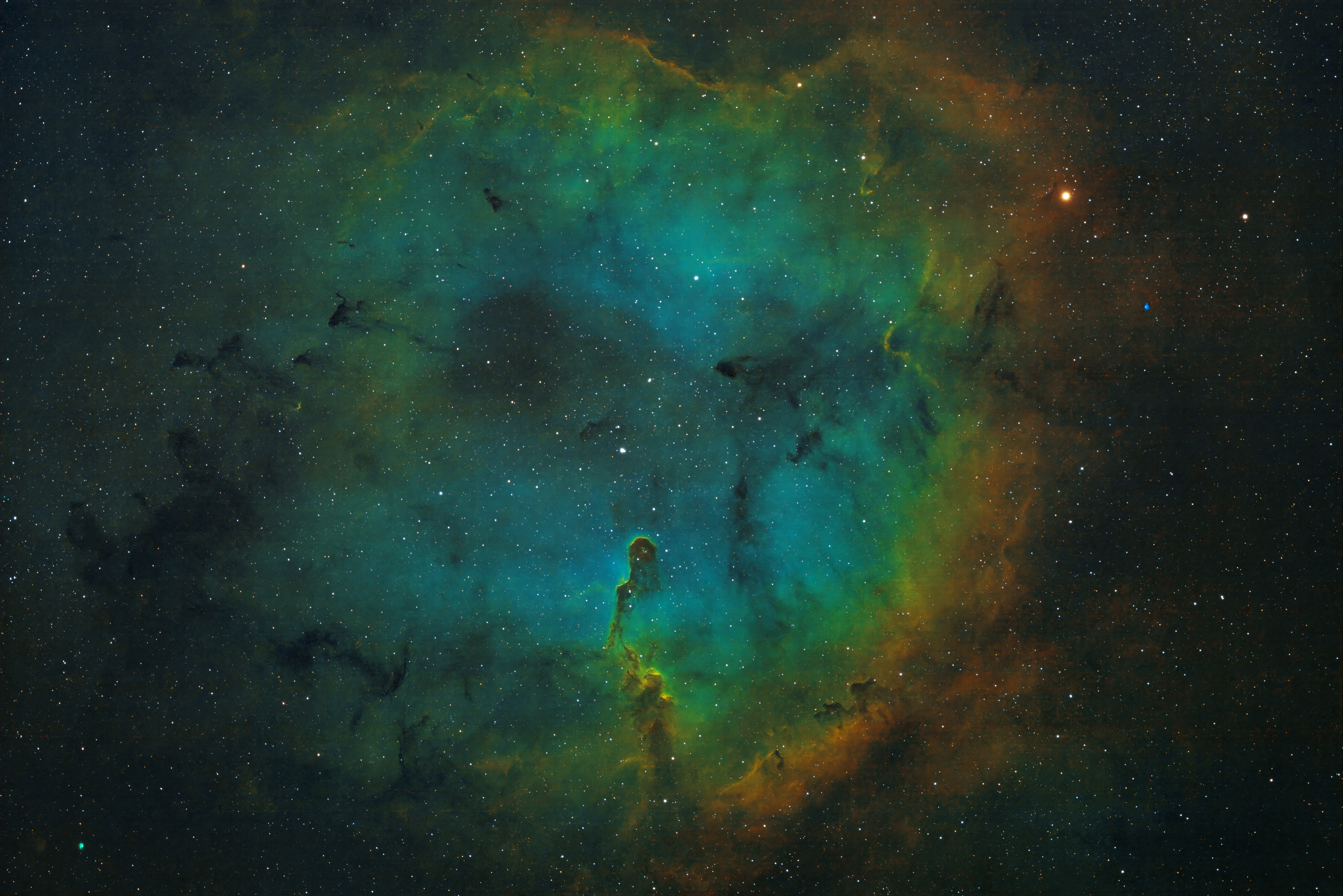
Licence: for personal use, credit Damon Scotting. Both JPEGs 4,096 x 2,733 px.
-10 C sensor temperature during imaging set point -10 C
360 mm focal length, plate solved Nakoh states 360 mm
3.74 x 2.50° field of view 6,248 x 4,176 px on ASI2600MM Air
26 MP ASI2600MM Air 6,248 x 4,176 px, 23.5 x 15.7 mm
Should you buy it?
52/100 Stars for Your Buck
Pros
- “Clearly the Japanese lenses used in these telescopes are superior to whatever everyone else is using.”
- The optional 0.65x reducer makes it a 234 mm f/3.9 astrograph.
- Short narrowband sessions of 42 to 90 minutes gave sharp, colourful nebulae.
- The Crescent Nebula is sharp and the colours tell a story, from a very limited 45 minutes of stacked subs.
Cons
- “The dew shield is fixed; I weirdly did not like that.”
- “I also didn't like the fact that I couldn't add my own guide scope and my ASIAIR at the same time. There's just one accessory slot.”
- The reducer and the flattener are extras: when a scope already costs $999, I hate forking out another $399 for the reducer or $299 for the flattener.
- Full-frame 44 mm coverage is quoted only with the flattener or reducer attached.
I am mostly comparing this telescope in my mind to the ToupTek Hope D60, which I really enjoyed and is a very similar price but with some very different specs.
Who the 60GT is for
Narrowband nebula imager with a mono camera
Buy
Through 3 nm H, S and O filters it framed the Elephant's Trunk, the Crescent and the Veil well.
Imager who cares most about colour
Buy
Colour accuracy is where the 60GT stands out, and it is the reason to pay for its Japanese SD glass.
Wide-field imager who wants speed
Buy
With the 0.65x reducer the whole Veil fits in one APS-C frame.
Imager who guides with a separate guide scope and an ASIAIR
Skip
There is one accessory slot on the handle; the Askar 50P has three and costs a third as much.
Buyer who wants the most 60 mm for the money
Skip
My recommendation is the ToupTek Hope D60: £749 with the flattener built in and a 44 mm circle out of the box.
Owner of a 60 mm astrograph already
Skip
There is no aperture to gain at 60 mm; keep what you have and put the money into filters or a camera.
Three alternatives I have reviewed
- ToupTek Hope D60 60 mm f/4.66 five-element planar apochromat with the flattener built in, the telescope I compare it with 93/100 £749 Read the review
- Askar 60F 60 mm f/6.8 flat-field quadruplet with nothing extra to buy for full frame 87/100 £498 Read the review
- Askar 50P 50 mm f/3.8 Petzval with three accessory slots for a third of the price 95/100 £299 Read the review
Questions and more about this review
Reviewed by
Damon Scotting
The Telescope Man Verified
BSc (Hons) Physics with Astrophysics and Cosmology, Loughborough University PGCE / QTS, University of Nottingham
About Damon About Damon Damon Scotting is The Telescope Man. He holds a BSc (Hons) in Physics with Astrophysics and Cosmology from Loughborough University and a PGCE with QTS from the University of Nottingham, and taught physics in secondary schools before becoming an astronomy creator. He is a contributing writer for BBC Sky at Night Magazine and the author of 42 Wonders of Our Night Sky, and his photograph of the galaxy M100 with the dwarf planet Ceres was Highly Commended in the Astronomy Photographer of the Year 2024 competition run by Royal Observatory Greenwich. He has appeared on the BBC's Blue Peter. More than 750,000 people follow his astronomy channels on YouTube, Instagram and TikTok, and he has reviewed more than 140 telescopes, mounts, cameras, filters and accessories hands-on for this site. More about Damon · How I test · Damon's book
I review all kinds of gear: most of it I buy, some is gifted and some is loaned, and all of it is reviewed the same way. How this site is funded
Nine questions, answered
Questions about the Nakoh 60GT
Reviewed 5 May 2026 ·Updated 23 September 2026
I review all kinds of gear. Most of it I buy, some is gifted and some is loaned, and all of it is reviewed the same way: no company sees or approves a review before it is published. Shop links marked Ad are affiliate links: I earn a commission when you buy through them, at no extra cost to you. How this site is funded
- What is the real focal length of the Nakoh 60GT? Nakoh states 360 mm. Plate solves of my Elephant's Trunk and Crescent stacks give 359.5 and 359.9 mm, so the ZWO ASI2600MM Air frames 3.74 x 2.50 degrees at 2.16 arcsec per pixel. Tested numbers and the download ↓
- Does the Nakoh 60GT need a flattener? It does say it supports full-frame 44 mm camera sensors, but specifically with the attachments. Nakoh quotes the 44 mm circle with the optional 1.0x flattener (three elements, 55 mm back focus, about 0.53 kg, ¥49,335) or the 0.65x reducer; no back focus is published for the bare triplet. From my video review The specifications and the comparison table ↓
- What does the 0.65x reducer do? I am also a big fan of the option for reducers like the 0.65x, especially since that takes the f ratio down from f/6 to f/3.9. Nakoh quotes 234 mm at f/3.9 from four elements, one of them SD glass, 55 mm back focus and about 0.58 kg. My Veil through it plate-solves at 247 mm. From my video review What I captured ↓
- How sharp were the stars? AutoIntegrate measured a median star width (FWHM) of 2.6 pixels across the Elephant's Trunk subs, about 5.6 arcsec at 2.16 arcsec per pixel. That figure folds in the seeing, the guiding and the focus as well as the optics. What I captured ↓
- Is the dew shield retractable? No. It is a fixed length and does not slide out, though it lifts off the tube. In the hand ↓
- How does the Nakoh 60GT compare with the ToupTek Hope D60? The Hope D60 is a 280 mm f/4.66 five-element planar apochromat with the flattener built in and a 44 mm circle; the 60GT is a 360 mm f/6 triplet that needs an optional corrector for full frame. Both are side by side in the comparison table. The specifications and the comparison table ↓
- How much does the Nakoh 60GT cost and where can I buy it? £899 at First Light Optics, in stock; $799 at Agena Astro for a bundle with the 0.65x reducer and 1.0x flattener included (regular price $1,697), on backorder; and ¥131,835 including tax on Nakoh's own page in Japan, which has no online checkout. The verdict, the readers and the sellers ↓
- How heavy is the Nakoh 60GT? Nakoh quotes about 2.94 kg, and it comes with its carrying handle, tube rings and a 230 mm Vixen-style dovetail. The flattener adds about 0.53 kg and the reducer about 0.58 kg. The rig on the mount ↓
- What have I not tested on the 60GT? Full-frame sensors, visual use, the planets and guiding figures: not tested.