Askar 60F review: a tiny but mighty quadruplet astrograph
Where does it rank on our leaderboard
| Rank | Telescope | Stars for Your Buck | Recorded UK price |
|---|---|---|---|
| 1 | Askar 50P | 95 out of 100 | £299 |
| 2 | ToupTek Hope D60 | 93 out of 100 | £749 |
| 6 | Askar 91F | 89 out of 100 | £995 |
| 8 | Askar 60F | 87 out of 100 | £498 |
| 19 | Sky-Watcher Heliostar 76Ha | 74 out of 100 | £2,399 |
| 25 | Askar 185APO | 71 out of 100 | £5,049 |
| 36 | Nakoh 60GT | 52 out of 100 | £899 |
| 41 | Celestron 114 LCM | 42 out of 100 | £361 |
| 42 | Celestron AstroMaster LT 76 | 13 out of 100 | £200 |
Contents
- 01 Where does it rank on our leaderboard
- 02 Specifications and features
- 03 In the hand
- 04 How good is it? Here's what I captured
- 05 Raw against finished
- 06 The rig on the mount
- 07 What is it for
- 08 Versus the Askar 91F
- 09 Watch the review
- 10 Tested numbers and the download
- 11 Should you buy it?
- 12 Questions and more about this review
In 30 seconds
Stars for Your Buck 87/100
Reviewed 2 Dec 2025 Updated 23 Sep 2026
- Rank
- #8 of 42 telescopes
- Verdict
- Damon's pick
Written by Damon Scotting 7 min read
Buy it if
- You want a flat field on an APS-C sensor without buying a flattener: it is built in, with a 44 mm image circle.
- You image large nebulae: at 408 mm an APS-C sensor frames the North America Nebula, the Heart Nebula and both arcs of the Veil.
- Your mount is small: the 60F weighs 2.86 kg with its rings and dovetail, and the handle takes a guide scope.
Skip it if
- You want a fast astrograph: f/6.8 needs longer sessions than f/4 to f/5 designs such as the ToupTek Hope D60.
- You mostly image small galaxies and planetary nebulae: 60 mm at 408 mm leaves them small in the frame.
- You want the lightest travel scope: the Askar 50P weighs half as much.
Tiny but mighty is the bottom line for this telescope: a compact, ultraportable, quadruplet, self-flattened astrograph for less than $500.
Specifications and features
Against the telescopes I have reviewed
Compare with
| Askar 60F reviewed #8 of 42 | Askar 71F #14 of 42 | ToupTek Hope D60 #2 of 42 | Askar 50P #1 of 42 | SVBONY SV555 #16 of 42 | Altair 60EDF #38 of 42 | |
|---|---|---|---|---|---|---|
| Recorded UK price | £498 | £599 | £749 | £299 | £509 | £499 |
| Stars for Your Buck | 87/100 | 81/100 | 93/100 | 95/100 | 79/100 | 51/100 |
| Aperture | 60 mm | 71 mm | 60 mm | 50 mm | 54 mm | 60 mm |
| Focal length | 408 mm | 490 mm | 280 mm | 190 mm | 243 mm | 360 mm |
| Focal ratio | f/6.8 | f/6.9 | f/4.66 | f/3.8 | f/4.5 | f/6 |
| Optical design | Quadruplet air-spaced APO, one ED element, self-flattening | Quadruplet APO, one ED element, self-flattening | Five-element flat-field apochromat, SD and lanthanum glass | Quadruplet Petzval APO, one SD element | Petzval, 5 elements in 3 groups | S-FPL53 ED doublet |
| Image circle | 44 mm | 44 mm | 44 mm | APS-C | 44 mm | APS-C with the optional 1.0x flattener |
| Back focus | 31 to 81 mm from the M48 thread; 49 to 99 mm from M54 | Up to 82.5 mm from the M48 thread | 55 mm | 55 mm | 55 mm | 55 mm with the optional flattener or reducer |
| Focuser | 2.4 inch dual-speed rack and pinion, 1:10, 50 mm travel, 360 degree rotator | 2.4 inch dual-speed rack and pinion, rotator | 3 inch dual-speed rack and pinion, 30 mm travel, rotator | Single-speed ring, 15 mm travel, rotator | Helical, 360 degree rotator, 2 inch filter holder | 2.5 inch dual-speed rack and pinion, rotator |
| Weight, tube | 2.36 kg; 2.86 kg with rings and dovetail | 2.5 kg; 3.0 kg with rings and dovetail | About 3.5 kg as supplied, not a bare-tube figure | 1.4 kg with ring and dovetail | 2.45 kg | About 1.5 kg with rings and rotator |
| Length, tube | 289 mm; 323 mm dew shield extended | 372.5 mm; 430.9 mm dew shield extended | 255 mm dew shield retracted | 147 mm; 182 mm dew shield extended | not recorded | 230 mm; 300 mm dew shield extended |
| Dew shield | Retractable | Retractable | Retractable, magnetic | Retractable | Reversible lens hood | Retractable |
| In the box | Tube rings, handle, 230 mm Vixen dovetail, photographic adapters | Tube rings, handle, Vixen dovetail, photographic adapters | Tube ring, dovetail, handle, M48 adapter, tilt adjuster | Tube ring and dovetail, manual | EAF kit, handle with finder saddle, dovetail, camera angle adjuster, case | Rings with clamp, 200 mm dovetail, handle rail, 2 inch adapter, test report |
In the hand
On the mount with a guide scope
The guide scope on the handle rail
The Flat-Field lettering
The 60 mm f/6.8 objective
Beside its guide scope
Focuser and rotator
How good is it? Here's what I captured
Eight targets
Horsehead Nebula (IC 434), ASI533MM Pro, HSO narrowband
- Integration
- 1 h 30 min (10 x 180 s each of Ha, SII, OIII)
- Field
- 1.56 x 1.56 degrees
- Telescope
- Askar 60F
- Camera
- ZWO ASI533MM Pro
- Mount
- JUWEI-14
- Target
- Horsehead Nebula (IC 434)
- Type
- Dark nebula
- Location
- Bortle 6.8 (in my garden)
North America Nebula (NGC 7000), ASI2600MM Air, HSO narrowband
- Integration
- 1 h 30 min (10 x 180 s each of Ha, SII, OIII)
- Field
- 3.25 x 2.17 degrees
- Telescope
- Askar 60F
- Camera
- ZWO ASI2600MM Air
- Mount
- JUWEI-14
- Target
- North America Nebula (NGC 7000)
- Type
- Emission nebula
- Location
- Bortle 6.8 (in my garden)
Soul Nebula (IC 1848), ASI533MM Pro, HSO narrowband
- Integration
- 1 h 30 min (10 x 180 s each of Ha, SII, OIII)
- Field
- 1.56 x 1.56 degrees
- Telescope
- Askar 60F
- Camera
- ZWO ASI533MM Pro
- Mount
- JUWEI-14
- Target
- Soul Nebula (IC 1848)
- Type
- Emission nebula
- Location
- Bortle 6.8 (in my garden)
Heart Nebula (IC 1805), ASI2600MM Air, HSO narrowband
- Integration
- 1 h 30 min (10 x 180 s each of Ha, SII, OIII)
- Field
- 2.98 x 1.99 degrees
- Telescope
- Askar 60F
- Camera
- ZWO ASI2600MM Air
- Mount
- JUWEI-14
- Target
- Heart Nebula (IC 1805)
- Type
- Emission nebula
- Location
- Bortle 6.8 (in my garden)
Veil Nebula (NGC 6960 and NGC 6992), ASI2600MM Air, HSO narrowband
- Integration
- 1 h 30 min (10 x 180 s each of Ha, SII, OIII)
- Field
- 3.13 x 2.09 degrees
- Telescope
- Askar 60F
- Camera
- ZWO ASI2600MM Air
- Mount
- JUWEI-14
- Target
- Veil Nebula (NGC 6960 and NGC 6992)
- Type
- Supernova remnant
- Location
- Bortle 6.8 (in my garden)
Elephant's Trunk Nebula (IC 1396), ASI2600MM Air, HSO narrowband
- Integration
- 1 h 30 min (10 x 180 s each of Ha, SII, OIII)
- Field
- 3.19 x 2.13 degrees
- Telescope
- Askar 60F
- Camera
- ZWO ASI2600MM Air
- Mount
- JUWEI-14
- Target
- Elephant's Trunk Nebula (IC 1396)
- Type
- Emission nebula
- Location
- Bortle 6.8 (in my garden)
Thor's Helmet Nebula (NGC 2359), ASI533MM Pro, HSO narrowband
- Integration
- 1 h 30 min (10 x 180 s each of Ha, SII, OIII)
- Field
- 1.49 x 1.48 degrees
- Telescope
- Askar 60F
- Camera
- ZWO ASI533MM Pro
- Mount
- JUWEI-14
- Target
- Thor's Helmet Nebula (NGC 2359)
- Type
- Emission nebula
- Location
- Bortle 6.8 (in my garden)
Dumbbell Nebula (M27), ASI533MM Pro, HSO narrowband
- Integration
- 1 h 30 min (10 x 180 s each of Ha, SII, OIII)
- Field
- 1.55 x 1.55 degrees
- Telescope
- Askar 60F
- Camera
- ZWO ASI533MM Pro
- Mount
- JUWEI-14
- Target
- Dumbbell Nebula (M27)
- Type
- Planetary nebula
- Location
- Bortle 6.8 (in my garden)
Raw against finished
The rig on the mount
The 4 targets, the raw combined stack against my finished image, each with its integration, the camera and the palette:
- Horsehead Nebula (IC 434): 1 h 30 min (10 x 180 s each of Ha, SII, OIII) (30 x 180 s) of light, ASI533MM Pro, HSO narrowband, the raw combined stack with one automatic stretch
- Soul Nebula (IC 1848): 1 h 30 min (10 x 180 s each of Ha, SII, OIII) (30 x 180 s) of light, ASI533MM Pro, HSO narrowband, the raw combined stack with one automatic stretch
- Thor's Helmet Nebula (NGC 2359): 1 h 30 min (10 x 180 s each of Ha, SII, OIII) (30 x 180 s) of light, ASI533MM Pro, HSO narrowband, the raw combined stack with one automatic stretch
- Dumbbell Nebula (M27): 1 h 30 min (10 x 180 s each of Ha, SII, OIII) (30 x 180 s) of light, ASI533MM Pro, HSO narrowband, the raw combined stack with one automatic stretch
On the JUWEI-17, then on six other mounts
What is it for
Four things it is for
A flat field built in
It has a nice big imaging circle of 44 mm, with the flattener built into the quadruplet, so an APS-C sensor is covered to the corners.
Room for accessories
With two finder bases and a handlebar mount, there is all the room you could possibly need for accessories.
Light for its class
It is very light, weighing in with its tube rings and dovetail plate at just 2.86 kg.
Colour through narrowband filters
I imaged in monochrome with a range of filters: the telescope is already amazing at bringing out the colours in your images, and the filters take it to the next level.
Versus the Askar 91F
Elephant's Trunk Nebula (IC 1396) on both, plate-solved and star-aligned (residual 0.26 px per 1000)
| Target | Telescope | Integration | Subs | Filter | Nights |
|---|---|---|---|---|---|
| Elephant's Trunk Nebula (IC 1396) | Askar 60F + ASI2600MM Air | 60 min | not recorded | HSO (Altair 2 inch) | not recorded |
| Elephant's Trunk Nebula (IC 1396) | Askar 91F + ASI2600MM Air | 90 min | not recorded | HSO | not recorded |
Watch the review
This $499 TELESCOPE is AMAZING!? (Askar 60F Review + RAW images) · published 2 December 2025 · 4:53 · Watch on YouTube · 12,758 views, 602 likes on 2 Oct 2026
Jump to
- 0:33 A compact, self-flattened quadruplet
- 1:14 Specifications
- 1:52 North America Nebula
- 2:08 Elephant's Trunk Nebula
- 2:34 Veil Nebula
- 3:12 Soul Nebula
- 3:52 Horsehead Nebula
- 4:04 My verdict
Transcript of the review video 523 words · 6 chapters · searchable
Press a time stamp to play from there.
0:00 The Askar 60F at $499 and the 91F at $999
0:00 About a year ago, I reviewed this telescope and I was blown away. 0:02 The colours and sharpness of the images produced were unlike anything I'd ever seen before for less than $1,000. 0:07 Now though, they've both stepped it up and down. 0:11 Askar have released a bigger Askar 91F for $999 and a smaller Askar 60F for $499. 0:20 Tonight, I'm going to be reviewing this tiny little beast and seeing what images it's capable of capturing from my light polluted garden. 0:25 I'm Damon Scotting and this is Astronomical.
0:33 A compact, self-flattened quadruplet
0:33 The Askar 60F is a compact, ultraportable, quadruplet, self-flattened astrograph. 0:37 That's the tagline for this telescope. 0:39 If you'd read that 10 years ago, you'd suddenly hear the sound of your wallet crying as it knows it's about to cost it at least $3,000 for this telescope. 0:46 You can now capture observatory quality images with a telescope that costs less than $500. 0:53 Now, I love the Askar 71F, which is why I have very high hopes already for its smaller brother, the 60F. 0:57 But interestingly, this time around, rather than imaging colour, I'm going to image in monochrome and use a range of filters.
0:59 Imaging in mono with narrowband filters
1:05 The telescope is already amazing at bringing out the colours in your images, but with the help of these specialized filters, it should be able to take it to the next level. 1:11 So, very quick before we jump into the images, here are the full list of specifications for this astrograph.
1:14 Specifications
1:16 It has a 60 mm aperture with a decent focal length of 408 mm and a middle ground focal ratio of f/6.8. 1:24 Not fast, but not horrifically slow. 1:27 It is a quadruplet air-spaced APO that costs less than $500. 1:30 It has a nice big imaging circle of 44 millimetres and as you can probably expect is very light, weighing in with its tube rings and dovetail plate at just 2.86 kg. 1:38 Tiny but mighty is the bottom line for this telescope. 1:44 With two finder bases and a handlebar mount, there is all the room you could possibly need for accessories. 1:50 So, what are we waiting for? 1:50 Let's see some pictures.
1:52 North America Nebula
1:52 I'm going to start off by showing you the raw stacked images followed by my final processed versions.
4:04 My verdict
4:05 Let me know what you think of the images and what you think of the telescope itself in the comments down below. 4:07 I've attached a link in the description for you to check out the telescope for yourself. 4:12 I will be doing an Askar 91F review as well at some point. 4:14 But honestly, I'm having so much fun with that telescope at the moment that I'm trying to get some more integration time on my targets before sharing them because I genuinely think my images so far with it are sick and honestly print worthy and I pretty much never print any of my images because I don't think they're good enough. 4:30 But the shots I've got with this are really good. 4:31 Yeah, Askar have knocked it out of the park with this range of telescopes. 4:35 They are as affordable as they are amazing. 4:39 Thanks for watching. 4:39 I'm Damon Scotting and this was Astronomical.
Check out more videos on the Askar 60F
I Tested the $3,395 Askar SQA 106 (f/4.8), Pinpoint Stars, Full-Frame Ready
12 Feb 2026
Tested numbers and the download
Finished image
- Download the raw stack JPEG · 2.8 MB · 2,944 x 2,944
- Download the finished image JPEG · 1.0 MB · 2,944 x 2,944
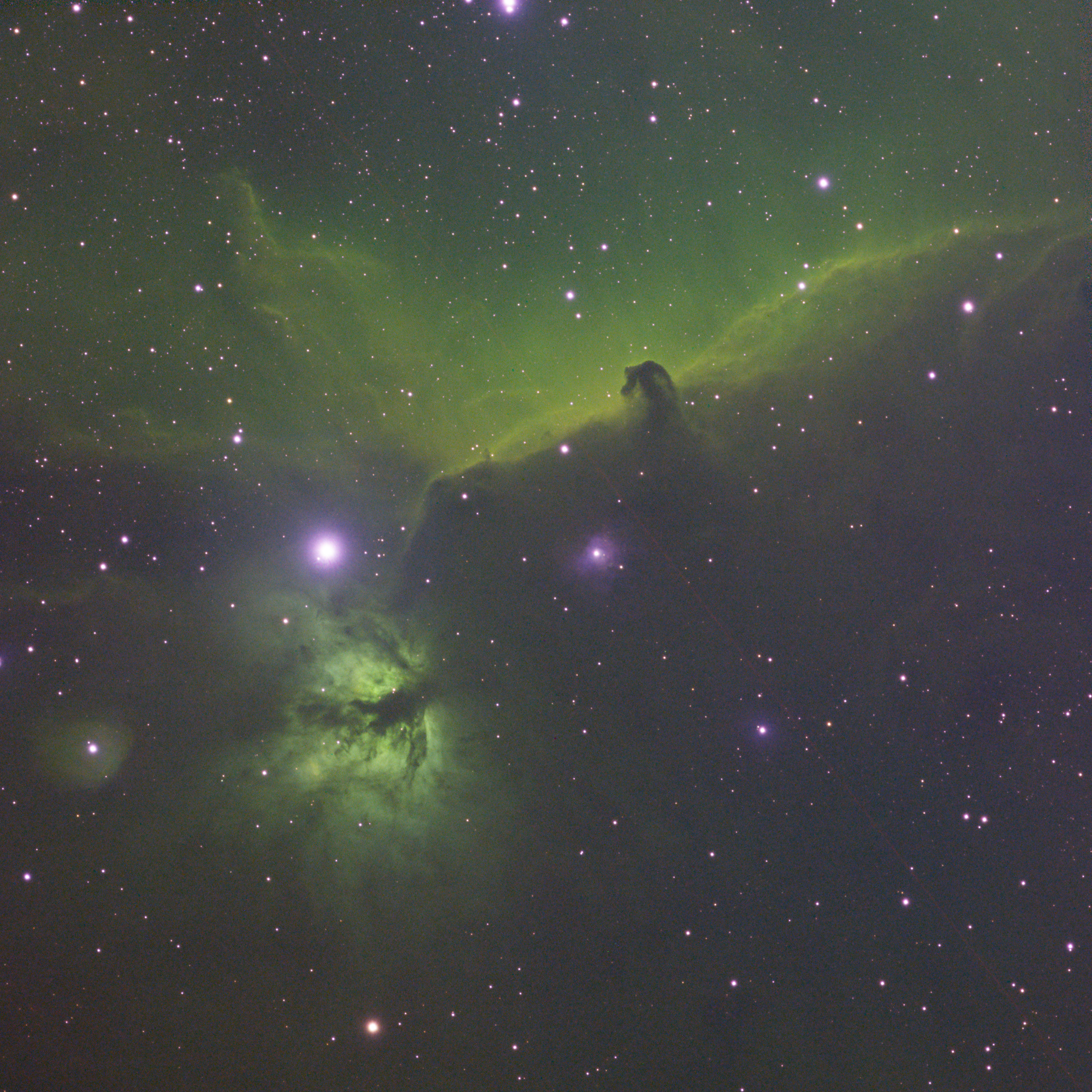
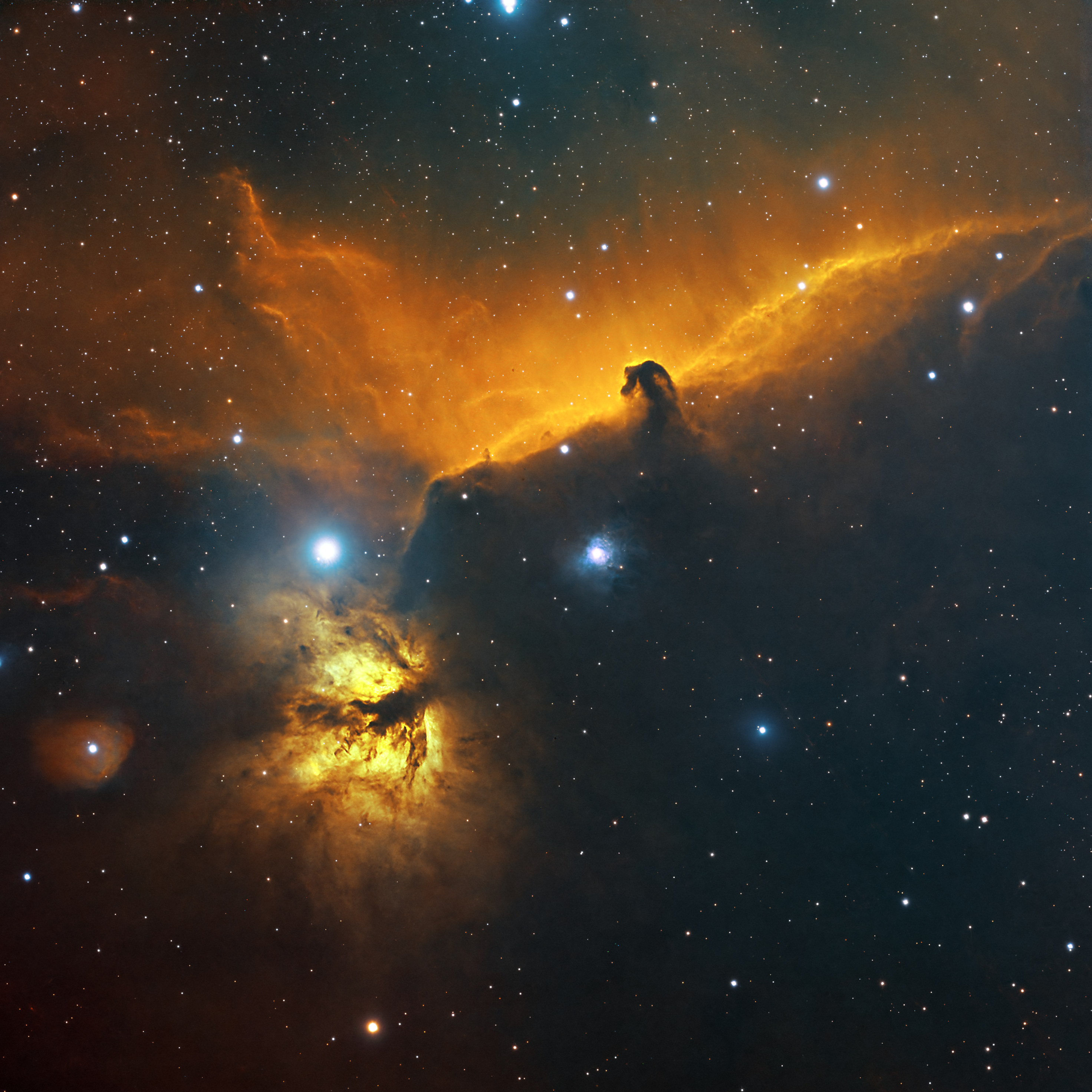
Licence: for personal use, credit Damon Scotting. Both JPEGs 2,944 x 2,944 px.
-10 C sensor temperature during imaging set point -10 C
407 mm focal length, plate solved Askar states 408 mm
3.31 x 2.21° field of view 6,248 x 4,176 px on ASI2600MM Air
26.1 MP ASI2600MM Air 6,248 x 4,176 px, 23.5 x 15.7 mm
Should you buy it?
87/100 Stars for Your Buck
Pros
- A self-flattening quadruplet with one ED element: there is no separate flattener to buy.
- Round stars into the corners of an APS-C sensor at the native 408 mm.
- Easy to carry by its handle, with a retractable dew shield.
- A handle rail and two finder bases carry the guide scope and small accessories.
- Strong colour through narrowband filters: all eight of my targets here are narrowband images.
- A 2.4 inch dual-speed rack and pinion focuser with 1:10 fine focus and a 360 degree scale rotator.
Cons
- “A middle-ground focal ratio of f/6.8: not fast, but not horrifically slow.”
- At 60 mm it is a tiny scope: small targets such as the Dumbbell Nebula stay small in the frame.
- The 0.75x reducer that would speed up f/6.8 is sold separately.
- No diagonal or eyepiece in the box: for visual use you supply your own.
You can now capture observatory quality images with a telescope that costs less than $500.
Who the 60F is for
Beginner moving into astrophotography
Buy
The Askar F range offers exceptional value for money for anyone starting to seriously get into astrophotography, and the 60F is the range's cheapest member.
Owner of a small harmonic mount
Buy
At 2.86 kg with rings and dovetail it leaves room on a small mount for a camera, filter wheel and guide scope.
Mono narrowband imager
Buy
Through H, S and O filters at 408 mm it frames big emission nebulae whole on an APS-C sensor, flat to the corners.
Galaxy and planetary nebula hunter
Skip
Small targets stay small at 408 mm; the Askar 91F at 609 mm frames them 1.5 times larger on the same camera.
Askar 71F owner
Skip
Do not change: the 71F is the same self-flattening design with the same 44 mm image circle and 11 mm more aperture.
Traveller who wants the lightest kit
Skip
The Askar 50P weighs 1.4 kg with its ring and dovetail, half of the 60F.
Three alternatives I have reviewed
- Askar 71F 71 mm f/6.9 self-flattening quadruplet with the same 44 mm image circle 81/100 £599 Read the review
- ToupTek Hope D60 60 mm f/4.66 five-element flat-field astrograph, faster at f/4.66 93/100 £749 Read the review
- Askar 50P 50 mm f/3.8 quadruplet Petzval at 1.4 kg, lighter and cheaper 95/100 £299 Read the review
Questions and more about this review
Reviewed by
Damon Scotting
The Telescope Man Verified
BSc (Hons) Physics with Astrophysics and Cosmology, Loughborough University PGCE / QTS, University of Nottingham
About Damon About Damon Damon Scotting is The Telescope Man. He holds a BSc (Hons) in Physics with Astrophysics and Cosmology from Loughborough University and a PGCE with QTS from the University of Nottingham, and taught physics in secondary schools before becoming an astronomy creator. He is a contributing writer for BBC Sky at Night Magazine and the author of 42 Wonders of Our Night Sky, and his photograph of the galaxy M100 with the dwarf planet Ceres was Highly Commended in the Astronomy Photographer of the Year 2024 competition run by Royal Observatory Greenwich. He has appeared on the BBC's Blue Peter. More than 750,000 people follow his astronomy channels on YouTube, Instagram and TikTok, and he has reviewed more than 140 telescopes, mounts, cameras, filters and accessories hands-on for this site. More about Damon · How I test · Damon's book
I review all kinds of gear: most of it I buy, some is gifted and some is loaned, and all of it is reviewed the same way. How this site is funded
Nine questions, answered
Questions about the Askar 60F
Reviewed 2 December 2025 ·Updated 23 September 2026
I review all kinds of gear. Most of it I buy, some is gifted and some is loaned, and all of it is reviewed the same way: no company sees or approves a review before it is published. Shop links marked Ad are affiliate links: I earn a commission when you buy through them, at no extra cost to you. How this site is funded
- Does the Askar 60F need a field flattener? No. The flattening is built into the quadruplet, and the only optional glass Askar list for it is a 0.75x reducer. The specifications and the comparison table ↓
- What is the real focal length of the Askar 60F? Askar state 408 mm at f/6.8. Plate solves of ten of my frames put it at 406 to 407 mm, about 1.907 arcseconds per pixel with 3.76 micron pixels. Tested numbers and the download ↓
- What field of view does the Askar 60F give? 3.31 x 2.21 degrees on the APS-C ZWO ASI2600MM Air and 1.59 x 1.59 degrees on the ZWO ASI533MM Pro: the North America Nebula fits whole on the first, the Horsehead and Flame nebulae together on the second. Tested numbers and the download ↓
- How heavy is the Askar 60F? Askar's figures are 2.36 kg for the tube and 2.86 kg with its tube rings and dovetail plate. It is 289 mm long with the dew shield retracted and 323 mm extended. The rig on the mount ↓
- Which mount suits the Askar 60F? I imaged with it on the JUWEI-14. At 2.86 kg with rings it suits small harmonic mounts; the rig on the mount adds the camera, guide scope and accessories and shows the load on each mount. The rig on the mount ↓
- Askar 60F or Askar 71F? The 71F is the same self-flattening quadruplet with 71 mm of aperture at 490 mm and f/6.9, for £599. The 60F is £101 cheaper, 0.14 kg lighter with its rings and dovetail, and frames a wider field at 408 mm. The specifications and the comparison table ↓
- Askar 60F or Askar 91F? On the same camera the 91F frames the Elephant's Trunk 1.5 times larger, with 91 mm at 609 mm for £995. The 60F costs half as much, weighs 2.86 kg against 4.52 kg with rings and takes in a field 1.5 times wider. Versus the Askar 91F ↓
- How much does the Askar 60F cost and where can I buy it? The prices I recorded: £498 at First Light Optics (UK), in stock; $499 at Agena Astro (US), in stock; $519 at AliExpress (LittleLight Store), Global, listed. A record, not a live price The verdict, the readers and the sellers ↓
- What have I not tested on the 60F? I have not used the 60F visually, fitted the optional 0.75x reducer, imaged with a full-frame sensor or measured its star shapes.