Celestron 63ED review: the unlisted 63 mm ED refractor tested
Where does it rank on our leaderboard
| Rank | Telescope | Stars for Your Buck | Recorded UK price |
|---|---|---|---|
| 1 | Askar 50P | 95 out of 100 | £299 |
| 2 | ToupTek Hope D60 | 93 out of 100 | £749 |
| 6 | Askar 91F | 89 out of 100 | £995 |
| 13 | Askar 103APO | 81 out of 100 | £999 |
| 22 | ZWO FF110 | 73 out of 100 | £1,499 |
| 38 | Altair 60EDF | 51 out of 100 | £499 |
| 40 | Celestron 63ED | 43 out of 100 | £322 |
| 41 | Celestron 114 LCM | 42 out of 100 | £361 |
| 42 | Celestron AstroMaster LT 76 | 13 out of 100 | £200 |
Contents
- 01 Where does it rank on our leaderboard
- 02 Specifications and features
- 03 In the hand
- 04 How good is it? Here's what I captured
- 05 Raw against finished
- 06 The rig on the mount
- 07 What is it for
- 08 Watch the review
- 09 Tested numbers and the download
- 10 Should you buy it?
- 11 Questions and more about this review
In 30 seconds
Stars for Your Buck 43/100
Reviewed 19 Nov 2024 Updated 23 Sep 2026
- Rank
- #40 of 42 telescopes
- Verdict
- With reservations
Written by Damon Scotting 4 min read
Buy it if
- You want clean, fringe-free star colour from a small ED refractor and are happy to buy from AliExpress.
- You image with a 1 inch or smaller sensor and want a field about 2 degrees wide.
Skip it if
- You want to buy from a UK or US shop.
- You mostly image galaxies, where every millimetre of aperture counts.
- You need a published image circle and back focus to plan a flattener or a large sensor.
“I do think the Celestron 63ED manages colours a lot better than the SVBONY, but with that being said, the SVBONY just pips the Celestron in terms of detail of its images.”
Specifications and features
Against the telescopes I have reviewed
Compare with
| Celestron 63ED reviewed #40 of 42 | SVBONY SV503 70ED #30 of 42 | Askar 80ED #17 of 42 | Altair 60EDF #38 of 42 | |
|---|---|---|---|---|
| Recorded UK price | £322 | £380 | £379 | £499 |
| Stars for Your Buck | 43/100 | 64/100 | 77/100 | 51/100 |
| Aperture | 63.5 mm | 70 mm | 80 mm | 60 mm |
| Focal length | 381 mm | 420 mm | 560 mm | 360 mm |
| Focal ratio | f/6 | f/6 | f/7 | f/6 |
| Optical design | ED doublet, fully multi-coated | ED doublet, one S-FPL51 ED element | ED doublet, one ED element | S-FPL53 ED doublet, fully multi-coated |
| Image circle | 1 inch (25.4 mm) | 1 inch | APS-C with the optional flattener or reducers | APS-C with the optional 1.0x flattener |
| Back focus | not recorded | 90 mm | 55 mm with the optional flattener or reducers | 55 mm with the optional reducer or flattener |
| Focuser | 2 inch dual-speed, 1:10, CNC machined | Rack and pinion, 1:10 | 2 inch dual-speed rack and pinion, 70 mm travel | 2.5 inch dual-speed 1:10 rack and pinion |
| Weight, tube | about 2.5 kg with accessories | 2.22 kg | 1.7 kg tube; 2 kg with ring and dovetail | about 1.5 kg with rings and rotator |
| Length, tube | not recorded | 318 mm | 404 mm dew shield retracted | 230 mm dew shield retracted |
| Dew shield | Retractable | Retractable | Retractable | Retractable |
| In the box | Tube rings, Vixen-style dovetail bar, mounting screws | Tube ring, 150 mm dovetail plate, 2 inch to 1.25 inch adapter, lens cover, dust cover | Tube ring, dovetail plate, 2 inch rear adapter, manual | X-rings with clamp, 200 mm dovetail bar, handle rail, test report, caps |
In the hand
Six photographs
How good is it? Here's what I captured
Two targets
M 45 Pleiades, ASI183MC
- Integration
- 39 min (78 x 30 s)
- Field
- 1.82 x 1.22 degrees
- Telescope
- Celestron 63ED
- Camera
- ZWO ASI183MC
- Mount
- ZWO AM5
- Target
- M 45 Pleiades
- Type
- Open cluster with reflection nebula
- Location
- Bortle 6.8 (in my garden)
M 31 Andromeda Galaxy, ASI183MC
- Integration
- Unknown
- Field
- 1.95 x 1.28 degrees
- Telescope
- Celestron 63ED
- Camera
- ZWO ASI183MC
- Mount
- Unknown
- Target
- M 31 Andromeda Galaxy
- Type
- Spiral galaxy
- Location
- Bortle 6.8 (in my garden)
Raw against finished
The rig on the mount
The 1 target, the raw combined stack against my finished image, each with its integration, the camera and the palette:
- M 45 Pleiades: 39 min (78 x 30 s) of light, ASI183MC, the raw combined stack with one automatic stretch
On the JUWEI-17, then on six other mounts
What is it for
Two things it is for
ED glass
The 63ED puts some much nicer blue colours into my Pleiades image, and next to the SVBONY 70 mm it shows zero chromatic aberration.
Made for imaging
It is a relatively affordable beginner telescope that is capable of taking images like the ones on this page.
Watch the review
Is this the BEST Telescope to buy for under £300? · published 19 November 2024 · 7:57 · Watch on YouTube · 20,845 views, 536 likes on 2 Oct 2026
Jump to
- 1:01 The SVBONY SV503 70ED
- 4:06 The Celestron 63ED
- 4:24 The Pleiades through the 63ED
- 4:46 The camera
- 5:05 Andromeda side by side
- 5:37 Is the 63ED real?
- 5:58 My verdict
- 7:00 Other telescopes to consider
Transcript of the review video 1,567 words · 9 chapters · searchable
Press a time stamp to play from there.
0:00 Buying your first telescope
0:00 Buying your first telescope is hard. 0:01 It can be very overwhelming having to come to the conclusion as to which telescope best fits your needs, and that's simply down to the fact that different telescopes do different things. 0:08 But none of this is helped by the fact that when we seek guidance as to which telescope we should buy, the first and supposedly most trustworthy link picks a $2,500 smart telescope as the best overall choice. 0:21 I really wish I was kidding. 0:23 In today's video I'm going to be comparing two entry-level telescopes. 0:24 One is fairly well established as a budget-friendly choice, regularly available here in the UK for just £279, whilst the other is a supposedly unreleased scope from one of the biggest telescope companies in the world. 0:36 This telescope is yet to be confirmed by Celestron, and it's a very bizarre circumstance that I've managed to get my hands on one, but I'm very interested to see what it can capture. 0:44 The significance of this video will be that these are two relatively affordable beginner telescopes that are capable of taking images such as this. 0:51 The question is, should one of these be the telescope that you buy? 0:53 Let's find out. 0:56 I'm Damon Scotting and this is Astronomical.
1:01 The SVBONY SV503 70ED
1:01 This is the SVBONY SV503 70 mm refractor telescope. 1:05 As a company, I've always felt that SVBONY have thrived at filling the niches of the astronomy accessory market by providing a vast selection of products at affordable prices, because let's face it, we astro enthusiasts get taken for a ride when it comes to buying new gear. 1:19 But SVBONY cover practically all the bases in astrophotography: they have a good selection of cameras and telescopes, as well as one of the most comprehensive accessory product lines of any company in the world, and better yet, their models are pretty much always the cheapest. 1:32 But surely that means they can't be the best as well, right? 1:34 I was originally planning on pitting it against the Askar 71F, but this plan was quickly changed after I realised the Askar 71F was blowing the SVBONY out of the water, and with good reason. 1:44 It may be the same size, but the Askar is twice the price, currently retailing at $599. 1:53 I originally wanted to make a budget setup using a £300 mount, a £350 camera and a £300 telescope, which is what led me down the route of an SVBONY 70 mm, a Sky-Watcher Star Adventurer 2i and an SVBONY SV705C camera. 2:07 Now, you can argue that the mount is just shy of being a worthy mount since it's not a go-to tracking mount, but I found that it's still more than possible to get some round stars when taking 60 second long exposures. 2:17 Exhibit A: the Dumbbell Nebula. 2:21 The telescope and camera have each done a surprisingly good job imaging this planetary nebula. 2:27 This is a raw stacked image of 68 one-minute long exposures. 2:29 Next up is the Veil Nebula, which also puts some lovely colours on display. 2:33 You've probably already noticed how many of these stars have thick blue and magenta rings on the outside of them. 2:38 This is due to chromatic aberration, and it's a running theme throughout the images captured with this telescope. 2:44 Although I find it to be a fairly big issue, it's something that can be simply resolved in post-processing. 2:48 Now, this is 62 minutes' worth of one-minute long exposures of the Great Globular Cluster in Hercules. 2:54 All of these images are raw stacked images, and that part is emphasised by the fact I haven't done anything about the satellite trails throughout the images. 3:02 They really are becoming an ever-increasing nuisance when taking long exposure images. 3:06 When stargazing in real time, however, I'm finding that they're becoming a second-rate meteor shower, which is actually quite enjoyable. 3:14 It's actually kind of nice to then be able to pull out your phone and look up exactly what satellite it was that just passed by; I do find that part really interesting. 3:21 So when it comes to live view observing it's quite fun, but for long exposures they're a nightmare. 3:26 Then lastly for the SVBONY 70 mm, I imaged our nearest galactic neighbour, the Andromeda Galaxy. 3:30 There's plenty of detail to be made out from the galactic disc, which is nice, although I can't help but feel the size of the stars in all of these images is too much. 3:38 So using deconvolution tools really goes a long way to making your images look much sharper and more professional. 3:44 This process is of course largely aided by the quality of the data you have captured, and for a telescope under £300 I think I've managed to get some really nice shots here. 3:52 Here's a full review of the specifications of the SVBONY scope. 3:56 In terms of editing the colours of these images, that is very much down to your own personal preferences; the editing process more often than not takes longer than the actual imaging process. 4:05 So now that we've learned what the SVBONY 70 mm is capable of, it's time to find out what the ever so slightly smaller Celestron 63ED is capable of.
4:06 The Celestron 63ED
4:14 Now, the fact is this scope is 10% smaller in aperture, which means its light gathering capabilities are going to be reduced compared to the SVBONY 70 mm. 4:23 Nevertheless, here's what I managed to capture when I pointed it towards the Pleiades for an hour.
4:24 The Pleiades through the 63ED
4:28 As you can see, we have some dust and cloud structure visible in our image, which is very exciting. 4:32 This is precisely the level of detail we should be hoping for when using a telescope to image the night sky; this right here should be the benchmark. 4:40 There are some much nicer blue colours visible in the image and, compared to the SVBONY 70 mm, zero chromatic aberration.
4:46 The camera
4:46 The main difference between this camera and the SVBONY SV705C is that the pixel size of the ASI183 is smaller than that of the SVBONY, but the resolution is significantly higher, which sounds like a worthy payoff, except for the fact that the ASI183 suffers heavily from amp glow. 5:01 But this can be mostly reduced through the use of dark frames. 5:03 Then, for a comparison image, I pointed the scope back towards the Andromeda Galaxy and tried to bring out as much as I could in our galactic companion.
5:05 Andromeda side by side
5:10 Sadly, though, this scope has struggled in comparison to the SVBONY 70 mm. 5:15 They each have roughly the same level of exposure, but I think the key difference here is likely a result of the smaller aperture in the telescope. 5:23 Here's a side-by-side comparison of the two images captured by each scope. 5:25 Once again, you can play around with them to make these images look more presentable, but it obviously makes more sense that I show you the raw stuff when comparing the two scopes; otherwise I'd also be comparing my editing skills. 5:35 As it currently stands, the Celestron 63ED is a myth: there is no official statement about the existence of Celestron releasing a new refractor range of telescopes.
5:37 Is the 63ED real?
5:44 With that being said, the marketing images that accompany this scope on AliExpress do look particularly official. 5:50 Regardless, I decided to take as small a risk as I could and try the smallest refractor in their range. 5:56 So the images are here for you to come to your own conclusion on which scope you think was better.
5:58 My verdict
6:00 I do think the Celestron 63ED manages colours a lot better than the SVBONY, but with that being said, the SVBONY just pips the Celestron in terms of detail of its images. 6:11 So I'd say if possible lean towards one of the larger scopes in the Celestron range, perhaps a Celestron 82ED. 6:17 This will cost you £450, and that's before you account for import taxes and shipping. 6:22 I have no news on what the official prices will be when these scopes eventually hit the market, but the current prices seem more than fair. 6:26 My opinion would be that if you are looking for a refractor telescope to buy in order to take images of the night sky, and you have less than £300, go for the SVBONY, at least until the Celestron telescopes officially hit the market. 6:38 This is due to import taxes, which push the Celestron 63ED over the price limit once they are added to the AliExpress price. 6:47 They're both more than capable telescopes that are far closer to the budgets of a beginner astrophotographer than Space.com's number one ranked overall recommended telescope, the $2,500 Unistellar.
7:00 Other telescopes to consider
7:00 For the record, you can get the Celestron 6SE for just over a third of the price of the Unistellar. 7:03 I think most amateur astrophotographers will agree that this is a far more suitable scope for beginner astronomers; it is available for $899 and of course includes a go-to tracking system. 7:14 And whilst we're on the topic of stretching our budget, if the telescopes shown today didn't quite tickle your pickle, then I would also strongly recommend checking out the Askar 71F; fair warning, that telescope is $599. 7:29 Full disclosure: most of the links in the description are affiliate links, which means I will get a small kickback on any sales, but that has in no way influenced my opinions on any of these products. 7:38 Thanks for watching, I'm Damon Scotting and this was Astronomical.
Check out more videos on the Celestron 63ED
CHEAP v.s EXPENSIVE Telescope Gear?!
18 Dec 2024
Tested numbers and the download
Finished image
- Download the raw stack JPEG · 3.5 MB · 4,096 x 2,753
- Download the finished image JPEG · 1.8 MB · 4,096 x 2,753
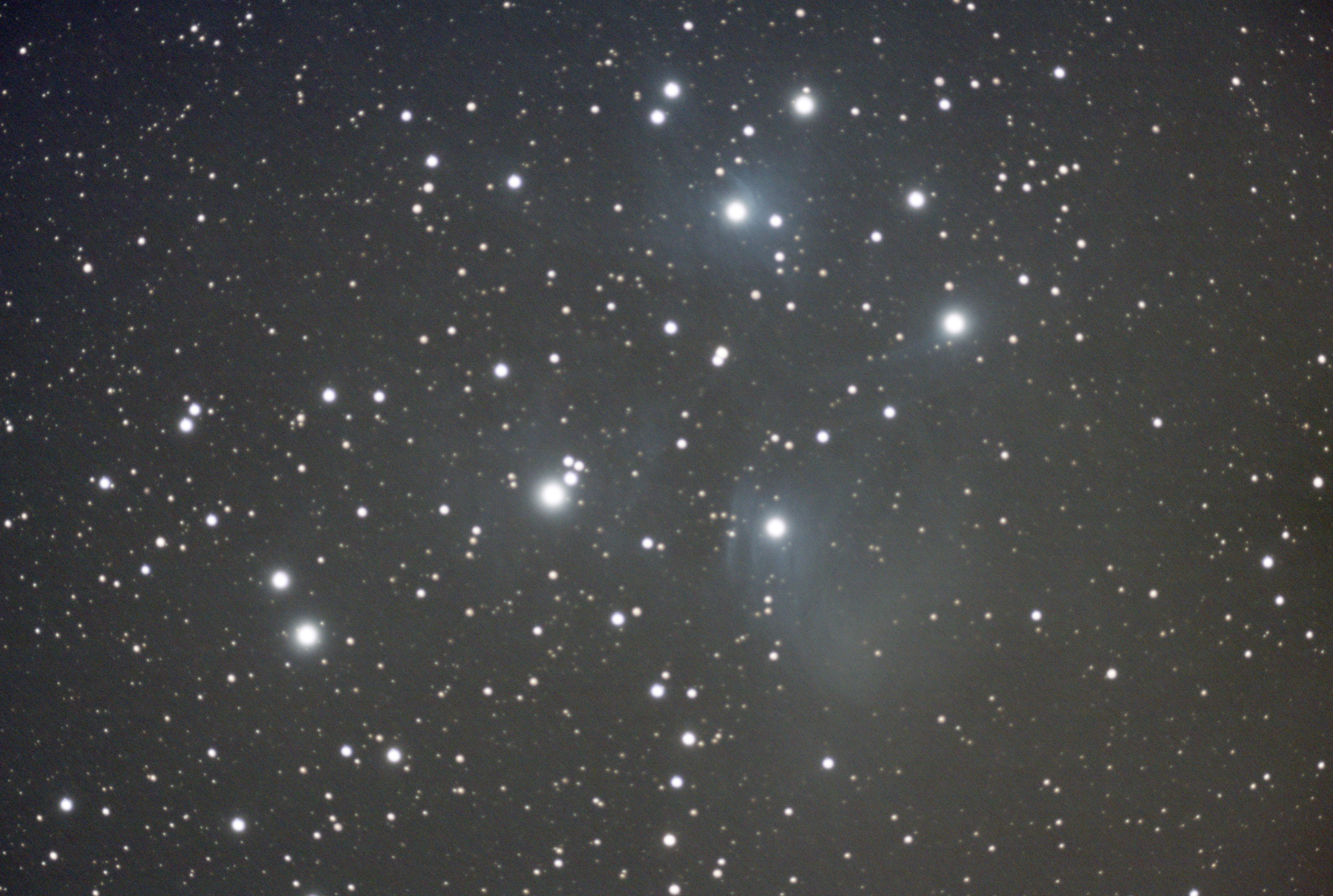
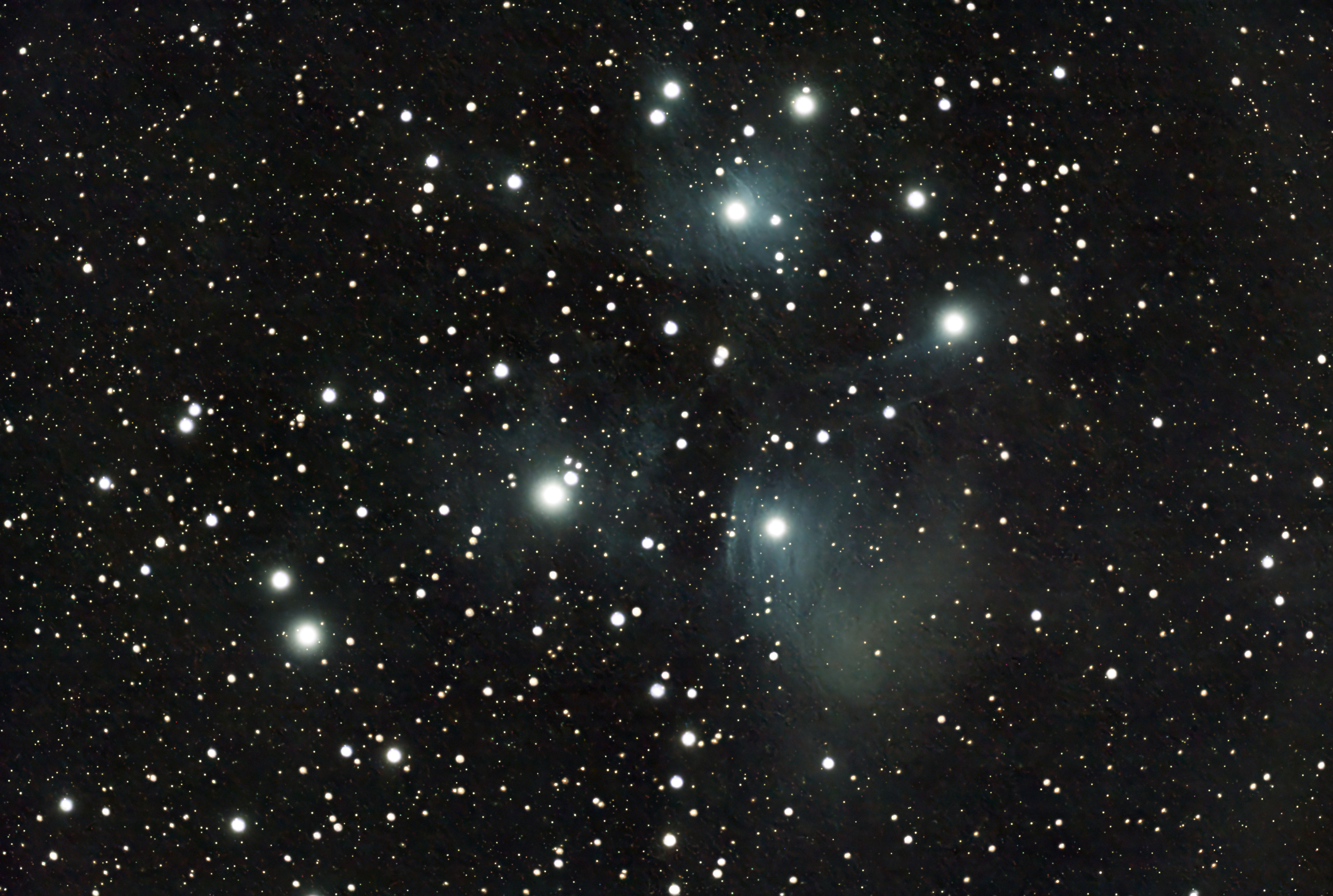
Licence: for personal use, credit Damon Scotting. Both JPEGs 4,096 x 2,753 px.
+8 C sensor temperature during imaging
382 mm focal length, plate solved Celestron states 381 mm
1.98 x 1.32° field of view 5,496 x 3,672 px on ASI183MC
20.2 MP ASI183MC 5,496 x 3,672 px, 13.2 x 8.8 mm
Should you buy it?
43/100 Stars for Your Buck
Pros
- The ED doublet keeps the bright stars free of colour fringes.
- Pointed at the Pleiades, it shows the dust and cloud structure around the stars, precisely the level of detail I hope for from a small refractor.
- Imaging-ready in the box: a 2 inch dual-speed 1:10 focuser, a retractable dew shield, tube rings and a Vixen-style dovetail.
- At about 2.5 kg with its rings and dovetail it is an easy load for the smallest strain-wave mounts.
- The plate-solved focal length lands within a millimetre of the 381 mm printed on the lens cell.
Cons
- The smaller aperture shows on galaxies: on Andromeda it struggled against the 70 mm SVBONY with roughly the same exposure.
- No UK or US shop stocks it, so AliExpress is the only way to buy one.
- Import tax and shipping come on top of the AliExpress price, which takes a UK buyer past a £300 budget.
- No image circle, back focus or length is published, so planning a flattener, a reducer or a large sensor is guesswork.
If you are looking for a refractor telescope to buy in order to take images of the night sky and you have less than £300, go for the SVBONY, at least until the Celestron telescopes officially hit the market.
Who the 63ED is for
Beginner imager with £300
Skip
The SVBONY SV503 70ED is easier to buy and shows a touch more detail; my recommendation is the SV503.
Colour-first imager
Buy
If clean star colour matters more to you than the last bit of detail, it is the pick of the two budget refractors I compared.
Owner of a 1 inch sensor camera
Buy
At 381 mm a 1 inch sensor frames about 2 x 1.3 degrees, enough for the Pleiades and the core of Andromeda.
APS-C or full-frame imager
Skip
No image circle, back focus or matching flattener is published for the 63ED, so a big sensor is a gamble.
Galaxy hunter
Skip
Aperture wins on galaxies; for £379 the Askar 80ED gives 80 mm and a UK stockist.
SVBONY SV503 70ED owner
Skip
The 63ED is a sideways step: cleaner colour, slightly less detail, and import costs on top.
Three alternatives I have reviewed
- SVBONY SV503 70ED 70 mm f/6 ED doublet with the edge on detail and UK and US stockists 64/100 £380 Read the review
- Askar 71F 71 mm f/6.9 self-flattening quadruplet with a 44 mm image circle 81/100 £599 Read the review
- Askar 50P 50 mm f/3.8 quadruplet Petzval, the top-scoring telescope on my board 95/100 £299 Read the review
Questions and more about this review
Reviewed by
Damon Scotting
The Telescope Man Verified
BSc (Hons) Physics with Astrophysics and Cosmology, Loughborough University PGCE / QTS, University of Nottingham
About Damon About Damon Damon Scotting is The Telescope Man. He holds a BSc (Hons) in Physics with Astrophysics and Cosmology from Loughborough University and a PGCE with QTS from the University of Nottingham, and taught physics in secondary schools before becoming an astronomy creator. He is a contributing writer for BBC Sky at Night Magazine and the author of 42 Wonders of Our Night Sky, and his photograph of the galaxy M100 with the dwarf planet Ceres was Highly Commended in the Astronomy Photographer of the Year 2024 competition run by Royal Observatory Greenwich. He has appeared on the BBC's Blue Peter. More than 750,000 people follow his astronomy channels on YouTube, Instagram and TikTok, and he has reviewed more than 140 telescopes, mounts, cameras, filters and accessories hands-on for this site. More about Damon · How I test · Damon's book
I review all kinds of gear: most of it I buy, some is gifted and some is loaned, and all of it is reviewed the same way. How this site is funded
Eight questions, answered
Questions about the Celestron 63ED
Reviewed 19 November 2024 ·Updated 23 September 2026
I review all kinds of gear. Most of it I buy, some is gifted and some is loaned, and all of it is reviewed the same way: no company sees or approves a review before it is published. Shop links marked Ad are affiliate links: I earn a commission when you buy through them, at no extra cost to you. How this site is funded
- Is the Celestron 63ED a real Celestron product? The tube, the objective ring and the focuser all carry Celestron branding, and the focuser is stamped S81902. Even so, celestron.com has no page for it, and Celestron had made no official statement about a new refractor range when I tested it. In the hand ↓
- Where can I buy the Celestron 63ED? No UK or US shop lists it. The live listing I found is on AliExpress at US $426. The verdict, the readers and the sellers ↓
- Celestron 63ED or SVBONY SV503 70ED? My viewers struggled to pick a clear winner on the images, so I call it a draw: the 63ED wins on colour, and the SV503 on detail and on being easy to buy. The specifications and the comparison table ↓
- What camera did you use with the Celestron 63ED? The ZWO ASI183MC, a 1 inch colour sensor with 2.4 micron pixels. On the 63ED that samples 1.30 arcseconds per pixel across a field of 1.98 x 1.32 degrees. Tested numbers and the download ↓
- Does the Celestron 63ED need a field flattener? I imaged without one on a 1 inch sensor. No flattener, image circle or back focus is published for the 63ED, so a matching corrector is not recorded. The specifications and the comparison table ↓
- What mount does the Celestron 63ED need? About 2.5 kg with rings and dovetail makes it a light load; my Pleiades was shot with it on the ZWO AM5. The rig on the mount ↓
- How long was the Pleiades exposure? 78 frames of 30 seconds, 39 minutes in all, at gain 111 on the night of 11 to 12 November 2024. What I captured ↓
- What have I not tested on the 63ED? I did not test the Celestron 63ED visually, with a flattener or reducer, on a sensor larger than 1 inch, or on the planets and the Moon.