Vaonis Vespera III review: premium design, familiar 4K sensor
Where does it rank on our leaderboard
| Rank | Telescope | Stars for Your Buck | Recorded UK price |
|---|---|---|---|
| 1 | ZWO Seestar S30 Pro | 99 out of 100 | £649 |
| 2 | ZWO Seestar S50 Pro | 91 out of 100 | £999 |
| 3 | DwarfLab DWARF mini | 89 out of 100 | £399 |
| 4 | ZWO Seestar S30 | 88 out of 100 | £419 |
| 6 | DwarfLab DWARF 3 | 61 out of 100 | £459 |
| 7 | Vaonis Vespera III | 60 out of 100 | £2,199 |
| 8 | ZWO Seestar S50 | 55 out of 100 | £539 |
| 9 | DwarfLab DWARF II | 22 out of 100 | £369 |
| 10 | Unistellar eVscope 2 | 8 out of 100 | £4,099 |
Contents
- 01 Where does it rank on our leaderboard
- 02 Specifications and features
- 03 In the hand
- 04 From the review video
- 05 How good is it? Here's what I captured
- 06 Raw against finished
- 07 Same target, other smart telescopes
- 08 What is it for
- 09 Versus the Vaonis Vespera Pro 2
- 10 Watch the review
- 11 Tested numbers and the download
- 12 Should you buy it?
- 13 Questions and more about this review
In 30 seconds
Stars for Your Buck 60/100
Reviewed 29 Aug 2026 Updated 23 Sep 2026
- Rank
- #7 of 10 smart telescopes
- Verdict
- Worth a look
Written by Damon Scotting 7 min read
Buy it if
- You want a premium, one-button observatory that runs up to 11 hours on its own battery.
- You want big mosaics for prints: CovalENS builds images of up to 24 MP.
- You value a sleek, well-designed telescope and app as much as the pictures.
Skip it if
- You want the most image for your money: the Seestar S30 Pro uses the same IMX585 sensor for £649.
- You want filters in the box: the solar and dual band filters cost extra.
- You want something light to carry: at 5 kg it is the bulkiest smart telescope I compared.
“The Vaonis smart telescopes are a welcome addition to the market. They offer something a little different, but with the price they are charging, they are yet to step up the quality of their image sensors.”
Specifications and features
Against the smart telescopes I have reviewed
Compare with
| Vaonis Vespera III reviewed #7 of 10 | Vaonis Vespera Pro 2 #5 of 10 | ZWO Seestar S50 Pro #2 of 10 | ZWO Seestar S50 #8 of 10 | |
|---|---|---|---|---|
| Recorded UK price | £2,199 | £2,599 | £999 | £539 |
| Stars for Your Buck | 60/100 | 63/100 | 91/100 | 55/100 |
| Aperture | 50 mm | 50 mm | 50 mm | 50 mm |
| Focal length | 245 mm | 245 mm | 260 mm (telephoto); 6 mm | 250 mm |
| Focal ratio | f/4.9 | f/4.9 | f/5.2 (telephoto); f/1.75 | f/5 |
| Optical design | Apochromatic quadruplet with refined field corrector | Apochromatic quadruplet in 3 groups with a refined field corrector, S-FPL52 lanthanum glass | 4-element apochromatic lens with ED glass; separate wide-angle camera | Apochromatic triplet with ED glass |
| Sensor | Sony IMX585 (colour), 1/1.2 inch, 2.9 µm pixels | Sony IMX676 (colour), 1/1.6 inch, 2 µm pixels | OmniVision OS08B10 (telephoto); Sony IMX586 | Sony IMX462 |
| Resolution | 3840 x 2160, 8.3 MP; up to 24 MP with CovalENS mosaic | 3536 x 3536, 12.5 MP; up to 50 MP with CovalENS mosaic | 3840 x 2160, 8.3 MP | 1920 x 1080, 2.1 MP |
| Field of view | 2.5 x 1.4 degrees; up to 4.33 x 2.43 degrees with CovalENS | 1.6 x 1.6 degrees; up to 4.18 x 2.45 degrees with CovalENS | 2.8 degrees (telephoto); 63 degrees | 1.29 x 0.73 degrees |
| Filters | None built in; solar, dual band and CLS light-pollution filters are optional extras | None built in; CLS light pollution, dual band and solar filters sold separately | UV/IR cut; dual-band light pollution (OIII 30 nm, H-alpha 20 nm); dark field; magnetic solar filter included | UV/IR cut; duo band (OIII 30 nm, H-alpha 20 nm); dark filter; magnetic solar filter included |
| Weight | 5 kg | 5 kg | 2.8 kg | 2.5 kg (net) |
| Battery | 11 hours | 11 hours | 10,000 mAh, up to 9 hours | 6000 mAh, about 6 hours |
| Storage | 115 GB | 225 GB | 128 GB eMMC | 64 GB |
| App | Singularity | Singularity | Seestar app | Seestar app |
In the hand
Folded, on the left, beside the Vespera Pro 2
The Vespera III badge
Arm raised, on the left
The 50 mm objective
Front optic
The optional filters
From the review video
Four frames from my videos
How good is it? Here's what I captured
Four targets
NGC 6888 Crescent Nebula, Sony IMX585 (built in)
- Integration
- 1 h 52 min (672 x 10 s)
- Field
- 3.8 x 2.9 degrees
- Telescope
- Vaonis Vespera III
- Camera
- Sony IMX585 (built in)
- Mount
- Built-in Vespera alt-azimuth mount
- Target
- NGC 6888 Crescent Nebula
- Type
- Emission nebula
- Location
- Bortle 6.8 (in my garden)
M 16 Eagle Nebula, Sony IMX585 (built in)
- Integration
- 1 h 00 min (362 x 10 s)
- Field
- 2.3 x 1.3 degrees
- Telescope
- Vaonis Vespera III
- Camera
- Sony IMX585 (built in)
- Mount
- Built-in Vespera alt-azimuth mount
- Target
- M 16 Eagle Nebula
- Type
- Emission nebula
- Location
- Bortle 6.8 (in my garden)
NGC 7000 North America Nebula, Sony IMX585 (built in)
- Integration
- 1 h 01 min (364 x 10 s)
- Field
- 2.3 x 1.2 degrees
- Telescope
- Vaonis Vespera III
- Camera
- Sony IMX585 (built in)
- Mount
- Built-in Vespera alt-azimuth mount
- Target
- NGC 7000 North America Nebula
- Type
- Emission nebula
- Location
- Bortle 6.8 (in my garden)
M 16 Eagle and M 17 Swan Nebulae, Sony IMX585 (built in)
- Integration
- 1 h 10 min (422 x 10 s)
- Field
- 3.1 x 2.6 degrees
- Telescope
- Vaonis Vespera III
- Camera
- Sony IMX585 (built in)
- Mount
- Built-in Vespera alt-azimuth mount
- Target
- M 16 Eagle and M 17 Swan Nebulae
- Type
- Emission nebulae
- Location
- Bortle 6.8 (in my garden)
Raw against finished
Same target, other smart telescopes
The 4 targets, the raw combined stack against my finished image, each with its integration, the camera and the palette:
- NGC 6888 Crescent Nebula: 1 h 52 min (672 x 10 s) of light, Sony IMX585, the raw combined stack with one automatic stretch
- M 16 Eagle Nebula: 1 h 00 min (362 x 10 s) of light, Sony IMX585, the raw combined stack with one automatic stretch
- NGC 7000 North America Nebula: 1 h 01 min (364 x 10 s) of light, Sony IMX585, the raw combined stack with one automatic stretch
- M 16 Eagle and M 17 Swan Nebulae: 1 h 10 min (422 x 10 s) of light, Sony IMX585, the raw combined stack with one automatic stretch
NGC 7000 North America Nebula, M 16 Eagle and M 17 Swan Nebulae, NGC 6888 Crescent Nebula, M 16 Eagle Nebula on the Vaonis Vespera III and four other smart telescopes; the panes pan and zoom together
What is it for
Five things it is for
Mosaics made for prints
Vaonis were one of the first smart telescope makers to introduce mosaic mode, letting you capture larger and higher resolution images than a standard frame. Backyard mosaics have a lot of potential for turning into your very own night sky prints.
An app that informs
To test the two Vesperas fairly I controlled each one from its own tablet.
Two parts to set up
It is literally just a tripod and a smart telescope: two parts that need assembling, and that is all you have to do.
A one-button observatory
The design of the app and the telescope is very sleek. It is the very definition of a cool gadget: a one-button, all-in-one observatory that captures other galaxies and nebulae from your own back garden.
The IMX585 sensor
It is the IMX585 sensors that stand head and shoulders above the rest, providing 4K quality images. No smart telescope on the market uses a better sensor than the IMX585.
Versus the Vaonis Vespera Pro 2
M 16 Eagle Nebula on both, the same night, plate-solved and star-aligned (residual 0.19 px per 1000)
| Target | Telescope | Integration | Subs | Filter | Nights |
|---|---|---|---|---|---|
| M 16 Eagle Nebula | Vespera III | 60 min | 362 x 10 s | none recorded | 2026-06-26 |
| M 16 Eagle Nebula | Vespera Pro 2 | 61 min | 364 x 10 s | CLS | 2026-06-26 |
Watch the review
I Tested out the 2 COOLEST Telescopes on the Market! - Vaonis Verspera Pro 2 / Vespera 3 Review · published 29 August 2026 · 9:24 · Watch on YouTube · 12,746 views, 157 likes on 2 Oct 2026
Jump to
- 0:52 Unboxing and setup
- 1:48 The app, and mosaic mode
- 2:05 The stacking problem, and why it matters
- 2:43 Design and build quality
- 3:53 The Pillars of Creation, Vespera 3
- 4:58 M16 side by side
- 5:12 North America Nebula, Vespera 3
- 6:33 Crescent Nebula, Vespera 3
- 8:09 The verdict, and the sensor Vaonis should have used
- 8:27 The filters, and what they cost
Transcript of the review video 1,080 words · 19 chapters · searchable
Press a time stamp to play from there.
0:00 Two new smart telescopes, one night
0:00 Tonight, I'm going to be testing out the two coolest telescopes in the world right now. 0:03 Side by side, beneath the same skies, I'm going to try and find out which one offers the most stars for your book. 0:08 We're going to take a detailed look at each scope specifications, as well as the quality of the images produced, and whether or not either of these is the perfect smart telescope for you. 0:16 So, tonight's episode promises to be very special.
0:16 Vespera Pro 2 vs Vespera 3: price and launch
0:18 And that's because I'm not reviewing just one new smart telescope. 0:21 I am, as you can see, reviewing two new smart telescopes, both from Venus. 0:26 In front of me right now, we have the Veayenus Vesper 3 and the Veayus Vesper Pro 2. 0:29 As far as I can see from the specifications, these two smart telescopes are more similar than they are different, but there is one crucial element that separates the two of them, and that is their imaging capabilities.
0:34 Where the two are identical
0:40 So, the goal tonight is to put them side by side and start capturing the same object so we can compare the images taken with each of them.
0:42 The one crucial difference: the sensor
0:48 All right, check that out. 0:48 Look at this. 0:50 So, to start with, this is the Vesper Pro 2.
0:52 Unboxing and setup
0:53 So, that's what is in there, by the way. 0:55 It is literally just a tripod and a smart telescope. 0:56 So, two parts that need assembling. 0:59 There is also a small pouch inside there that contains three tripod spike legs that you can replace the current ones on this tripod with just to give it a bit more stability. 1:09 Okay, there we go. 1:09 That's it. 1:10 That's all you have to do. 1:10 We are now ready to go. 1:12 So, yeah, they've stuck with the same 50 mm aperture of this telescope, which actually means it's the exact same size aperture as a sear S50 smart telescope. 1:20 So, it's not really breaking the boundaries much in that aspect. 1:24 So, let's get stuck in and take some pictures.
1:24 Testing on the third longest day of the year
1:26 Tonight is the third longest day of the year, which means technically here in the UK, we don't actually have any astro dark, which is where the skies are really dark and there's no lingering twilight. 1:35 So, this means these scopes are being tested under less than adequate conditions. 1:38 And if that's not restricting enough, how about a 70% illuminated moon? 1:42 This promises to be a tough test for any telescope, but I reckon these two are up to the challenge.
1:48 The app, and mosaic mode
1:48 In order to fairly test them side by side, I'm controlling each telescope separately from individual tablets. 1:52 The app is very well-designed and incredibly informative. 1:56 Veayus were one of the first smart Tesco producers to introduce the mosaic mode feature, allowing you to capture larger and higher resolution images than any other standard scopes. 2:05 But the first thing I began to note was how much of a nightmare the Pro two was being at trying to image selected deep sky objects.
2:05 The stacking problem, and why it matters
2:10 It really struggled to get going when it came to imaging the Dumbbell Nebula or the Hercules cluster. 2:16 In fact, something very alarming that I noted was only about one in every three images from the Pro two were being stacked, meaning it was wasting twothirds of my observation time. 2:26 I tried turning it off and recalibrating a telescope, but it didn't seem to help much. 2:29 The Vesper free telescope, however, managed to stack about one in every 1.8 images, which is a lot better, but still not exactly ideal. 2:37 This is a running theme across most smart telescopes. 2:39 They generally stack a little bit more than half of your images. 2:43 The design of the app and the scopes themselves is very sleek, and I've always been very impressed by the look of these smart telescopes.
2:43 Design and build quality
2:48 I feel like they do appeal to a more premium customer since it is the very definition of a cool gadget. 2:53 Perhaps nothing is more fitting of that title than a onebutton all-in-one observatory that lets you capture pictures of other galaxies and nebula from your own back garden. 3:03 Okay, so let's take an in-depth look at the images produced by each telescope.
3:03 How I processed every image
3:06 I tried to get shots of each target with each scope. 3:08 And I also tried to play around with the mosaic mode as much as possible because I think backyard mosaic images have a lot of potential for turning into your very own night sky prints. 3:16 I mean, let's face it, they look incredible. 3:18 I've broken each image down into my own individual editing stages so that you can see how much it progresses from the raw stacked image to the final version.
3:19 M27 Dumbbell Nebula, Vespera Pro 2
3:25 Let me know what you think of this new review video style in the comments down below. 3:32 Heat. 3:38 Heat.
3:53 The Pillars of Creation, Vespera 3
3:55 Heat.
7:03 Crescent Nebula, Vespera Pro 2
7:32 Heat.
7:38 Inside the 50 megapixel mosaic
7:40 So, what do we think?
7:53 Crescent side by side
8:04 Personally, I think the Veaya smart telescopes are a welcomed addition to Tesco market. 8:08 They offer something a little different, but I'm still surprised to see that with the price they are charging for their smart telescopes, they're yet to step up the quality of their image sensors an extra level and completely dominate the market as the most powerful smart telescopes out there.
8:09 The verdict, and the sensor Vaonis should have used
8:23 Seriously, an IMX533 sensor would be a gamecher, particularly since if the Seaar S50 had an IMX585 sensor, which many suspect a new addition will, then it goes toe-to-toe with the Vesper Pro 2 at a fraction of the cost.
8:27 The filters, and what they cost
8:35 The filters are also outrageously expensive, particularly the solar filter. 8:40 All of the smart telescopes I've used come with a solar filter included, as well as an inbuilt duo band filter. 8:45 Solar filters are not expensive to produce, so it's a little shocking how much this one cost. 8:51 Nevertheless, I used it and compared it to other smart telescopes, and it did produce the best images, so at least you get some value for your money.
8:53 The Sun and the Moon
8:57 All in all, I like the Veenus Vesper telescopes. 9:00 There is a lot to enjoy about them. 9:02 I'd certainly give them a decent 70 plus out of 100 rating in terms of stars for your book.
9:02 Final score, and your thoughts
9:06 But what do you think? 9:08 Let me know your comments on Venus and their smart telescopes in the comments down below and whether you have any plans to purchase one of the scopes featured in today's video. 9:14 You can find a direct product link to the telescopes in the description down below. 9:19 Thanks for watching. 9:19 I'm Damon Scotting and this was astronomical.
Check out more videos on the Vaonis Vespera III
I Tested EVERY SMART Telescope on the Market...These are the results!
30 Aug 2026
Tested numbers and the download
Finished image
- Download the raw stack JPEG · 4.9 MB · 4,096 x 3,073
- Download the finished image JPEG · 2.9 MB · 4,096 x 3,073
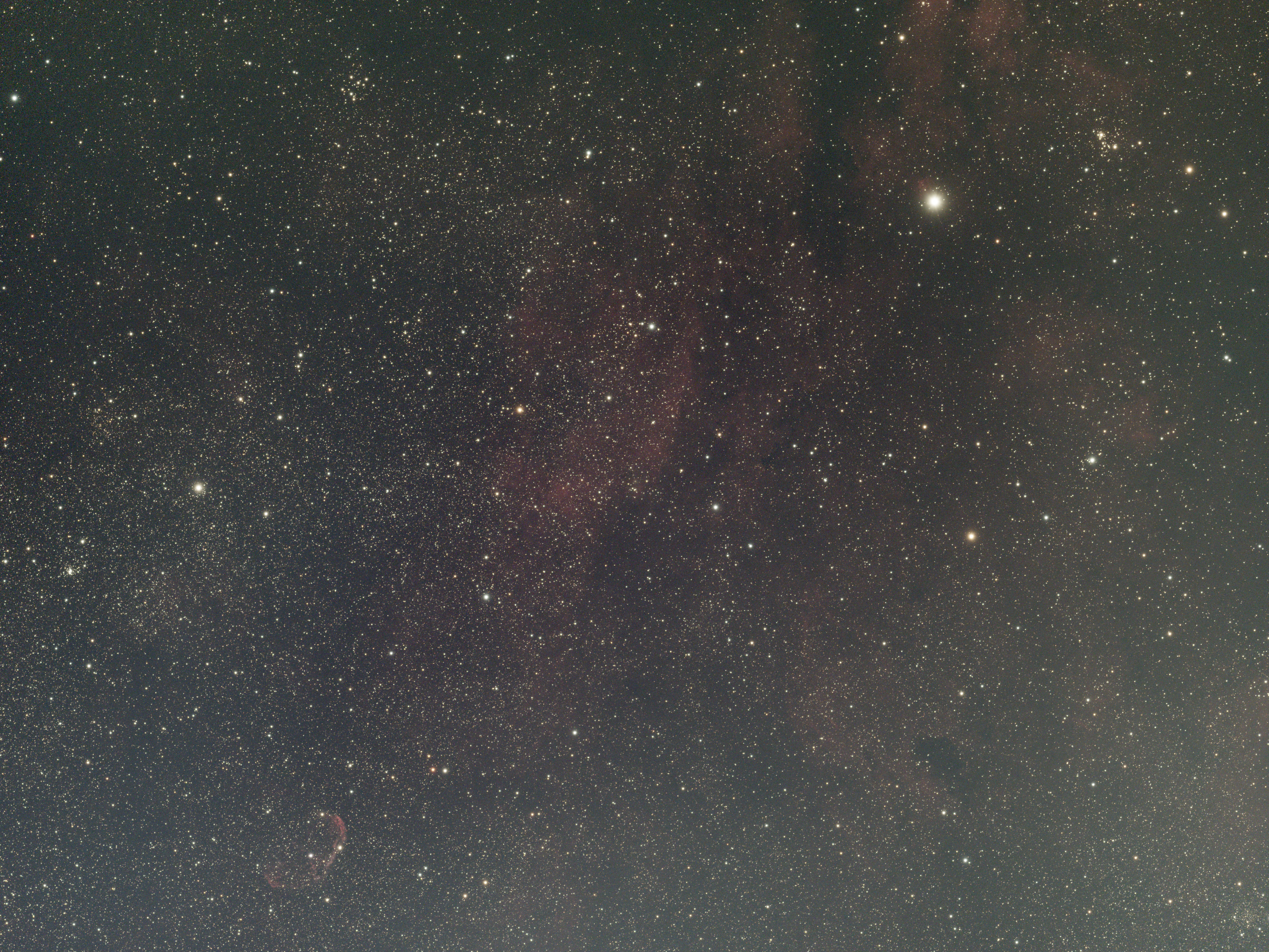
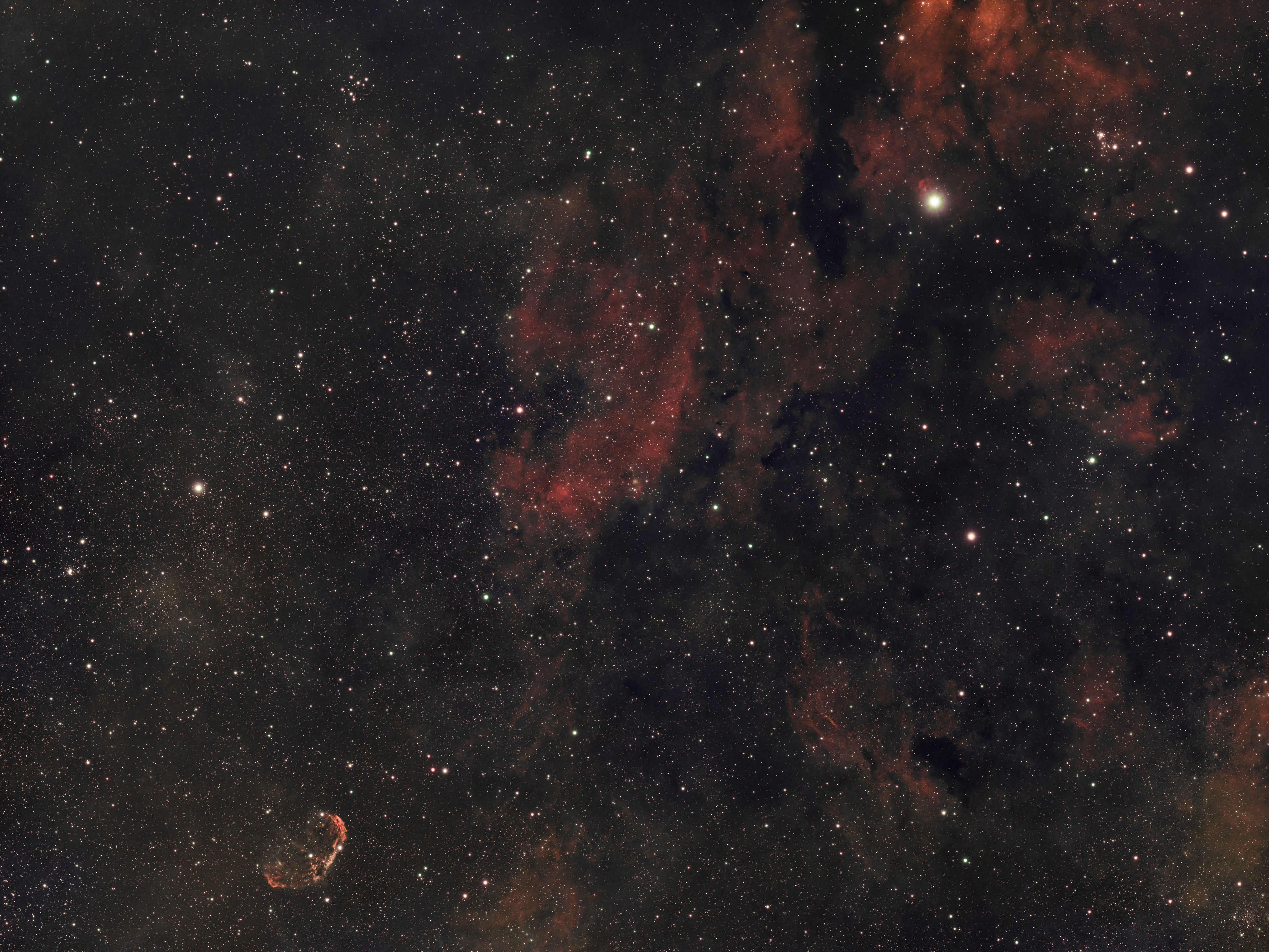
Licence: for personal use, credit Damon Scotting. Both JPEGs 4,096 x 3,073 px.
Unknown sensor temperature during imaging
245 mm focal length, plate solved Vaonis states 245 mm
2.6 x 1.5° field of view 3,840 x 2,160 px on Sony IMX585
8.3 MP Sony IMX585 3,840 x 2,160 px, 11.1 x 6.3 mm
Should you buy it?
60/100 Stars for Your Buck
Pros
- “The IMX585 sensor takes 4K frames, and I find it better for image quality than the higher-megapixel sensor in the Vespera Pro 2.”
- “It keeps most of its frames: across the same four June sessions the Vespera III stacked 77% of them, the Pro 2 beside it 52%.”
- “CovalENS mosaic mode builds images of up to 24 MP, and backyard mosaics have real potential as your own night sky prints.”
- “The app is very well designed and incredibly informative.”
- “Setup is two parts, the tripod and the telescope, and that is all you have to do.”
- “Vaonis rates the battery at 11 hours, the longest run time of any smart telescope I compared.”
Cons
- “At the price Vaonis charges, the sensor is the same 8.3 MP IMX585 found in far cheaper smart telescopes; an IMX533 would have been a game changer.”
- “The filters are outrageously expensive and sold separately: $229 for light pollution, $399 for dual band and $149 for solar, where other smart telescopes include a solar filter and build in a dual band filter.”
- “It still throws frames away: on both Eagle Nebula runs more than a third of the frames were rejected for star shape.”
- “The colour in its images was not nearly as easy to edit as in the Seestar shots.”
- “At 5 kg it is the biggest and bulkiest of the smart telescopes I compared.”
All in all, I like the Vaonis Vespera telescopes. There is a lot to enjoy about them.
Who the Vespera III is for
Wants a premium, design-led smart telescope
Buy
It is the very definition of a cool gadget: a sleek, one-button observatory with a well-designed app.
Wants mosaics to print
Buy
CovalENS mosaics reach 24 MP; my Crescent Nebula mosaic covers 3.8 x 2.9 degrees of sky.
Wants long sessions on one charge
Buy
Vaonis rates the battery at 11 hours, the longest of the smart telescopes I compared.
Beginner on a budget
Skip
My recommendation is the Seestar S30 Pro: the same IMX585 sensor for £649, and it scores 99 on my board.
Choosing between the Vespera III and Pro 2
Skip
The Pro 2 was one of my top two for images in my eight-scope comparison and scores 63 to the Vespera III's 60.
Already owns a Seestar S50 Pro or S30 Pro
Skip
It shares the same 8.3 MP 4K sensor class, so your images will not step up.
Three alternatives I have reviewed
- ZWO Seestar S30 Pro 30 mm f/5.3, 4-element apochromatic lens 99/100 £649 Read the review
- ZWO Seestar S50 Pro 50 mm f/5.2, 4-element apochromatic lens 91/100 £999 Read the review
- Vaonis Vespera Pro 2 50 mm f/4.9, apochromatic quadruplet in 3 groups 63/100 £2,599 Read the review
Questions and more about this review
Reviewed by
Damon Scotting
The Telescope Man Verified
BSc (Hons) Physics with Astrophysics and Cosmology, Loughborough University PGCE / QTS, University of Nottingham
About Damon About Damon Damon Scotting is The Telescope Man. He holds a BSc (Hons) in Physics with Astrophysics and Cosmology from Loughborough University and a PGCE with QTS from the University of Nottingham, and taught physics in secondary schools before becoming an astronomy creator. He is a contributing writer for BBC Sky at Night Magazine and the author of 42 Wonders of Our Night Sky, and his photograph of the galaxy M100 with the dwarf planet Ceres was Highly Commended in the Astronomy Photographer of the Year 2024 competition run by Royal Observatory Greenwich. He has appeared on the BBC's Blue Peter. More than 750,000 people follow his astronomy channels on YouTube, Instagram and TikTok, and he has reviewed more than 140 telescopes, mounts, cameras, filters and accessories hands-on for this site. More about Damon · How I test · Damon's book
I review all kinds of gear: most of it I buy, some is gifted and some is loaned, and all of it is reviewed the same way. How this site is funded
Eight questions, answered
Questions about the Vaonis Vespera III
Reviewed 29 August 2026 ·Updated 23 September 2026
I review all kinds of gear. Most of it I buy, some is gifted and some is loaned, and all of it is reviewed the same way: no company sees or approves a review before it is published. Some shop links are affiliate links: I earn a commission when you buy through them, at no extra cost to you. How this site is funded
- Is the Vespera III better than the Vespera Pro 2? They share the 50 mm apo quadruplet, the 245 mm focal length and the 5 kg body; the sensor is the difference. The Vespera III's IMX585 takes a wide 2.5 x 1.4 degree frame, the Pro 2's IMX676 a square 1.6 x 1.6 degree frame with more megapixels. The Pro 2 scores 63 on my board to the Vespera III's 60. Versus the Vaonis Vespera Pro 2 ↓
- How many frames does the Vespera III keep? By its own session logs it stacked 1,824 of 2,363 frames across four June sessions, 77%; the Pro 2 beside it kept 1,229 of 2,385, 52%. The two Eagle Nebula runs were its weakest at 61% and 66%, every reject flagged for star roundness. What I captured ↓
- How big are its mosaics? CovalENS goes up to 24 MP. My Crescent Nebula mosaic is 4,242 x 5,657 pixels, 24.0 MP, and covers 3.8 x 2.9 degrees; a single stacked frame, after the stacker's crop, covers about 2.3 x 1.3 degrees. What I captured ↓
- Do I need to buy filters? No filter is built in. Vaonis lists the light pollution (CLS) filter at $229, the dual band filter at $399 and the solar filter at $149; on vaonis.com the CLS filter and a backpack currently come free with the telescope, while First Light Optics sells the CLS filter separately at £219. In the hand ↓
- What focal length does it really have? My plate solves of four stacks read 2.44 arcseconds per pixel, which with its 2.9 micron pixels is 245 mm, exactly the focal length Vaonis states. Tested numbers and the download ↓
- Is it worth it over a Seestar? For image quality per pound, no. The Seestar S30 Pro and S50 Pro score 99 and 91 on my board to the Vespera III's 60, at a fraction of the price. The Vespera III's case is its build, its 11-hour battery and its mosaics.
- How long does the battery last? Vaonis rates it at 11 hours, the longest of the smart telescopes I compared. I have not run it down to empty myself. The specifications and the comparison table ↓
- What have I not tested on the Vespera III? I have not run the Vespera III's battery to empty, used its multi-night mode, or imaged the Moon and the planets with it.