ZWO ASI2600MM Air review: mono APS-C with ASIAIR built in
Where does it rank on our leaderboard
| Rank | Camera | Stars for Your Buck | Recorded UK price |
|---|---|---|---|
| 1 | SVBONY SV705C | 93 out of 100 | £229 |
| 2 | SVBONY SC571CC | 90 out of 100 | £1,029 |
| 5 | ToupTek SkyEye 24AC | 85 out of 100 | £1,804 |
| 7 | ZWO ASI2600MM Air | 84 out of 100 | £2,499 |
| 13 | Player One Apollo 428M MAX Pro | 76 out of 100 | £1,045 |
| 16 | ToupTek ATR533C | 76 out of 100 | £799 |
| 25 | ZWO ASI2600MM | 62 out of 100 | £2,059 |
| 28 | ZWO ASI183MC | 38 out of 100 | £549 |
| 29 | Nikon COOLPIX P1000 | 32 out of 100 | £787 |
Contents
- 01 Where does it rank on our leaderboard
- 02 Specifications and features
- 03 In the hand
- 04 The rig on the mount
- 05 How good is it? Here is what it captured
- 06 Raw against finished
- 07 What is it for
- 08 Watch it in my videos
- 09 Tested numbers and the download
- 10 Should you buy it?
- 11 Questions and more about this review
In 30 seconds
Stars for Your Buck 84/100
Reviewed 1 Sep 2026 Updated 24 Sep 2026
- Rank
- #7 of 29 cameras
- Verdict
- Damon recommends
Written by Damon Scotting 7 min read
Buy it if
- You image in mono with a filter wheel and want the wheel, the focuser and the mount power all plugged into the camera.
- You want the ASIAIR and a guide sensor inside the camera instead of a separate controller and guide camera.
- You shoot narrowband and LRGB on refractors of a few hundred millimetres, where the APS-C sensor frames whole nebulae.
Skip it if
- You want colour without a filter wheel: the ASI2600MC Air is the same camera in colour.
- You guide through 3 nm filters at long focal lengths: the built-in guide sensor struggles there.
- You want the IMX571 mono sensor for less: the ToupTek ATR2600MM costs about £1,000 less.
“Filters can make an imaging setup a lot messier, but the ASI2600MM Air makes the whole thing far more straightforward.”
Specifications and features
Against the cameras I have reviewed
Compare with
| ZWO ASI2600MM Air reviewed #7 of 29 | ZWO ASI2600MC Air #4 of 29 | ToupTek ATR2600MM #19 of 29 | ZWO ASI2600MM #25 of 29 | ZWO ASI2600MC Duo #8 of 29 | |
|---|---|---|---|---|---|
| Recorded UK price | £2,499 | £2,149 | £1,488 | £2,059 | £1,849 |
| Stars for Your Buck | 84/100 | 88/100 | 73/100 | 62/100 | 83/100 |
| Sensor | Sony IMX571 | Sony IMX571 | Sony IMX571 | Sony IMX571 | Sony IMX571 with an SC2210 guide sensor |
| Format | APS-C, 23.5 x 15.7 mm | APS-C, 23.5 x 15.7 mm | APS-C, 23.4 x 15.7 mm, 28.3 mm diagonal | APS-C, 23.5 x 15.7 mm | APS-C, 23.5 x 15.7 mm |
| Colour or mono | Mono | Colour | Mono | Mono | Colour |
| Resolution | 6248 x 4176, 26 MP | 6248 x 4176, 26 MP | 6224 x 4168, 26 MP | 6248 x 4176, 26 MP | 6248 x 4176, 26 MP |
| Pixel size | 3.76 um | 3.76 um | 3.76 um | 3.76 um | 3.76 um |
| Cooling | 30 to 35 C below ambient | 30 to 35 C below ambient | Two-stage TEC, up to 42 C below ambient | Two-stage TEC, 30 to 35 C below ambient | Two-stage TEC, 30 to 35 C below ambient |
| Read noise | 0.9 to 4.2 e- | 0.9 to 4.2 e- | as low as 0.883 e- | 1.0 to 3.3 e- | 0.9 to 4.2 e- |
| Full well | 50 ke- (73 ke- in extended mode) | 50 ke- | 51 ke- | 73 ke- | 50 ke- |
| ADC | 16-bit | 16-bit | 16-bit | 16-bit | 16-bit |
| Weight | 775 g | 775 g | 577 g | 700 g | 700 g |
| Back focus | 12.5 or 17.5 mm | 12.5 or 17.5 mm | 17.5 mm with the M42 adapter | 17.5 mm | 17.5 mm |
| Interface | Wi-Fi 5 and Bluetooth; USB-C output, four USB 2.0 ports, three 12 V DC ports, any one of them the power input | Wi-Fi 5 and Bluetooth; USB-C output, four USB 2.0 ports, three 12 V DC ports, any one of them the power input | USB 3.0, two USB 2.0 hub ports, 512 MB DDR3 buffer | USB 3.0 | USB 3.0 for imaging, USB 2.0 for guiding |
| In the box | Camera, two 1 m DC power cords, 1.5 m DC extension, two 0.5 m USB 2.0 cables, 16.5 mm and 21 mm M54 spacers, M48 to M54 ring, cable strap, hex wrench, quick start guide | Camera, external antenna, two 1 m DC power cords, 1.5 m DC extension, two 0.5 m USB 2.0 cables, 16.5 mm and 21 mm M54 spacers, M48 to M54 ring, cable strap, hex wrench, quick start guide, soft bag | The camera, a 12 V 3.3 A power adapter and cable, a 1.5 m USB 3.0 cable, M48-M42 0 mm, 16.5 mm and 21 mm extenders, a 12.5 mm M42 adapter and a cover | Camera, lens cover, T2-M48 16.5 mm extender, T2 21 mm extender, M42-M48 adapter ring, two USB 2.0 cables, USB 3.0 cable, padded bag, hex wrench, quick start guide | Camera, soft padded case, 2 m USB 3.0 cable, two 0.5 m USB 2.0 cables, 16.5 mm and 21 mm M54 extenders, M54 to M48 ring, hex key, quick start guide |
In the hand
Every cable into the camera
On the Askar SQA60 Pro
At dusk
Filter wheel and focuser above
The Wi-Fi antenna
On the C11 EdgeHD
The rig on the mount
On the JUWEI-17, then on six other mounts
How good is it? Here is what it captured
Five targets
NGC 7000 North America Nebula, ASI2600MM Air, Scorpio 3 nm HSO
- Integration
- 4 h (80 x 180 s)
- Field
- 4.85 x 3.24 degrees
- Telescope
- Askar SQA60 Pro
- Camera
- ZWO ASI2600MM Air
- Mount
- ZWO AM3N
- Target
- NGC 7000 North America Nebula
- Type
- Emission nebula
- Location
- Bortle 6.8 (in my garden)
This target benefited from the most integration time of any of these targets, 4 hours of integration time in the narrowband spectrum.
NGC 6960 Veil Nebula, ASI2600MM Air, Scorpio 3 nm HSO
- Integration
- 2 h 39 min (53 x 180 s)
- Field
- 4.85 x 3.24 degrees
- Telescope
- Askar SQA60 Pro
- Camera
- ZWO ASI2600MM Air
- Mount
- ZWO AM3N
- Target
- NGC 6960 Veil Nebula
- Type
- Supernova remnant
- Location
- Bortle 6.8 (in my garden)
This deep sky object was very high up in our night sky. On average it was about 70 degrees above the horizon, which gave us this nice flat looking image.
IC 1805 Heart Nebula, ASI2600MM Air, Scorpio 3 nm HSO
- Integration
- 1 h 15 min (25 x 180 s)
- Field
- 4.85 x 3.24 degrees
- Telescope
- Askar SQA60 Pro
- Camera
- ZWO ASI2600MM Air
- Mount
- ZWO AM3N
- Target
- IC 1805 Heart Nebula
- Type
- Emission nebula
- Location
- Bortle 6.8 (in my garden)
Rather than just imaging the Heart Nebula, I've managed to squeeze in the Soul Nebula as well.
IC 1396 Elephant's Trunk Nebula, ASI2600MM Air, Scorpio 3 nm HSO
- Integration
- 1 h 24 min (28 x 180 s)
- Field
- 4.85 x 3.24 degrees
- Telescope
- Askar SQA60 Pro
- Camera
- ZWO ASI2600MM Air
- Mount
- ZWO AM3N
- Target
- IC 1396 Elephant's Trunk Nebula
- Type
- Emission nebula
- Location
- Bortle 6.8 (in my garden)
All of these images were captured with a bargain bin Scorpio 3 nanometre HSO filter set and then stacked in a Hubble palette style, giving most of these shots a distinct greenish look to begin with.
M 31 Andromeda Galaxy, ASI2600MM Air, ZWO LRGB
- Integration
- 1 h 30 min (30 x 180 s)
- Field
- 4.85 x 3.24 degrees
- Telescope
- Askar SQA60 Pro
- Camera
- ZWO ASI2600MM Air
- Mount
- ZWO AM3N
- Target
- M 31 Andromeda Galaxy
- Type
- Galaxy
- Location
- Bortle 6.8 (in my garden)
I've imaged the Andromeda Galaxy with a ZWO LRGB filter set for 45 minutes with a luminance filter and then for 15 minutes each with the red, green and blue filters.
Raw against finished
What is it for
The 5 targets, the raw combined stack against my finished image, each with its integration, the camera and the palette:
- NGC 7000 North America Nebula: 4 h (80 x 180 s) of light, ASI2600MM Air, Scorpio 3 nm HSO, the raw combined stack with one automatic stretch
- NGC 6960 Veil Nebula: 2 h 39 min (53 x 180 s) of light, ASI2600MM Air, Scorpio 3 nm HSO, the raw combined stack with one automatic stretch
- IC 1805 Heart Nebula: 1 h 15 min (25 x 180 s) of light, ASI2600MM Air, Scorpio 3 nm HSO, the raw combined stack with one automatic stretch
- IC 1396 Elephant's Trunk Nebula: 1 h 24 min (28 x 180 s) of light, ASI2600MM Air, Scorpio 3 nm HSO, the raw combined stack with one automatic stretch
- M 31 Andromeda Galaxy: 1 h 30 min (30 x 180 s) of light, ASI2600MM Air, ZWO LRGB, the raw combined stack with one automatic stretch
Two things it is for
A mono rig with one hub
A mono setup is fiddly, but this camera keeps everything in check: the filter wheel, the power from the mount and the autofocuser all plug into the camera.
Guiding from inside the camera
Here is almost 20 minutes worth of one second guiding whilst tracking the Whirlpool Galaxy with the Askar SQA106. As you can see, these are some very healthy numbers.
Watch it in my videos
What YOU Can See With a £1,249 Telescope! (Askar SQA60 Pro Review) · published 1 September 2026 · 9:06 · Watch on YouTube · 17,142 views, 239 likes on 2 Oct 2026
Jump to
- 3:14 Elephant Trunk Nebula (IC 1396) in SHO narrowband
- 3:49 Andromeda Galaxy (M31) in LRGB
- 4:33 Two for one: the Heart & Soul Nebulae
- 5:36 Veil Nebula: the entire supernova remnant in one frame
- 6:37 Cygnus Wall & North America Nebula (4 hours integration)
- 7:33 My verdict: is the SQA60 Pro worth £1,299?
Transcript of the video 1,889 words · 11 chapters · searchable
Press a time stamp to play from there.
0:00 These images came from a 60mm telescope
0:00 These are all images I've captured with this tiny 60mm telescope that has 6 separate pieces of glass inside it. 0:06 It cost £1,299 and in today's video we're going to see exactly why. 0:12 Could the Askar SQA60 Pro Telescope be the best new telescope of 2026? 0:17 Let's find out. 0:17 I'm Damon Scotting and this is Astronomical.
0:18 Meet the Askar SQA60 Pro (and the SQA range so far)
0:24 Okay so this is the Askar SQA60 Pro and if you've been keeping up with Askar's products recently then the first thing that's going to stick out to you is why is there a pro at the end of the name? 0:32 So anyone who knows about the Askar SQA range of telescopes will know that they are incredible, like they offer a lot of quality. 0:37 I think it's fair to say that we've got to the point now where the SQA range of telescopes are pretty much the leading standard in terms of what amateurs can expect to purchase for affordable rates and get incredible images that are worthy of being framed. 0:49 I myself have tried out the SQA 55, the SQA 85, the SQA106 and the SQA130 and I cannot vouch highly enough for them, they are all incredible. 1:01 So now we've got to a point where we've got a relatively small telescope, the SQA60, but there's an extra flashy term added at the end. 1:06 So what does the Pro add to this range of telescopes that is already a very high standard? 1:11 Well the most important specifications are that it has 60mm of aperture, a focal length of 276mm which means it has a focal ratio of f/4.6.
1:12 Full specs: sextuplet optics, f/4.6, 44mm image circle
1:20 Inside it is a sextuplet design, which includes 6 different elements. 1:20 Every other scope in the SQA range, the 55 and 70 is a quintuplet, so this is the only one with 6, two of which are super ED class. 1:33 The flattener is integrated so there's nothing to bolt on and nothing to space. 1:38 The back focus is adjustable from 41 to 66mm with 55 as the recommended figure. 1:44 And it covers a whopping 44mm image circle, which means it's full frame compatible. 1:49 Askar quote a central spot RMS under 1 micron and under 2.1 in the corners. 1:55 So the telescope is really talking the talk, it's sounding very appealing right now.
2:00 Focuser, 360° rotator, size, weight & what's in the box
2:00 The focuser is a 2.8 inch dual speed rack and pinion with 25mm of travel, an engraved scale and it is ready for an electronic focuser straight away, in fact Askar have just decided to go ahead and release their own range of automatic focusers. 2:14 This news came after I already reviewed this telescope and mounted on the ZWO electronic autofocuser. 2:18 There is also a 360 degree rotator with its own engraved scale as well. 2:23 Although it is very small in size it actually is quite dense, weighing in at 2.79kg for the tube and about 3.5kg all in. 2:31 In terms of size it is only 283mm long. 2:31 It comes with a cloth case, a tube ring, a vixen dovetail, a top handle and two finder shoes.
2:39 The fixed dew shield + the ToupTek Hope D60 rivalry
2:39 The one curiosity that I had about this telescope was the fact that the dew shield is fixed, there's no sort of like adjustable extendable or removable aspect to it, it is just as it is. 2:49 Nowadays there is a lot of competition when it comes to small refractor telescopes, especially around the 60mm range. 2:53 Most recently I reviewed the ToupTek Hope D60 telescope which I'm a huge fan of so it'll be interesting today to see how this Askar SQA60 Pro compares against it, especially since the ToupTek Hope D60 telescope is a lot more affordable in comparison. 3:08 So without further ado let's get stuck into seeing the quality of the images capable with this telescope from a light polluted English garden, our first target is a rainbow coloured portal to another world.
3:14 Elephant Trunk Nebula (IC 1396) in SHO narrowband
3:17 This is the interestingly named Elephant Trunk Nebula. 3:17 All of these images were captured with a bargain bin, Scorpio 3 nanometre HSO filter set and then stacked in a Hubble palette style, giving most of these shots a distinct greenish look to begin with. 3:31 Sometimes I do fear that I make my shots a little too oversaturated, but the thing is, with certain scopes like this one that I'm reviewing tonight, it's so easy. 3:36 There's an abundance of distinct colours to play around with. 3:40 All of these shots are 26 megapixels which means there's a lot of room to zoom in and crop if you wish to do so.
3:49 Andromeda Galaxy (M31) in LRGB
3:51 Next up is the Galaxy Next Door. 3:51 I've imaged the Andromeda Galaxy with a ZWO LRGB filter set for 45 minutes with a luminance filter and then for 15 minutes each with the red, green and blue filters. 4:00 And straight out of the gate, this has given us a purplish hue over our shot. 4:04 Which isn't too much of a concern, since the free tool GraXpert does a fantastic job of removing it, which allows us to see plenty of colour in the stars surrounding the galaxy and some faint colours within its galactic bands. 4:15 The Andromeda galaxy is distinct, the colours are nice and I think once you compare the shot vs the shot where the gradient has been corrected and the purplish hue is removed, the final process shot doesn't look that different. 4:28 So yeah, I'm satisfied with this image. 4:32 Maybe not blown away but it's done exactly the job that I wanted it to. 4:32 Because the focal length of this telescope is so short, you do get some extremely wide shots of deep sky objects, which as a result opens up the opportunity to get yourself some two for ones, which is precisely what I've done here.
4:33 Two for one: the Heart & Soul Nebulae
4:44 Rather than just imaging the heart nebula, I've managed to squeeze in the soul nebula as well. 4:48 The original shot does look a bit better and fits in the soul nebula, but the 16 to 9 ratio of YouTube videos means I've had to trim a bit off the top and bottom of these images. 4:58 The heart nebula was not particularly high in the sky when I captured this shot, and you can kind of assume this based on the gradient of the raw shot. 5:05 I've applied a lot of colour corrections to the final shot here, which is why it's gone from this Irish green heart to something a bit more fiery. 5:14 I think I normally try and make the heart nebula a bit more yellow and red focused, but with the colours the SQA60 Pro is picking up, I decided to play around with it a lot and have gone for something a little different to what I normally do, but I still like it. 5:26 Yeah, it's an alright shot in the end, but it could definitely have used some more integration time or at the very least it could have done with being higher in the night sky. 5:35 But hey, speaking of fun colourful targets, this next one is one of my favourites to image.
5:36 Veil Nebula: the entire supernova remnant in one frame
5:41 It is a supernova remnant, the Veil Nebula. 5:41 This is an easy target to image even in the broadband spectrum, which is to say, just the normal colours that we see. 5:46 But it's when imaging in narrowband, with our more specialised HSO filters, that you can pick up a lot more of the faint nebulosity, something that this target has a significant amount of. 5:59 For these shots, this deep sky object was very high up in our night sky. 6:04 In fact to think on average it was about 70 degrees above the horizon, which gave us this nice flat looking image, which means that the biggest edit that I made in Photoshop was turning this electric, vomiting, yellowy green colour into a more distinct fiery red colour, the better matches its standard broadband look. 6:22 Yeah, this is a very forgiving deep sky object image, sometimes you do have to choose between imaging the eastern or western Veil Nebula, but as is the case with the Askar SQA60 Pro Telescope and the ASI 2600 monochrome camera, we can fit the entire aftermath of this stellar explosion within the same field of view. 6:36 Then lastly, no summer imaging session is complete without a good go at the Cygnus wall in the North American Nebula.
6:37 Cygnus Wall & North America Nebula (4 hours integration)
6:41 This target benefited from the most integration time of any of this video's targets, receiving 4 hours of integration time in the narrowband spectrum. 6:52 Again, it's a good target to image in broadband but imaging in narrowband reveals a lot more detail but more so in this case a richer variety of colours. 7:01 The Askar SQA60 Pro has done a great job and it's extra apparent once you separate the stars from the nebulosity. 7:07 It's so sharp and distinct. 7:07 Yeah, it makes for a really good capture. 7:12 I perhaps didn't make the final shot as red as I normally do and left a little too much of that greenish colour in the final image. 7:16 But it's weird how in the moment of editing you can spend a good hour on a single target before you reach a point you're happy with, only for then a day later to go back to it and take a look at your edits and think, what on earth have I done here?
7:33 My verdict: is the SQA60 Pro worth £1,299?
7:33 Okay so what do you think? 7:33 I find this telescope generally impressive and it is the kind of telescope that I feel like nowadays you can purchase and take really high quality images from your garden that I would strongly say are worthy of being framed and featured in the likes of galleries. 7:47 I keep saying that a lot because I think we're finally get to the point as amateurs where like this is a real thing, like you really are able to take images that 20 years ago no one was coming close to. 7:54 In fact I'm seeing a lot more videos nowadays where lots of amateur astrophotographers are doing stuff like Hubble versus my backyard telescope. 8:03 And how crazy is that that we as amateurs are even daring to go toe to toe with a billion dollar space telescope? 8:09 Well although none of us are actually outdoing the Hubble space telescope, most of our attempts are actually proving to be insanely high quality especially when you consider the limitations of imaging from here on earth as opposed to wow in space. 8:21 As I was reviewing this telescope I did note one thing and that is that I think I've now have successfully reviewed more Askar telescopes than any other brand of telescope. 8:25 And that is a mixture of two things, the first being that Askar pretty much produce the widest range of telescopes there is. 8:35 Don't get me wrong it is almost exclusively refract telescopes and Newtonians but I mean in terms of lens elements and varying apertures you can't really find a better range of telescopes than this. 8:44 The second reason being is because it feels like every few months Askar are releasing something new. 8:50 So yeah let me know what you think of the telescope down below. 8:54 If you've also used a telescope for yourself then please share your comments so others can read about your experience. 8:58 I'd also be very interested to see how you got on myself. 9:02 Thanks for watching, I'm Damon Scotting, and this was Astronomical.
Check out more videos on the ZWO ASI2600MM Air
One of the BEST Mounts in the WORLD or Underwhelming...? (AM7 Review)
4 May 2026
I Tested the $3,395 Askar SQA 106 (f/4.8), Pinpoint Stars, Full-Frame Ready
12 Feb 2026
Tested numbers and the download
Finished image
- Download the raw stack JPEG · 5.7 MB · 4,096 x 2,733
- Download the finished image JPEG · 4.5 MB · 4,096 x 2,733
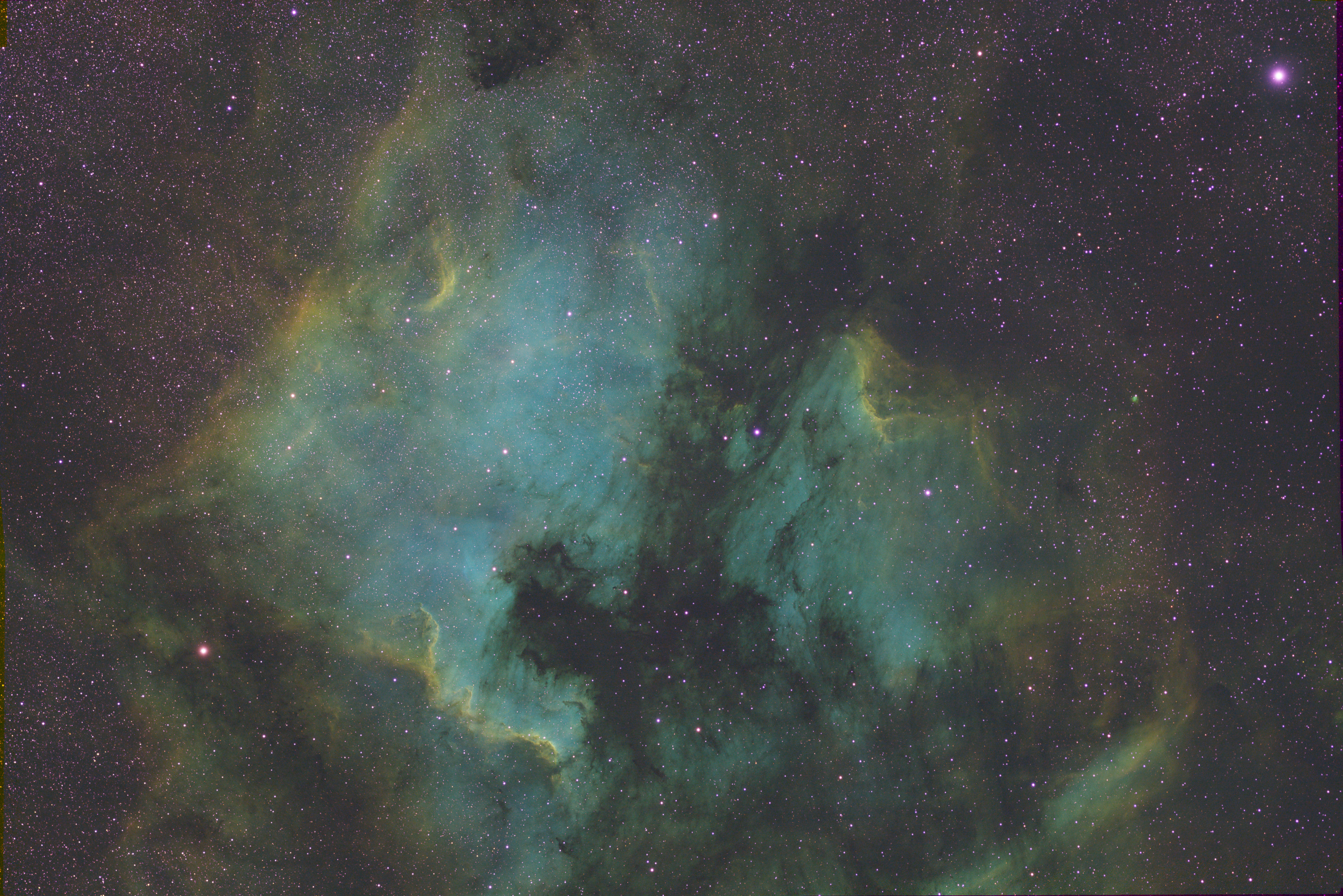
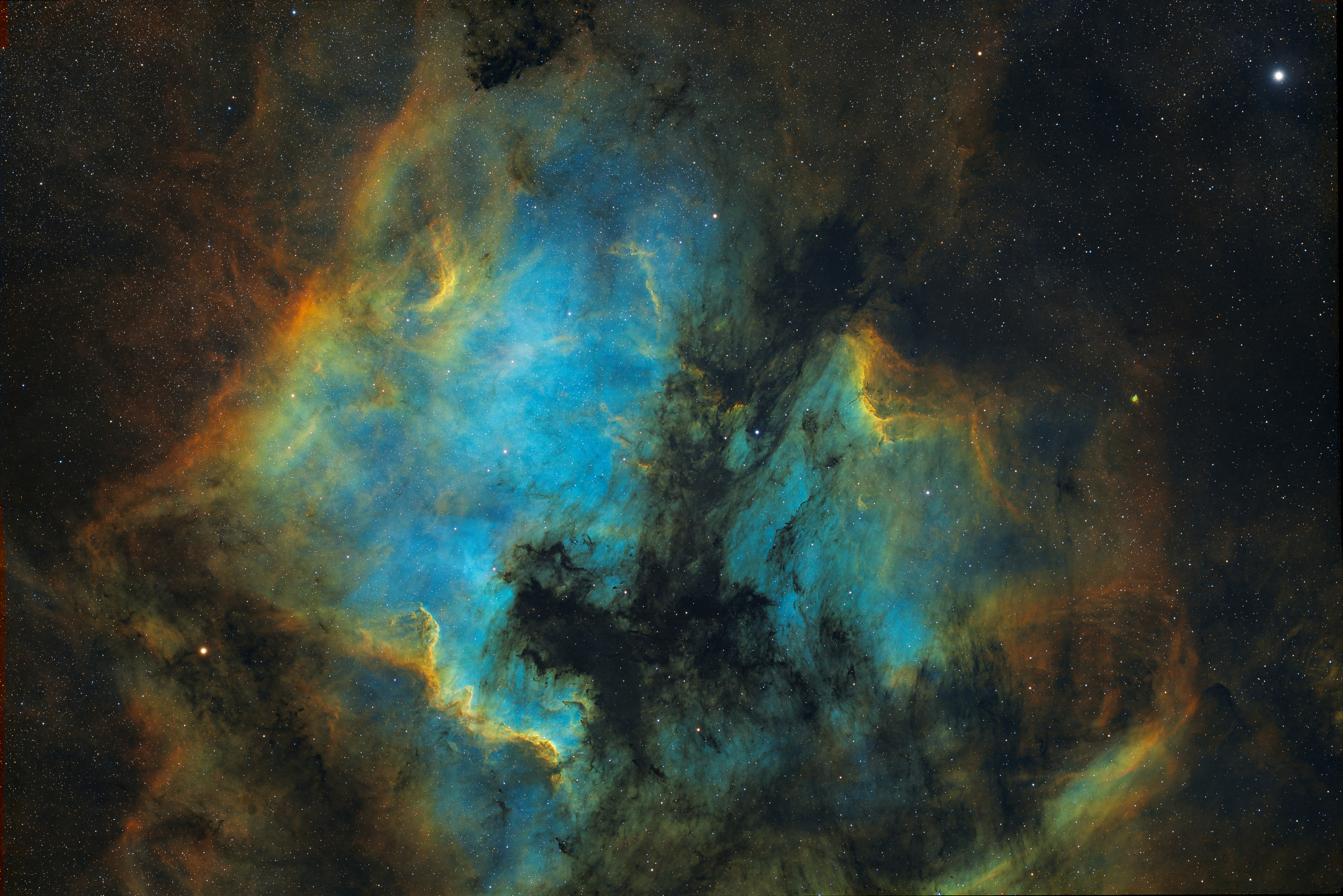
Licence: for personal use, credit Damon Scotting. Both JPEGs 4,096 x 2,733 px.
-10 C sensor set point the set point I run every cooled camera at
278 mm focal length, plate solved on the Askar SQA60 Pro (276 mm by Askar)
4.85 x 3.24° field of view 6,248 x 4,176 px on ASI2600MM Air
26 MP ASI2600MM Air 6,248 x 4,176 px, 23.5 x 15.7 mm
Should you buy it?
84/100 Stars for Your Buck
Pros
- Every cable goes straight into the camera: the camera angle adjuster, the filter wheel, the mount power and the autofocuser. No loose cables dangling everywhere.
- It has four USB ports plus a USB-C port for getting your images off it.
- Every shot is 26 megapixels, so there is plenty of room to zoom in and crop.
- On the Askar SQA60 Pro it fits the whole Veil Nebula, the aftermath of a stellar explosion, in one field of view.
- There is no separate guide scope or guide camera: the guide sensor is built in.
Cons
- Behind very narrow filters, around 2.5 or 3 nm, the guide sensor struggles, because it has to see through them.
- With the gain pushed to 400 or 500 it does a decent job through hydrogen alpha, but it struggles in SII and OIII.
- At the very long focal length of the C11 EdgeHD, the guide sensor really suffers in narrowband.
- At £2,499 at First Light Optics it costs £350 more than the colour ASI2600MC Air, before the filter wheel and filters a mono camera needs.
It is still significant value for money: not quite the bargain the ASI585MC Air is, but I like it, and it is a very useful piece of kit.
Who the ASI2600MM Air is for
Narrowband imager with a filter wheel
Buy
The filter wheel, the focuser, the angle adjuster and the mount power all plug into the camera, and the ASIAIR is already inside.
LRGB galaxy imager
Buy
A 26 MP mono APS-C sensor takes luminance and RGB with the ZWO LRGB set, as my Andromeda Galaxy did in an hour and a half.
Wide-field refractor owner
Buy
On a 276 mm astrograph the whole Veil Nebula fits in one frame.
First cooled camera
Skip
My recommendation is the ASI2600MC Air: colour needs no filter wheel, and its guide sensor never sits behind a 3 nm filter.
Long focal length imager
Skip
Behind narrowband filters at a C11 EdgeHD's focal length the built-in guide sensor struggles; plan on a separate guide camera.
Budget mono imager
Skip
My recommendation is the ToupTek ATR2600MM: the same IMX571 mono sensor for about £1,000 less, with its own guide camera and controller.
Three alternatives I have reviewed
- ZWO ASI2600MC Air The same body, ASIAIR and guide sensor with a colour sensor 88/100 £2,149 Read the review
- ToupTek ATR2600MM The same IMX571 mono sensor in a plain cooled body 73/100 £1,488 Read the review
- ZWO ASI585MM Air A smaller IMX585 mono sensor with the ASIAIR and guider inside 83/100 £1,099 Read the review
Questions and more about this review
Reviewed by
Damon Scotting
The Telescope Man Verified
BSc (Hons) Physics with Astrophysics and Cosmology, Loughborough University PGCE / QTS, University of Nottingham
About Damon About Damon Damon Scotting is The Telescope Man. He holds a BSc (Hons) in Physics with Astrophysics and Cosmology from Loughborough University and a PGCE with QTS from the University of Nottingham, and taught physics in secondary schools before becoming an astronomy creator. He is a contributing writer for BBC Sky at Night Magazine and the author of 42 Wonders of Our Night Sky, and his photograph of the galaxy M100 with the dwarf planet Ceres was Highly Commended in the Astronomy Photographer of the Year 2024 competition run by Royal Observatory Greenwich. He has appeared on the BBC's Blue Peter. More than 750,000 people follow his astronomy channels on YouTube, Instagram and TikTok, and he has reviewed more than 140 telescopes, mounts, cameras, filters and accessories hands-on for this site. More about Damon · How I test · Damon's book
I review all kinds of gear: most of it I buy, some is gifted and some is loaned, and all of it is reviewed the same way. How this site is funded
Seven questions, answered
Questions about the ZWO ASI2600MM Air
Reviewed 1 September 2026 ·Updated 24 September 2026
I review all kinds of gear. Most of it I buy, some is gifted and some is loaned, and all of it is reviewed the same way: no company sees or approves a review before it is published. Shop links marked Ad are affiliate links: I earn a commission when you buy through them, at no extra cost to you. How this site is funded
- Does the built-in guide sensor work through narrowband filters? It struggles behind 2.5 and 3 nm filters because it has to see through them with one or two second exposures. With the gain at about 400, sometimes 500, it does a decent job through hydrogen alpha but struggles in SII and OIII. For my July narrowband run I guided with a separate ASI120MM Mini. What is it for ↓
- What else do I need to image with it? A filter wheel and filters. My rig was a ZWO camera angle adjuster, a ZWO 7 x 2 inch filter wheel with HSO narrowband and RGB filters, and a ZWO electronic focuser, all plugged into the camera. In the hand ↓
- ASI2600MM Air or ASI2600MC Air? The mono camera gives narrowband detail, but its guide sensor has a harder time behind narrowband filters, which is the only reason I scored it a little lower than the colour Air. The specifications and the comparison table ↓
- Does it need a computer or an ASIAIR? No. The ASIAIR is inside the camera, with 256 GB of storage, and runs from the ZWO phone app over Wi-Fi; in my rig it ran the filter wheel, the focuser and the mount. The specifications and the comparison table ↓
- What field does it give on a small refractor? On the Askar SQA60 Pro my stacks solve at 278 mm, a field of 4.85 x 3.24 degrees: enough for the whole Veil Nebula or the Heart and Soul together. Tested numbers and the download ↓
- What mount does it need? The camera weighs 775 g. On the SQA60 Pro with a guide scope, a guide camera and 1 kg of filter wheel and focuser the rig is about 5.7 kg, within the 8 kg the ZWO AM3N carries without a counterweight, and mine carried it for the whole run. The rig on the mount ↓
- What have I not tested on the ASI2600MM Air? I have not measured its read noise, dark current or cooling time, used it for planetary imaging or run it from a laptop.