Altair 60EDF review: a 60 mm FPL53 doublet for a first rig
Where does it rank on our leaderboard
| Rank | Telescope | Stars for Your Buck | Recorded UK price |
|---|---|---|---|
| 1 | Askar 50P | 95 out of 100 | £299 |
| 2 | ToupTek Hope D60 | 93 out of 100 | £749 |
| 5 | Celestron 8" EdgeHD | 90 out of 100 | £1,999 |
| 16 | SVBONY SV555 | 79 out of 100 | £509 |
| 26 | Askar SQA60 Pro | 71 out of 100 | £1,249 |
| 32 | Sky-Watcher HAC125 | 61 out of 100 | £405 |
| 38 | Altair 60EDF | 51 out of 100 | £499 |
| 41 | Celestron 114 LCM | 42 out of 100 | £361 |
| 42 | Celestron AstroMaster LT 76 | 13 out of 100 | £200 |
Contents
- 01 Where does it rank on our leaderboard
- 02 Specifications and features
- 03 In the hand
- 04 How good is it? Here's what I captured
- 05 Raw against finished
- 06 The rig on the mount
- 07 What is it for
- 08 Versus the ZWO Seestar S30 Pro
- 09 Watch the review
- 10 Tested numbers and the download
- 11 Should you buy it?
- 12 Questions and more about this review
In 30 seconds
Stars for Your Buck 51/100
Reviewed 11 Jul 2025 Updated 23 Sep 2026
- Rank
- #38 of 42 telescopes
- Verdict
- With reservations
Written by Damon Scotting 8 min read
Buy it if
- You want a small, light ED doublet to build a first guided imaging rig on a small tracking mount.
- You image with a 585-size sensor and want about 2.2 x 1.2 degrees of sky for the bright nebulae and galaxies.
- You buy in the UK, where the maker sells it direct with a reducer or flattener included.
Skip it if
- You want the easiest way into deep-sky imaging: a smart telescope needs no laptop, guiding or long setup.
- You need a flat field across a large sensor: Altair publishes no image circle for this doublet.
“It is a very small telescope, but it is what we like to refer to as a premium telescope. The glass used within this telescope is FPL53, which is very high quality.”
Specifications and features
Against the telescopes I have reviewed
Compare with
| Altair 60EDF reviewed #38 of 42 | Askar 60F #8 of 42 | Celestron 63ED #40 of 42 | Askar 71F #14 of 42 | Askar 50P #1 of 42 | ToupTek Hope D60 #2 of 42 | |
|---|---|---|---|---|---|---|
| Recorded UK price | £499 | £498 | £322 | £599 | £299 | £749 |
| Stars for Your Buck | 51/100 | 87/100 | 43/100 | 81/100 | 95/100 | 93/100 |
| Aperture | 60 mm | 60 mm | 63.5 mm | 71 mm | 50 mm | 60 mm |
| Focal length | 360 mm (288 mm with the 0.8x reducer) | 408 mm | 381 mm | 490 mm | 190 mm | 280 mm |
| Focal ratio | f/6 (f/4.8 with the 0.8x reducer) | f/6.8 | f/6 | f/6.9 | f/3.8 | f/4.66 |
| Optical design | ED doublet, S-FPL53 objective, fully multi-coated | Quadruplet air-spaced APO, one ED element, self-flattening | Doublet refractor with one ED element, fully multi-coated | Quadruplet air-spaced APO, one ED element, self-flattening | Quadruplet Petzval APO, one SD element | 5-element planar apochromatic (PAPO) refractor with built-in field flattener, SD glass and lanthanum glass |
| Image circle | APS-C with the optional 1.0x flattener | 44 mm | 1 inch | 44 mm | APS-C format | 44 mm |
| Back focus | 55 mm with the 0.8x reducer or the 1.0x flattener | Imaging mode 31 to 81 mm from the M48x0.75 male thread base | not recorded | Imaging mode maximum 82.5 mm from the M48x0.75 male thread base | 50 to 65 mm range; 55 mm recommended | 55 mm connection distance recommended |
| Focuser | 2.5 inch dual-speed 1:10 rack and pinion, rear camera rotator | 2.4 inch dual-speed rack and pinion, 1:10 fine focus, 50 mm travel, 360 degree scale rotator | 2 inch dual-speed 1:10 CNC-machined focuser | 2.4 inch dual-speed rack and pinion, 1:10 micro-focusing, 360 degree scale rotator | integrated single-speed focuser ring with MXL teeth (electronic-focuser compatible), 15 mm focuser travel, rear rotator with locking screw | 3-inch rack and pinion, 30 mm travel, coarse and fine (dual-speed), zero backlash, 360 degree CAA rotator, compatible with electronic focusers |
| Weight, tube | about 1.5 kg with ring and rear camera rotator | 2.36 kg OTA; 2.86 kg gross with tube rings and dovetail plate | about 2.5 kg with accessories | 2.5 kg OTA; 3.0 kg gross with tube rings and dovetail plate | 1.4 kg gross including tube ring and dovetail plate | About 3.5 kg as supplied, not a bare-tube figure |
| Length, tube | 230 mm dew shield retracted; 300 mm extended | 289 mm dew shield contracted; 323 mm extended (with 1.25 inch adapter); 336 / 369 mm with the photographic adapter | not recorded | 372.5 mm dew shield retracted; 430.9 mm extended (with 1.25 inch adapter); up to 473.4 mm with the photographic adapter | 147 mm dew shield contracted; 182 mm dew shield extended | 255 mm with dew shield retracted |
| Dew shield | Retractable | Retractable | Retractable | Retractable | Retractable | retractable dew shield (hood), magnetic positioning |
| In the box | Tube with retractable dew shield, optical test report, 2.5 inch focuser with camera rotator, 2 inch push-fit and 1.25 inch adapters, X-rings with quick-release clamp, 200 mm Vixen dovetail, top handle rail (Vixen and Arca), lens cap and dust plug | 60F OTA, pair of tube rings, handle, 230 mm Vixen dovetail plate, set of photographic adapters | Tube rings, Vixen dovetail bar, mounting screws | 71F OTA, tube rings, handle, Vixen dovetail plate, photographic adapters | 50P OTA (tube ring and dovetail plate counted in the gross weight), manual | front lens cap, tube ring, dovetail plate, handle, M48x0.75 male adapter, dust cover, dovetail rail, threaded insert, hex wrench, user manual, tilt adjuster |
In the hand
On the mount with its guide scope
Red rings and top handle
The guide scope on the handle
The S-FPL53 objective
The dew shield end
Under the Moon
How good is it? Here's what I captured
Seven targets
M 42 Orion Nebula, Altair Hypercam 585C
- Integration
- 1 h 30 min (18 x 300 s)
- Field
- 2.10 x 1.16 degrees
- Telescope
- Altair 60EDF with the 0.8x reducer
- Camera
- Altair Hypercam 585C
- Mount
- Sky-Watcher Star Adventurer GTi
- Target
- M 42 Orion Nebula
- Type
- Emission nebula
- Location
- Bortle 6.8 (in my garden)
NGC 2237 Rosette Nebula, Altair Hypercam 585C
- Integration
- 2 h (24 x 300 s)
- Field
- about 2.2 x 1.2 degrees
- Telescope
- Altair 60EDF with the 0.8x reducer
- Camera
- Altair Hypercam 585C
- Mount
- Sky-Watcher Star Adventurer GTi
- Target
- NGC 2237 Rosette Nebula
- Type
- Emission nebula
- Location
- Bortle 6.8 (in my garden)
IC 434 Horsehead Nebula, Altair Hypercam 585C
- Integration
- 1 h (12 x 300 s)
- Field
- 2.19 x 1.23 degrees
- Telescope
- Altair 60EDF with the 0.8x reducer
- Camera
- Altair Hypercam 585C
- Mount
- Sky-Watcher Star Adventurer GTi
- Target
- IC 434 Horsehead Nebula
- Type
- Dark and emission nebula
- Location
- Bortle 6.8 (in my garden)
M 31 Andromeda Galaxy, Altair Hypercam 585C
- Integration
- 30 min (10 x 180 s)
- Field
- 2.19 x 1.23 degrees
- Telescope
- Altair 60EDF with the 0.8x reducer
- Camera
- Altair Hypercam 585C
- Mount
- Sky-Watcher Star Adventurer GTi
- Target
- M 31 Andromeda Galaxy
- Type
- Spiral galaxy
- Location
- Bortle 6.8 (in my garden)
IC 1396 Elephant's Trunk Nebula, Altair Hypercam 585M TEC, HSO
- Integration
- 45 min (15 x 180 s: H 5, S 5, O 5)
- Field
- 2.25 x 1.26 degrees
- Telescope
- Altair 60EDF with the 0.8x reducer
- Camera
- Altair Hypercam 585M TEC
- Mount
- Sky-Watcher Star Adventurer GTi
- Target
- IC 1396 Elephant's Trunk Nebula
- Type
- Emission nebula
- Location
- Bortle 6.8 (in my garden)
NGC 7000 North America Nebula, Altair Hypercam 585M TEC, HSO
- Integration
- 1 h 12 min (24 x 180 s: H 10, S 6, O 8)
- Field
- 2.25 x 1.26 degrees
- Telescope
- Altair 60EDF with the 0.8x reducer
- Camera
- Altair Hypercam 585M TEC
- Mount
- Sky-Watcher Star Adventurer GTi
- Target
- NGC 7000 North America Nebula
- Type
- Emission nebula
- Location
- Bortle 6.8 (in my garden)
NGC 6960 Veil Nebula (four-panel mosaic), Altair Hypercam 585M TEC
- Integration
- Unknown
- Field
- Unknown
- Telescope
- Altair 60EDF
- Camera
- Altair Hypercam 585M TEC
- Mount
- Sky-Watcher Star Adventurer GTi
- Target
- NGC 6960 Veil Nebula (four-panel mosaic)
- Type
- Supernova remnant
- Location
- Bortle 6.8 (in my garden)
Raw against finished
The rig on the mount
The 6 targets, the raw combined stack against my finished image, each with its integration, the camera and the palette:
- M 42 Orion Nebula: 1 h 30 min (18 x 300 s) of light, Altair Hypercam 585C, the raw combined stack with one automatic stretch
- NGC 2237 Rosette Nebula: 2 h (24 x 300 s) of light, Altair Hypercam 585C, the raw combined stack with one automatic stretch
- IC 434 Horsehead Nebula: 1 h (12 x 300 s) of light, Altair Hypercam 585C, the raw combined stack with one automatic stretch
- M 31 Andromeda Galaxy: 30 min (10 x 180 s) of light, Altair Hypercam 585C, the raw combined stack with one automatic stretch
- IC 1396 Elephant's Trunk Nebula: 45 min (15 x 180 s) of light, Altair Hypercam 585M TEC, HSO, the raw combined stack with one automatic stretch
- NGC 7000 North America Nebula: 1 h 12 min (24 x 180 s) of light, Altair Hypercam 585M TEC, HSO, the raw combined stack with one automatic stretch
On the TeSeek 11, then on six other mounts
What is it for
Five things it is for
Premium glass in a small tube
The Altair 60EDF promises some very sharp images: a 60 mm ED doublet with an S-FPL53 objective, in a tube 23 cm long with the dew shield retracted.
Fast with the reducer
At f/6 the focal length is 360 mm, fairly wide, which frames the majority of targets in our night sky. With a 0.8x reducer at the back it drops to 288 mm at f/4.8, a very fast telescope, and with a 585 camera the field is almost perfect for the brightest deep-sky objects.
Guided long exposures
To take five or even ten minute exposures I added Altair's 32 mm guide scope and its 462 Mark II guide camera, an excellent lightweight guiding setup that rides on top of the tube.
Room to grow
A rig like this is expandable. I kept the telescope and added a cooled monochrome 585 camera, a seven-slot filter wheel, an autofocuser and hydrogen alpha, sulphur and oxygen filters, and the same tube took my narrowband images.
Mosaics for the biggest targets
The field is quite large, and you can make it bigger still by stitching panels together: my four-panel Veil Nebula fits the whole supernova remnant, so I did not have to choose between the western and eastern halves.
Versus the ZWO Seestar S30 Pro
M 31 Andromeda Galaxy on both, plate-solved and star-aligned (residual 0.12 px per 1000)
| Target | Telescope | Integration | Subs | Filter | Nights |
|---|---|---|---|---|---|
| M 31 Andromeda Galaxy | Altair 60EDF + Hypercam 585C | 30 min | 10 x 180 s | none (one-shot colour) | not recorded |
| M 31 Andromeda Galaxy | ZWO Seestar S30 Pro | 127 min | 763 x 10 s | IR-cut | 2026-08-22 |
Watch the review
What YOU can SEE with a NEW £2000 Telescope setup?! · published 11 July 2025 · 9:20 · Watch on YouTube · 7,438 views, 458 likes on 2 Oct 2026
Jump to
- 1:57 Total cost of equipment
- 2:53 The telescope: Altair 60EDF, FPL53 glass
- 3:25 The 0.8x reducer: 288 mm at f/4.8
- 3:49 Guide scope and guide camera
- 5:21 The field of view, and the Pleiades
- 6:33 Images
- 7:29 Markarian's Chain, a four-panel mosaic
- 8:18 Conclusion
Transcript of the review video 1,590 words · 11 chapters · searchable
Press a time stamp to play from there.
0:00 Intro
0:00 This is a complete astrophotography setup and it costs two thousand British pounds. 0:05 But how good are the images that you can capture with this rig? 0:09 Well in today's video we're gonna find out. 0:09 I'm Damon Scotting and this is Astronomical.
0:18 Who are Altair Astro?
0:18 So this right here is a complete astrophotography setup. 0:18 As far as I'm concerned this is the baseline for everything you need to take long exposure images of our night sky. 0:26 It includes a go-to tracking mount, your main telescope, a guide scope, a guiding camera, your main camera, and a couple of other accessories that enhance the quality of your images. 0:35 Now as we're all painfully aware, astrophotography is not a cheap hobby to get involved in, so it's really important to make sure that what you're purchasing is going to give you the results that you're hoping to achieve. 0:45 Which is why today's video is largely furnished by equipment from Altair Astro. 0:48 Altair Astro are a very well respected UK based company that ship internationally. 0:55 They are most well known for providing high quality and affordable astronomy gear and their customer service is unmatched. 0:58 I've been speaking with them a lot recently and you can tell how passionate they are about a hobby and that they will do anything they can to help. 1:05 In fact this video idea was largely developed by them as a way to help beginners get started with an affordable astrophotography setup. 1:11 Their website link and all of the products featured today are listed in a description below. 1:18 I strongly encourage you to have a look and check them out. 1:18 They've been around for ages but they don't invest tons in promotion and advertising choosing to let their work and the word of mouth speak for them instead. 1:27 But yeah the bottom line is I really like them and I'm more than happy to showcase their work in today's video. 1:32 This video will be the first in a new series of videos in which I explain what you can see with different budgets and different types of gear. 1:39 I've already started making a follow-up video to this titled what you can see with a three thousand pound telescope setup so make sure you're subscribed for all of these and if you really don't care too much about the gear and just want to see the the pictures I've captured with it, then I've included timestamps to all of the important moments in today's video. 1:54 Okay let's get started. 1:54 So here is our complete setup and you're probably wondering how I came to the conclusion that this is the rig to build for £2,000.
1:57 Total cost of equipment
2:02 Because let's face it that's not an easy decision to come to especially because there are so many different options now on the telescope market as to what equipment you should buy.
2:11 The mount: Sky-Watcher Star Adventurer GTi
2:12 I'm going to start off by talking about the mount. 2:12 The mount was probably the easiest decision I had to make in this entire rig and that's because this is a Skywatcher Star Adventurer GTi tracking mount which is essentially a budget solution for low payload setups. 2:22 The essence of this video is to keep the cost down as low as possible which is why I've gone for this because it's capable but also cost-effective. 2:30 At £535 this mount is essentially one of the most affordable go-to tracking mounts on the market. 2:38 The Skywatcher Star Adventurer GTi is actually very easy to use and you can control it remotely with its own user-friendly app. 2:42 You can buy the mount head on its own but I went for the version with the tripod and pillar mount attachments. 2:49 Then moving on to the actual payload itself, the really important part of your telescope setup.
2:53 The telescope: Altair 60EDF, FPL53 glass
2:54 I'm going to start off by talking about the telescope which is an Altair 60EDF Refractor Telescope. 2:58 Now it is a very small telescope but it is what we like to refer to as a premium telescope. 3:04 The glass used within this telescope is FPL53 which is very high quality. 3:10 The aperture of the telescope is 60 millimetres and the focal ratio is f/6 which means your total focal length is 360 millimetres which is fairly wide allowing you to capture the majority of targets in our night sky. 3:21 But I've taken it one step further by introducing a 0.8x reducer at the back end of the telescope which actually reduces my focal length down to 288 millimetres and also my focal ratio down to f/4.8.
3:25 The 0.8x reducer: 288 mm at f/4.8
3:31 So f/4.8 means that this is a very fast telescope. 3:39 Now I'm hoping that if I properly align this telescope mount I'll be able to take some relatively long exposure images with this telescope, especially because it now has such a wide field of view.
3:49 Guide scope and guide camera
3:50 But just to guarantee that I can take five, maybe even 10 minute long exposures, I'm going to also add a guide scope and guide camera. 3:58 Now I want to talk in particular about the Altair Astro new guide camera just here because it is very affordable and the specifications of this are incredibly interesting. 4:07 At £129 the Altair 462 Mark II offers 1080p resolution and 2.9 micrometres pixel size, which is very nice. 4:14 Pop this on top of your scope inside the Altair MG32 mini guide scope and you have yourself an excellent lightweight guiding setup.
4:22 The camera: Altair Hypercam 585C
4:23 And then lastly the final component of this setup is the camera. 4:23 This is an Altair Astro 585 and what's really interesting about its design is that it actually implements a fan feature but you don't need a separate power supply for it. 4:33 It's priced at pretty much the same amount as all the other 585 sensors on the market. 4:38 This is the same camera sensor as the one used in the Player One Uranus-C camera and the ASI585. 4:43 These cameras have become two of the most popular astronomy cameras on the market and with good reason. 4:47 They are affordable and capable of capturing spectacular images not just of deep sky objects but also of the planets. 4:56 You can purchase their most expensive cooled variant models for a bit more but what's so What's so incredible about the Altair design is that it's the first camera to not need an additional power supply to cool itself down, you can operate the fan with just a data cable plugged in. 5:11 And if that wasn't an incentive enough to choose the Altair 585C over the two most popular alternatives on the market, well then the fact that it is also priced at 10% cheaper than the others really sweetens the deal.
5:21 The field of view, and the Pleiades
5:22 When you combine the telescope, reducer and camera together you get almost the perfect field of view in terms of imaging the brightest deep sky objects in our night sky. 5:31 And as proof, this is how the Pleiades look through this setup, which is especially nice considering our total cost is £1,746.50. 5:39 So yeah that about covers the entire setup I'm going to be using today and I think the last thing I need to possibly mention is that I'm going to control all of this using my laptop. 5:49 I didn't think there was any reason to include this in the total cost of making a setup but I am mentioning it for full clarity. 5:54 The thing is basically everyone has their own laptop or computer and the software that you need in order to control this entire setup and capture images is actually completely free. 6:02 I'll attach some links in the description below for the software that you can use. 6:05 In fact, when the guide camera here arrived, on the cover of the box was actually a logo indicating that you can get a year's worth of SharpCap for free, purely because you've purchased this camera. 6:14 And if you don't want to use SharpCap, you can of course use Altair Astro's free software, Altair Capture. 6:19 And then if you want to go a little bit further and do an all-in-one setup, you can use a software such as N.I.N.A.. 6:24 Yeah, I'll attach links in the description below. 6:25 All right, enough talking. 6:26 Let's finally put this telescope rig to the test.
7:29 Markarian's Chain, a four-panel mosaic
7:29 For the final image I stitched together 4 images to make a 32 megapixel mosaic shot of the Markarian chain. 7:56 The field of view of this scope is quite large but you can always make your shots even bigger and higher resolution by stitching them together like this. 8:04 In doing so I have been able to include almost 50 more galaxies as well as one of the largest black holes known to man, M87. 8:17 My final thoughts, the conclusion of what I think of this setup is that it is in fact the baseline for a beginner astrophotography setup.
8:18 Conclusion
8:24 this is everything you are going to need. 8:26 It's the perfect foundation to then build upon. 8:29 I'm already planning on making a follow-up video to this titled, what you can see with a 3,000 pound telescope setup. 8:35 And it's gonna be a very similar rig to what this is right now. 8:38 But the main difference I'm going to implement is I'm gonna start using a monochrome camera and a set of filters, and then maybe add an autofocuser and a couple more little gizmos. 8:46 There is a fair bit of flexibility when you add an extra 1,000 pounds to your budget. 8:51 So if you're interested in seeing that video and more videos like this, make sure you are subscribed. 8:53 Thanks for watching, I'm Damon Scotting and this was Astronomical.
Check out more videos on the Altair 60EDF
What YOU can SEE with a £3000 Telescope setup?!
23 Jul 2025
Seestar S30 pro V.S My $2000 Telescope rig - Image comparison
3 Jan 2026
Tested numbers and the download
Finished image
- Download the raw stack JPEG · 1.7 MB · 3,686 x 2,021
- Download the finished image JPEG · 1.7 MB · 3,686 x 2,021
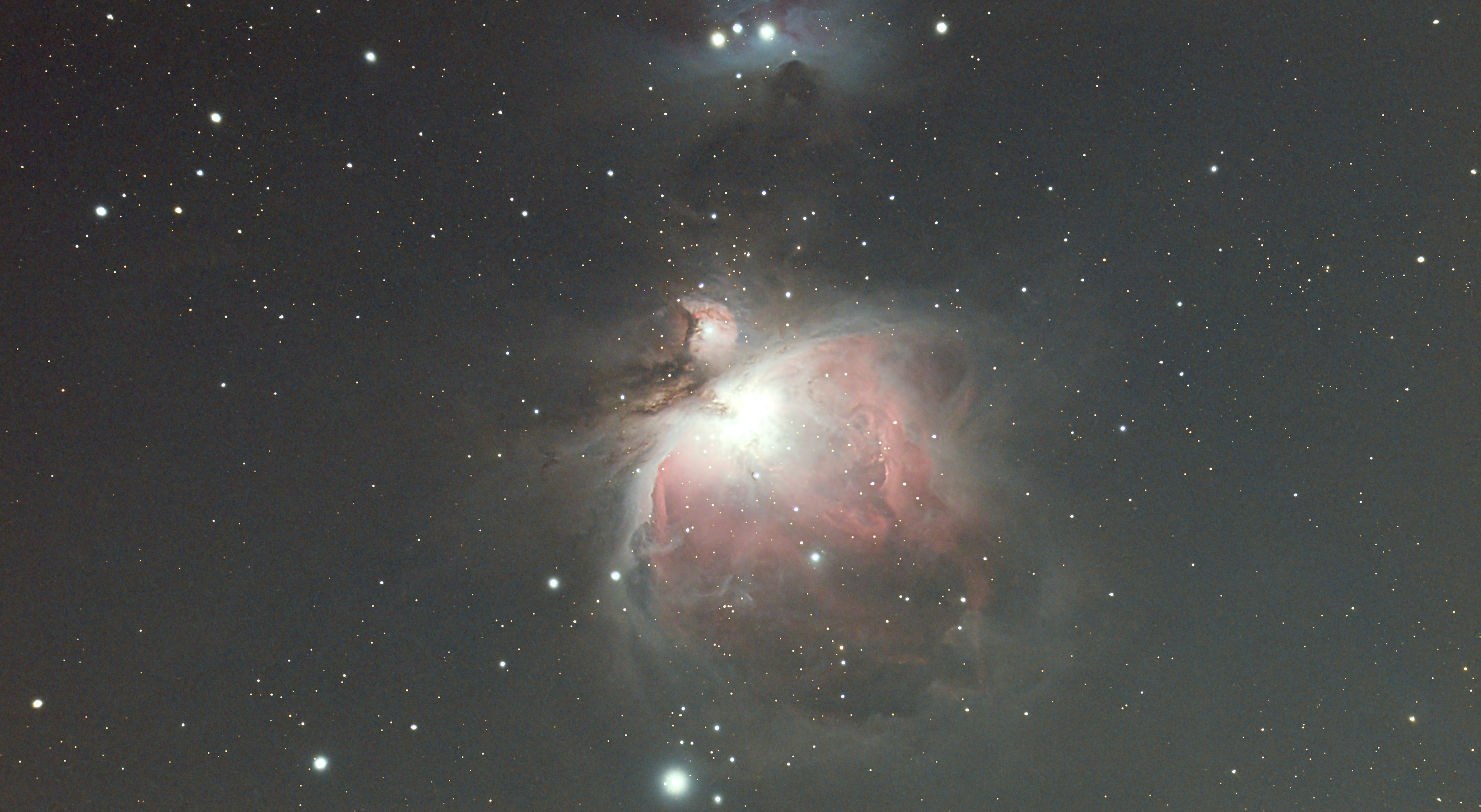
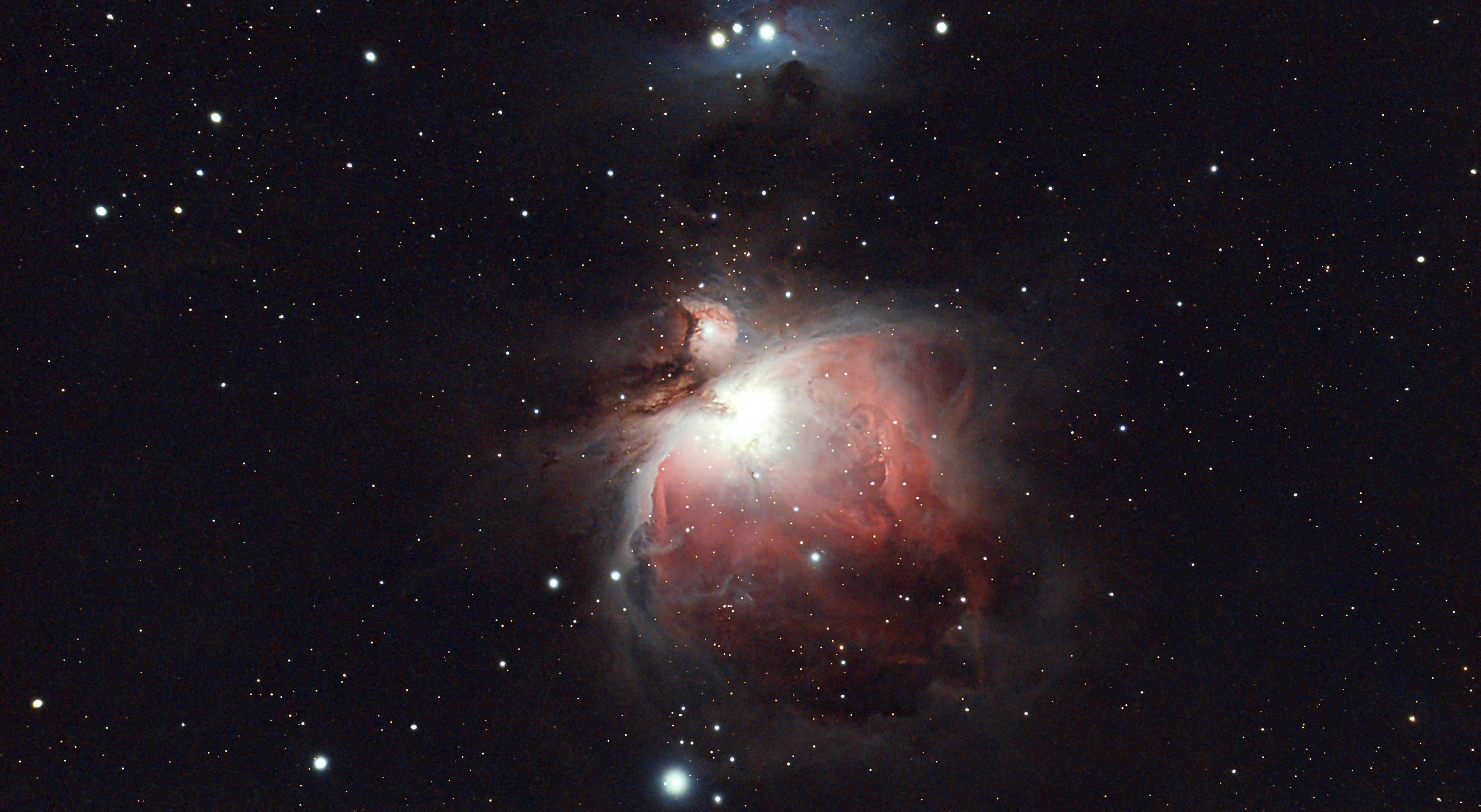
Licence: for personal use, credit Damon Scotting. Both JPEGs 3,686 x 2,021 px.
-10 C sensor temperature during imaging set point -10 C
287 mm focal length, plate solved Altair states 288 mm
2.23 x 1.25° field of view 3,840 x 2,160 px on Altair Hypercam 585M TEC
8.3 MP Altair Hypercam 585M TEC 3,840 x 2,160 px, 11.1 x 6.3 mm
Should you buy it?
51/100 Stars for Your Buck
Pros
- Premium S-FPL53 glass in a very small, light 60 mm ED doublet.
- Fast with the 0.8x reducer: 288 mm at f/4.8, and my plate solves agree to within a few millimetres.
- On a 585 sensor it frames the Rosette, the Horsehead and the Orion Nebula with room around them.
- Light enough for a small tracker: my whole guided rig ran on a Sky-Watcher Star Adventurer GTi with 5-minute subs.
- Expandable: the same tube took narrowband with a mono camera, a filter wheel and an autofocuser.
- Against the Seestar S30 Pro, which shares its 585 sensor, it has a bigger aperture, better sampling and more sophisticated guiding.
Cons
- At 60 mm of aperture it gathers less light than the 71 mm and 80 mm refractors on my board.
- There is no built-in flattener: a flat field needs the 0.8x reducer or 1.0x flattener at 55 mm spacing, and Altair publishes no image circle.
- At £499 it costs the same as the Askar 60F at £498, a self-flattening quadruplet with a 44 mm image circle.
- As a traditional rig it needs a laptop, guiding and careful focusing every night, and a smart telescope is far easier to set up.
It is in fact the baseline for a beginner astrophotography setup: this is everything you are going to need, and it is the perfect foundation to then build upon.
Who the 60EDF is for
Complete beginner
Skip
My recommendation is the Seestar S30 Pro: the same 585 sensor, set up in minutes, for about a quarter of the cost of my rig.
Beginner building a first traditional rig
Buy
With a Star Adventurer GTi, a small guide scope and a 585 camera it makes a complete first rig that you can upgrade later.
Owner of a 585 camera
Buy
My whole rig was built around a 585 camera, and behind the reducer it frames the bright nebulae well.
APS-C or full-frame imager
Skip
For a flat field on a large sensor my recommendation is the Askar 60F, which covers 44 mm for the same money.
Buyer in the US
Skip
My recommendation is the Askar 60F, which Agena Astro has in stock at $499.
Owner of a 50 mm astrograph
Skip
Ten more millimetres is not a real step up from a RedCat 51 or an Askar 50P: my recommendation is to save for 70 mm or more, such as the Askar 71F.
Three alternatives I have reviewed
- Askar 60F Costs the same and needs no reducer or flattener for a flat field. 87/100 £498 Read the review
- Askar 50P My top-rated small refractor: a 50 mm f/3.8 Petzval for far less. 95/100 £299 Read the review
- ZWO Seestar S30 Pro The same 585 sensor in a smart telescope, and far easier to use. 99/100 £649 Read the review
Questions and more about this review
Reviewed by
Damon Scotting
The Telescope Man Verified
BSc (Hons) Physics with Astrophysics and Cosmology, Loughborough University PGCE / QTS, University of Nottingham
About Damon About Damon Damon Scotting is The Telescope Man. He holds a BSc (Hons) in Physics with Astrophysics and Cosmology from Loughborough University and a PGCE with QTS from the University of Nottingham, and taught physics in secondary schools before becoming an astronomy creator. He is a contributing writer for BBC Sky at Night Magazine and the author of 42 Wonders of Our Night Sky, and his photograph of the galaxy M100 with the dwarf planet Ceres was Highly Commended in the Astronomy Photographer of the Year 2024 competition run by Royal Observatory Greenwich. He has appeared on the BBC's Blue Peter. More than 750,000 people follow his astronomy channels on YouTube, Instagram and TikTok, and he has reviewed more than 140 telescopes, mounts, cameras, filters and accessories hands-on for this site. More about Damon · How I test · Damon's book
I review all kinds of gear: most of it I buy, some is gifted and some is loaned, and all of it is reviewed the same way. How this site is funded
Eight questions, answered
Questions about the Altair 60EDF
Reviewed 11 July 2025 ·Updated 23 September 2026
I review all kinds of gear. Most of it I buy, some is gifted and some is loaned, and all of it is reviewed the same way: no company sees or approves a review before it is published. How this site is funded
- Does the Altair 60EDF need a flattener? For a flat field, yes. It is a bare ED doublet, and I imaged through Altair's 0.8x reducer, which makes it 288 mm at f/4.8. Altair also sells a 1.0x flattener; both need 55 mm of spacing, and Altair's own shop offers one of them free with the telescope. The specifications and the comparison table ↓
- What focal length does the Altair 60EDF really give? My plate solves read 359.5 mm without the reducer, against 360 mm stated. With the 0.8x reducer they read 284 to 292 mm against 288 mm stated, depending on the camera and its spacing. Tested numbers and the download ↓
- Which camera suits the Altair 60EDF? I used Altair's Hypercam 585C and the cooled Hypercam 585M TEC. Behind the reducer the 585 sensor frames about 2.2 x 1.2 degrees. What I captured ↓
- Can a small tracking mount carry it? Yes. The tube weighs about 1.5 kg with its ring and rotator; I imaged the Horsehead, Orion and the Rosette in 5-minute subs on a Sky-Watcher Star Adventurer GTi with its counterweight. The rig on the mount ↓
- Is the Altair 60EDF better than a Seestar S30 Pro? On paper it wins, and it is expandable. The Seestar is far easier to use, though, and at about a quarter of the cost of my rig it is the better buy for most people. Versus the ZWO Seestar S30 Pro ↓
- Can it take narrowband images? Yes, with a mono camera and filters. My Elephant's Trunk is 5 subs each of hydrogen alpha, sulphur and oxygen at 180 s, and my North America Nebula is 24 subs, both through the 0.8x reducer. The raw stacks against the finished images ↓
- Where can I buy the Altair 60EDF? The prices I recorded: £499 at Altair Astro (UK), in stock. A record, not a live price The verdict, the readers and the sellers ↓
- What have I not tested on the 60EDF? I did not use it with a sensor larger than the 585, with the 1.0x flattener, or visually at the eyepiece.