Celestron C11 EdgeHD review: an 11-inch beast for narrowband
Where does it rank on our leaderboard
| Rank | Telescope | Stars for Your Buck | Recorded UK price |
|---|---|---|---|
| 1 | Askar 50P | 95 out of 100 | £299 |
| 2 | ToupTek Hope D60 | 93 out of 100 | £749 |
| 8 | Askar 60F | 87 out of 100 | £498 |
| 18 | Celestron C11 EdgeHD | 75 out of 100 | £4,845 |
| 19 | Sky-Watcher Heliostar 76Ha | 74 out of 100 | £2,399 |
| 29 | William Optics RedCat 51 | 69 out of 100 | £849 |
| 36 | Nakoh 60GT | 52 out of 100 | £899 |
| 41 | Celestron 114 LCM | 42 out of 100 | £361 |
| 42 | Celestron AstroMaster LT 76 | 13 out of 100 | £200 |
Contents
- 01 Where does it rank on our leaderboard
- 02 Specifications and features
- 03 In the hand
- 04 How good is it? Here's what I captured
- 05 Planets and the Moon
- 06 Raw against finished
- 07 The rig on the mount
- 08 What is it for
- 09 Versus the Askar SQA106
- 10 Watch the review
- 11 Tested numbers and the download
- 12 Should you buy it?
- 13 Questions and more about this review
In 30 seconds
Stars for Your Buck 75/100
Reviewed 12 Feb 2026 Updated 23 Sep 2026
- Rank
- #18 of 42 telescopes
- Verdict
- Damon recommends
Written by Damon Scotting 6 min read
Buy it if
- You want small targets large: planetary nebulae, galaxy cores and nebula detail at about 1,950 mm with the 0.7x reducer
- You have a mount that carries 14 kg of telescope and camera without strain, ideally on a pier
- You will put in long narrowband integrations: the frames here took 3 to 12 hours
Skip it if
- You want wide nebulae: even with the reducer the field is 0.69 x 0.46 degrees on an APS-C sensor
- You want easy guiding: at this focal length an on-camera guide sensor struggles, above all in narrowband
- You need something to carry out each night: the tube alone weighs 13 kg
The Celestron 11 inch EdgeHD is a beast, a very powerful telescope with an incredibly long focal length, but I was really struggling to guide with it.
Specifications and features
Against the telescopes I have reviewed
Compare with
| Celestron C11 EdgeHD reviewed #18 of 42 | Celestron 8" EdgeHD #5 of 42 | |
|---|---|---|
| Recorded UK price | £4,845 | £1,999 |
| Stars for Your Buck | 75/100 | 90/100 |
| Aperture | 279.4 mm (11 in) | 203.2 mm (8 in) |
| Focal length | 2,800 mm | 2,032 mm |
| Focal ratio | f/10 | f/10 |
| Optical design | EdgeHD aplanatic Schmidt-Cassegrain | EdgeHD aplanatic Schmidt-Cassegrain |
| Image circle | 42 mm with the 0.7x reducer | APS-C sensors with the 0.7x reducer |
| Back focus | 146 mm with the 0.7x reducer | 105 mm with the 0.7x reducer |
| Focuser | Moving primary mirror with mirror clutches | Moving primary mirror with mirror clutches |
| Weight, tube | 13 kg (28 lb) optical tube | 6.35 kg (14 lb) optical tube |
| Length, tube | 610 mm (24 in) | 432 mm (17 in) |
| Dew shield | not included | not included |
| In the box | 9x50 finderscope, 2 in mirror diagonal with 1.25 in adapter, 23 mm Luminos 2 in eyepiece, CGE dovetail bar | 40 mm Plossl 1.25 in eyepiece, 9x50 finderscope, 1.25 in star diagonal, CGE dovetail bar |
In the hand
Six A7S frames
How good is it? Here's what I captured
Ten targets
M 27, ASI2600MM, Scorpio 3 nm HSO
- Integration
- 12 h
- Field
- 0.64 x 0.43 degrees
- Telescope
- Celestron C11 EdgeHD with the 0.7x reducer
- Camera
- ZWO ASI2600MM
- Mount
- ZWO AM7
- Target
- M 27 Dumbbell Nebula
- Type
- Planetary nebula
- Location
- Bortle 6.8 (in my garden)
IC 1396, ASI2600MM, HSO
- Integration
- 8 h
- Field
- 0.67 x 0.45 degrees
- Telescope
- Celestron C11 EdgeHD with the 0.7x reducer
- Camera
- ZWO ASI2600MM
- Mount
- ZWO AM7
- Target
- IC 1396 Elephant's Trunk Nebula
- Type
- Emission nebula with a dark globule
- Location
- Bortle 6.8 (in my garden)
NGC 2359, ASI2600MM, HSO
- Integration
- 3 h
- Field
- 0.64 x 0.43 degrees
- Telescope
- Celestron C11 EdgeHD with the 0.7x reducer
- Camera
- ZWO ASI2600MM
- Mount
- ZWO AM7
- Target
- NGC 2359 Thor's Helmet
- Type
- Emission nebula around a Wolf-Rayet star
- Location
- Bortle 6.8 (in my garden)
IC 434, ASI2600MM Pro, HSO
- Integration
- 2 h 15 min
- Field
- 0.66 x 0.45 degrees
- Telescope
- Celestron C11 EdgeHD with the 0.7x reducer
- Camera
- ZWO ASI2600MM Pro
- Mount
- ZWO AM7
- Target
- IC 434 Horsehead Nebula
- Type
- Dark nebula
- Location
- Bortle 6.8 (in my garden)
M 1, ASI2600MM Pro, LRGB
- Integration
- 3 h
- Field
- 0.44 x 0.28 degrees
- Telescope
- Celestron C11 EdgeHD with the 0.7x reducer
- Camera
- ZWO ASI2600MM Pro
- Mount
- ZWO AM7
- Target
- M 1 Crab Nebula
- Type
- Supernova remnant
- Location
- Bortle 6.8 (in my garden)
NGC 2237, ASI2600MM, HSO
- Integration
- 1 h
- Field
- 0.69 x 0.46 degrees
- Telescope
- Celestron C11 EdgeHD with the 0.7x reducer
- Camera
- ZWO ASI2600MM
- Mount
- ZWO AM7
- Target
- NGC 2237 Rosette Nebula (core)
- Type
- Emission nebula
- Location
- Bortle 6.8 (in my garden)
M 13, ASI2600MC
- Integration
- 1 h
- Field
- 0.69 x 0.46 degrees
- Telescope
- Celestron C11 EdgeHD with the 0.7x reducer
- Camera
- ZWO ASI2600MC
- Mount
- ZWO AM7
- Target
- M 13 Hercules Globular Cluster
- Type
- Globular cluster
- Location
- Bortle 6.8 (in my garden)
NGC 6960, ASI2600MC
- Integration
- 1 h
- Field
- 0.69 x 0.46 degrees
- Telescope
- Celestron C11 EdgeHD with the 0.7x reducer
- Camera
- ZWO ASI2600MC
- Mount
- ZWO AM7
- Target
- NGC 6960 Western Veil Nebula
- Type
- Supernova remnant
- Location
- Bortle 6.8 (in my garden)
M 31 core, LRGB
- Integration
- 1 h
- Field
- 0.63 x 0.35 degrees
- Telescope
- Celestron C11 EdgeHD with the 0.7x reducer
- Camera
- Unknown
- Mount
- ZWO AM7
- Target
- M 31 Andromeda Galaxy (core)
- Type
- Spiral galaxy
- Location
- Bortle 6.8 (in my garden)
M 51
- Integration
- Unknown
- Field
- 0.23 x 0.13 degrees
- Telescope
- Celestron C11 EdgeHD with the 0.7x reducer
- Camera
- Unknown
- Mount
- ZWO AM7
- Target
- M 51 Whirlpool Galaxy
- Type
- Spiral galaxy
- Location
- Bortle 6.8 (in my garden)
Planets and the Moon
Jupiter and Mars
Jupiter
- Date
- 24 Feb 2025
- Gear
- Celestron C11 EdgeHD at 2,800 mm; camera not recorded
Mars
- Date
- 24 Feb 2025
- Gear
- Celestron C11 EdgeHD at 2,800 mm; camera not recorded
Raw against finished
The rig on the mount
The 4 targets, the raw combined stack against my finished image, each with its integration, the camera and the palette:
- M 27 Dumbbell Nebula: 12 h of light, ASI2600MM, Scorpio 3 nm HSO, the raw combined stack with one automatic stretch
- IC 1396 Elephant's Trunk Nebula: 8 h of light, ASI2600MM, HSO narrowband, the raw combined stack with one automatic stretch
- NGC 2359 Thor's Helmet: 3 h of light, ASI2600MM, HSO narrowband, the raw combined stack with one automatic stretch
- IC 434 Horsehead Nebula: 2 h 15 min (45 x 180 s) of light, ASI2600MM Pro, HSO narrowband, the raw combined stack with one automatic stretch
On the ZWO AM7, then on six other mounts
What is it for
In my words
A very long focal length for narrowband
It is a beast. Connected to the telescope I have a 0.7 times reducer, a T-adapter, a camera angle adjuster from ZWO, a 7 by 2 inch filter wheel and the ASI2600MM Air camera. With this setup I take really nice quality narrowband images of the night sky at a very long focal length.
Almost 14 kg on the mount
The AM7 mount makes the telescope itself look deceptively lightweight. It's not. The payload is almost 14 kg in total, which is 70% of the maximum recommended payload for that mount without a counterweight.
Versus the Askar SQA106
Elephant's Trunk on both, plate-solved and star-aligned (residual 2.99 px per 1000)
| Target | Telescope | Integration | Subs | Filter | Nights |
|---|---|---|---|---|---|
| IC 1396 Elephant's Trunk Nebula | Celestron C11 EdgeHD | 480 min | not recorded | HSO narrowband | November 2025 |
| IC 1396 Elephant's Trunk Nebula | Askar SQA106 | 90 min | 30 x 180 s | Laida 5 nm HSO | 24 Apr 2026 |
Watch the review
One of the BEST Mounts in the WORLD or Underwhelming...? (AM7 Review) · published 4 May 2026 · 8:21 · Watch on YouTube · 12,503 views, 423 likes on 2 Oct 2026
Jump to
- 0:00 Out with the old, in with the new
- 0:14 Almost 14 kg of C11 EdgeHD with no counterweight
- 1:00 First impressions, building the rig
- 1:30 The full back-end, C11 Edge HD + reducer + filter wheel + 2600MM Air
- 1:57 My images through the C11 EdgeHD
- 2:00 Why I had to switch to the Askar SQA-106
- 2:20 Guiding the C11 EdgeHD with the camera's built-in sensor
Check out more videos on the Celestron C11 EdgeHD
The Night Sky through my 11-INCH Telescope!
12 Feb 2026
Tested numbers and the download
Finished image
- Download the raw stack JPEG · 2.4 MB · 4,096 x 2,733
- Download the finished image JPEG · 0.5 MB · 4,096 x 2,733
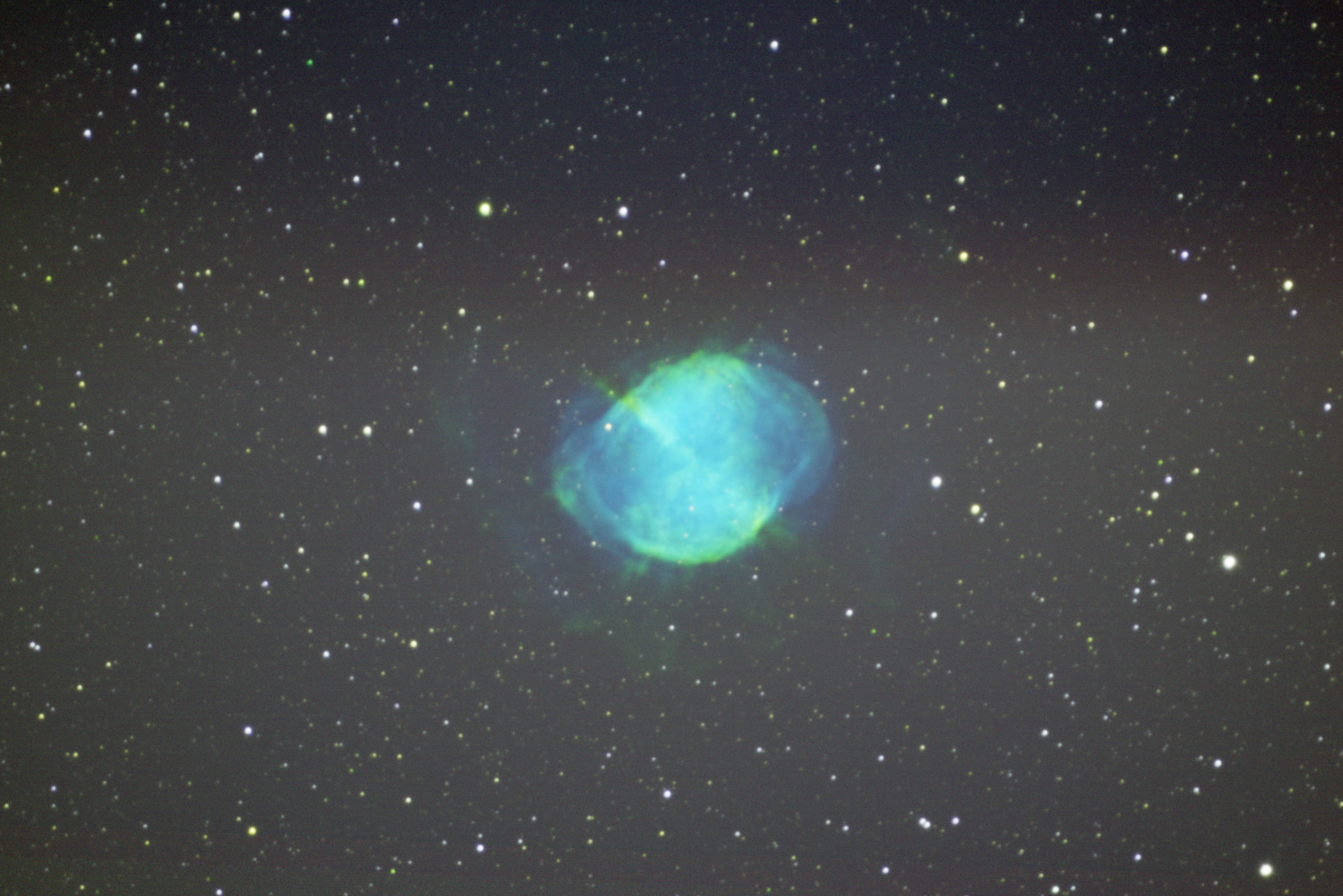
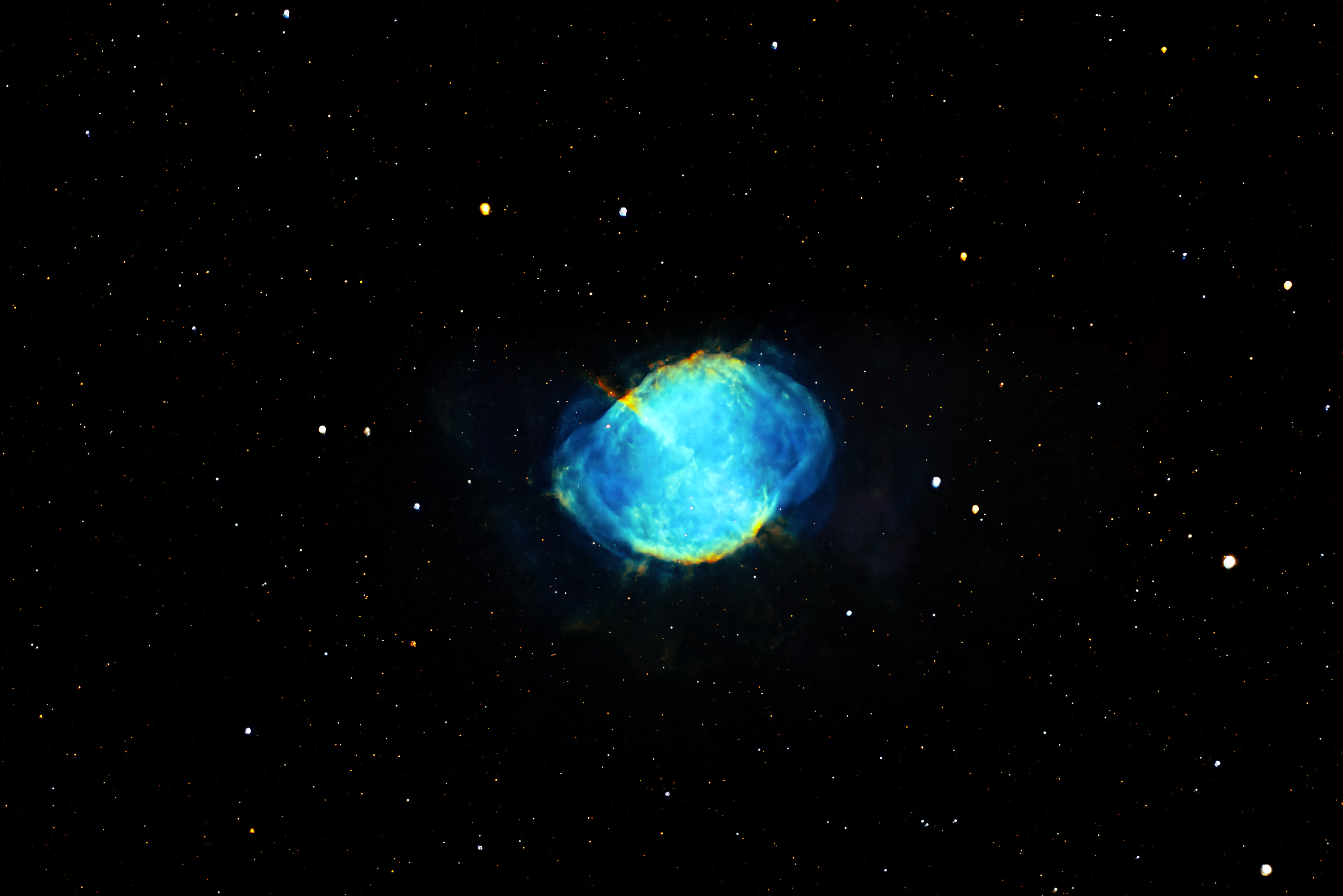
Licence: for personal use, credit Damon Scotting. Both JPEGs 4,096 x 2,733 px.
-10 C sensor temperature during imaging set point -10 C
1952 mm focal length, plate solved Celestron states 1960 mm
0.69 x 0.46° field of view 6,248 x 4,176 px on ASI2600MM Pro
26 MP ASI2600MM Pro 6,248 x 4,176 px, 23.5 x 15.7 mm
Should you buy it?
75/100 Stars for Your Buck
Pros
- With the 0.7x reducer it takes really nice quality narrowband images at a very long focal length: my frames plate-solve at 1,952 mm.
- As far as making out the structure of Thor's Helmet goes, I am very happy with it.
- It has the reach for the planets: my Jupiter shows its belts and festoons, and Mars its dark surface markings.
- One hour of LRGB resolves the dust lanes wrapped around the core of the Andromeda Galaxy.
- Celestron makes the reducer for it: f/7, 146 mm of back focus and a 42 mm image circle, bigger than any APS-C sensor.
Cons
- Guiding is hard at this focal length: imaging in narrowband with an on-camera guiding sensor, the guide camera really suffers.
- It is heavy: 13 kg for the tube and almost 14 kg with the imaging train, so it needs a serious mount.
- The field is small: 0.69 x 0.46 degrees with the reducer on an APS-C sensor, too tight for the whole Rosette or Veil.
- At its native f/10 it is slow for deep sky, and the 0.7x reducer is a separate purchase, $849 at Celestron.
It is a beast.
Who the C11 EdgeHD is for
Deep-sky imager with a pier
Buy
279 mm at about 1,950 mm with the reducer: 12 hours on the Dumbbell and 8 hours on the Elephant's Trunk show what it does with time.
Planetary imager
Buy
At 2,800 mm native, Jupiter's belts and festoons and the dark markings on Mars show in my captures.
Owner of a small strain-wave mount
Skip
The tube is 13 kg before a camera goes on. My recommendation is the Celestron 8 inch EdgeHD, 6.35 kg of the same design.
Wide-field nebula imager
Skip
0.69 x 0.46 degrees crops the Rosette to its core. My recommendation is the Askar SQA106.
Complete beginner
Skip
A 13 kg tube with no mount, and hard to guide. My recommendation is the Celestron NexStar 6SE, a 150 mm Schmidt-Cassegrain on its own GoTo mount.
Owner of an 8 inch EdgeHD
Skip
Over a third more aperture costs twice the tube weight, 13 kg against 6.35 kg, and a much bigger mount.
Three alternatives I have reviewed
- Celestron 8" EdgeHD 203 mm EdgeHD at 2,032 mm, the same design at half the weight 90/100 £1,999 Read the review
- Askar SQA106 106 mm quintuplet at 509 mm, the sharper and easier telescope I moved to for guiding 91/100 £3,395 Read the review
- Askar 185APO 185 mm f/7 triplet at 1,295 mm, the big refractor at about the same price 71/100 £5,049 Read the review
Questions and more about this review
Reviewed by
Damon Scotting
The Telescope Man Verified
BSc (Hons) Physics with Astrophysics and Cosmology, Loughborough University PGCE / QTS, University of Nottingham
About Damon About Damon Damon Scotting is The Telescope Man. He holds a BSc (Hons) in Physics with Astrophysics and Cosmology from Loughborough University and a PGCE with QTS from the University of Nottingham, and taught physics in secondary schools before becoming an astronomy creator. He is a contributing writer for BBC Sky at Night Magazine and the author of 42 Wonders of Our Night Sky, and his photograph of the galaxy M100 with the dwarf planet Ceres was Highly Commended in the Astronomy Photographer of the Year 2024 competition run by Royal Observatory Greenwich. He has appeared on the BBC's Blue Peter. More than 750,000 people follow his astronomy channels on YouTube, Instagram and TikTok, and he has reviewed more than 140 telescopes, mounts, cameras, filters and accessories hands-on for this site. More about Damon · How I test · Damon's book
I review all kinds of gear: most of it I buy, some is gifted and some is loaned, and all of it is reviewed the same way. How this site is funded
Eight questions, answered
Questions about the Celestron C11 EdgeHD
Reviewed 12 February 2026 ·Updated 23 September 2026
I review all kinds of gear. Most of it I buy, some is gifted and some is loaned, and all of it is reviewed the same way: no company sees or approves a review before it is published. Shop links marked Ad are affiliate links: I earn a commission when you buy through them, at no extra cost to you. How this site is funded
- What focal length does the Celestron C11 EdgeHD reach with the 0.7x reducer? Celestron states 2,800 mm at f/10. With the 0.7x reducer my frames plate-solve at 1,952 mm, 0.397 arcsec per pixel on the 3.76 micron pixels of the ASI2600MM, which is close to f/7. Tested numbers and the download ↓
- How heavy is the C11 EdgeHD, and what mount does it need? Celestron states 13 kg for the tube. With my reducer, filter wheel and camera the payload was almost 14 kg, 70% of the ZWO AM7's rating without a counterweight. The rig on the mount ↓
- Is the C11 EdgeHD hard to guide? At this focal length, yes. I was really struggling to guide it with the guiding sensor built into my camera in narrowband, so for the AM7 guiding test I moved the same camera to the Askar SQA106. Watch the review ↓
- What field of view does it give? 0.69 x 0.46 degrees with the 0.7x reducer on a 26 MP APS-C sensor. The Dumbbell, Thor's Helmet and M 13 fill it; the Rosette and the Veil show only a part. What I captured ↓
- Can the C11 EdgeHD image the planets? Yes. At its native 2,800 mm my captures of Jupiter show the belts and festoons, and Mars shows its dark surface markings. Planets and the Moon ↓
- How does it compare with the Askar SQA106 on the same target? On the Elephant's Trunk the C11 EdgeHD frames the trunk alone at about 1,950 mm, where the SQA106 takes in a wide field of IC 1396 at 505 mm. Side by side on the same patch of sky, the C11 shows the edges of the trunk in far finer detail. Versus the Askar SQA106 ↓
- Does the C11 EdgeHD work with a HyperStar lens? Celestron says every EdgeHD tube is Fastar compatible: the secondary mirror comes out for a third-party lens at f/2. I have only a short test stack that way, nothing finished. The specifications and the comparison table ↓
- What have I not tested on the C11 EdgeHD? I have not used the C11 EdgeHD visually, measured its cool-down time or how well its collimation holds, or finished an image with a HyperStar lens at f/2.