Celestron RASA 8 review: deep sky in minutes at f/2
Where does it rank on our leaderboard
| Rank | Telescope | Stars for Your Buck | Recorded UK price |
|---|---|---|---|
| 1 | Askar 50P | 95 out of 100 | £299 |
| 2 | ToupTek Hope D60 | 93 out of 100 | £749 |
| 5 | Celestron 8" EdgeHD | 90 out of 100 | £1,999 |
| 14 | Askar 71F | 81 out of 100 | £599 |
| 22 | ZWO FF110 | 73 out of 100 | £1,499 |
| 35 | Celestron 8 inch RASA | 53 out of 100 | £2,595 |
| 37 | Starfield Optics 115 Triplet | 52 out of 100 | £1,899 |
| 41 | Celestron 114 LCM | 42 out of 100 | £361 |
| 42 | Celestron AstroMaster LT 76 | 13 out of 100 | £200 |
Contents
- 01 Where does it rank on our leaderboard
- 02 Specifications and features
- 03 In the hand
- 04 From the review video
- 05 How good is it? Here's what I captured
- 06 Raw against finished
- 07 The rig on the mount
- 08 What is it for
- 09 Watch the review
- 10 Tested numbers and the download
- 11 Should you buy it?
- 12 Questions and more about this review
In 30 seconds
Stars for Your Buck 53/100
Reviewed 18 Dec 2024 Updated 23 Sep 2026
- Rank
- #35 of 42 telescopes
- Verdict
- With reservations
Written by Damon Scotting 5 min read
Buy it if
- You want deep-sky images in minutes rather than hours from a small colour camera
- You run live views or outreach nights and want colour on screen in a fraction of a second
- Your mount already carries a 7.7 kg tube with room to spare
Skip it if
- You want to look through an eyepiece: it only takes a camera
- You image planets or small targets that need a long focal length
- You want f/2 speed on a budget: the Sky-Watcher HAC125DX costs far less
The Celestron 8 inch RASA is a very exciting telescope that produced some beautiful images, but it is not exactly an affordable second telescope setup.
Specifications and features
Against the telescopes I have reviewed
Compare with
| Celestron 8 inch RASA reviewed #35 of 42 | Celestron 8" EdgeHD #5 of 42 | |
|---|---|---|
| Recorded UK price | £2,595 | £1,999 |
| Stars for Your Buck | 53/100 | 90/100 |
| Aperture | 203.2 mm (8 in) | 203.2 mm (8 in) |
| Focal length | 400 mm | 2,032 mm |
| Focal ratio | f/2.0 | f/10 |
| Optical design | Rowe-Ackermann Schmidt Astrograph, 93 mm central obstruction | EdgeHD aplanatic Schmidt-Cassegrain |
| Image circle | 22 mm, 3.15 degrees (usable field 32 mm, 4.6 degrees) | 42 mm; central 28 mm optimised |
| Back focus | 25 mm from the supplied adapters, 29 mm from the threaded collar | 133.35 mm from rear 2 inch, 24 TPI baffle lock nut, native f/10 |
| Focuser | Ultra-Stable Focus System on precision linear ball bearings | Moving primary mirror; mirror support clutches |
| Weight, tube | 7.7 kg (17 lb) optical tube | 6.35 kg (14 lb) optical tube |
| Length, tube | 628 mm tube, 235 mm diameter | 432 mm tube, 238 mm diameter |
| Dew shield | Not included | Not included |
| In the box | 42 mm T-thread and C-thread camera adapters, fan battery pack, CGE dovetail bar | 9x50 finderscope, 1.25 in mirror diagonal, 40 mm Plossl eyepiece, CGE dovetail bar |
In the hand
Six frames from my A7S footage
The camera sits at the front
On its CGE dovetail bar
The corrector, camera in the centre
The front of the tube
Upright, camera fitted
The whole rig
From the review video
Three frames from my live stream
M 57 at one sixth of a second
M 57 after live stacking five-second frames
M 101 after a minute and a half of five-second frames
How good is it? Here's what I captured
Seven targets
M 27 Dumbbell Nebula, Player One Uranus-C
- Integration
- 10 min 50 s (130 x 5 s)
- Field
- 1.34 x 0.85 degrees
- Telescope
- Celestron 8 inch RASA
- Camera
- Player One Uranus-C
- Mount
- ZWO AM5
- Target
- M 27 Dumbbell Nebula
- Type
- Planetary nebula
- Location
- Bortle 6.8 (in my garden)
M 13 Great Globular Cluster in Hercules, Player One Uranus-C
- Integration
- 30 min 55 s (371 x 5 s)
- Field
- 1.29 x 0.78 degrees
- Telescope
- Celestron 8 inch RASA
- Camera
- Player One Uranus-C
- Mount
- ZWO AM5
- Target
- M 13 Great Globular Cluster in Hercules
- Type
- Globular cluster
- Location
- Bortle 6.8 (in my garden)
700,000 stars, some of which are packed so close and tightly together that they're only a light year apart.
M 51 Whirlpool Galaxy, Player One Uranus-C
- Integration
- 12 min 30 s (150 x 5 s)
- Field
- 1.59 x 0.90 degrees
- Telescope
- Celestron 8 inch RASA
- Camera
- Player One Uranus-C
- Mount
- ZWO AM5
- Target
- M 51 Whirlpool Galaxy
- Type
- Interacting spiral galaxies
- Location
- Bortle 6.8 (in my garden)
M 81 and M 82, Player One Uranus-C
- Integration
- Unknown
- Field
- 1.36 x 0.84 degrees
- Telescope
- Celestron 8 inch RASA
- Camera
- Player One Uranus-C
- Mount
- Unknown
- Target
- M 81 and M 82
- Type
- Galaxies
- Location
- Bortle 6.8 (in my garden)
M 101 Pinwheel Galaxy, Player One Uranus-C
- Integration
- Unknown
- Field
- 1.57 x 0.82 degrees
- Telescope
- Celestron 8 inch RASA
- Camera
- Player One Uranus-C
- Mount
- Unknown
- Target
- M 101 Pinwheel Galaxy
- Type
- Spiral galaxy
- Location
- Bortle 6.8 (in my garden)
NGC 6960 Western Veil Nebula, Player One Uranus-C
- Integration
- Unknown
- Field
- 1.35 x 0.82 degrees
- Telescope
- Celestron 8 inch RASA
- Camera
- Player One Uranus-C
- Mount
- ZWO AM5
- Target
- NGC 6960 Western Veil Nebula
- Type
- Supernova remnant
- Location
- Bortle 6.8 (in my garden)
M 57 Ring Nebula, Player One Uranus-C
- Integration
- Unknown
- Field
- 1.36 x 0.76 degrees
- Telescope
- Celestron 8 inch RASA
- Camera
- Player One Uranus-C
- Mount
- Unknown
- Target
- M 57 Ring Nebula
- Type
- Planetary nebula
- Location
- Bortle 6.8 (in my garden)
Raw against finished
The rig on the mount
The 1 target, the raw combined stack against my finished image, each with its integration, the camera and the palette:
- M 13 Great Globular Cluster in Hercules: 30 min 55 s (371 x 5 s) of light, Player One Uranus-C, the raw combined stack with one automatic stretch
On the JUWEI-17, then on six other mounts
What is it for
Four things it does
Live views in colour
Tonight I'm going to be showcasing M 13 as it should appear if you looked at it with the naked eye. That's about one eighth of a second exposure time.
Live stacking in five-second frames
I'm going to increase that exposure all the way up to five seconds and then head on over to live stack. So now every single picture I take is going to increase the quality of the overall image.
The camera goes at the front
Instead, you mount your camera at the very end of the telescope. It's a very short journey, which means the images are incredibly bright.
Flat field, stable focus, built-in cooling
A flat field that is free of optical aberrations, an ultra-stable focus system and an integrated air cooling system: it is these features and more that make astrophotography faster than ever before.
Watch the review
CHEAP v.s EXPENSIVE Telescope Gear?! · published 18 December 2024 · 14:15 · Watch on YouTube · 66,551 views, 1,854 likes on 2 Oct 2026
Jump to
- 5:12 Sky-Watcher HAC125
- 5:27 My short review of the 8 inch RASA
- 5:46 The same speed for less: the HAC125
- 6:09 The HAC125's catch: cameras, collimation and focus
- 7:03 The verdict: the RASA's images are better
- 13:18 Conclusion
Transcript of the review video 2,663 words · 12 chapters · searchable
Press a time stamp to play from there.
0:00 Intro
0:00 Over the last couple of months I've been trying out some of astrophotography's forbidden gear. 0:05 These are the much cheaper and heavily under-researched products that have the potential to provide you a similar level of quality as the main name brands but at a fraction of the price. 0:12 In today's video I'm going to be putting six super low-cost astro replacements up against their more popular counterparts. 0:18 Are these affordable alternatives really worth it or is this just a starry-eyed dream? 0:23 Let's find out. 0:23 I'm Damon Scotting and this is Astronomical.
0:27 Gemini autofocuser
0:34 First up we need to focus. 0:34 This is a make-or-break aspect of our observations. 0:34 The tiniest adjustment in your focus can have the most dramatic effects on your images. 0:40 So do we leave it up to our naked eyes to squint and tell us what looks like the sharpest view or do we utilise the assistance of autofocusers like these? 0:49 Electronic autofocusers have been around for years now. 0:49 The first editions simply employed clockwise and anti-clockwise adjustments at variable speeds. 0:55 But then they levelled up as they were able to function alongside the rest of our gear. 0:59 You can now correct the focus of your scope via your computer. 1:04 In fact, you can even gauge the temperature outside and modify the focus accordingly. 1:09 But perhaps the biggest step up is that you can now ask your electronic focuser to perfectly pinpoint your stars for you. 1:14 You no longer have to make your own subjective decision on what looks best. 1:19 The focuser will use its own mathematical formula to figure it out for you. 1:24 As nights go on the temperature can vary. 1:24 So too can a lot of things including the perfect focus of your telescope. 1:30 With an EAF you can set it to automatically correct the focus as often as you like. 1:35 So they are undeniably super helpful pieces of kit and given the simplicity behind the structural design and its purpose they must be relatively cheap, right? 1:40 Come on, this is astrophotography we are talking about. 1:46 Companies will charge you an extra £100 for a power bank simply because they know some of you can afford it. 1:50 I've recently had the pleasure of using a ZWO EAF, which is arguably one of the top focusers available on the market. 1:58 Simple design, powerful function which is why users will fork out almost $200 to get one. 2:02 But what if there was a cheaper alternative available? 2:06 Perhaps at a cost of £69. 2:06 This is our first affordable alternative, the Gemini autofocuser. 2:12 For a pre-tax cost of £69 I have received a wonderful piece of kit that comes with some very useful accessories of its own. 2:21 Upon opening the box I was greeted with a focuser itself, mounting tools, a remote control, a signal receiver and a temperature sensor. 2:25 These last two components are not included with the ZWO EAF but can be purchased for an additional fee of... 2:34 That's not great. 2:34 Yeah you could almost buy a second Gemini focuser for that. 2:40 I am starting to get a bit more experience now with focusers, in fact I've recently been using a ToupTek AAF, which costs just over half the price of the ZWO EAF. 2:48 In keeping with the matching colour schemes I'm going to attach my Gemini focuser to my newest scope, the Askar SQA85. 2:52 Its space grey colour scheme fits perfectly alongside the Gemini. 3:02 In case you were wondering how complex it is to install the focuser, here's a 60 second walkthrough. 3:10 First thing you're going to do is find the tightening screw located inside the coarse adjustment screw of your telescope and loosen that up a little bit until the coarse adjustment just slides off. 3:19 Now we're looking to simply replace this with our autofocuser, so in order to do so we're going to select one of the three flexible couplings provided in the box. 3:27 Then we're going to be sure to loosen the screws properly before tightening them to secure it to our focuser. 3:31 And as you can see, we're already halfway through the process. 3:35 Next, do the exact same thing in order to attach the focuser to the other end of the flexible coupling. 3:39 Lastly, in order to ensure the electronic autofocuser can apply the necessary torque to your telescope focuser, we need to fix it in using the mounting bracket provided. 3:47 Don't forget to also use the washers that are included in this little bag. 4:05 And there we go! 4:05 That was the so-called hard part, but it really didn't take very long. 4:09 It certainly looks the part, and doesn't at all stand out in comparison to the blue and white hybrid ToupTek Askar setup, or the red and black ZWO rig. 4:17 So let's plug in the additional attachments. 4:17 The remote control is very handy, and the temperature sensor is super useful. 4:21 It's nice to see both of these included in the listing, or at the very worst, an additional $8 fee for the pair of them. 4:29 That's excellent value, especially compared to… well, yeah. 4:33 It certainly looks the part, relatively similar dimensions and weight. 4:36 The big difference of course is the cost. 4:38 There is a huge disparity between astrophotographers saying they have a budget of $200 for a telescope, and then you have some of us dropping $200 alone on this little box that enacts such a simple process. 4:49 I plugged the data cable into a power bank and tested to see how well it responded to the remote control. 4:54 And yeah, it runs and responds very smoothly. 4:57 A worthy adversary to the ZWO EAF and the ToupTek AAF, but available for far less. 5:03 It is supported by NINA and you can download the driver from the product page that I've linked in the description below. 5:08 So there we go, product number one of the cheap versus expensive tests, and cheap comes out on top with ease.
5:12 Sky-Watcher HAC125
5:15 Next up we have a race between two of the fastest scopes in the galaxy, the £500 limited-release Sky-Watcher HAC125 versus a £2,000 Celestron 8 inch RASA telescope.
5:27 My short review of the 8 inch RASA
5:27 Now I was briefly blessed with an 8 inch Celestron RASA telescope in order to conduct a short review and I have to say, it is a very exciting telescope that produced some beautiful images. 5:37 It has since been a telescope that I've heavily admired and wish to spend more time with, but at £2,000 it's not exactly an affordable second telescope setup.
5:46 The same speed for less: the HAC125
5:46 But imagine if we could employ a similar speedy principle at a much more affordable price. 5:51 This has got to be one of the most divisive telescopes this year, surely the Marmite of new telescopes. 5:57 You either love it, or you hate it, and in my case I really really love it. 6:02 I've already done full-length reviews of a lot of the products featured in today's video, so if you are keen on learning even more about them, check out my channel for more.
6:09 The HAC125's catch: cameras, collimation and focus
6:10 But in order to cut to the chase, the scope's excellent, it's so fast that it can record these bright live videos of our night sky. 6:17 But due to its design, it is only compatible with lipstick style cameras and the collimation and focus of the scope is nothing short of a nightmare. 6:25 If you've got the patience to play with it, then I don't think there are many more fun telescopes out there on the market. 6:31 This is practically a dream telescope for astronomy outreach. 6:34 Imagine how engaging your audience will find stargazing when you can zip between targets at a moment's notice and bring them live views of anything their heart desires. 6:43 Bright stars, star clusters, nebulae, binary stars and galaxies. 6:43 Basically everything. 6:49 I am loving mine so far, however the images captured with it are a bit of an eyesore that needs some, let's say, heavy corrections when it comes to the post-processing of the images. 6:59 But with a little care, you can capture beautiful images of the universe like this, faster than ever.
7:03 The verdict: the RASA's images are better
7:03 Undoubtedly the images captured with the Celestron 8 inch RASA are better, of course they are. 7:08 So for this comparison, cheap isn't necessarily better. 7:08 It's a simple case of: you get what you pay for, therefore this race ends in a tie. 7:14 Now what if we cancel the prices out in our equation because both products turn out to be basically the same price? 7:21 Well then what possible case could you have for exploring the lesser-reviewed option over the most popular?
7:23 AstroStation
7:26 Easy! 7:31 It's all about accessibility. 7:31 This is the AstroStation, an ASIAIR wannabe. 7:37 The ASIAIR is a mini PC that allows you to control practically your entire rig from one device. 7:41 It's a simple and incredibly well laid out design, but it has one major flaw, and that is by choice. 7:46 It does not want to play with others. 7:50 ZWO are one of the biggest astrophotography equipment producers in the world. 7:54 Their product list expands well beyond mini PCs. 7:54 It's because of this that they have taken the opportunity to severely restrict the compatibility of their super helpful mini PC to just ZWO products. 8:05 Which is a huge moral issue that the vast majority of astrophotographers are up in arms about and rightfully so. 8:10 You can only use ZWO cameras and a ZWO focuser with the ASIAIR. 8:16 Which means the market is crying out for an all-in-one friendly mini PC that accepts all types of gear. 8:21 Could this be the answer to our prayers? 8:28 Nope. 8:28 This is the AstroStation and right now it is in the beta stage of its development, yet for some reason available for customers to purchase on websites such as AliExpress. 8:37 I was very eager to try this one out and upon first impression it looked like the real deal, but I found it to be severely lacking in its lack of interactive sky atlas that features a field of view simulator like ZWO and its ability to live stack your images let alone stack them at all. 8:49 It's just not quite there yet. 8:55 The idea is there which is great. 8:55 Competition is the key to better products at lower prices but I can see why they haven't fully released this mini PC yet as it is still very limited in comparison to the ASIAIR. 9:06 Its only improvement is its ability to accept a wider range of products. 9:11 If the price was cheaper I would still be able to argue its case but I mean as it stands I'm seeing the price of these at more than that of the ASIAIR, which unfortunately means the scores are now tied. 9:21 It's one apiece in this test of cheap versus expensive astro gear. 9:21 Perhaps this next item will swing things back in favour of the cheap side. 9:26 A pier extension is an essential piece of gear, especially when using big refractor telescopes.
9:30 Pier extension
9:32 The issue of your telescope clipping your tripod legs is extremely dangerous and yet frustratingly common. 9:36 When I started using an AM5 mount I also added one of ZWO's PE200 pier extensions. 9:47 And yeah in hindsight this is an essential piece of kit. 9:47 I actually use two now because I found it so crucial to my setup and attached each of them to my home-built pier mounts. 9:56 So £189 for a crucial bit of added height. 9:56 Given the worth of the payload it is supporting I'm more than comfortable paying at least £100. 10:02 This is one of the times I do agree with the old saying, the cheapest is the dearest, because the thought of watching my gear crash under the collapse of a less than sufficient pier extension would be beyond devastating. 10:17 But here is our competitor, a very affordable, structurally sound extension column that is compatible with a range of tripods, including the TC40 often included alongside AM5 mounts. 10:28 My verdict on this one is very simple, it's perfect, it does the job, it weighs just 1.1kg, but it handles itself very well. 10:34 The biggest payload I've had on it so far was roughly 18 kilograms and it's done just fine. 10:41 Sticking with the topic of mounts, what is this lovely looking blue beauty? 10:47 A similarly designed telescope mount to the widely popular AM5.
10:47 JUWEI-17 mount
10:50 This is the mysterious JUWEI-17 mount and it is raising eyebrows across the hobby. 10:56 Why? 10:56 Well it's doing the same job as a £2,000 AM5 mount but at less than half the cost. 11:02 I think it's fair to say that we're all very wary over buying the new untested gear from relatively unverified sellers overseas. 11:06 There's a lot of justifications for being cautious. 11:11 It's common to have the preconceived notion that it surely has to be too good to be true, but as someone who has owned this mount now for almost two months I can verify that it's been working very well. 11:19 My biggest issue with it is the lack of an additional DC power port to redirect some of your power to other aspects of your rig, such as your camera or mini PC. 11:24 But the guiding results speak for themselves. 11:29 It walks the walk. 11:29 I suspect that this mount will soon become a very common purchase for more advanced astrophotographers to use as their backup mount. 11:40 But I certainly believe that out of all of the items featured so far in today's video, the JUWEI-17 currently represents the best value savings when it comes to purchasing the cheap versus expensive options. 11:49 If you would like to read more about other users' experience with the JUWEI-17 mount, then be sure to watch my full review video as many astrophotographers have given their own personal views on it. 11:59 I'm very impressed with the mount so far and I can happily say at this point it was worth the gamble of trying something relatively under-reviewed. 12:03 Then lastly to finish things off I tried the suspected upcoming Celestron refractor telescope range.
12:08 Celestron 63ED
12:08 Celestron are a more than well established reputable telescope company who release a variety of well-made products but oddly enough this telescope kept popping up all over marketplaces like AliExpress with seemingly official advertising documents, and yet there's no word from Celestron on an upcoming refractor range. 12:30 Regardless, I decided to take a chance on their cheapest telescope from this range, a Celestron 63ED. 12:34 These are a couple of the images I captured with it, and yeah, I can't complain too much about the quality given that it is a telescope priced at under £300, but there isn't a perfectly like for like telescope on the market right now for me to compare it to. 12:47 I'm in talks at the moment with a very nice chap at Altair Astro about reviewing their budget-friendly Starwave 60ED, available at £379. 12:51 This should make for an excellent comparison with the Celestron 63ED. 12:58 Like I said, the images captured with it were impressive enough for me to think that this was a worthy inclusion as a footnote in this video. 13:03 I did pit it against the SVBONY 70 mm in a recent video, and even my viewers struggled to pick out a clear winner between the two. 13:12 I guess this one will for now at least remain a draw. 13:12 So there we have it. 13:12 At the end of our competition, we have three for cheap, two for draw, and one for expensive.
13:18 Conclusion
13:23 Which one of today's products do you think offers the best bang for your buck? 13:26 And please, please, please, if you have purchased any of the items in today's video and use them for yourself, let me and thousands of other keen astrophotographers know about your personal experience so far. 13:37 Competition is good, astrophotography is shockingly anti-budget friendly. 13:41 With products like the ones featured in today's video, amateur astrophotographers can start assembling very powerful rigs for cheaper than ever, which is of course very exciting. 13:50 I've attached links to all of the products featured in today's video in the description below. 13:55 Thanks for watching, I'm Damon Scotting and this was Astronomical.
Check out more videos on the Celestron 8 inch RASA
STARGAZING / AURORA LIVE!! UK
12 May 2024
Tested numbers and the download
Finished image
- Download the raw stack JPEG · 1.2 MB · 3,125 x 1,893
- Download the finished image JPEG · 0.7 MB · 3,125 x 1,893
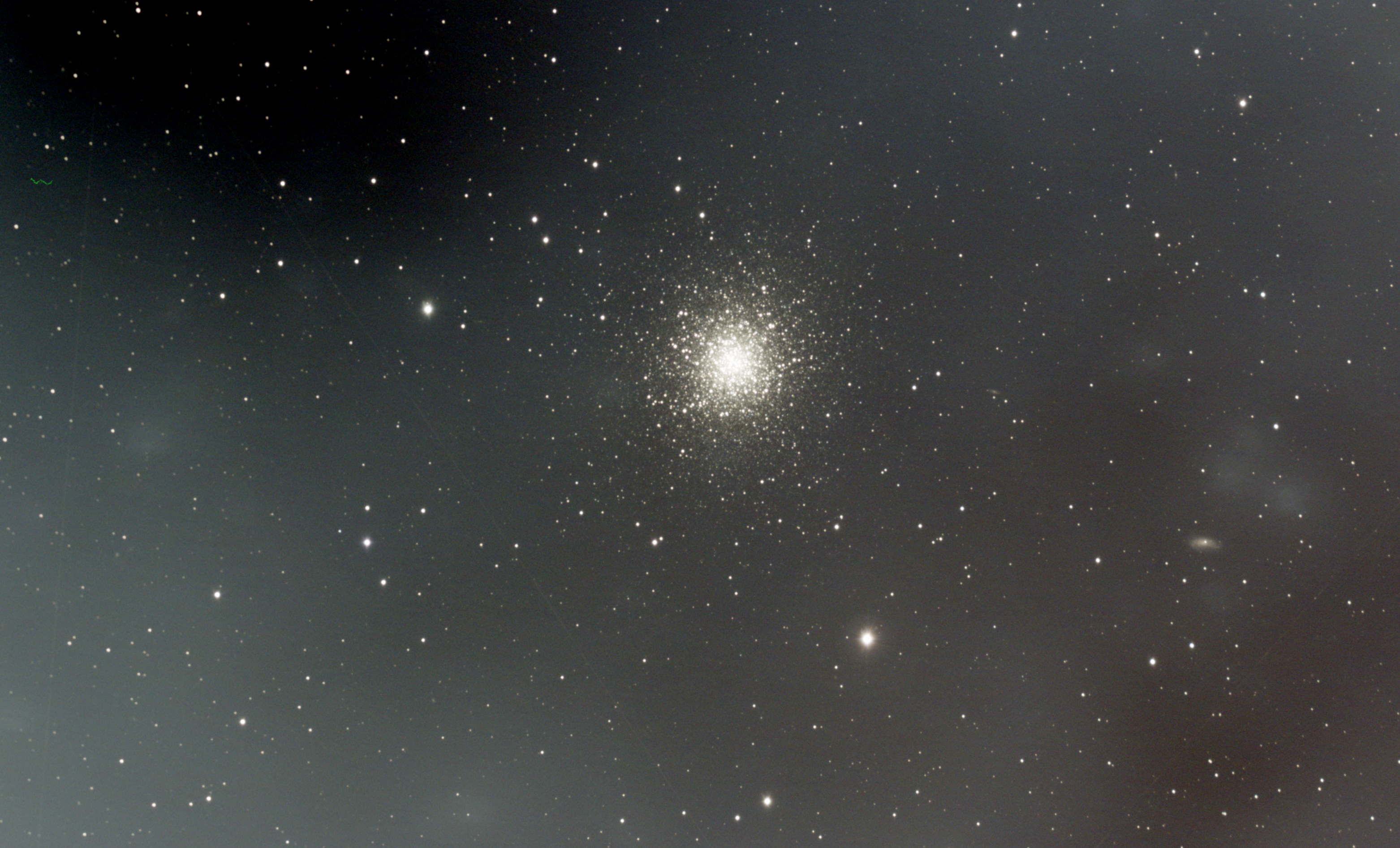
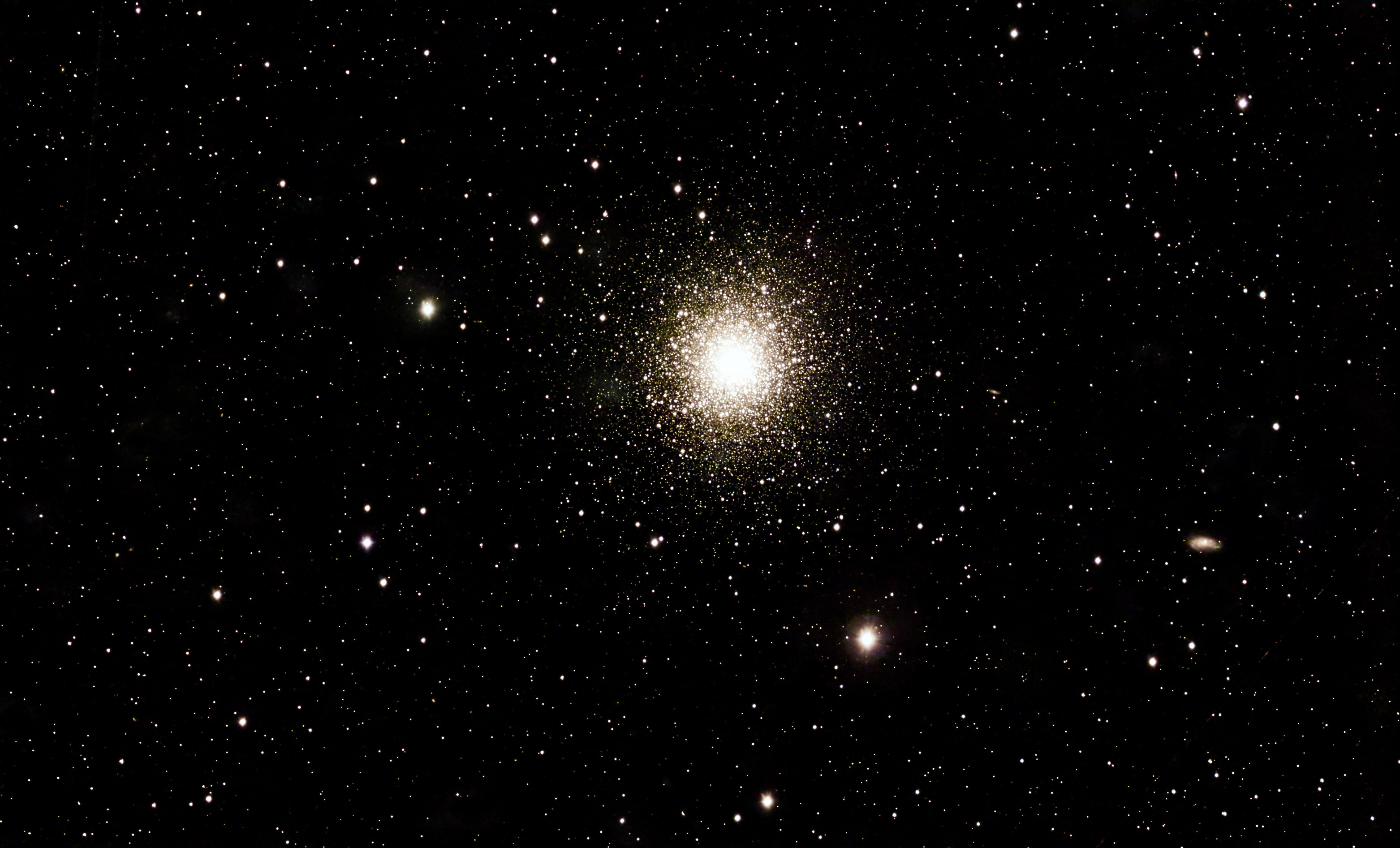
Licence: for personal use, credit Damon Scotting. Both JPEGs 3,125 x 1,893 px.
+23 C sensor temperature during imaging
402 mm focal length, plate solved Celestron states 400 mm
1.59 x 0.90° field of view 3,856 x 2,180 px on Player One Uranus-C
8.4 MP Player One Uranus-C 3,856 x 2,180 px, 11.2 x 6.3 mm
Should you buy it?
53/100 Stars for Your Buck
Pros
- “It has an extremely low focal ratio, meaning you can pick up a lot of deep sky objects with very short exposures.”
- At one sixth of a second per exposure I was already seeing a lot of colour in the Ring Nebula.
- “It replicates precisely what you can see with the naked eye; I've never been able to do that with a telescope before.”
- “That Whirlpool Galaxy after two minutes' worth of exposure is looking incredible.”
- A 12 V cooling fan, an internal filter mount and a linear ball bearing focus system are built in.
Cons
- “It's not for visual astronomy, which means there's no eyepiece holder for you to look through.”
- The tube alone weighs 7.7 kg, so the mount needs real capacity before a camera goes on.
- Bright stars carry a wide halo: 52 Cygni in my Veil Nebula frame shows it.
- The fully corrected circle is 22 mm across, so it suits smaller sensors rather than full frame.
- The central obstruction is 93 mm, nearly half the aperture, and the camera sits in front of the corrector.
This 8 inch RASA telescope is absolutely mind-blowing.
Who the RASA 8 is for
Complete beginner
Skip
Start with a smart telescope such as the Seestar S30 Pro; the RASA 8 needs a capable mount, a camera at the front and some imaging practice.
Outreach and live-stream host
Buy
Live views show colour almost at once, and five-second frames build a clean image while people watch.
Imager with few clear nights
Buy
Eleven to thirty-one minutes of five-second frames finished M 27, M 51 and M 13 on this page, so a short gap in the clouds is enough.
Budget astrophotographer
Skip
My recommendation is the Sky-Watcher HAC125DX: the same f/2 speed from 125 mm for far less money.
Visual observer
Skip
There is no eyepiece holder at all; the Celestron 8 inch EdgeHD gives the same aperture with an eyepiece.
Planetary imager
Skip
400 mm is far too short for planets; an 8 inch SCT at f/10 is the tool for that.
Three alternatives I have reviewed
- Sky-Watcher HAC125DX The same f/2 speed in a 125 mm Honders, for far less money 92/100 £589 Read the review
- Celestron 8" EdgeHD The same 203 mm aperture at f/10, with an eyepiece as well as a camera 90/100 £1,999 Read the review
- Celestron C11 EdgeHD 280 mm at f/10, or f/1.9 with a HyperStar at the front 75/100 £4,845 Read the review
Questions and more about this review
Reviewed by
Damon Scotting
The Telescope Man Verified
BSc (Hons) Physics with Astrophysics and Cosmology, Loughborough University PGCE / QTS, University of Nottingham
About Damon About Damon Damon Scotting is The Telescope Man. He holds a BSc (Hons) in Physics with Astrophysics and Cosmology from Loughborough University and a PGCE with QTS from the University of Nottingham, and taught physics in secondary schools before becoming an astronomy creator. He is a contributing writer for BBC Sky at Night Magazine and the author of 42 Wonders of Our Night Sky, and his photograph of the galaxy M100 with the dwarf planet Ceres was Highly Commended in the Astronomy Photographer of the Year 2024 competition run by Royal Observatory Greenwich. He has appeared on the BBC's Blue Peter. More than 750,000 people follow his astronomy channels on YouTube, Instagram and TikTok, and he has reviewed more than 140 telescopes, mounts, cameras, filters and accessories hands-on for this site. More about Damon · How I test · Damon's book
I review all kinds of gear: most of it I buy, some is gifted and some is loaned, and all of it is reviewed the same way. How this site is funded
Eight questions, answered
Questions about the Celestron 8 inch RASA
Reviewed 18 December 2024 ·Updated 23 September 2026
I review all kinds of gear. Most of it I buy, some is gifted and some is loaned, and all of it is reviewed the same way: no company sees or approves a review before it is published. Some shop links are affiliate links: I earn a commission when you buy through them, at no extra cost to you. How this site is funded
- Can you look through the Celestron RASA 8? No. It is an astrograph built for a camera only. The specifications and the comparison table ↓
- How long do exposures need to be with the RASA 8? Five-second frames were enough for every target on this page: M 13 is 371 of them (30 min 55 s), M 27 is 130 (10 min 50 s) and M 51 is 150 (12 min 30 s). For a live view, an eighth to a sixth of a second already shows colour. What I captured ↓
- Which camera suits the RASA 8? A small one that sits at the front without shading much of the aperture. I used the Player One Uranus-C, an uncooled IMX585 camera of 160 g whose 12.8 mm sensor diagonal sits well inside the 22 mm corrected circle. Tested numbers and the download ↓
- What mount does the RASA 8 need? The tube weighs 7.7 kg on its CGE dovetail bar before the camera goes on. My M 13, M 27, M 51 and Veil Nebula frames were taken on a ZWO AM5, and I also set it up on a Celestron CGX. The rig on the mount ↓
- Is the RASA 8 better than the Sky-Watcher HAC125? Undoubtedly the images captured with the Celestron 8 inch RASA are better, of course they are. So for this comparison cheap isn't necessarily better; it's a simple case of you get what you pay for, therefore this race ends in a tie. From my video review Watch the review ↓
- What field of view does the RASA 8 give? It plate-solves at 402 mm, so the full 3,856 x 2,180 frame of an IMX585 camera covers 1.59 x 0.90 degrees. Celestron's corrected circle is 22 mm, 3.15 degrees across. Tested numbers and the download ↓
- How much does the Celestron RASA 8 cost? The prices I recorded: £2,595 at First Light Optics (UK), in stock; $2,199 at Agena Astro (US), in stock; $2,199 at Celestron (Global), in stock. A record, not a live price The verdict, the readers and the sellers ↓
- What have I not tested on the RASA 8? I did not test the RASA 8 with a cooled, APS-C or full-frame camera, with any filter or over a full season, and I measured no star shapes across the field.