Sky-Watcher HAC125DX review: the f/2 scope for live views
Where does it rank on our leaderboard
| Rank | Telescope | Stars for Your Buck | Recorded UK price |
|---|---|---|---|
| 1 | Askar 50P | 95 out of 100 | £299 |
| 2 | ToupTek Hope D60 | 93 out of 100 | £749 |
| 3 | Sky-Watcher HAC125DX | 92 out of 100 | £589 |
| 11 | Askar SQA130 | 82 out of 100 | £4,695 |
| 19 | Sky-Watcher Heliostar 76Ha | 74 out of 100 | £2,399 |
| 32 | Sky-Watcher HAC125 | 61 out of 100 | £499 |
| 36 | Nakoh 60GT | 52 out of 100 | £899 |
| 41 | Celestron 114 LCM | 42 out of 100 | £361 |
| 42 | Celestron AstroMaster LT 76 | 13 out of 100 | £200 |
Contents
- 01 Where does it rank on our leaderboard
- 02 Specifications and features
- 03 In the hand
- 04 From the review video
- 05 How good is it? Here's what I captured
- 06 Live views
- 07 Raw against finished
- 08 The rig on the mount
- 09 What is it for
- 10 Watch the review
- 11 Tested numbers and the download
- 12 Should you buy it?
- 13 Questions and more about this review
In 30 seconds
Stars for Your Buck 92/100
Reviewed 21 Jul 2025 Updated 23 Sep 2026
- Rank
- #3 of 42 telescopes
- Verdict
- Damon's pick
Written by Damon Scotting 7 min read
Buy it if
- You want bright live views of nebulae and galaxies to share with family and friends
- You image with a 1 inch or smaller sensor and want a wide 250 mm field at f/2
- You want the fastest telescope in the galaxy: if you struggle with light pollution, this telescope is great at cutting through it
Skip it if
- You shoot APS-C or full frame: the image circle is 16 mm
- You want an eyepiece view: the camera sits at the front, in the light path
- You want to image the planets: at 250 mm Jupiter and Saturn are only a dozen pixels or fewer across
“The ability to point the scope at whatever I want and have a nice bright view of my targets is something I've been dreaming of for a very long time.”
Specifications and features
Against the telescopes I have reviewed
Compare with
| Sky-Watcher HAC125DX reviewed #3 of 42 | Sky-Watcher HAC125 #32 of 42 | Celestron 8 inch RASA #35 of 42 | |
|---|---|---|---|
| Recorded UK price | £589 | £499 | £2,595 |
| Stars for Your Buck | 92/100 | 61/100 | 53/100 |
| Aperture | 125 mm | 125 mm | 203.2 mm (8 in) |
| Focal length | 250 mm | 250 mm | 400 mm |
| Focal ratio | f/2 | f/2 | f/2.0 |
| Optical design | Honders Advanced Catadioptric (hybrid refractive and reflective, collimatable primary) | Honders Advanced Catadioptric | Rowe-Ackermann Schmidt Astrograph, 93 mm central obstruction |
| Image circle | 16 mm | 16 mm | 22 mm, 3.15 degrees |
| Back focus | Approximately 40 mm from the front glass plate to the camera focal plane, owner-reported | Approximately 40 mm from the front glass plate to the camera focal plane, owner-reported | 25 mm from the supplied adapters, 29 mm from the threaded collar |
| Focuser | Rear primary-mirror helical focuser | Front helical focuser | Ultra-Stable Focus System on precision linear ball bearings |
| Weight, tube | 3.82 kg (8.4 lb) | 3.82 kg | 7.7 kg (17 lb) optical tube |
| Length, tube | 399 mm (15.7 in), 160 mm diameter | 399 mm | 628 mm tube, 235 mm diameter |
| Dew shield | Included | Removable, screw-on, no cable hole | Not included |
| In the box | Clamshell tube rings with V-style dovetail, dew shield, 1.25 in adapter, male and female M42x0.75 adapters | Tube rings on a Vixen/CG5 dovetail, mini finder shoe, dew shield, 1.25 in camera interface | 42 mm T-thread and C-thread camera adapters, fan battery pack, CGE dovetail bar |
In the hand
From the review video
Six frames from my video
How good is it? Here's what I captured
Five targets
NGC 6960 and NGC 6992 Veil Nebula, Player One Saturn-C SQR
- Integration
- 1 h (120 x 30 s)
- Field
- 2.6 x 2.6 degrees
- Telescope
- Sky-Watcher HAC125DX
- Camera
- Player One Saturn-C SQR
- Mount
- EM31 Pro
- Target
- NGC 6960 and NGC 6992 Veil Nebula
- Type
- Supernova remnant
- Location
- Bortle 6.8 (in my garden)
NGC 7000 North America Nebula, Player One Saturn-C SQR
- Integration
- 35 min (7 x 300 s)
- Field
- 1.8 x 1.4 degrees
- Telescope
- Sky-Watcher HAC125DX
- Camera
- Player One Saturn-C SQR
- Mount
- ZWO AM3N
- Target
- NGC 7000 North America Nebula
- Type
- Emission nebula
- Location
- Bortle 6.8 (in my garden)
M 31 Andromeda Galaxy, Player One Saturn-C SQR
- Integration
- 20 min (20 x 60 s)
- Field
- 2.6 x 1.7 degrees
- Telescope
- Sky-Watcher HAC125DX
- Camera
- Player One Saturn-C SQR
- Mount
- ZWO AM3N
- Target
- M 31 Andromeda Galaxy
- Type
- Galaxy
- Location
- Bortle 6.8 (in my garden)
M 45 Pleiades, Player One Saturn-C SQR
- Integration
- 1 h 44 min (96 frames, 6,260 s)
- Field
- 2.6 x 1.7 degrees
- Telescope
- Sky-Watcher HAC125DX
- Camera
- Player One Saturn-C SQR
- Mount
- ZWO AM3N
- Target
- M 45 Pleiades
- Type
- Open star cluster
- Location
- Bortle 6.8 (in my garden)
IC 1396 Elephant's Trunk Nebula, Player One Saturn-C SQR
- Integration
- 1 h 17 min (77 x 60 s)
- Field
- 2.3 x 1.5 degrees
- Telescope
- Sky-Watcher HAC125DX
- Camera
- Player One Saturn-C SQR
- Mount
- ZWO AM3N
- Target
- IC 1396 Elephant's Trunk Nebula
- Type
- Emission nebula
- Location
- Bortle 6.8 (in my garden)
Live views
Eleven deep sky targets as the HAC125DX and the Saturn-C showed them live
M31 Andromeda Galaxy
M31 Andromeda Galaxy · Sky-Watcher HAC125DX, Player One Saturn-C, recorded live view
- M31 Andromeda Galaxy, Sky-Watcher HAC125DX, Player One Saturn-C, recorded live view
- M81 and M82, Sky-Watcher HAC125DX, Player One Saturn-C, recorded live view
- M27 Dumbbell Nebula, Sky-Watcher HAC125DX, Player One Saturn-C, recorded live view
- M57 Ring Nebula, Sky-Watcher HAC125DX, Player One Saturn-C, recorded live view
- M13 Hercules Cluster, Sky-Watcher HAC125DX, Player One Saturn-C, recorded live view
- M16 Eagle Nebula, Sky-Watcher HAC125DX, Player One Saturn-C, recorded live view
- M17 Swan Nebula, Sky-Watcher HAC125DX, Player One Saturn-C, recorded live view
- M8 and M20, Sky-Watcher HAC125DX, Player One Saturn-C, recorded live view
- North America Nebula, Sky-Watcher HAC125DX, Player One Saturn-C, recorded live view
- Veil Nebula, Sky-Watcher HAC125DX, Player One Saturn-C, recorded live view
- Double Cluster, Sky-Watcher HAC125DX, Player One Saturn-C, recorded live view
Raw against finished
The rig on the mount
The 1 target, the raw combined stack against my finished image, each with its integration, the camera and the palette:
- NGC 7000 North America Nebula: 35 min (7 x 300 s) of light, Player One Saturn-C SQR, the raw combined stack with one automatic stretch
On the JUWEI-17, then on six other mounts
What is it for
Eight things it is for
Focus from the back
The most noteworthy improvement is that the focuser is now at the back. On the original you were obstructing the starlight with your hand when trying to pinpoint your stars. This feature alone is a big enough upgrade to make it all worthwhile.
A cable hole in the dew shield
The second major improvement is a hole in the dew shield that allows you to thread the camera cable through. It is very well designed and clearly shows the makers have considered real world use. The original dew shield screwed onto the tube, which was a bit of a nuisance; now screws tighten it in position.
Built for small sensors
The telescope is designed to work with an imaging circle of up to 16 mm, and it comes with multiple adapters for attaching your own camera. It took about 30 seconds to set my Player One Saturn camera up.
Live views of the night sky
I capture 0.3 second exposures at gain 600 and play them back in sequence. The results are noisy, but they are very good live views of what the night sky looks like, and that for me is the reason I want this telescope.
A wide 250 mm field
At a focal length of 250 mm the telescope produces a very wide field of view, which I prefer for live imaging. It makes it easy to figure out what you're doing and where you're going.
Round stars out of the box
The stars across the field are an incredibly healthy shape. On the older design it was a nightmare adjusting the collimation to get a flat field, but this is how the scope's views are straight out of the box.
A sneak peek of the Swan
When I pointed the telescope very low down towards the Swan Nebula, it gave me a very nice sneak peek.
A comet in one minute
I managed to snap a single 60 second exposure of Comet Lemmon and bring out a lot more detail in its tail.
Watch the review
One of my Favourite Telescopes just got BETTER!? (Skywatcher HAC125 DX first impressions...) · published 21 July 2025 · 9:17 · Watch on YouTube · 41,722 views, 1,275 likes on 2 Oct 2026
Jump to
- 1:10 Comparison
- 1:28 The focuser moves to the back
- 2:46 A hole in the dew shield for the cable
- 3:16 See it in action!
- 4:09 LIVE VIEWS
- 4:44 Round stars out of the box
- 5:58 A sneak peek of the Swan Nebula
- 7:10 Why it's GOAT'd
Transcript of the review video 1,885 words · 10 chapters · searchable
Press a time stamp to play from there.
0:00 Intro
0:02 Hello. 0:02 It has literally been raining all day here in the UK and it's still kind of raining right now if I'm being honest a little bit. 0:07 Just passed over then, but I'm still outside stargazing because I'm testing out a very new telescope and that is the Sky-Watcher HAC125DX. 0:18 Now, this is the latest and improved variation of the original Sky-Watcher HAC125 telescope that I did a review on a couple of months ago, and I absolutely adore that telescope. 0:26 I think it's amazing. 0:28 And with this new model, they've improved it. 0:29 So much so that I can now accompany the telescope with an IMX533 sensor, which is turning it into something very impressive. 0:38 Goal tonight is just to simply get a few live videos taken with the telescope so I can get a first impression of it because the forecast for next week is absolutely terrible. 0:49 So fingers crossed we can get some decent targets in and compare the telescope to how the previous one looked with a QHY 585C camera. 0:55 I'm really excited to try a telescope out. 0:59 It has a lot of potential and at only £599, I think it could be a real bargain. 1:03 I'm Damon Scotting and this is astronomical.
1:10 Comparison
1:13 Right, so I figured we'd start things off with a direct side-by-side comparison between the two telescopes in my dirty old shed. 1:17 So visually the scopes are near identical when viewed side on. 1:19 The only difference being that the newer model has a DX at the end of its name. 1:25 But when viewed closely you can note that the newer DX model is slightly longer than its predecessor with the most noteworthy improvement being that the focuser for this telescope is now at the back.
1:28 The focuser moves to the back
1:34 Previously this was a bloody nightmare. 1:36 I actually like helical focuses in which you can rotate a dial or knob to achieve focus. 1:40 But with this telescope you're obstructing the starlight with your hand when trying to pinpoint your stars. 1:45 It's a very messy dilemma. 1:47 So, this feature alone is a big enough upgrade to make this all worthwhile. 1:51 Now, with the original design, I proclaimed that the only cameras that would work with the telescope were lipstick style cameras so as to not obstruct the telescope's field of view. 1:59 But with that being said, I did try and use the Player One Saturn camera with the telescope, which uses the very popular IMX533 sensor. 2:05 I did really struggle with it, but I just about managed to achieve somewhere near optimal focus. 2:11 Yeah. 2:11 Okay. 2:11 The IMX533 sensor is slightly higher resolution and bigger pixel size, making it an even better choice for live imaging than the QHY 585 Mark III colour camera. 2:19 But the beauty of the QHY 585 camera was that it utilized a USB-C input, which meant I could use a super skinny cable like this and obstruct as little of the light as physically possible. 2:32 Whereas when I attached the Player One Saturn camera to a telescope, it needs your typical astro data cable and the input port is on the side of the camera, which meant for the old design, I could not attach the dew shield, nor could I do anything about the thickness of the cable, which brings me to the second major improvement of the Sky-Watcher HAC125 telescope, a hole in the dew shield that allows you to thread the cable through.
2:46 A hole in the dew shield for the cable
2:54 This is very well designed and clearly shows that the manufacturers have considered real world uses when selling this telescope. 2:59 And to back that claim up even further, the original dew shield had like a screw thread at the end of it so you could put it onto the telescope, which was a bit of a nuisance. 3:08 Now though, it uses screws to tighten its position and secure it at the end of the telescope. 3:13 So all in all, I'm very happy with this. 3:15 The telescope has now received a worldwide release as opposed to just limited locations, and it's still priced very competitively at just £599 here in the UK.
3:16 See it in action!
3:24 But the real selling point for me is that the telescope is designed to work with an imaging circle of up to 16 mm. 3:30 It even comes with multiple adapters for you to attach your own camera to, which means it took like 30 seconds for me to set the Player One Saturn camera up. 3:37 It's summer time here in England, which generally means 20° C and lots of rain. 3:42 So, this video is solely going to be my first impressions and not an in-depth review. 3:46 Now, when shooting with this setup, I want you to know that I'm capturing three-tenths-of-a-second exposures at gain 600. 3:52 I'm then playing these images back in sequence at four times playback speed. 3:57 The videos therefore are going to be really noisy, but they are very good live views of what the night sky looks like. 4:03 And that for me is the reason I want this telescope. 4:05 And I think it could be the perfect telescope. 4:06 So right now, this isn't looking at anything special.
4:09 LIVE VIEWS
4:10 I'm just doing a first video test whilst the telescope is in its home position and pointing at Polaris, the North Star. 4:16 But already this footage tells us three really interesting details. 4:20 Number one, the star shape is stunning. 4:23 I hadn't even considered it, but I suspect the shape of the camera is causing these tremendously aesthetically pleasing diffraction spikes. 4:28 So, none of this one awkward spike sticking out nonsense. 4:32 This looks beautiful. 4:32 It actually reminds me of the stars from the images taken by the James Webb telescope. 4:38 Number two, the clouds are being a real booger and the risk of rain is a constant threat. 4:42 And number three, the stars across the field are an incredibly healthy shape.
4:44 Round stars out of the box
4:46 On the older design, it was an absolute nightmare adjusting the collimation, trying to produce a flat field across the board. 4:54 But this is how the scope's views are straight out of the box. 4:55 In fact, almost bizarrely, I didn't even need to focus the camera. 4:59 Don't get me wrong, I still tried to perfect it, but literally straight away, the stars were pinpoint, which is just insanely convenient. 5:06 Probably a one-off, but yeah, still pretty cool. 5:08 I'll be able to provide a more detailed analysis as to the shape of the stars in the future when I take some long exposure images. 5:13 But as you can see from these live views of the Ring Nebula and the Dumbbell Nebula, the stars seem nice and round across the board. 5:20 At a focal length of 250 mm, the telescope obviously produces a very wide field of view, which I prefer when doing live imaging like this anyway. 5:26 It makes it easy to figure out what you're doing and where you're going. 5:30 This video of the binary star system, Albireo, just about shows us the contrasting red and blue stars. 5:36 I suppose you can't quite resolve the stars independently, but you can still make out the difference in colours. 5:41 The following shots are going to be really noisy, but that's because I'm pushing the scope up against a couple of nebula. 5:46 No filters are going to be used here, but you can just about make out the structure of the North America nebula. 5:51 But let's be honest, it's not too great. 5:53 But it's more than can be said for the Western and Eastern Veil Nebulas, which I really struggle to bring any detail out of.
5:58 A sneak peek of the Swan Nebula
5:58 However, when I pointed the telescope very low down in the horizon towards a Swan Nebula, it gave me a very nice sneak peek. 6:05 I even managed to briefly get a view of the Pillars of Creation. 6:09 I think the noisiness of this image seems way worse because of the movement of the clouds. 6:15 But you see, this swift movement in between deep sky objects. 6:16 This is what I really adore. 6:19 The ability to point scope at whatever I want and have a nice bright view of my targets is something I've been dreaming of for a very long time. 6:26 Yes, I know that a lot of the elder statesmen of this hobby are going to bash the telescope for various reasons, but it's £599 and it's given me live views of the Andromeda galaxy like this. 6:38 Once again, let me reiterate that the scene conditions are not great. 6:40 I'm viewing this from a Bortle 6 location. 6:44 So, the views that you can get with this telescope are undoubtedly going to be much better than this first impression. 6:49 In my last review of the previous 125 telescope model, though, my absolute dream setup would be to have this telescope set up on a random sequence where every couple of minutes it pings towards another deep sky object. 7:01 Preferably, it would be in a randomized order. 7:03 I know none of us are fans in the exponential increase in satellites polluting our night sky, but I've got to be honest, I absolutely love watching satellites whiz by these cosmic wonders.
7:10 Why it's GOAT'd
7:14 Astrophotography is beautiful, but not very immersive. 7:16 Staring at your laptop screen trying to switch to the right filter and the right settings for a 5-minute long exposure is so abstract to physically observing the night sky. 7:24 But in turn, visual observing can be so underwhelming without the right setup. 7:31 And in comparison to the spectacular masterpieces you achieve with astrophotography, it can be relatively boring and by the end of the night, you have nothing to show for it. 7:37 So, I think this is the perfect middle ground. 7:42 Astronomy and stargazing are to me two of the coolest hobbies imaginable, which is why I want to be able to share what it is I'm seeing every single night with my family, with my friends, and with all of you lovely people online. 7:51 And this affordable telescope allows me to do so. 7:56 The next cheapest alternative to this, by the way, is not yet released, but it's the 6-in Celestron RASA telescope for $1,699. 8:04 So, this 5-in Sky-Watcher HAC125 telescope at £599 seems like an absolute steal. 8:10 I'm not being sponsored to promote or say this. 8:12 In fact, with the previous model telescope, I only discovered it when scrolling through AliExpress and buying lots of weird stuff that I came to refer to as forbidden gear, which is stuff that wasn't sold here in the UK or US for a number of different reasons. 8:25 And I'm pretty sure the Sky-Watcher HAC125 wasn't sold here in the UK or US simply because they didn't think it would do very well. 8:31 I will be trying to release a video in exactly 1 month's time that is a more comprehensive review of this telescope and what it can capture. 8:38 So, make sure you're subscribed for that. 8:41 So yeah, there we go. 8:41 What do you think of the videos I managed to capture with this telescope? 8:44 Let me know in the comments down below. 8:46 And would you recommend a telescope given that it's only £599? 8:51 If you are interested in a telescope, then I've attached a link in the description below where you can check it out for yourself. 8:56 Thanks for watching. 8:57 I'm Damon Scotting and this was astronomical. 9:00 I think it's starting to rain.
9:00 Outro
9:02 Oh god.
Check out more videos on the Sky-Watcher HAC125DX
Can I PHOTOGRAPH a COMET with my SMARTPHONE?!
28 Oct 2025
Tested numbers and the download
Finished image
- Download the raw stack JPEG · 0.8 MB · 2,108 x 1,661
- Download the finished image JPEG · 0.9 MB · 2,108 x 1,661
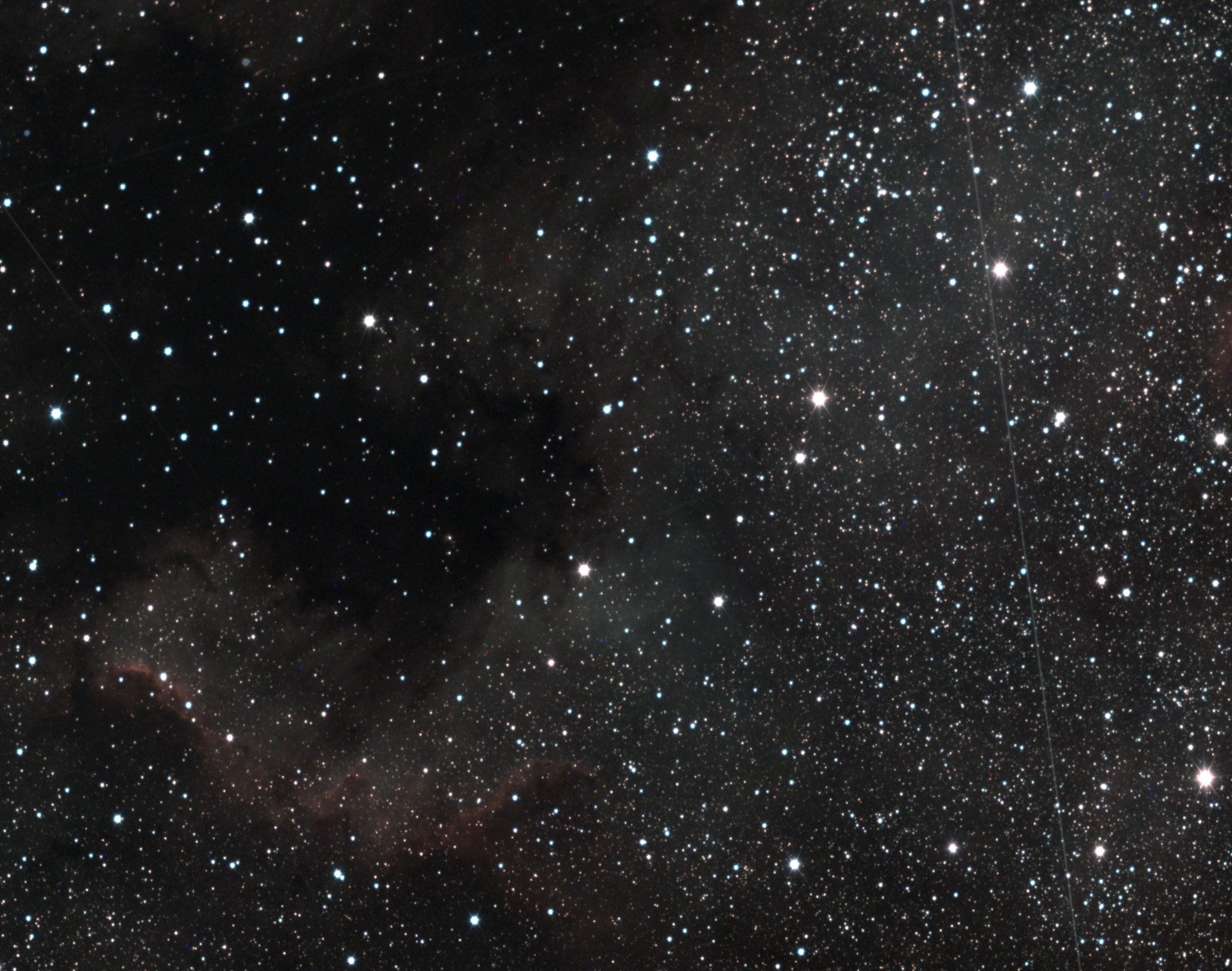
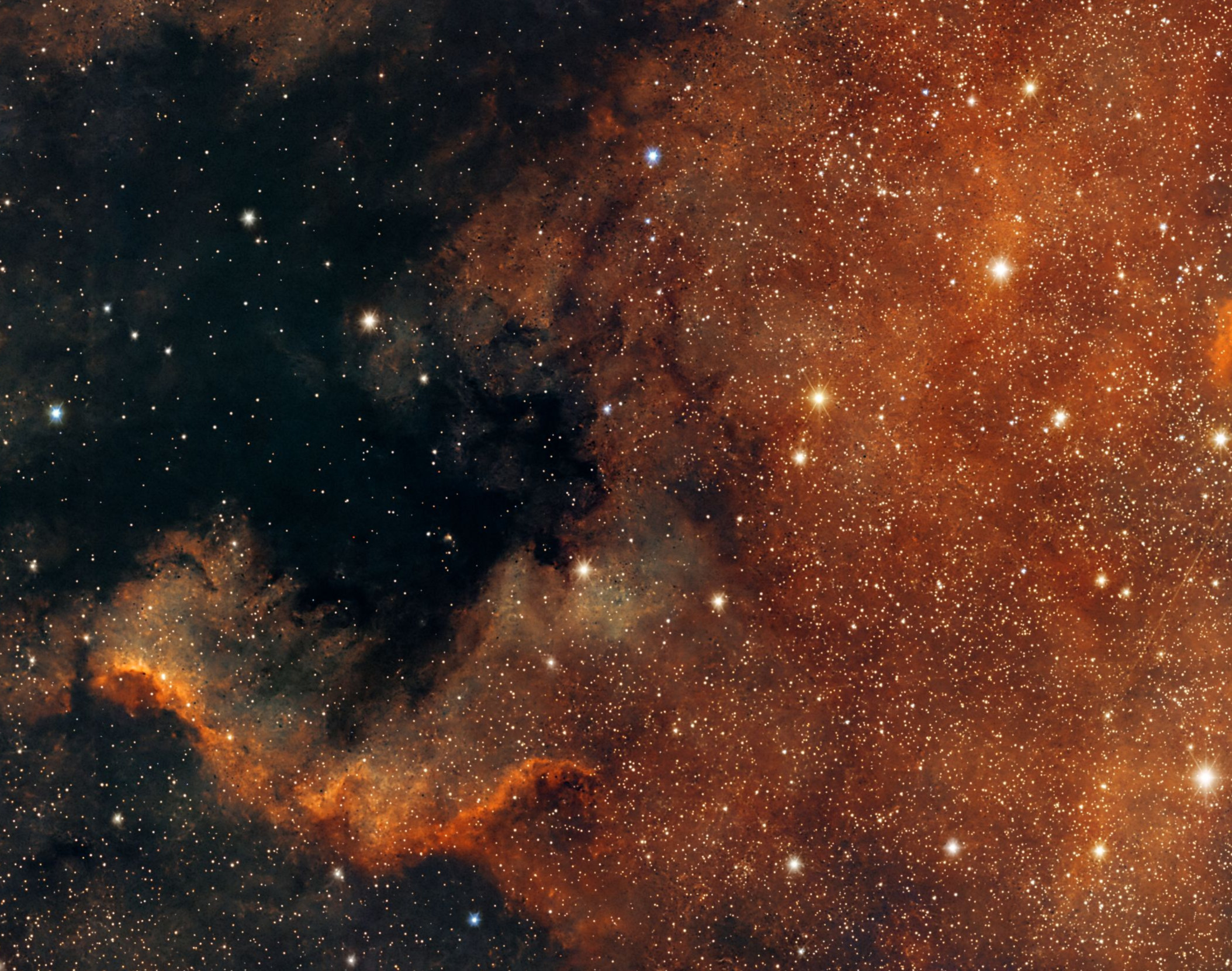
Licence: for personal use, credit Damon Scotting. Both JPEGs 2,108 x 1,661 px.
Unknown sensor temperature during imaging
252 mm focal length, plate solved Sky-Watcher states 250 mm
2.57 x 2.57° field of view 3,008 x 3,008 px on Player One Saturn-C SQR
9 MP Player One Saturn-C SQR 3,008 x 3,008 px, 11.3 x 11.3 mm
Should you buy it?
92/100 Stars for Your Buck
Pros
- The focuser is now at the back, so my hand no longer blocks the starlight while I focus, which was a nightmare on the original.
- A hole in the dew shield lets the camera cable thread through: very well designed for real world use.
- The stars across the field are an incredibly healthy shape straight out of the box.
- It is designed for an image circle up to 16 mm and comes with adapters, so my IMX533 camera took about 30 seconds to set up.
- At 250 mm and f/2 the field is very wide and bright, which makes it easy to find your way between targets live.
Cons
- The camera sits in the light path, so you want a slim, lipstick-style camera and a skinny cable to block as little light as possible.
- The 16 mm image circle rules out APS-C and full-frame sensors; a 1 inch sensor such as the IMX533 is the largest that fits.
- Unfiltered live views of faint nebulae such as the North America and the Veil are not too great under light-polluted skies.
- The HAC125DX is the tube alone: the mount, the camera and a computer to run them are all extra.
I think it could be the perfect telescope.
Who the HAC125DX is for
Outreach and family stargazing host
Buy
Bright live views on a screen, one target after another, are the easiest way I know to share nebulae and galaxies with family and friends.
Owner of a 1 inch or smaller astro camera
Buy
The 16 mm image circle and the supplied M42 and 1.25 inch adapters suit a sensor such as the IMX533; mine was set up in about 30 seconds.
Owner of the original HAC125
Buy
Focusing from the back instead of reaching into the light path is a big enough upgrade on its own, and the dew shield now takes the camera cable.
APS-C or full-frame camera owner
Skip
The 16 mm image circle cannot cover your sensor. My recommendation is the ToupTek Hope D60, which covers full frame at 280 mm.
Complete beginner
Skip
The HAC125DX is the tube alone: you also need a mount, a camera and a computer to run it. My recommendation is the ZWO Seestar S30 Pro, which does all of that in one box.
Planetary imager
Skip
At 250 mm of focal length Jupiter and Saturn are a dozen pixels or fewer across; a planetary imager wants a long-focal-length telescope such as a Schmidt-Cassegrain.
Three alternatives I have reviewed
- ToupTek Hope D60 60 mm f/4.66 planar apochromat with a 44 mm image circle 93/100 £749 Read the review
- Askar 50P 50 mm f/3.8 Petzval astrograph, optimised for 1 inch sensors 95/100 £299 Read the review
- ZWO Seestar S30 Pro smart telescope with the mount and camera built in 99/100 £649 Read the review
Questions and more about this review
Reviewed by
Damon Scotting
The Telescope Man Verified
BSc (Hons) Physics with Astrophysics and Cosmology, Loughborough University PGCE / QTS, University of Nottingham
About Damon About Damon Damon Scotting is The Telescope Man. He holds a BSc (Hons) in Physics with Astrophysics and Cosmology from Loughborough University and a PGCE with QTS from the University of Nottingham, and taught physics in secondary schools before becoming an astronomy creator. He is a contributing writer for BBC Sky at Night Magazine and the author of 42 Wonders of Our Night Sky, and his photograph of the galaxy M100 with the dwarf planet Ceres was Highly Commended in the Astronomy Photographer of the Year 2024 competition run by Royal Observatory Greenwich. He has appeared on the BBC's Blue Peter. More than 750,000 people follow his astronomy channels on YouTube, Instagram and TikTok, and he has reviewed more than 140 telescopes, mounts, cameras, filters and accessories hands-on for this site. More about Damon · How I test · Damon's book
I review all kinds of gear: most of it I buy, some is gifted and some is loaned, and all of it is reviewed the same way. How this site is funded
Eight questions, answered
Questions about the Sky-Watcher HAC125DX
Reviewed 21 July 2025 ·Updated 23 September 2026
I review all kinds of gear. Most of it I buy, some is gifted and some is loaned, and all of it is reviewed the same way: no company sees or approves a review before it is published. Shop links marked Ad are affiliate links: I earn a commission when you buy through them, at no extra cost to you. How this site is funded
- What is the difference between the HAC125DX and the original HAC125? The DX is slightly longer, its focuser is at the back instead of the front, its dew shield has a hole for the camera cable and screws in place, and it has had a worldwide release. Both are 125 mm f/2 Honders astrographs with a 16 mm image circle. The specifications and the comparison table ↓
- Which cameras suit the HAC125DX? Sensors up to the 16 mm image circle. My Player One Saturn-C SQR has a 1 inch IMX533 sensor with a 16 mm diagonal, which the circle just covers. The camera sits at the front, in the light path, so a slim camera and a skinny cable block the least light. What is it for ↓
- What field of view does the HAC125DX give? With the IMX533 my frames plate-solve at 3.08 arcsec per pixel, 252 mm of focal length and a 2.57 x 2.57 degree field: the whole Veil Nebula fits in one frame. Tested numbers and the download ↓
- Is the HAC125DX good for live viewing? Yes. At 0.3 second exposures and gain 600 the live views are noisy, but they are very good live views of what the night sky looks like, and that is the reason I want this telescope. Watch the review ↓
- Does the HAC125DX need collimating out of the box? Mine did not. The stars across the field were an incredibly healthy shape straight out of the box, and I barely had to touch the focus. The primary mirror cell is collimatable if you ever need it. What I captured ↓
- How does Albireo look through the HAC125DX? In a 0.3 second live view Albireo's contrasting colours show, but the two stars blur together: I could not quite resolve them independently. Watch the review ↓
- What mount does the HAC125DX need? Sky-Watcher states 3.82 kg for the tube, which comes on clamshell rings with a V-style dovetail. I imaged Comet Lemmon with it on my JUWEI-14. The rig on the mount ↓
- What have I not tested on the HAC125DX? I have not tested the HAC125DX on planets, with a sensor larger than the 1 inch IMX533, or with a guiding log or a star-shape measurement across the field.